Beginner Guide to Choosing a Handmade Macrame Crystal Necklace
Discover how to choose, style, and care for your first macrame crystal necklace. Learn about cord materials, crystal shapes, and knotting.

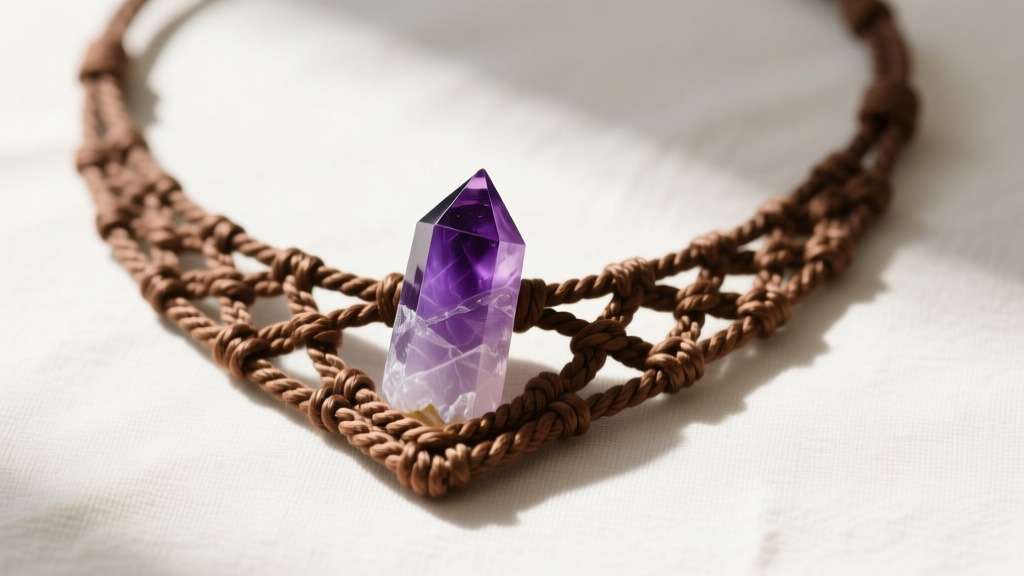
The Artisan Appeal of Macrame Crystal Jewelry
When you first encounter a macrame crystal necklace, you are looking at the intersection of ancient textile art and natural earth elements. Unlike mass-produced chain necklaces that rely on metal clasps and jump rings, macrame jewelry uses intricate knotting techniques to cradle, secure, and showcase gemstones. For beginners stepping into the world of artisan jewelry, understanding the anatomy of these pieces is crucial for making informed purchases, styling them correctly, and ensuring their longevity.
This comprehensive guide will break down the specific materials, knotting structures, and gemological considerations you need to know before buying or wearing your first macrame crystal pendant.
Understanding the Foundation: Cord Materials
The cord is the skeletal structure of any macrame piece. The durability, water resistance, and aesthetic of your necklace depend entirely on the textile chosen by the artisan. Here are the three most common materials used in high-quality macrame crystal necklaces:
1. Waxed Polyester and Cotton Blends
Premium brands like Linhasita produce waxed cords that are the gold standard for professional macrame artists. The wax coating provides a slight stiffness that makes knotting precise, while also offering a degree of water resistance. These cords typically come in 0.5mm (for micro-macrame) and 1.0mm (for standard pendant cages) thicknesses.
2. Nylon (C-Lon or Chinese Knotting Cord)
Nylon is incredibly strong, colorfast, and entirely waterproof. It is the preferred choice for micro-macrame, where artists use 0.4mm or 0.5mm cords to create highly detailed, lace-like enclosures around small tumbled stones. Nylon can be melted with a lighter to seal the ends of the sliding knots, ensuring a permanent finish.
3. Hemp and Natural Cotton
While natural fibers offer a beautiful, earthy, and bohemian aesthetic, they lack the tensile strength and water resistance of synthetics. Unwaxed cotton will absorb sweat, oils, and water, leading to fraying and bacterial buildup over time. If you choose natural fibers, reserve them for occasional wear rather than daily use.
Cord Material Comparison Chart
| Material | Standard Thickness | Water Resistance | Best Use Case |
|---|---|---|---|
| Waxed Polyester | 0.5mm - 1.0mm | Moderate | Standard pendants, daily wear |
| Nylon (C-Lon) | 0.4mm - 0.5mm | High | Micro-macrame, shower/swim wear |
| Unwaxed Cotton | 1.0mm - 2.0mm | Low | Boho fashion, occasional wear |
| Hemp | 1.0mm - 3.0mm | Low | Heavy raw stones, rustic styles |
Selecting Your Crystal: Shape and Hardness
The beauty of a macrame crystal necklace lies in its ability to hold stones that cannot be easily set in traditional metal bezels. Because the cord wraps around the stone's natural contours, artisans can use raw, uncut, or irregularly shaped gems.
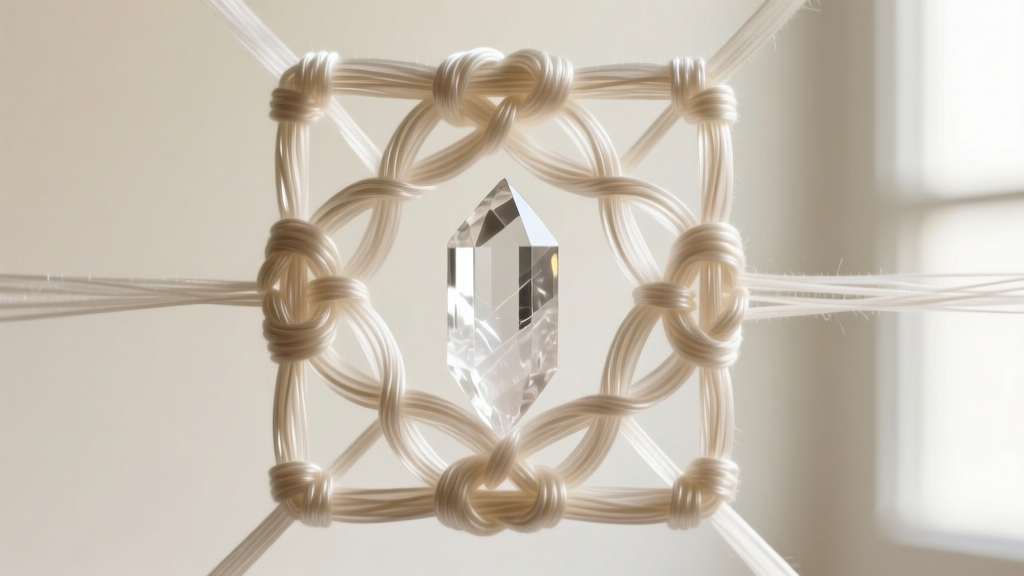
Raw Points vs. Tumbled Stones
Raw crystal points (like amethyst or clear quartz generators) are usually secured using a 'cage knot' or a series of square knots that grip the ridges of the stone. Tumbled stones, being smooth and rounded, require a more complex netting technique, often utilizing a diamond or spiral knot pattern to prevent the stone from slipping out.
The Mohs Hardness Scale and Water Exposure
One of the most critical mistakes beginners make is wearing their macrame necklace in the shower without considering the crystal's hardness. According to the Gemological Institute of America (GIA), gemstones with a Mohs hardness below 5 are highly susceptible to water damage, chemical degradation, or dissolution.
- Safe for Water (Mohs 7+): Clear Quartz, Amethyst, Citrine, Agate, Jade.
- Water-Soluble / Fragile (Mohs 2-4): Selenite, Malachite, Lapis Lazuli, Turquoise, Fluorite.
If your necklace features a Selenite wand or a Malachite tumble, you must remove it before swimming, showering, or exercising, even if the nylon cord itself is waterproof.
The Anatomy of the Knots
You do not need to be a master knotter to appreciate the engineering behind your jewelry, but recognizing basic knots helps you assess the quality of the craftsmanship.
The Lark's Head Knot
This is the foundational knot used to attach the main cord to a ring, a clasp, or the top of a crystal. A well-executed Lark's Head should sit flush and symmetrical, with no visible gaps or twisted fibers.
The Square Knot and Spiral Knot
The square knot is the workhorse of macrame. When tied in alternating patterns, it creates a flat, sturdy band. When tied repeatedly on the same side, it creates a spiral knot (or half-hitch), resulting in a twisted, rope-like texture that is often used for the main body of the necklace cord.
The Sliding Square Knot (Adjustable Closure)
High-quality macrame crystal necklaces rarely use metal clasps. Instead, they finish with a sliding square knot. This allows the wearer to adjust the drop length of the pendant from the collarbone (approx. 16 inches) down to the solar plexus (approx. 22 inches). Ensure the artisan has melted or glued the tail ends of the cord so the sliding knot cannot be pulled apart.
Styling Your Macrame Pendant for Different Necklines
Because macrame necklaces are adjustable and visually textured, they require specific styling considerations to avoid looking cluttered.
V-Necks and Scoop Necks
These necklines naturally frame the chest and draw the eye downward. A longer macrame pendant (dropping to the sternum) with a vertical crystal point, such as a raw quartz generator, complements the V-shape of the shirt perfectly. The vertical line of the crystal elongates the torso.
Crew Necks and Turtlenecks
Wearing a heavily textured macrame piece directly against a high, tight neckline can look choked and visually overwhelming. If you must wear a macrame piece with a turtleneck, opt for a micro-macrame pendant on a very thin (0.5mm) cord, and adjust it to sit slightly below the fabric line. Alternatively, layer a delicate metal chain underneath the macrame cord to create a bridge between the fabric and the textile.
Care, Cleaning, and Maintenance
Proper maintenance ensures your macrame crystal necklace remains vibrant and structurally sound for years. The cleaning method must address both the textile cord and the gemstone simultaneously.
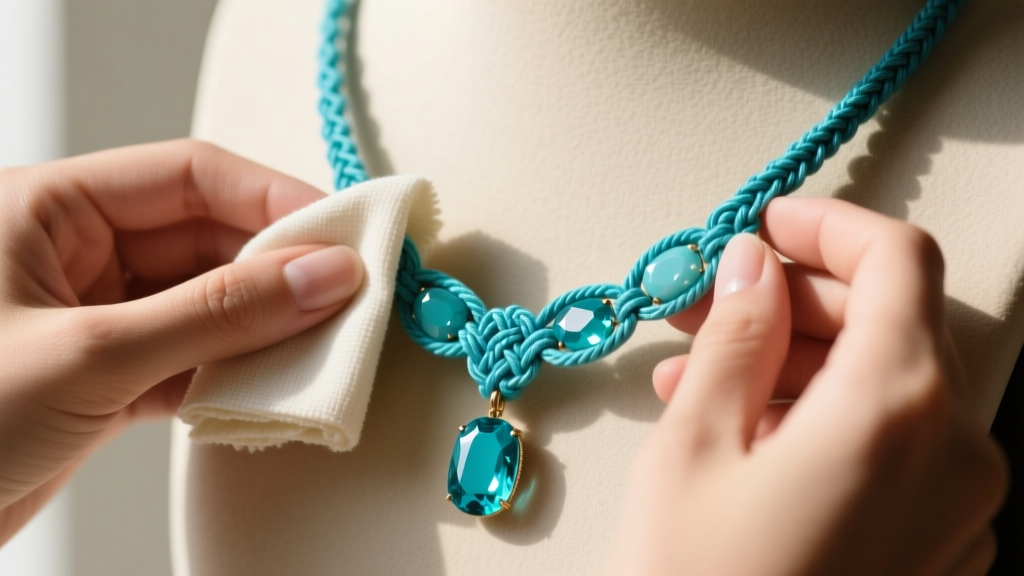
How to Clean the Crystal
For hard, non-porous stones like quartz or agate, you can use a soft brush with mild dish soap and warm water. However, as noted by the International Gem Society, porous stones like turquoise or opal should only be wiped with a dry, untreated microfiber cloth to prevent chemical absorption or crazing.
How to Refresh the Cord
Over time, waxed cotton and polyester cords will accumulate skin oils, perfumes, and environmental dust, causing the colors to look dull.
- Remove the necklace and lay it flat on a clean towel.
- Dip a cotton swab in a mixture of warm water and a single drop of gentle baby shampoo.
- Gently rub the swab along the braided sections of the cord, avoiding direct contact with fragile crystals.
- Use a dry microfiber cloth to blot the moisture away immediately.
- Allow the necklace to air dry completely in a well-ventilated area, away from direct sunlight which can fade both the dyed cord and UV-sensitive stones like amethyst.
Final Thoughts on Artisan Investment
A handmade macrame crystal necklace is more than just an accessory; it is a wearable piece of textile art. By paying attention to the cord material, understanding the Mohs hardness of your specific crystal, and utilizing the adjustable sliding knots to suit your wardrobe, you can seamlessly integrate these beautiful, earthy pieces into your daily rotation. Whether you are drawn to the protective energy of black tourmaline or the calming aesthetics of rose quartz, the right macrame setting will elevate your stone from a simple mineral to a masterwork of artisan craftsmanship.


