Oscar de la Renta Necklace Anatomy: Materials and Craft Guide
Explore the technical anatomy of an Oscar de la Renta necklace, from gold-plated brass bases to resin cabochons and crystal pavé.


When evaluating high-end fashion jewelry, the untrained eye often dismisses pieces that lack solid precious metals or mined gemstones. However, as we move through 2026, the secondary market and archival collecting of designer costume jewelry have surged, demanding a rigorous, gemological approach to authentication and appraisal. An Oscar de la Renta necklace is a masterclass in advanced metallurgical plating, structural engineering, and material science. Unlike fine jewelry, which relies on the intrinsic value of its raw materials, luxury fashion jewelry derives its value from extreme manufacturing tolerances, proprietary alloy blends, and artisanal hand-finishing. This technical deep dive deconstructs the exact material composition, structural failure modes, and engineering specifications that define authentic Oscar de la Renta necklaces.
The Metallurgical Foundation: Base Alloys and Plating Architecture
The structural integrity of any heavy bib or statement necklace begins with its base metal. While lower-tier fashion brands rely on Zamak (a zinc-aluminum alloy prone to pitting and catastrophic brittle failure), authentic Oscar de la Renta pieces predominantly utilize high-grade jeweler's brass. Specifically, manufacturers often employ a CuZn39Pb3 alloy (a copper-zinc blend with trace lead for machinability) or modern lead-free bismuth-brass alternatives to meet strict 2026 EU and US safety regulations.
The brilliance of the metalwork is achieved through a multi-stage electroplating process. According to industry manufacturing standards documented by the Gemological Institute of America (GIA), luxury fashion houses do not use simple 'flash' plating. The architecture typically involves:
- Surface Preparation: Micro-polishing and ultrasonic degreasing to ensure zero sub-surface inclusions.
- Barrier Strike Layer: A 0.5-micron layer of palladium or rhodium is applied first. This prevents copper migration (where brass atoms bleed through the gold, causing a reddish tint) and acts as a corrosion inhibitor.
- Precious Metal Plating: A thick deposition of 14k or 18k gold, typically ranging from 1.5 to 2.5 microns. This is significantly thicker than standard commercial fashion jewelry (which averages 0.15 to 0.5 microns), granting the piece a Vickers hardness that resists micro-scratches from daily wear.
- E-Coating (Electrophoretic Lacquer): A microscopic, UV-stable anti-tarnish resin is electrodeposited over the gold to seal the porous metal surface from atmospheric sulfur and skin acids.
Gemological Reality: Crystal Pavé and Foil-Backed Cabochons
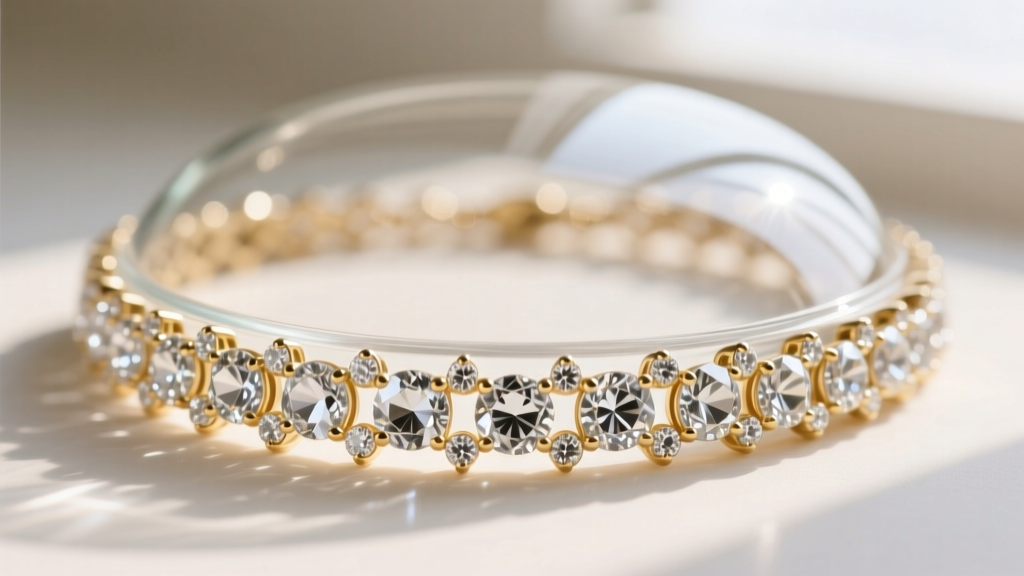
Oscar de la Renta is celebrated for its dense, glittering pavé work and vibrant, oversized cabochons. It is crucial to understand that these are rarely mined minerals. Instead, they are triumphs of optical engineering.
Refractive Index and Glass Composition
The 'crystals' utilized in authentic pieces are typically high-lead glass (historically up to 32% PbO for maximum light dispersion) or, in modern 2026 productions, advanced barium silicate and zinc-oxide glass formulations that mimic the refractive index (RI) of lead crystal without the environmental toxicity. These stones are precision-faceted using automated lapidary machines to ensure exact girdle thicknesses, allowing them to sit flush in micro-prong settings.
For the brand's signature opaque and translucent cabochons, the material is often a proprietary cast resin or molded glass backed with a metallic foil. This foil backing acts as a mirror, bouncing ambient light back through the stone's crown, creating a luminous depth that flat-backed acrylics simply cannot replicate. The adhesive used to secure these stones is not standard cyanoacrylate (super glue), which degrades and turns white over time. Instead, master jewelers use aerospace-grade, two-part optically clear epoxies (such as Araldite 2020), which maintain structural flexibility and resist yellowing under UV exposure.
The Chemistry of Cold Enamel and Resin Applications
Floral motifs and vibrant color blocking are hallmarks of the brand's aesthetic. While traditional fine jewelry uses vitreous enamel (glass powder fused to metal at 1,400°F), this heat would melt a brass base. Therefore, Oscar de la Renta necklaces utilize advanced 'cold enamel' techniques.
'The mastery of cold enamel lies in viscosity control. The resin must be poured in a way that creates perfect surface tension, doming slightly at the edges of the brass cloisons without spilling over, requiring a steady hand and precise curing environments.' — Master Artisan, European Fashion Jewelry Atelier.
Modern cold enamels are essentially UV-stabilized, two-part epoxy resins. The technical challenge here is preventing 'amine blush' (a waxy surface film that forms during curing in high humidity) and ensuring the pigment is perfectly suspended. Authentic pieces exhibit a glass-like, meniscus-curved surface on the enamel, whereas counterfeits often show flat, meniscus-free fills with visible micro-bubbles trapped in the resin matrix.
Structural Hardware: Tensile Limits and Clasp Engineering
A heavily beaded Oscar de la Renta bib necklace can easily exceed 150 grams. Supporting this weight requires hardware engineered for high tensile strength and shear resistance.
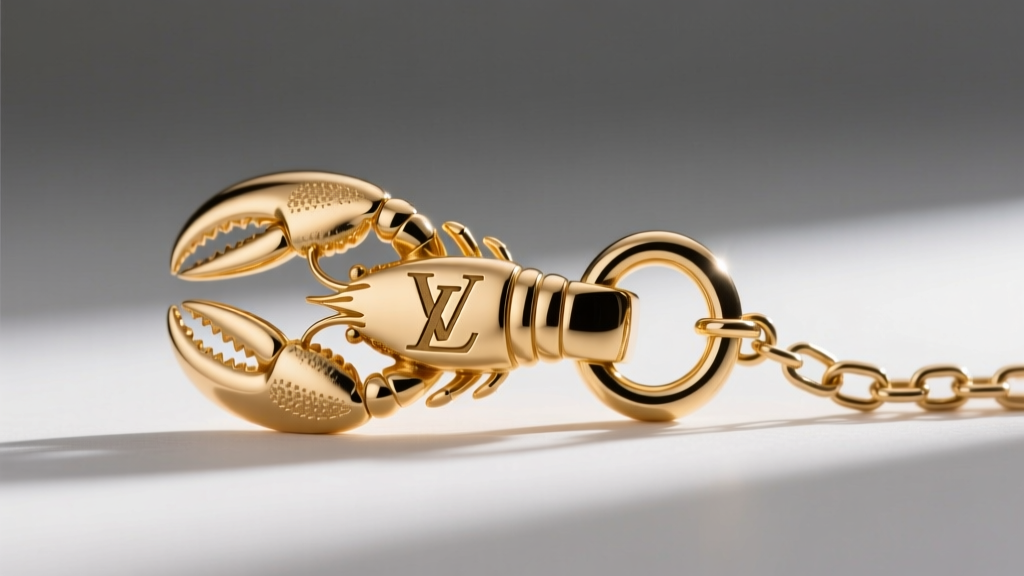
- Lobster Clasps: Authentic pieces use custom-cast, solid brass lobster clasps rather than hollow-stamped sheet metal. The internal spring mechanism is calibrated for high tension, and the exterior features a deeply milled, crisp logo engraving rather than a superficial laser etch.
- Jump Rings: The jump ring connecting the clasp to the chain is almost always soldered shut. An unsoldered jump ring on a heavy necklace is a primary failure point; the lateral torque of a 150g pendant will easily pry open an unsoldered brass ring, leading to catastrophic loss.
- Extender Chains: The standard 2.5-inch extender chain is typically a heavy-gauge cable chain. The terminal ring often features a custom drop charm or a specialized end-cap to prevent the lobster clasp from slipping off during wear.
Authentication and Material Verification Matrix
As the vintage and archival market expands, sophisticated counterfeits have entered the space. Use the following technical matrix to verify the authenticity of an Oscar de la Renta necklace, referencing historical data and brand guidelines available via the Vogue Fashion Archives and the Oscar de la Renta official atelier.
| Component | Authentic ODLR Specification | Counterfeit / Replica Marker |
|---|---|---|
| Base Metal Weight | Heavy jeweler's brass; dense, cold to the touch | Zamak or hollow-cast alloy; lightweight, warms quickly |
| Plating Quality | 1.5 - 2.5 microns; rich, warm tone with e-coat seal | Flash plated; overly yellow, brassy, or peeling at edges |
| Stone Settings | Micro-prong or flush-set with optically clear epoxy | Glue-visible, milky adhesive residue, uneven prong heights |
| Hardware Engraving | Deeply milled, crisp font on clasp and hangtags | Shallow laser etching, blurred serifs, incorrect font weight |
| Chain Links | Soldered jump rings at stress points; uniform welds | Unsoldered jump rings; visible gaps or crushed link ends |
Archival Care and Preventative Maintenance Protocols
Preserving the structural and aesthetic integrity of luxury fashion jewelry requires strict environmental controls. Because the core material is a reactive copper alloy, the primary enemy is atmospheric sulfur and chlorides found in human perspiration.
- Ultrasonic Avoidance: Never place an Oscar de la Renta necklace in an ultrasonic cleaner. The high-frequency cavitation will shatter the bond of the optically clear epoxy holding the pavé stones and will strip the anti-tarnish e-coating, exposing the raw gold plating to rapid oxidation.
- Chemical Isolation: Avoid all commercial silver dips or ammonia-based cleaners. These will instantly dissolve the palladium barrier layer and cause the brass to 'bleed' through the gold plating, resulting in irreversible reddish-brown staining.
- Micro-Climate Storage: Store pieces in a sealed, acid-free archival box with 3M anti-tarnish strips. Maintain a relative humidity (RH) of 40-50%. High humidity accelerates the hydrolysis of the cold enamel resins, leading to micro-cracking and eventual delamination from the brass cloisons.
- Mechanical Resting: Heavy bib necklaces should be stored flat or draped over a wide, padded velvet neck form. Hanging a 200g necklace on a thin hook for years will cause 'creep'—a slow, permanent metallurgical deformation of the chain links and jump rings under constant gravitational stress.
Understanding the precise engineering, material science, and structural limits of an Oscar de la Renta necklace elevates it from a mere accessory to a highly collectible piece of wearable industrial art. By respecting the technical boundaries of gold-plated brass, cold enamels, and epoxy-set crystals, collectors can ensure these archival pieces survive for generations.


