Expert Guide to Buying the Perfect Jewish Necklace Chai
Discover how to choose the perfect Jewish necklace chai. Learn about metal grades, chain types, sizing, and pricing in our expert buying guide.

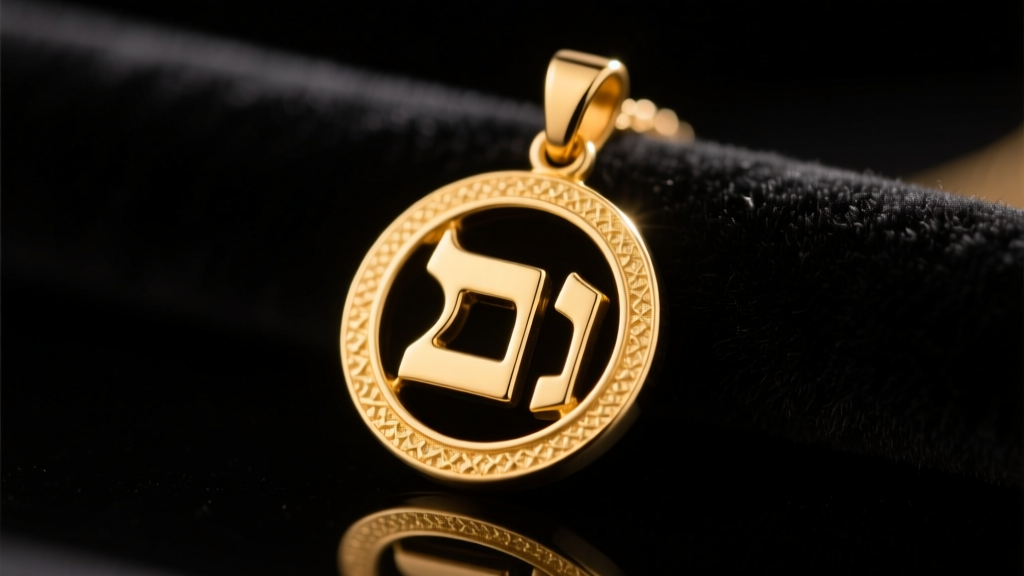
The Chai symbol is far more than a standard piece of jewelry; it is a profound declaration of life, heritage, and spiritual resilience. When shopping for a Jewish necklace chai, the market is flooded with options ranging from flimsy, mass-produced trinkets to exquisite, heirloom-quality masterpieces. Navigating this landscape requires an understanding of metallurgy, chain mechanics, and cultural significance. This comprehensive buying guide strips away the marketing fluff to provide you with actionable, expert-level insights on selecting a Chai pendant that will endure for generations.
The Cultural and Spiritual Weight of the Chai Symbol
Before evaluating karats and clasps, it is vital to understand what you are wearing. The word 'Chai' (חי) translates to 'life' in Hebrew. It is composed of two letters: Chet (ח) and Yud (י). In the Jewish mystical tradition of Gematria, where each Hebrew letter corresponds to a numerical value, Chet equals 8 and Yud equals 10, bringing the total to 18. This is why the number 18 is considered deeply auspicious in Jewish culture, often dictating the monetary value of charitable gifts and the structure of traditional blessings. According to My Jewish Learning, the symbol gained widespread prominence as a protective amulet in the 18th century, eventually evolving into the modern pendant we recognize today. When you purchase a Chai necklace, you are acquiring a wearable artifact of survival and optimism.
Decoding Metal Choices: Durability vs. Tradition
The longevity of your Jewish necklace chai is entirely dependent on the metal alloy used. Pure 24k gold is entirely unsuitable for daily-wear pendants due to its extreme malleability. Instead, jewelers rely on specific alloy mixtures to balance color, durability, and skin compatibility.
14k vs. 18k Gold: The Sweet Spot
14k gold (58.5% pure gold) is the undisputed workhorse of fine jewelry. With a Vickers hardness rating of approximately 140, it resists scratching, bending, and bail deformation far better than higher-karat alternatives. It is the ideal choice if you plan to wear your Chai necklace daily, especially if you lead an active lifestyle. 18k gold (75% pure gold) offers a noticeably richer, warmer yellow hue and is highly hypoallergenic, but its lower hardness (around 125 Vickers) makes it more susceptible to surface marring. If you opt for 18k white gold, ensure it has a high-quality rhodium flash, as the underlying alloy often carries a faint yellowish-grey tint that requires re-plating every few years.
Sterling Silver and Platinum Alternatives
Sterling silver (92.5% silver, 7.5% copper) is an accessible entry point, typically ranging from $50 to $150. However, the copper content makes it highly reactive to sulfur and moisture, meaning it will tarnish and require regular polishing with a treated cloth. Platinum, conversely, is the premium tier. Weighing roughly 60% more than 14k gold, a platinum Chai pendant feels substantial and will never tarnish or lose metal mass when scratched; the metal merely displaces. It is the ultimate choice for an heirloom piece, though it commands a significant premium.
Always verify the hallmark stamp. The Federal Trade Commission Jewelry Guides strictly mandate that precious metal items sold in the US must be accurately stamped with their purity mark (e.g., 14k, 585, 925, or PT950) alongside a registered manufacturer's trademark.
Chain Mechanics: Matching the Pendant to the Necklace
A common failure point in necklace ownership is pairing a heavy pendant with an inadequate chain. The bail (the loop connecting the pendant to the chain) acts as a fulcrum. If the chain is too thin, it will act like a wire saw, slowly cutting through the gold bail over months of friction.
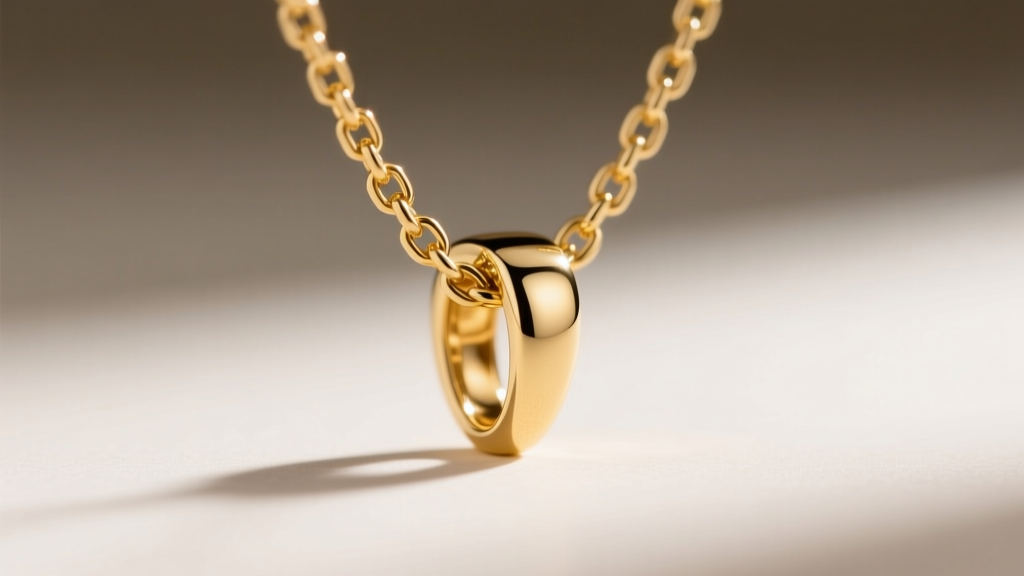
Chain Type and Thickness Matrix
Use the following matrix to match your Chai pendant's weight to the correct chain architecture. Avoid snake chains entirely; their tightly interlocked links trap hair and skin oils, and once kinked, they cannot be repaired.
| Chain Type | Recommended Thickness | Max Pendant Weight | Durability Profile |
|---|---|---|---|
| Cable (Standard) | 1.0mm - 1.2mm | Up to 3 grams | Moderate; links can stretch if pulled |
| Box Chain | 1.2mm - 1.5mm | Up to 6 grams | High; geometric links resist kinking |
| Rope Chain | 1.5mm - 2.0mm | Up to 10 grams | Very High; twisted links distribute stress |
| Wheat (Spiga) | 1.2mm - 1.5mm | Up to 7 grams | High; woven structure prevents snapping |
Furthermore, ensure the inner diameter of the pendant's bail is at least 2.5mm. This provides adequate clearance for the chain to move freely without binding, reducing friction wear by up to 40%.
Sizing and Proportions: Getting the Dimensions Right
The visual impact of a Chai necklace relies heavily on its proportions relative to the wearer's anatomy and wardrobe. Chai pendants generally fall into three size categories:
- Dainty (10mm - 14mm): Best for layering with other necklaces or wearing with high-neck blouses. These typically weigh under 1.5 grams and require delicate 0.8mm to 1.0mm chains.
- Standard (15mm - 20mm): The most versatile size. A 17mm Chai resting on a 16-inch or 18-inch chain sits perfectly on the collarbone, visible above most standard crew and V-necklines.
- Bold (22mm - 30mm+): Designed as a standalone statement piece. These heavier pendants (often 5+ grams) require thicker chains and larger bails to maintain visual balance.

Pay close attention to the aspect ratio of the Chet and Yud. In traditional calligraphy, the Chet should be slightly wider and more grounded, while the Yud floats gracefully above or beside it. Poorly designed CAD models often make the letters look blocky, uniform, and devoid of their natural typographic flow.
Red Flags: What to Avoid When Shopping
When inspecting a Jewish necklace chai, whether in a boutique or online, look out for these critical manufacturing defects:
- Hollow Casting (Electroforming): Some manufacturers create large, lightweight pendants by hollowing out the back. While this saves on gold costs, hollow pendants are notoriously fragile. A single drop onto a hard surface will dent them, and they are virtually impossible for a jeweler to repair.
- Laser-Welded Bails: The bail should be cast as a single, continuous piece with the pendant body or soldered using high-temperature torch methods. Laser-welded bails on mass-produced jewelry often feature microscopic stress fractures that snap under sudden tension.
- Casting Porosity: Inspect the surface of the gold under a loupe or high-resolution macro photos. Tiny pinholes indicate gas bubbles trapped during the casting process. This compromises the structural integrity of the metal and makes polishing a nightmare.
- Undersized Lobster Clasps: The clasp should be proportional to the chain. A 5mm lobster clasp on a 1.5mm rope chain is a mechanical bottleneck and the most likely point of failure.
Pricing Tiers: What Should You Expect to Pay?
Understanding the baseline pricing prevents you from overpaying for brand names or underpaying for suspiciously cheap alloys. Prices below are estimated for a standard 17mm solid cast Chai pendant (excluding the chain) in the current market:
- Sterling Silver (925): $45 - $120. Price variance depends on brand markup and whether the silver features rhodium plating or diamond-cut faceting.
- 14k Yellow/White Gold (Solid, 2-3 grams): $250 - $450. Driven primarily by the daily spot price of gold and the complexity of the finishing work (e.g., high-polish vs. matte sandblasted backgrounds).
- 18k Gold (Solid, 3-4 grams): $400 - $700. The premium reflects the higher pure gold content and the specialized labor required to work with softer alloys.
- Platinum (PT950, 5-7 grams): $800 - $1,500+. Platinum's density means you are buying significantly more metal weight, compounded by the higher melting points and specialized tools required for fabrication.
Final Thoughts on Sourcing and Authenticity
Investing in a Jewish necklace chai is an exercise in balancing spiritual meaning with material science. Prioritize solid casting over hollow constructions, match your chain gauge to the pendant's exact weight, and always verify the FTC-mandated purity stamps. By focusing on the structural integrity of the bail, the Vickers hardness of your chosen gold alloy, and the typographic grace of the Hebrew letters, you will secure a piece of jewelry that not only honors tradition but withstands the rigors of daily life. Whether purchased from a specialized Judaica artisan or a master bench jeweler, a well-crafted Chai pendant is a lifelong companion that carries the weight of history with effortless elegance.


