Do Gold Plated Necklaces Tarnish? The Ultimate Care & Cleaning Guide
Do gold plated necklaces tarnish? Yes. Discover the science behind plating failure modes, expert cleaning methods, and how to extend their lifespan.

The Short Answer: Do Gold Plated Necklaces Tarnish?
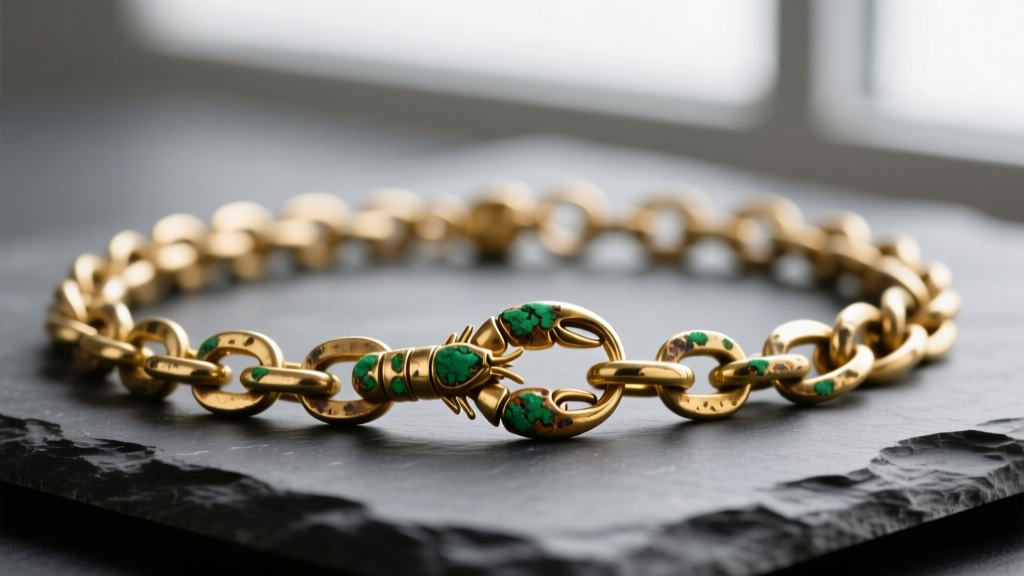
If you have ever asked yourself, 'do gold plated necklaces tarnish?', the definitive answer is yes. Unlike solid 14k or 18k gold, which is highly resistant to corrosion due to its noble metal properties, gold plated jewelry consists of a microscopic layer of gold bonded to a base metal core. Over time, environmental factors, body chemistry, and friction will inevitably compromise this outer layer, leading to tarnish, discoloration, and fading. However, tarnishing is not an immediate death sentence for your favorite pendant or chain. By understanding the metallurgy behind your jewelry and adopting a rigorous, science-backed maintenance routine, you can significantly delay the oxidation process and keep your necklaces looking pristine for years.
The Science of Tarnish: Why Gold Plating Fails
To properly care for plated necklaces, you must first understand the mechanical and chemical failure modes of the plating itself. Tarnish on a gold plated necklace rarely originates from the gold; it originates from the base metal beneath it.
Base Metal Migration and Porosity
Electroplated gold is not a solid, impermeable sheet. Under an electron microscope, the gold layer reveals a crystalline structure riddled with microscopic pores. When the base metal—commonly brass, copper, or nickel silver—is exposed to moisture, oxygen, and sulfur compounds in the air, it begins to oxidize. This corrosion migrates upward through the microscopic pores in the gold layer, manifesting as dark spots, greenish hues, or a dull, brassy patina on the surface. This phenomenon is known as base metal migration.
The Role of Body Chemistry
Human sweat has a pH level ranging from 4.5 to 7.0, making it mildly acidic. When this acidic moisture pools in the crevices of a cable chain or box chain, it acts as an electrolyte, accelerating the galvanic corrosion of the copper or brass core. Furthermore, the natural oils, lotions, and perfumes we apply daily create a chemical film that traps moisture against the metal, exponentially speeding up the tarnishing process.
Comparing Plating Grades: Flash vs. Vermeil vs. PVD
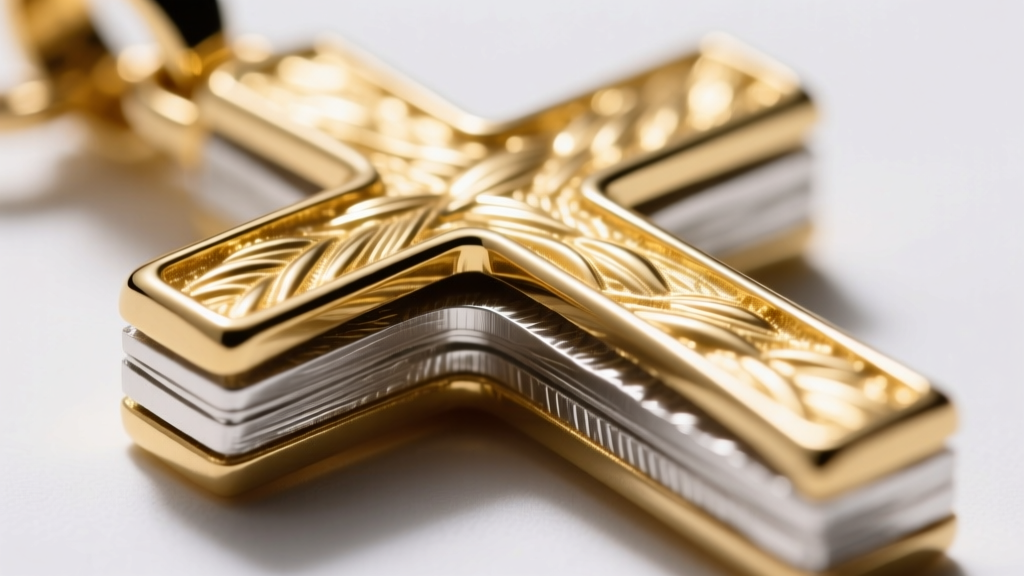
Not all gold plated necklaces are created equal. The lifespan and tarnish-resistance of your jewelry depend entirely on the thickness of the gold layer (measured in microns) and the quality of the base metal. According to the Federal Trade Commission (FTC) Jewelry Guides, specific terminology must be used to describe these variations.
| Plating Type | Base Metal | Gold Thickness | Tarnish Resistance | Average Lifespan |
|---|---|---|---|---|
| Flash Plated | Brass / Copper | < 0.1 microns | Very Low | 3 - 6 months |
| Gold Vermeil | Sterling Silver | > 2.5 microns | Moderate to High | 2 - 5 years |
| Gold Filled | Jeweler's Brass | 5% of total weight | High | 10 - 30 years |
| PVD Coated | Stainless Steel | Titanium Nitride | Extremely High | Lifetime (Color) |
Expert Insight: If you are buying a necklace for daily wear, avoid flash-plated brass entirely. Opt for Gold Vermeil (which uses a non-allergenic sterling silver core that tarnishes much slower than copper) or PVD-coated stainless steel, which uses a vacuum-sealed titanium nitride layer that mimics the color of 14k gold and is virtually impervious to sweat and water.
Daily Wear Rules: Preventing Premature Tarnish
Preventative care is vastly superior to reactive cleaning. Once the base metal begins to oxidize beneath the plating, no amount of surface polishing will reverse the damage. Implement these strict daily wear protocols to protect the micron-thin gold layer:
- The 'Last On, First Off' Rule: Your gold plated necklace should be the very last item you put on after applying skincare, makeup, and perfume, and the first item you remove when undressing. Alcohol and volatile organic compounds (VOCs) in perfumes can chemically strip thin gold layers.
- Avoid High-Friction Zones: Delicate herringbone or snake chains are prone to micro-abrasions when they rub against coarse fabrics like wool or raw denim. These micro-scratches wear through the plating, exposing the base metal.
- The Shower and Pool Ban: Chlorine in swimming pools and hot tubs is highly corrosive to base metals. Even if the gold layer holds, chlorine can penetrate the pores and cause the underlying brass to become brittle and snap.
- Proper Storage: Store necklaces individually in anti-tarnish cloth pouches or ziplock bags with a silica gel desiccant packet. Humidity is the primary catalyst for copper oxidation.
Pro Tip: If you live in a high-humidity coastal environment, applying a micro-thin layer of museum wax or a specialized jewelry sealant to the clasp and jump rings can prevent the most vulnerable parts of the chain from oxidizing.
Step-by-Step Cleaning Protocol for Plated Chains
When your necklace accumulates oils and environmental grime, it requires cleaning. However, the internet is rife with destructive 'DIY hacks' that will ruin gold plating instantly. Never use baking soda, toothpaste, or aluminum foil baths. Baking soda and toothpaste contain abrasive particles (Mohs hardness of 3 to 4) that will literally sand the 2.5-micron gold layer off your vermeil necklace. Ultrasonic cleaners are equally dangerous, as the high-frequency cavitation bubbles can cause the gold plating to flake and peel.
The Safe Cleaning Method
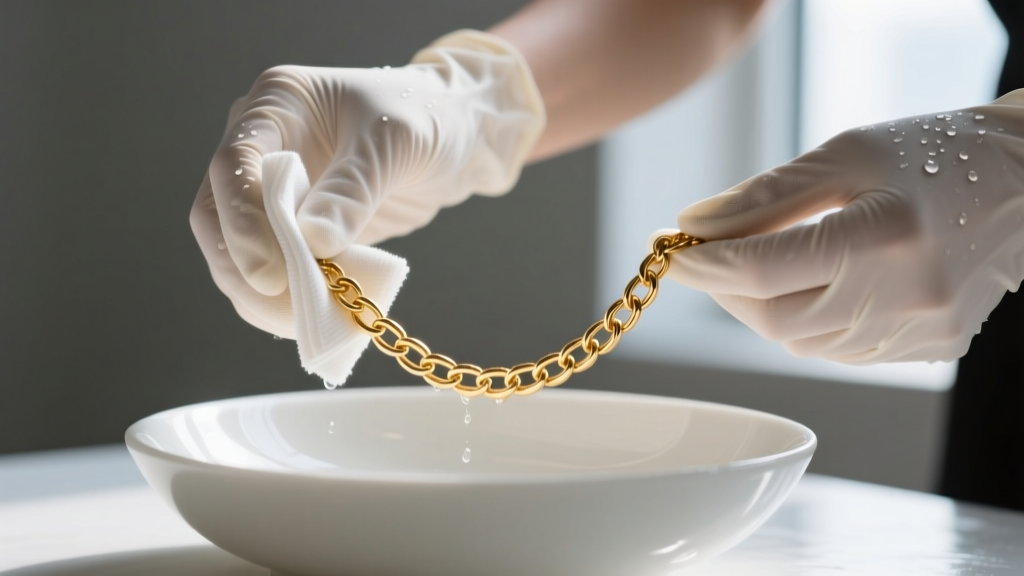
Follow this exact protocol to safely clean your gold plated pendants and chains without compromising the structural integrity of the plating:
- Prepare the Solution: In a small ceramic bowl, mix two cups of lukewarm distilled water (tap water contains chlorine and minerals that can cause spotting) with three drops of pH-neutral, lotion-free dish soap.
- Soak Briefly: Submerge the necklace for no more than 3 to 5 minutes. Prolonged soaking can weaken the adhesive on glued-in gemstones or pearls.
- Agitate Gently: Using an ultra-soft, baby-hair toothbrush, gently brush the crevices of the chain and the bail of the pendant. Do not scrub; let the bristles do the work.
- Rinse and Dry: Rinse thoroughly under a gentle stream of distilled water. Immediately pat dry with a lint-free microfiber cloth. Do not air dry, as water spots will form.
- Buff: Finish by lightly buffing the chain with a clean, dry jewelry polishing cloth designed specifically for plated metals (ensure it contains no harsh chemical rouges).
When to Replate: Assessing Chain Damage
Eventually, even the most meticulously cared-for gold plated necklace will experience wear at high-friction points, such as the clasp, the jump rings, and the links that rest against the collarbone. When the brassy or silvery base metal becomes visibly exposed, it is time to consider replating.
Taking your necklace to a professional bench jeweler for a fresh electroplating bath is a cost-effective way to restore heirloom or high-quality designer pieces. According to industry standards and educational resources from the Gemological Institute of America (GIA), replating requires the jeweler to first polish away the old, damaged plating and base metal oxidation before applying a fresh layer of gold. Expect to pay between $45 and $85 to replate a standard 18-inch gold vermeil cable chain, depending on the complexity of the links and the karat of gold requested. For fast-fashion, flash-plated brass chains costing under $30, replating is generally not economically viable, and it is better to recycle the piece and invest in a higher-quality vermeil or gold-filled replacement.