Material Guide to the 1920s Pearl Necklace: Natural, Cultured & Faux
Discover the material properties of a 1920s pearl necklace. Compare natural, early cultured, and faux celluloid pearls with expert authentication tips.
The 1920s Pearl Necklace: A Turning Point in Jewelry Materials
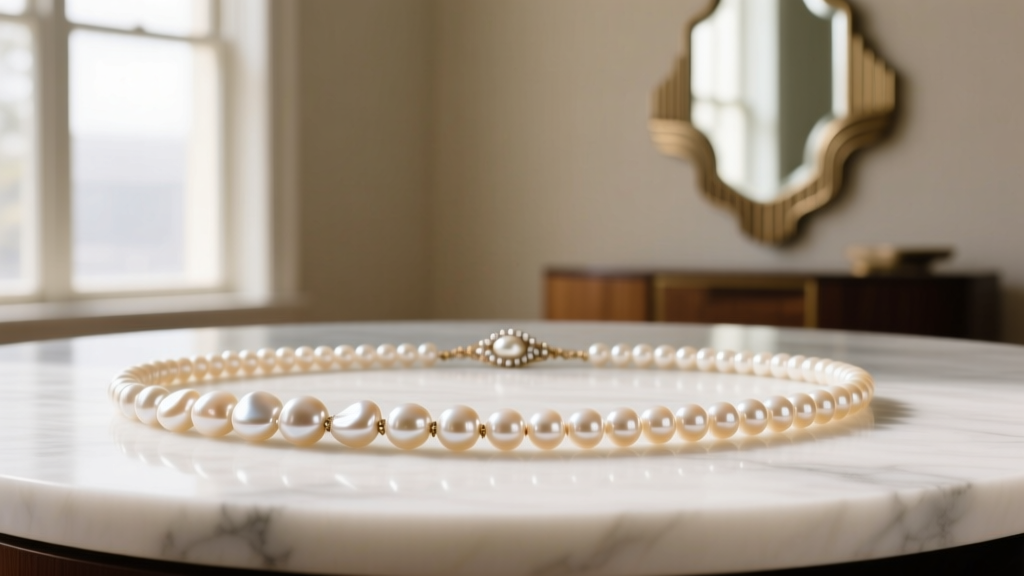
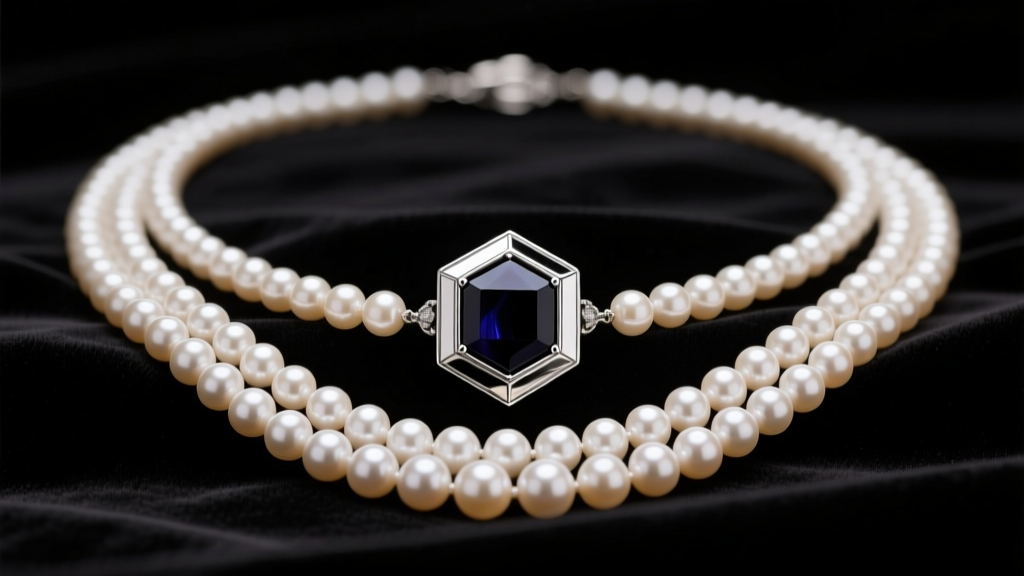
The 1920s marked a seismic shift in jewelry history. The iconic 'flapper' silhouette demanded elongated, swinging jewelry, making the long pearl sautoir the defining accessory of the decade. However, when evaluating a genuine 1920s pearl necklace today, collectors and gemologists face a complex material landscape. This was the exact decade when the pearl market fractured into three distinct material categories: rare natural saltwater pearls, revolutionary early cultured pearls, and mass-produced faux alternatives. As we navigate the antique jewelry market in 2026, understanding the specific metallurgical and gemological properties of these materials is critical for accurate authentication and valuation.
Natural Saltwater vs. Early Cultured Pearls
Prior to the 1920s, virtually all pearls were natural, harvested by divers in the Persian Gulf and the Gulf of Mannar. But in 1916, Kokichi Mikimoto patented his method for producing perfectly spherical, bead-nucleated cultured pearls. By the mid-1920s, these cultured pearls flooded the Western market, causing a catastrophic collapse in natural pearl prices.
Visually, a high-quality 1920s natural pearl necklace and a contemporary Mikimoto cultured piece can look identical to the naked eye. Both exhibit the soft, iridescent orient characteristic of saltwater nacre. However, their internal structures are vastly different. According to the Gemological Institute of America (GIA), gemologists rely on X-ray microradiography to distinguish between the two. A natural pearl reveals concentric growth rings, resembling the cross-section of an onion. In contrast, an early 1920s cultured pearl reveals a solid mother-of-pearl bead nucleus—often with parallel striations—surrounded by a relatively thin layer of nacre, typically ranging from just 0.2mm to 0.8mm thick in vintage pieces.
The Rise of Faux: Celluloid, Glass, and Essence d'Orient
Because genuine pearls remained prohibitively expensive for the working class, the 1920s saw an explosion in faux pearl manufacturing. The most prominent materials included:
- Essence d'Orient on Glass: Pioneered by companies like Majorica, this technique involved coating solid glass beads with 'essence d'orient,' a solution derived from guanine crystals extracted from fish scales. These beads are notably heavy, with a specific gravity often exceeding 2.80 due to the leaded glass cores used in the era.
- Celluloid Pearls: Created from nitrocellulose and camphor, celluloid was an early plastic molded into pearl shapes and coated with pearlescent lacquer. Celluloid is exceptionally light (specific gravity around 1.35) and highly flammable. More importantly, it is chemically unstable.
- Bakelite and Casein: While less common for full sautoirs due to their weight and opacity, early milk-protein plastics (casein) and phenolic resins (Bakelite) were sometimes used for larger, novelty Art Deco pendants and beads.
Material Comparison and Identification Matrix
When authenticating a 1920s pearl necklace, gemologists use a combination of physical properties and advanced imaging. The table below outlines the definitive material markers for the three primary pearl types of the era.
| Material Type | Core Composition | Specific Gravity (Weight) | X-Ray Radiography Result | Surface / Feel Test |
|---|---|---|---|---|
| Natural Saltwater | 100% Nacre | 2.61 - 2.69 | Concentric growth rings; no nucleus | Gritty against teeth; warm to touch |
| Early Cultured | Mother-of-Pearl Bead | 2.61 - 2.69 | Solid nucleus; thin outer nacre shell | Gritty against teeth; drill hole shows nacre/bead line |
| Glass Faux | Leaded Glass | 2.80 - 3.20 (Heavy) | Opaque solid core; no organic structure | Perfectly smooth; cold to touch |
| Celluloid Faux | Nitrocellulose/Camphor | 1.35 - 1.40 (Very Light) | Radiolucent (mostly transparent) | Smooth; smells of camphor if rubbed |
Stringing, Clasps, and Hardware Metallurgy
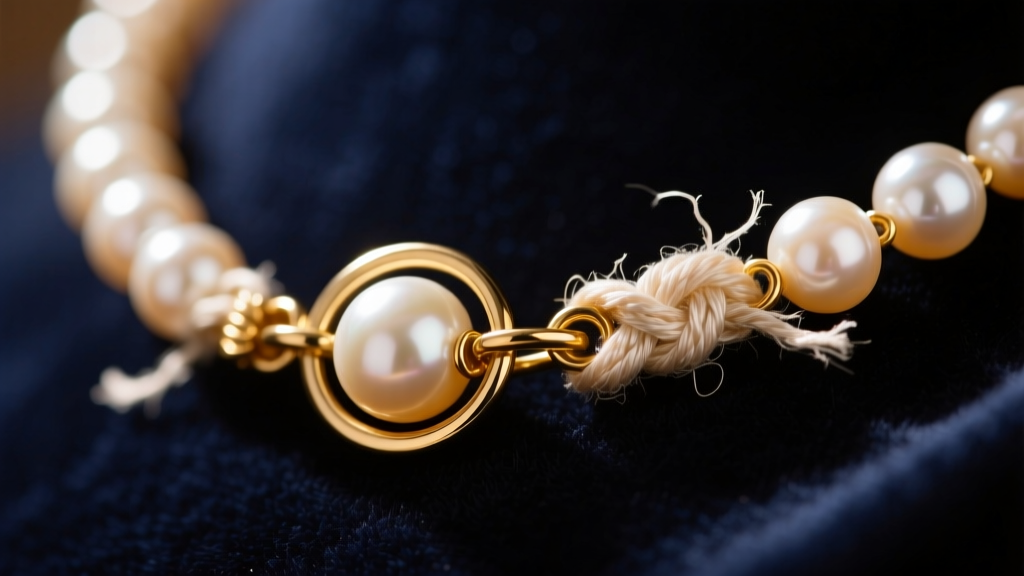
The materials used to construct the necklace are just as vital for dating and authentication as the pearls themselves. A true 1920s pearl necklace was strung on heavy-duty, multi-strand silk thread, with a hand-tied knot between every single pearl to prevent catastrophic loss if the strand broke.
At the clasp, you should look for 'French wire' (also known as gimp)—a tiny, coiled metal spring that protects the silk thread from fraying against the metal clasp. In high-end Art Deco pieces, this wire was made of 14k or 18k gold, or platinum. The clasps themselves were masterpieces of 1920s engineering. According to the Victoria and Albert Museum's jewelry archives, Art Deco clasps frequently featured geometric filigree, box mechanisms with dual safety catches, and accents of calibré-cut onyx, jade, or marcasite. Platinum (stamped 'PLAT' or '900') and white gold (often rhodium-plated 14k or 18k) were the dominant metals, chosen to complement the cool, white luster of the pearls.
Market Valuation and Authentication Realities
The value of a 1920s pearl necklace is entirely dictated by its material origin, condition, and provenance. In the current 2026 auction landscape, the price disparities are staggering:
Natural Saltwater Sautoir (60+ inches): $15,000 to $80,000+. Provenance from houses like Cartier or Boucheron pushes this into the hundreds of thousands.
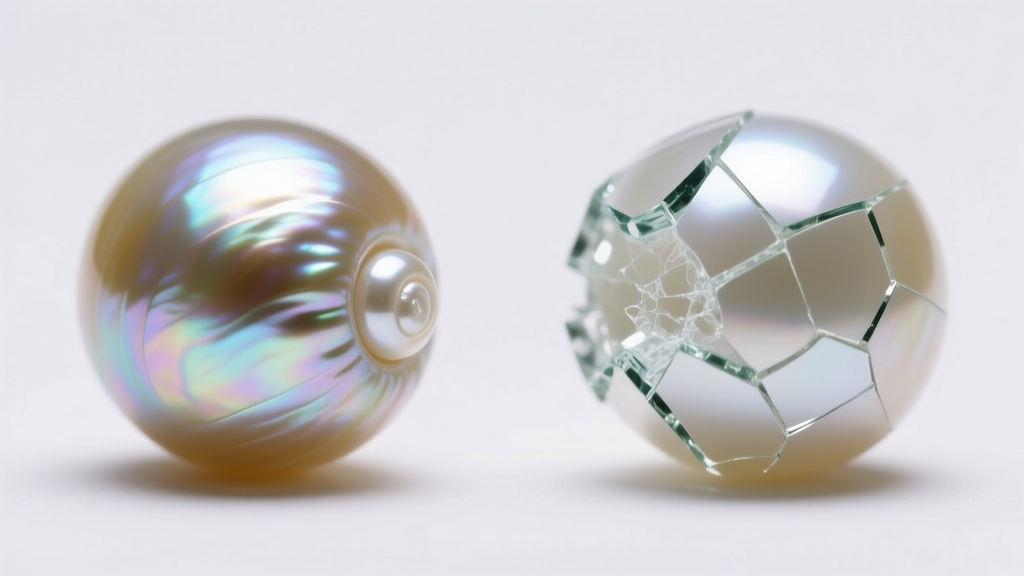
Early Cultured Pearl Sautoir: $1,500 to $6,000. Value depends heavily on nacre thickness and the presence of 'peeling' (nacre delamination).
High-End Faux (Majorica/Glass with Platinum Clasp): $400 to $1,200. The value here lies almost entirely in the precious metal clasp and the Art Deco design.
Celluloid/Basic Faux: $80 to $250. Highly collectible for costume jewelry purists, but chemically fragile.
Preservation: Combating Celluloid Rot and Nacre Delamination
Owning a century-old pearl necklace requires strict environmental controls. Natural and cultured pearls are organic gems composed of calcium carbonate and conchiolin. They are highly susceptible to drying out, which causes the nacre to crack and peel—a failure mode known as delamination. Pearls must be stored in a humidity-controlled environment (ideally 45% to 55% relative humidity) and should never be sealed in airtight plastic bags, which trap moisture and promote fungal growth on the silk thread.
Celluloid faux pearls present a much more dangerous preservation challenge. As nitrocellulose degrades, it undergoes a chemical breakdown known as 'celluloid rot,' off-gassing nitric acid. This acidic gas will actively corrode the metal clasps, etch nearby glass stones, and destroy the pearlescent coating on the beads themselves. If you detect a sharp, acidic smell or notice a powdery white residue on a faux 1920s pearl necklace, isolate it immediately from the rest of your jewelry collection to prevent cross-contamination and acid damage to your other antiques.
Whether you are hunting for a natural saltwater masterpiece or a pristine faux Art Deco piece, understanding these material properties ensures you can authenticate, value, and preserve the legacy of the 1920s pearl necklace for the next century.


