Obsidian Heart Necklace Trends 2026: Dark Romance Style Guide
Discover 2026 obsidian heart necklace trends. Learn how to style volcanic glass pendants, choose durable bezel settings, and master dark romance layering.

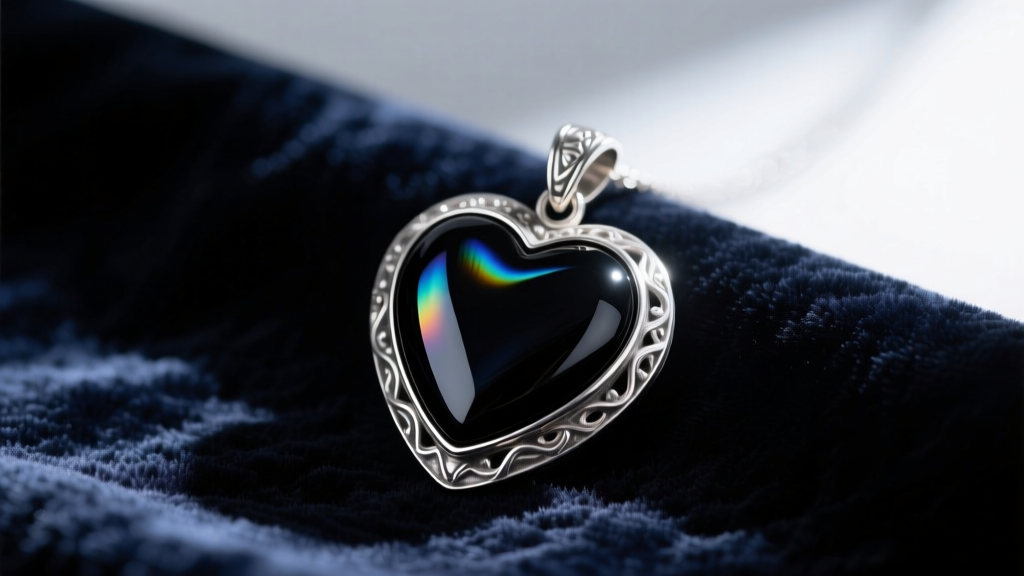
The Resurgence of Volcanic Glass in 2026 Dark Romance
The jewelry landscape of 2026 has seen a definitive pivot away from the ultra-minimalist, high-polish gold aesthetics that dominated the early 2020s. In its place, the 'Dark Romance' and 'Whimsigoth' movements have propelled moody, tactile, and historically resonant gemstones to the forefront of contemporary styling. At the center of this shift is the obsidian heart necklace. Once relegated to souvenir shops or purely metaphysical markets, high-grade obsidian has been reclaimed by independent jewelers and heritage houses alike, transformed into a sophisticated emblem of modern gothic elegance.
Unlike crystalline gemstones, obsidian is a naturally occurring volcanic glass formed from rapidly cooling silica-rich lava. This amorphous structure gives it a unique, glassy luster that absorbs and reflects light in a way that feels both ancient and deeply intimate. For the 2026 consumer, an obsidian heart pendant is not merely an accessory; it is a statement piece that bridges the gap between Victorian mourning jewelry and contemporary avant-garde fashion.
Material Anatomy: Grading and Carving Obsidian Hearts
To understand the value and styling potential of an obsidian heart necklace, one must first understand the material's geological limitations and strengths. According to the Gemological Institute of America (GIA), obsidian lacks a crystalline structure, meaning it does not cleave along defined planes. Instead, it exhibits a conchoidal fracture, breaking with smooth, curved surfaces that are razor-sharp.
Because of this fracture pattern, lapidaries rarely facet obsidian. A faceted heart would be incredibly fragile at the pointed cleft and the outer lobes. Therefore, premium obsidian heart pendants are almost exclusively cut as cabochons (smooth, domed, and polished) or hand-carved into three-dimensional sculptural hearts. When evaluating a carved obsidian heart, look for symmetry in the lobes, a sharp and defined center cleft, and a mirror-like polish that is free of dull, matte patches or deep pitting caused by trapped gas bubbles during the stone's formation.
Mohs Hardness and the Bezel Setting Imperative
Obsidian registers between 5.0 and 5.5 on the Mohs scale of mineral hardness. For context, this makes it softer than quartz (7.0) and significantly softer than sapphire (9.0). This relative softness dictates a critical rule in jewelry design: never buy an obsidian heart held by traditional prongs.
Prong settings exert concentrated point-pressure on the stone. Given obsidian's conchoidal fracture and brittleness, a minor impact against a tabletop or doorframe can cause the glass to chip or shatter entirely at the pressure points. The only structurally sound setting for an obsidian heart is a full bezel or a heavy semi-bezel. A bezel setting wraps a continuous rim of metal around the entire perimeter of the heart, distributing impact forces evenly and protecting the vulnerable edges of the volcanic glass. When shopping, ensure the bezel wall is at least 1.2mm thick to provide adequate structural defense.
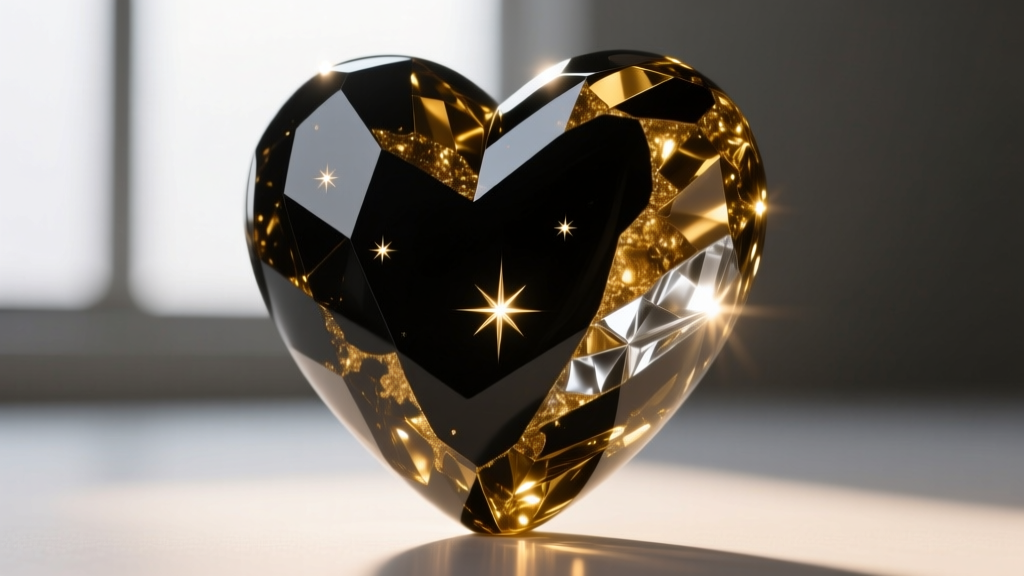
Varieties of Obsidian: Beyond Standard Black
While the classic opaque black obsidian heart necklace remains a staple of the dark romance wardrobe, the 2026 trend cycle heavily favors rare inclusions and optical phenomena. The Mindat.org mineral database outlines how trace elements and cooling rates create distinct visual varieties of volcanic glass. Choosing the right variety allows for highly specific wardrobe pairings.
| Obsidian Variety | Visual Characteristics | Best Metal Pairing | Price Range (2026) |
|---|---|---|---|
| Black | Deep, opaque, mirror-like glassy luster | Oxidized Sterling Silver | $40 - $90 |
| Snowflake | Black base with white/gray cristobalite spherulites | Bright Rhodium-Plated Silver | $60 - $120 |
| Mahogany | Brown and black banding from iron oxide inclusions | 14k Rose Gold Vermeil | $50 - $110 |
| Gold Sheen | Bronze/gold metallic sheen from microscopic gas bubbles | 18k Yellow Gold or Brass | $80 - $180 |
Gold sheen obsidian, in particular, has seen a 40% surge in search volume this year, as its metallic flash perfectly complements the mixed-metal styling trends dominating current runway shows.
Chain Pairings and Hardware Metallurgy
The chain you select for your obsidian heart pendant must balance aesthetic contrast with tensile strength. Because obsidian is relatively heavy for its size (specific gravity of roughly 2.35 to 2.60), flimsy chains will snap or stretch over time. Avoid chains thinner than 1.5mm in gauge.
- The Box Chain (1.5mm - 2.0mm): The interlocking square links provide excellent tensile strength and a modern, geometric contrast to the organic curves of the heart. Best paired with Gold Sheen or Mahogany obsidian.
- The Rope Chain (2.0mm - 2.5mm): Offers a vintage, Victorian feel that aligns perfectly with the Dark Romance aesthetic. The twisted links catch the light, complementing the glassy luster of pure Black obsidian.
- The Cable Chain with Oxidized Finish: A staple for Snowflake obsidian. The darkened crevices of oxidized sterling silver highlight the white cristobalite inclusions in the stone, creating a cohesive, moody palette.
Ensure the jump ring connecting the pendant to the chain is soldered shut. An open jump ring will inevitably pull apart under the pendulum-like swinging weight of a solid glass heart.
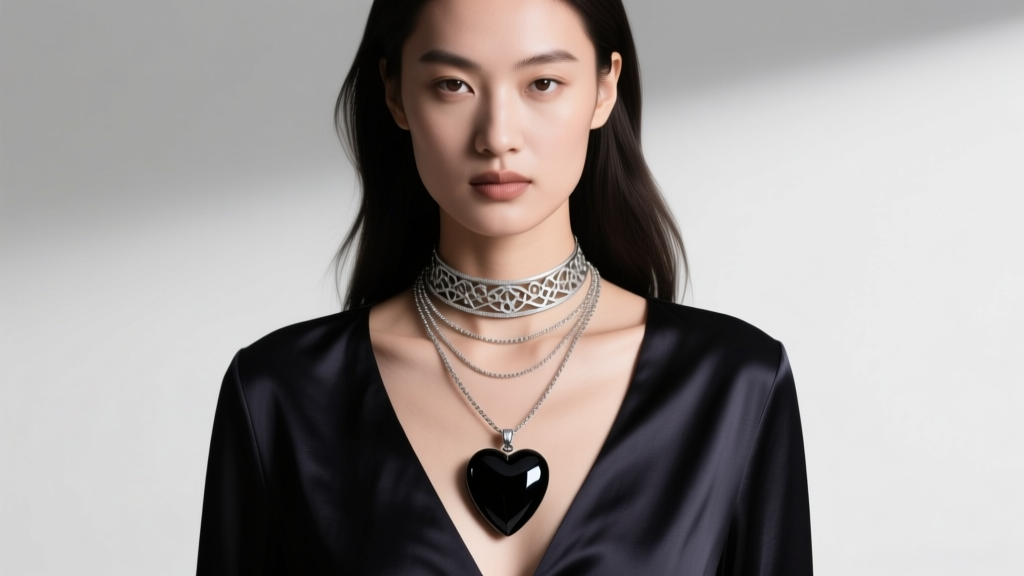
Styling Framework: Layering the Obsidian Heart
Mastering the 2026 layered necklace stack requires a strict adherence to length gradation and textural contrast. The obsidian heart necklace should serve as the 'anchor' or focal point of the stack, typically sitting at the 18-inch or 20-inch mark.
The Dark Romance Layering Formula:
1. 14-inch Choker: A delicate 1.0mm oxidized silver snake chain or a black velvet ribbon.
2. 16-inch Mid-Length: A textured chain featuring small, matte onyx or black spinel beads.
3. 18-inch Anchor: Your primary obsidian heart necklace in a heavy bezel setting.
4. 22-inch Terminator: A simple, unadorned silver paperclip chain to frame the lower décolletage.
When styling necklines, the obsidian heart shines best against high-necked Victorian blouses, dark silk slip dresses, or structured wool turtlenecks. Avoid wearing it over heavily patterned fabrics, as the intricate details of the carving or the subtle sheen of the glass will be lost in the visual noise.
Care, Maintenance, and Failure Modes
Volcanic glass requires specific maintenance protocols to preserve its mirror finish and structural integrity. The most common failure mode for obsidian jewelry is thermal shock. Because it is a glass, sudden temperature changes—such as stepping out of a hot shower into freezing winter air, or leaving the necklace on a car dashboard in direct summer sunlight—can cause internal stress fractures that eventually lead to spontaneous shattering.
Furthermore, obsidian is highly susceptible to micro-scratching. Storing your necklace loosely in a jewelry box alongside diamonds, sapphires, or even quartz crystals will result in a network of fine, dull scratches across the stone's surface. Always store your obsidian heart necklace in a dedicated, soft flannel pouch. To clean the pendant, use only a microfiber cloth and warm water. Avoid ultrasonic cleaners and harsh chemical dips, which can degrade the oxidized patina of the silver bezel and leave a cloudy residue on the glass.


