Gold Red Necklace Value Guide: Budgeting for Rubies & Garnets
Discover the true value of a gold red necklace in 2026. Compare ruby, garnet, and spinel pricing, gold purities, and how to avoid overpaying.

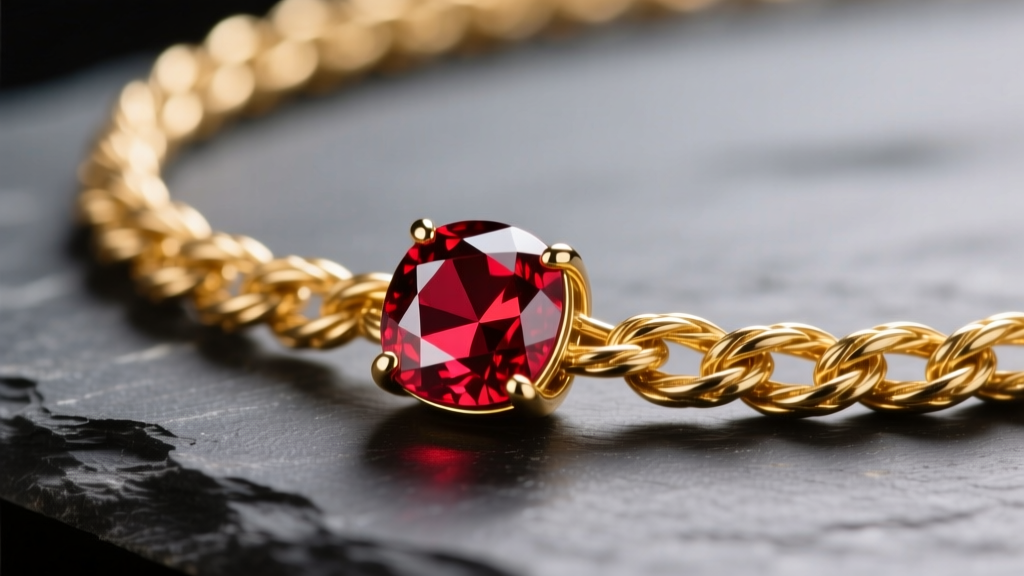
The 'Gold Red Necklace' Spectrum: What Are You Actually Buying?
When shoppers search for a gold red necklace, they are navigating one of the most volatile pricing spectrums in the jewelry market. The term encompasses everything from a $45 gold-plated brass chain with a red glass teardrop, to a $45,000 18-karat solid gold collar featuring a pigeon-blood Burmese ruby. As a buyer in 2026, understanding the intersection of gold purity and red gemstone mineralogy is the only way to accurately assess value and avoid severe retail markups.
The fundamental rule of jewelry valuation is that 'red' is not a gemstone, and 'gold' is not a single material. A budget assessment requires breaking down the piece into its two core components: the chain's metallurgical integrity and the pendant's gemological reality. In this guide, we dissect the actual market values, failure modes, and pricing matrices of red gemstones set in gold, giving you the exact frameworks used by estate appraisers.
2026 Pricing Matrix: Budget vs. True Intrinsic Value
To understand where your money goes, we must separate retail markup from intrinsic value. The table below outlines typical market pricing for a standard 18-inch necklace featuring a 1-carat (or equivalent) red center stone.
| Material Combination | Avg. Retail Price (2026) | Intrinsic Melt/Gem Value | Value Retention |
|---|---|---|---|
| 18k Solid Gold + Natural Unheated Ruby | $6,500 - $15,000+ | $4,000 - $11,000 | High |
| 14k Solid Gold + Heat-Treated Ruby | $1,800 - $3,500 | $900 - $1,800 | Moderate |
| 14k Solid Gold + Rhodolite Garnet | $600 - $1,200 | $250 - $450 | Moderate |
| Gold Vermeil + Natural Red Spinel | $180 - $350 | $60 - $120 | Low |
| Gold Plated Brass + Red Glass/Enamel | $40 - $120 | <$5 | None |
According to the Federal Trade Commission Jewelry Guides, a piece can only be legally labeled 'vermeil' if it has a sterling silver base coated with at least 2.5 microns of gold. Anything less is merely 'gold plated' and will degrade rapidly with daily wear.
Red Gemstone Value Drivers: Ruby vs. Garnet vs. Spinel
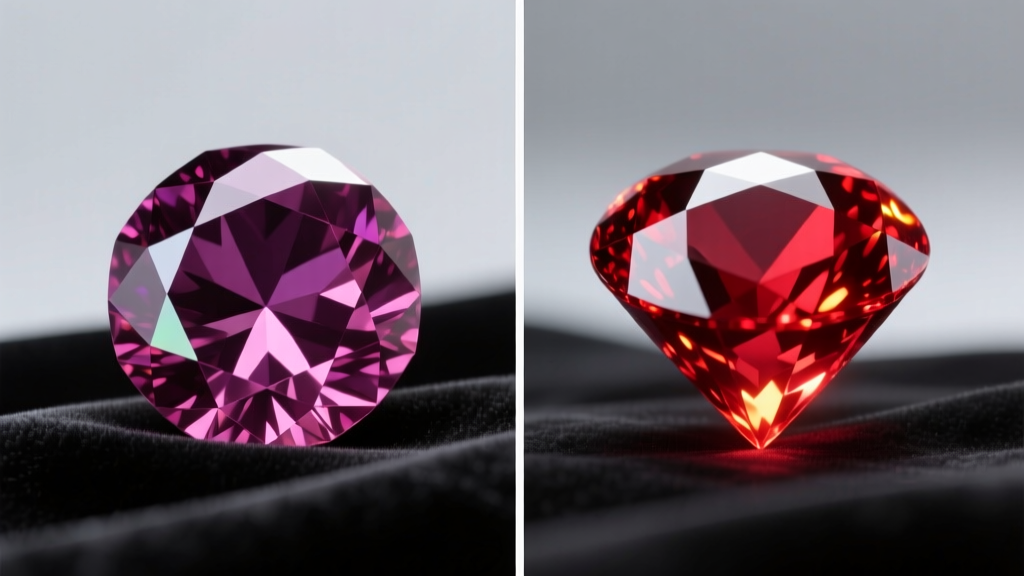
The red gemstone market is rife with misrepresentation. Retailers often use vague terms like 'red crystal' or 'ruby quartz' to mask low-value materials. According to the Gemological Institute of America (GIA), true rubies are the red variety of the mineral corundum. Here is how the top three red gemstones compare in a budget assessment:
1. Natural Ruby (Corundum)
Mohs Hardness: 9
Budget Reality: Rubies command a massive premium, primarily driven by color saturation and origin. A 'pigeon blood' ruby from Myanmar with no heat treatment can exceed $10,000 per carat. However, 95% of commercial rubies are heat-treated to improve clarity and color, dropping the price to $300–$800 per carat. If a gold red necklace features a flawless, deep red ruby but costs under $500, it is almost certainly a synthetic flame-fusion ruby, which holds virtually zero resale value.
2. Red Spinel
Mohs Hardness: 8
Budget Reality: Historically confused with ruby (the famous 'Black Prince's Ruby' in the Crown Jewels is actually a spinel), natural red spinel is a brilliant, durable alternative. It offers exceptional brilliance and is rarely treated. A high-quality red spinel pendant in 14k gold offers incredible visual impact for $400–$900, making it a top-tier 'smart buy' for budget-conscious collectors who want natural, untreated stones.
3. Garnet (Pyrope / Rhodolite)
Mohs Hardness: 7 to 7.5
Budget Reality: As detailed in the GIA Garnet Encyclopedia, garnets are abundant and generally untreated. Rhodolite garnet offers a beautiful purplish-red hue. While visually stunning, garnets are softer than rubies and spinels, making them prone to facet abrasion over years of daily wear. A gold garnet necklace is an excellent entry-level fine jewelry purchase, but it should not be viewed as an investment asset.
Gold Purity and Chain Integrity: Where Budget Pieces Fail
The pendant is only half the equation. The chain supporting your red gemstone dictates the necklace's lifespan. When assessing a gold red necklace on a budget, you must scrutinize the chain's gauge, alloy, and clasp mechanism.
- Gold Plated Brass (The Budget Trap): Brass contains copper. When the microscopically thin gold layer (often less than 0.5 microns) wears off, the copper reacts with sweat and oxygen, creating verdigris (green corrosion). This not only stains the skin but causes the chain links to become brittle and snap.
- Gold Vermeil (The Middle Ground): With a sterling silver core and a thick 2.5-micron gold coating, vermeil prevents the 'green skin' effect. However, the silver core is soft. Heavy ruby pendants will slowly stretch the silver links over time.
- Solid 14k Gold (The Standard): Alloyed with copper and zinc, 14k gold (58.5% pure gold) offers the perfect balance of rich color and tensile strength. It will not tarnish, oxidize, or wear away.
Gauge Size and Clasp Failure Modes
A common failure point in mid-tier gold red necklaces is a mismatched chain gauge and clasp. If your red gemstone pendant weighs more than 4 grams, an 18-inch chain must be at least 1.2mm in thickness. Furthermore, avoid spring-ring clasps for heavy pendants; the internal tension spring frequently fails under dynamic load. Always insist on a solid lobster-claw clasp with a reinforced solder ring.
How to Authenticate and Assess Vintage or Estate Pieces
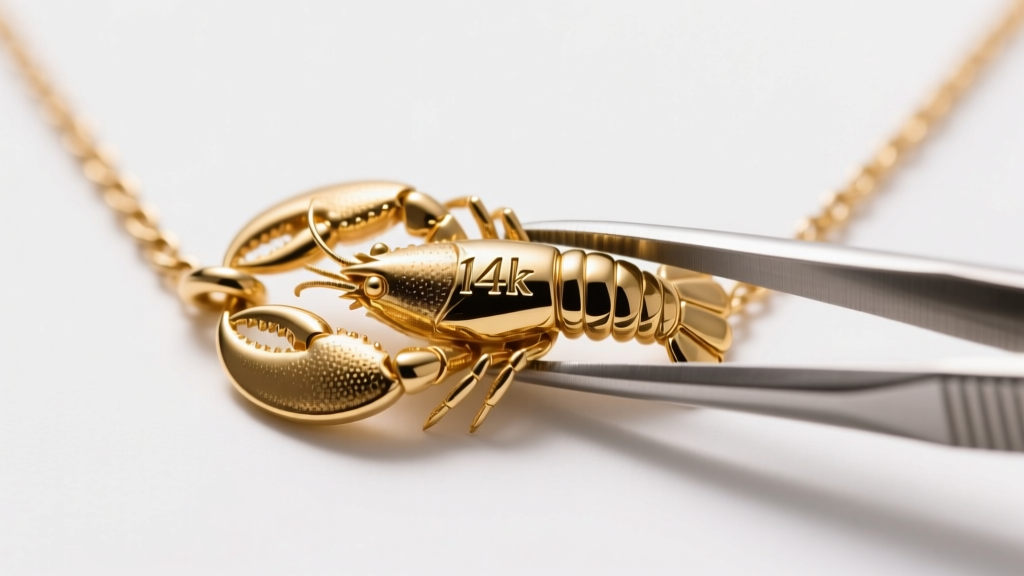
Buying vintage is a popular strategy for acquiring high-quality gold red necklaces below modern retail markups. However, estate jewelry requires rigorous authentication. Follow this three-step inspection protocol before purchasing:
- Locate and Magnify the Hallmark: Use a 10x jeweler's loupe to inspect the clasp and the jump ring. Look for '14k', '585', '18k', or '750'. If you see '14k HGE' (Heavy Gold Electroplate) or '14k GF' (Gold Filled), the chain is not solid gold, and the price should reflect that.
- Inspect the Gemstone Inclusions: Natural rubies and spinels will have internal characteristics. Under magnification, look for 'silk' (intersecting rutile needles) or tiny crystal inclusions. If the stone is completely flawless, or if you see curved striae (curved lines) or gas bubbles, you are looking at synthetic glass or flame-fusion corundum.
- Check the Prong Wear: Red stones set in vintage gold often suffer from prong degradation. Gently run a piece of silk fabric over the pendant. If it snags, the prongs are lifted or worn thin, meaning you will need to budget an additional $75–$150 for a jeweler to re-tip the prongs and secure the stone.
Final Verdict: Where to Allocate Your Budget
If your goal is long-term value retention and daily wearability, avoid gold-plated fashion jewelry entirely. The most financially sound strategy in 2026 is to allocate 70% of your budget to a high-quality, solid 14k gold chain (such as a 1.5mm cable or rope chain) and 30% toward a natural, untreated red spinel or a high-grade rhodolite garnet. This combination guarantees a necklace that will not tarnish, snap, or lose its luster, providing decades of wear while completely sidestepping the inflated premiums of the commercial ruby market.


