How to Choose the Best Metal for an Initial Necklace With Cross
Discover the best metals for your initial necklace with cross. Compare durability, tarnish resistance, and pricing for daily wear in this expert guide.

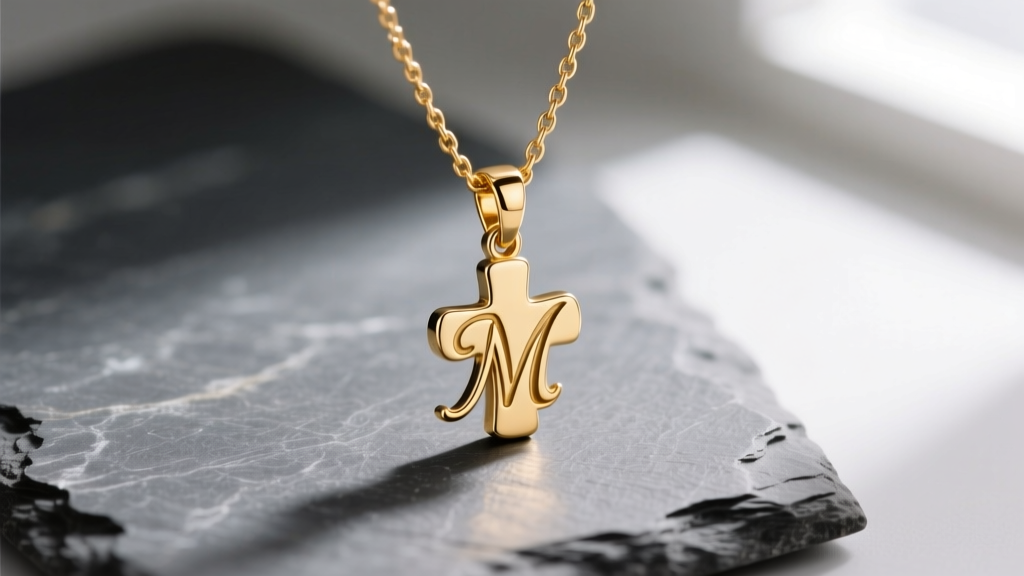
Combining personal identity with spiritual or symbolic meaning has made the initial necklace with cross a staple in modern jewelry layering. Whether you are wearing a single integrated pendant featuring a letter embedded within a cross, or layering two separate pendants on a single chain, the structural demands on the metal are significant. Dual pendants create continuous friction, and the intricate cutouts of initials and crosses trap moisture, lotions, and environmental pollutants.
Choosing the right material is not just about color preference; it is about metallurgical durability, skin chemistry, and long-term wearability. In this comprehensive guide, we break down the exact material properties, chain gauges, and maintenance protocols required to keep your meaningful pendants looking pristine for decades.
The Anatomy and Weight Distribution of Dual Pendants
When you wear an initial necklace with cross pendants, you are introducing dynamic weight to your neckline. Unlike a single solitaire pendant that rests flat against the sternum, two pendants will slide, collide, and overlap. This constant kinetic friction acts like a mild abrasive on the metal surface. If the pendants are integrated into a single die-struck piece, the thin connecting joints between the letter and the cross arms become potential stress fractures if the metal alloy is too soft or the casting is porous.
Understanding how different metals handle this specific type of micro-abrasion and structural stress is critical before making an investment. Below is a comparative breakdown of the most common metals used in personalized faith-based jewelry.
Metal Comparison Chart: Durability & Tarnish Resistance
| Metal Type | Vickers Hardness (HV) | Tarnish Risk | Avg. Price Range | Best For |
|---|---|---|---|---|
| Solid 14k Gold | 140 - 160 HV | None | $350 - $800+ | Daily wear, showering, heirloom longevity |
| Solid 18k Gold | 125 - 140 HV | None | $500 - $1,200+ | Rich color, occasional wear, luxury gifting |
| Argentium Silver | 95 - 110 HV | Very Low | $120 - $250 | Bright white finish, low-maintenance silver |
| Sterling Silver (925) | 60 - 75 HV | High | $60 - $150 | Budget-friendly, requires regular polishing |
| Gold Vermeil | Base: 60-75 HV | Moderate (Wear) | $80 - $180 | Short-term trend wear, dry environments |
| Surgical Stainless Steel | 200 - 250 HV | None | $25 - $60 | High-impact activities, waterproof wear |
Deep Dive: How Specific Metals Perform
Solid 14k and 18k Gold: The Heirloom Standard
According to the Gemological Institute of America (GIA), pure 24k gold is far too soft (around 25 HV) for intricate pendant work. It would easily bend if the cross arm caught on a sweater. Therefore, alloying is essential. Solid 14k gold (58.5% pure gold) is alloyed with metals like copper, silver, and zinc, raising its Vickers hardness to approximately 150 HV. This makes it the ultimate choice for an initial necklace with cross designs, as it resists the scratching caused by the two pendants rubbing together.
18k gold (75% pure gold) offers a richer, warmer yellow hue but is slightly softer. If you opt for 18k gold, ensure the initial and cross are cast with a slightly thicker profile (at least 1.2mm depth) to prevent warping over years of daily wear.
Sterling Silver vs. Argentium Silver
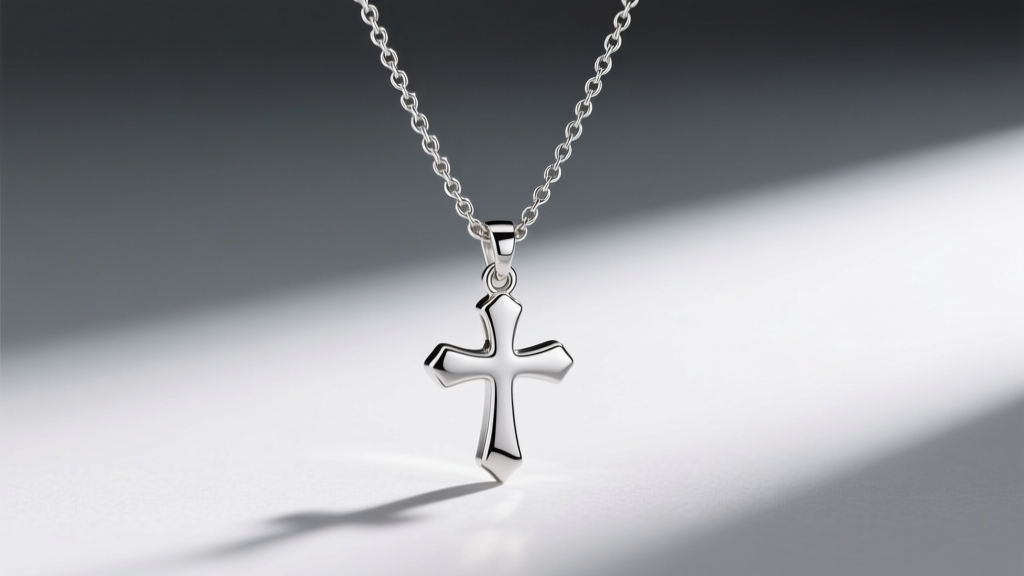
Traditional Sterling Silver (925) is an alloy of 92.5% silver and 7.5% copper. That copper is the culprit behind tarnishing; it reacts with sulfur and moisture in the air (and your sweat) to create black silver sulfide. Because an initial necklace with cross sits close to the pulse points of the neck, it is highly exposed to perspiration.
For a superior alternative, look for Argentium Silver. This modern alloy replaces some of the copper with germanium. The germanium forms a transparent, self-healing oxide layer on the surface that drastically slows down tarnishing. While slightly more expensive, Argentium maintains the bright, white luster of rhodium-plated silver without the risk of the plating eventually wearing off and exposing a yellowish base metal underneath.
Gold Vermeil and the Reality of Friction
The Federal Trade Commission (FTC) mandates that for jewelry to be legally sold as 'vermeil' in the United States, it must feature a sterling silver base coated with at least 2.5 microns of gold. While this is significantly thicker than standard 'gold plated' jewelry (which often measures less than 0.5 microns), vermeil is still a surface treatment.
The primary failure mode for a vermeil initial necklace with cross is edge wear. The sharp corners of the initial letter and the tips of the cross act as high-friction contact points. Over 12 to 18 months of daily wear, these edges will inevitably show the silver base beneath. If you choose vermeil, reserve it for occasional wear or commit to having the piece re-plated by a jeweler every few years.
Skin Chemistry and Metal Reactions
Your body's unique chemistry dictates how well certain metals will perform. Individuals with a highly acidic skin pH (below 5.5) or those who consume diets high in sulfur-rich foods (like garlic, onions, and cruciferous vegetables) will find that 925 sterling silver tarnishes at an accelerated rate. The sulfur is excreted through the pores and instantly reacts with the copper alloy in the silver.
If you have acidic sweat, avoid hollow-back pendants. A solid, flat-back initial and cross will rest flush against the skin, minimizing the pocket of trapped moisture and air that accelerates the oxidation process. For those with severe nickel allergies, ensure your stainless steel jewelry is specifically graded as 316L surgical steel, which binds nickel tightly within the alloy lattice, preventing leaching.
Chain Gauge and Clasp Mechanics for Dual Pendants
The most overlooked aspect of buying an initial necklace with cross is the chain engineering. Dual pendants require specific structural support that standard fashion chains cannot provide.
Optimal Chain Thickness and Link Style
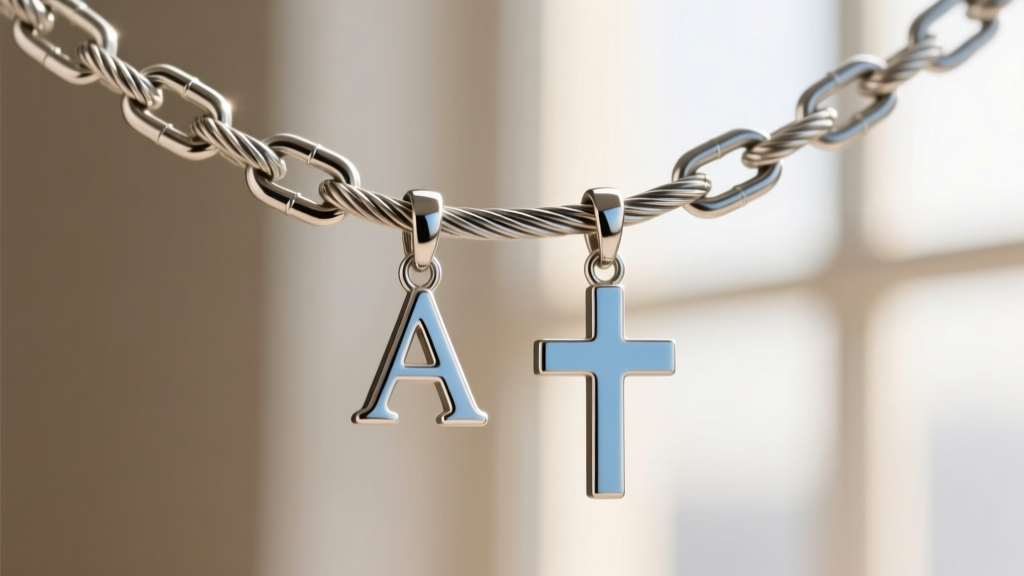
Many mass-market jewelers pair dual pendants with 0.8mm or 0.9mm cable chains to keep costs down. This is a critical error. The combined weight and swinging momentum of two pendants will eventually cause metal fatigue at the jump rings, leading to a snapped chain.
- Ideal Gauge: Opt for a chain thickness between 1.2mm and 1.5mm. This provides the necessary tensile strength to support 4 to 8 grams of pendant weight without looking overly bulky.
- Link Style: Avoid snake chains or herringbone chains. Their rigid, interlocking structures kink easily when bent by the movement of dual pendants. Instead, choose a Rolo chain or a standard Cable chain. These feature independent, freely moving links that absorb kinetic energy and allow the pendants to slide smoothly without twisting the chain.
Jump Ring and Clasp Specifications
The jump rings connecting your initial and cross to the chain must be soldered shut or feature a heavy-duty split mechanism. An open jump ring will easily pull apart under the lateral stress of two pendants swinging. Furthermore, discard the standard 6mm spring ring clasp. The internal spring mechanism is prone to failure and is difficult to operate with one hand. Upgrade to a 5x9mm Lobster Clasp, which features a solid internal lever and a much higher tensile failure point.
Care and Maintenance by Material
Proper maintenance extends the life of your jewelry, but the cleaning method must match the metallurgy of your specific piece.
- Solid Gold & Platinum: These can be safely cleaned in an ultrasonic jewelry cleaner using a mild degreasing solution. The high-frequency waves will dislodge trapped lotions and dead skin from the intricate crevices of the initial lettering.
- Sterling & Argentium Silver: Never use ultrasonic cleaners on oxidized or antiqued silver, as it will strip the deliberate darkening in the engraved grooves. Instead, use a treated microfiber polishing cloth (impregnated with jeweler's rouge) to gently buff the high-polish surfaces.
- Gold Vermeil: Avoid all chemical dips, ultrasonic cleaners, and abrasive polishing cloths. These will strip the 2.5-micron gold layer. Clean vermeil exclusively with warm water, a drop of phosphate-free dish soap, and an ultra-soft baby toothbrush, patting dry immediately with a lint-free cloth.
By understanding the material science and structural requirements of an initial necklace with cross, you can select a piece that not only holds deep personal significance but also withstands the physical realities of daily wear. Prioritize chain integrity, choose your metal based on your skin chemistry, and your personalized pendants will remain a lasting part of your signature style.


