Evaluating Hemp Necklace Patterns: Cost, Value, and Materials
Discover the true cost and value of hemp necklace patterns. Compare DIY material expenses against retail prices and learn to source premium cords.

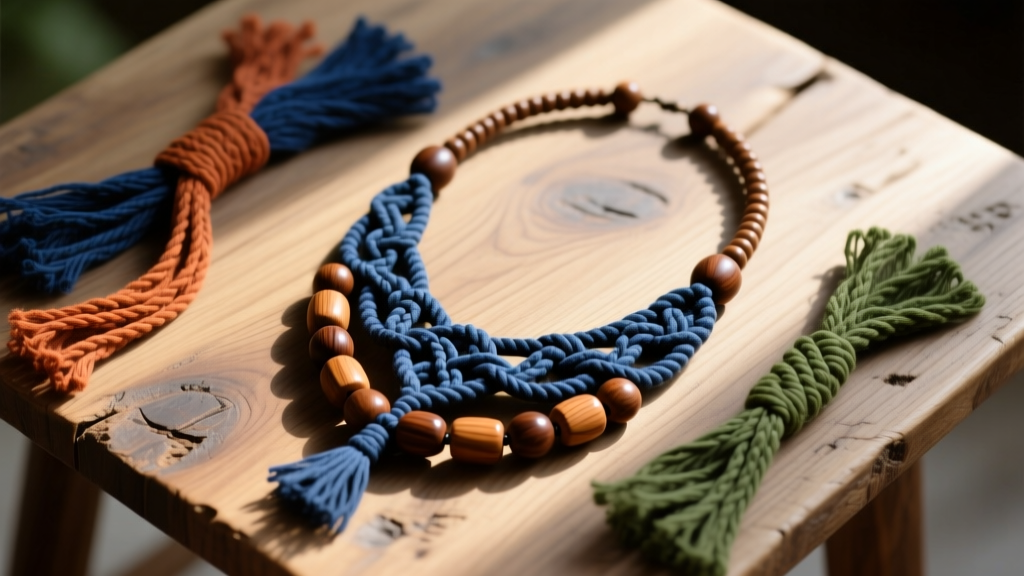
The True Economics of Hemp Jewelry Crafting
When evaluating hemp necklace patterns, the conversation often revolves around aesthetics and nostalgia. However, from a budget and value assessment perspective, hemp jewelry represents one of the highest-margin, lowest-barrier-to-entry crafts in the artisan market. To truly understand the value proposition, we must dissect the material costs, the time investment required for various knotting techniques, and the retail markup potential. Unlike precious metals or gemstones, where material costs dictate the baseline price, the value of a hemp necklace is almost entirely derived from the artisan's time, pattern complexity, and finishing techniques.
Sourcing high-quality hemp cord is the first step in controlling your budget. According to wholesale suppliers like Hemp Traders, purchasing in bulk drastically reduces the cost per yard. A standard 1-pound spool of 1mm 4-ply hemp cord yields approximately 1,000 yards and costs around $22 to $28. Since an average choker-length necklace requires between 4 and 8 yards of cord (depending on the pattern), the base material cost per piece is a mere $0.09 to $0.18. Even when factoring in premium glass beads, wooden toggles, and microcrystalline wax for sealing, the total hard cost for a high-quality DIY hemp necklace rarely exceeds $1.50.
Cost Breakdown: DIY vs. Retail Market
| Component | DIY Cost (Per Necklace) | Retail Equivalent Value |
|---|---|---|
| 1mm 4-Ply Hemp Cord (8 yards) | $0.15 | $5.00 - $8.00 |
| Artisan Glass/Wood Beads | $0.40 - $1.20 | $3.00 - $10.00 |
| Findings (Clasps/Jump Rings) | $0.25 | $2.00 - $4.00 |
| Sealing Wax & Conditioner | $0.10 | Included in Finish |
| Total Hard Cost | $0.90 - $1.70 | $15.00 - $45.00+ |
Analyzing Popular Hemp Necklace Patterns by Time and Value
Not all hemp necklace patterns are created equal when it comes to time investment and perceived retail value. The complexity of the macrame or braiding technique directly correlates to the hourly wage you are effectively paying yourself (or charging a client). Let us break down three distinct pattern tiers and their value assessments.
1. The Basic Square Knot Choker (Beginner)
The alternating square knot is the foundation of hemp jewelry. A standard 16-inch choker using 2mm hemp cord takes approximately 30 to 45 minutes to complete. While the material cost is low, the perceived retail value is also modest, typically capping at $12 to $18 on platforms like Etsy. The value here lies in volume production and market booth sales rather than high-end artisan pricing.
2. The Spiral Stitch Lariat (Intermediate)
By consistently tying half-square knots, the cord naturally twists into a beautiful, rope-like spiral. Lariats require more cord (often 12 to 15 yards) and take 1.5 to 2 hours to complete, especially when integrating wire-wrapped bead cages or sliding macrame closures. These pieces command $25 to $40 retail, offering a much better hourly return for the crafter.
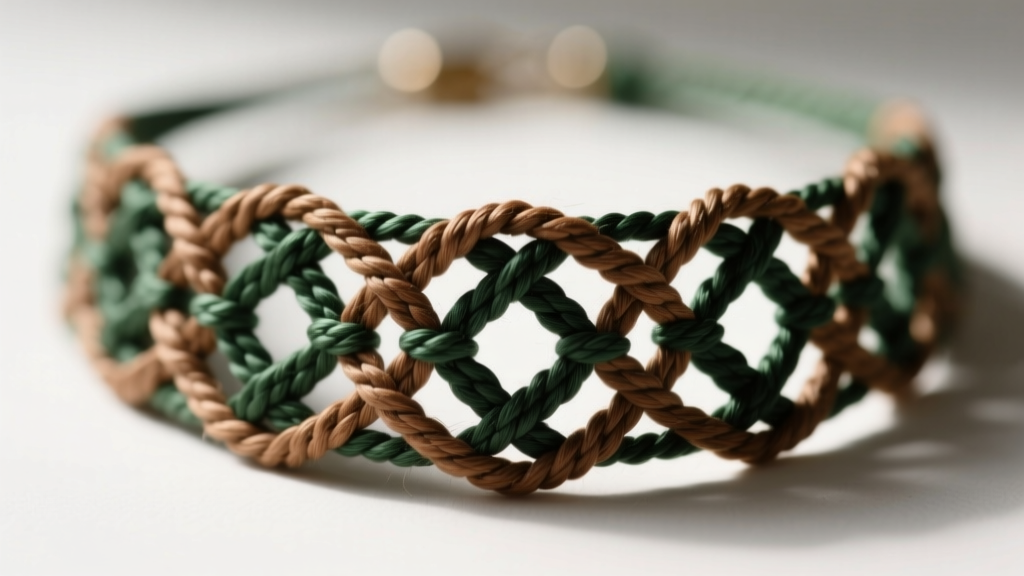
3. Micro-Macrame Diamond & Cavandoli Patterns (Advanced)
Utilizing 1mm or even 0.5mm waxed hemp, advanced crafters employ double half-hitches (Cavandoli macrame) to create intricate geometric diamonds, chevrons, and pictorial designs. These hemp necklace patterns require intense focus, precise tension control, and 4 to 8 hours of labor. Tutorials on platforms like The Spruce Crafts often highlight the steep learning curve of micro-macrame. Because of the sheer time investment and the artisan skill required to maintain uniform tension without warping the piece, these necklaces easily retail for $60 to $120+, positioning them as premium wearable art.
Material Grades: Why Cheap Hemp Ruins the Value
A common mistake that destroys the value of hemp jewelry is using low-grade, loosely spun cord. To assess value properly, you must understand hemp cord grading, specifically ply count and twist direction.
- 1mm 4-Ply: The gold standard for intricate hemp necklace patterns. It consists of four individual strands twisted together. It offers excellent tensile strength (approx. 25 lbs) and allows for tight, defined knots without excessive bulk.
- 1mm 8-Ply: Denser and rounder than 4-ply. It creates very uniform square knots but is stiffer, making complex diamond patterns difficult to execute without hand fatigue.
- 2mm 4-Ply: Best for chunky, bohemian chokers and simple braids. Too thick for detailed micro-macrame, as the knots become overly large and the necklace loses drape.
"The true mark of premium hemp cord is the consistency of its Z-twist or S-twist. Inconsistent spinning leads to 'sloughing,' where outer fibers shed and fray during the knotting process, instantly downgrading a piece from artisan to amateur."
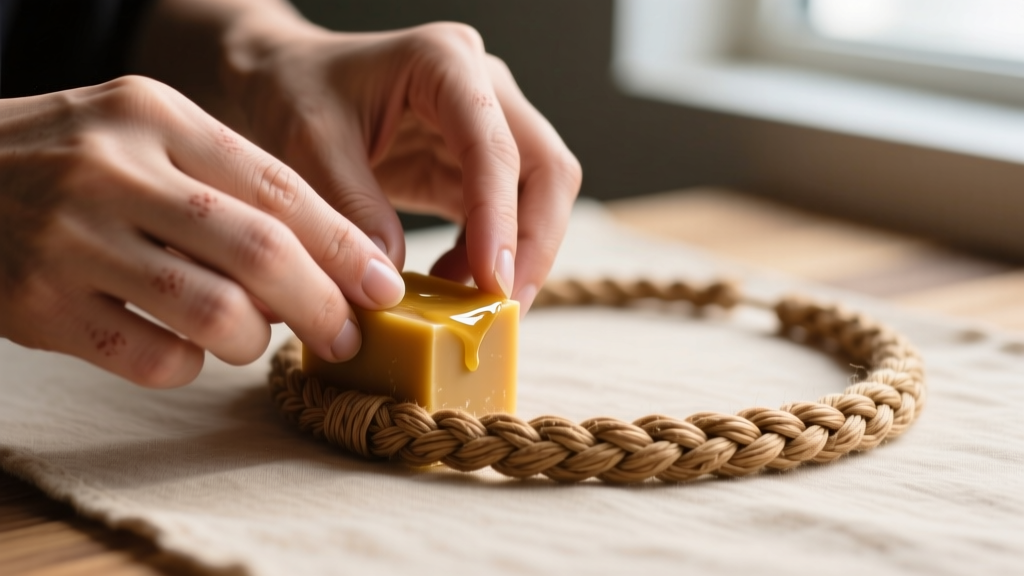
Furthermore, waxed versus unwaxed hemp drastically alters the final value. Waxed hemp is treated with microcrystalline or beeswax, which binds the fibers, prevents fraying, and adds crucial water resistance. Unwaxed hemp, while softer against the skin, absorbs sweat and oils, leading to rapid degradation and a shortened lifespan. For high-value retail pieces, always use waxed cord or apply a finishing wax yourself.
Dye Fastness and UV Degradation Risks
When incorporating colored hemp into your patterns, budget assessment must include the risk of dye failure. Cheap, mass-produced dyed hemp often utilizes low-grade direct dyes that bleed when exposed to moisture or fade rapidly under UV light. If a customer's $40 necklace stains their white shirt the first time they sweat, the brand value is destroyed.
Always source hemp dyed with fiber-reactive dyes, which chemically bond to the cellulose fibers of the hemp. According to textile resources cataloged by Interweave Beading, testing a small swatch of dyed cord in warm, soapy water before committing to a complex 6-hour pattern is a mandatory quality control step that protects your reputation and justifies premium pricing.
Hardware, Finishing, and Maximizing Lifespan
The weakest point of any hemp necklace pattern is the closure. Using standard metal crimp beads on hemp cord is a critical failure point; the soft cellulose fibers will eventually be sheared by the sharp edges of the metal crimp, causing the necklace to snap. To maintain high value and structural integrity, artisans must use specialized finishing techniques.
High-Value Closure Techniques
- The Macrame Sliding Knot: Using a separate, thinner piece of cord to tie a series of square knots over the two ends of the necklace. This requires zero metal hardware, is fully adjustable, and eliminates mechanical failure points.
- Fold-Over Crimps with Adhesive: If a metal lobster clasp is required for the design, use fold-over crimp ends (cord ends) secured with a drop of flexible cyanoacrylate (jewelry glue) or E6000. This distributes the tension across a wider surface area of the hemp.
- Wire Wrapping: Tightly wrapping 24-gauge dead-soft copper or sterling silver wire around the hemp bundle, creating a custom loop. This adds a premium mixed-metal aesthetic while securely anchoring the fibers.
Final Verdict: Is the Investment Worth It?
From a strict budget and value assessment, mastering hemp necklace patterns offers an exceptional return on investment for crafters. The financial barrier to entry is practically nonexistent, yet the ceiling for retail value is surprisingly high when advanced micro-macrame techniques and premium, colorfast materials are utilized. By focusing on structural integrity, avoiding cheap dyed cords, and employing hardware-free sliding closures, you elevate a simple craft into a durable, high-value accessory that commands respect—and premium prices—in the artisan jewelry market.


