Gold Sideway Cross Necklace: A Material & Alloy Guide
Discover the best metals for a gold sideway cross necklace. Compare 10K, 14K, 18K, and gold-filled options for durability, hardness, and style.

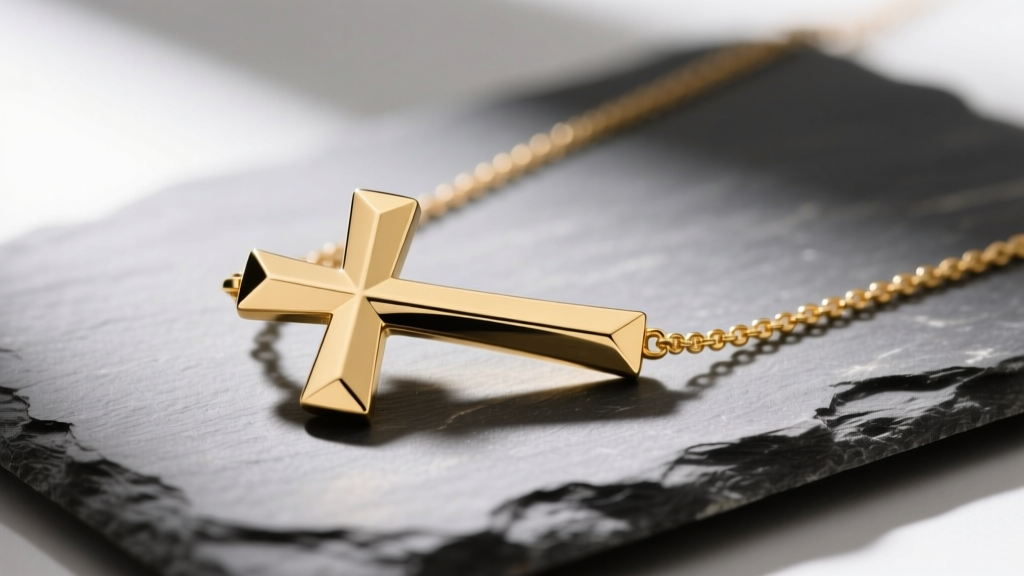
The Structural Mechanics of a Sideways Cross
The sideways cross—often referred to as a horizontal cross necklace—has cemented itself as a staple in modern jewelry layering. However, rotating a traditional vertical pendant 90 degrees fundamentally alters its physics and wear-and-tear profile. When a standard vertical cross hangs, gravity aligns with its longest axis, keeping the bail (the loop connecting the pendant to the chain) under simple, downward tensile stress. A gold sideway cross necklace, conversely, hangs horizontally. This shifts the center of gravity and introduces lateral torque.
Every time the wearer moves, the horizontal bar acts as a lever. If the cross catches on a seatbelt, a knit sweater, or even a scarf, the force is transferred directly to the bail and the solder joints connecting it to the pendant body. Because of this multi-directional stress, the metallurgical properties of the gold alloy used are not just an aesthetic choice; they are a structural necessity. Choosing a metal that is too soft can result in a warped bail ring or a snapped pendant within months of daily wear.
Solid Gold Karats: Hardness and Tensile Strength
Gold purity is measured in karats, but higher purity does not equate to higher durability. Pure 24K gold is exceptionally malleable, boasting a Vickers Hardness (HV) of roughly 25. For a horizontal pendant subject to lateral snagging, 24K is entirely unsuitable. To achieve the necessary tensile strength, gold is alloyed with metals like copper, silver, zinc, and palladium. According to the Gemological Institute of America (GIA), the specific karat weight dictates the pendant's resistance to deformation.
| Karat | Gold Purity | Vickers Hardness (HV) | Durability for Sideways Crosses | Avg. Price Range (1g) |
|---|---|---|---|---|
| 10K | 41.7% | ~160+ HV | Excellent. Highly resistant to bail warping and edge denting. | $40 - $55 |
| 14K | 58.3% | ~140 HV | Optimal. The industry sweet spot for everyday horizontal pendants. | $60 - $80 |
| 18K | 75.0% | ~125 HV | Moderate. Rich color, but prone to scratching and bail stretching. | $85 - $110 |
| 22K | 91.6% | ~70 HV | Poor. Too soft for the lever-action stress of a sideways cross. | $110 - $130 |
Note: Pricing reflects raw material melt value and basic casting costs as of early 2026; finished retail pieces will carry a craftsmanship premium.
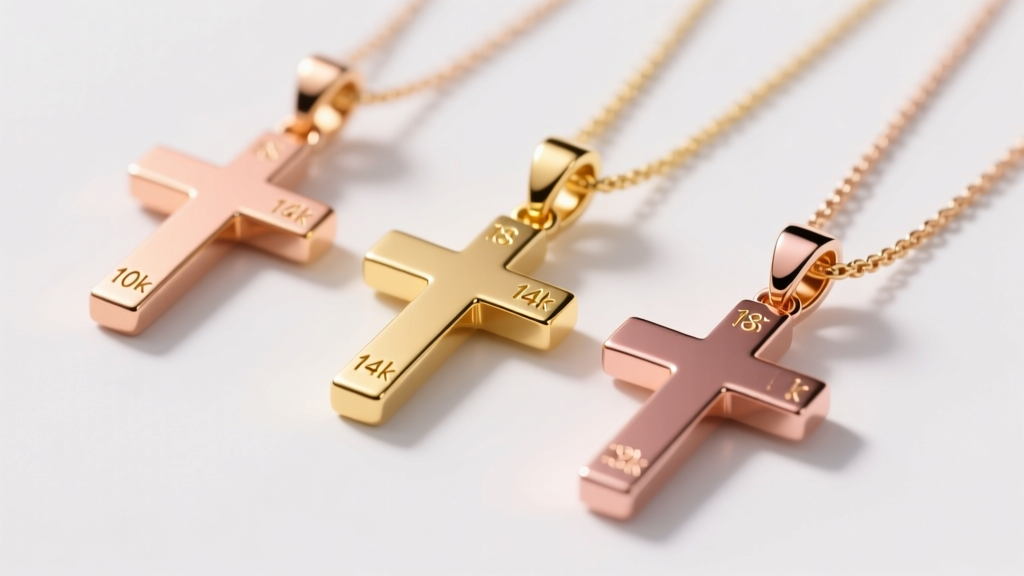
Alloy Compositions: Yellow, White, and Rose Gold
Beyond the karat weight, the specific alloy mixture determines the necklace's color, tarnish resistance, and skin compatibility. The World Gold Council outlines standard alloying practices that directly impact how a sideways cross ages over time.
Yellow Gold
Yellow gold alloys typically blend pure gold with silver, copper, and a touch of zinc. The silver provides a brightening effect, while the copper adds warmth and hardness. For a sideways cross, a higher copper-to-silver ratio in 14K yellow gold increases the Vickers hardness, making the sharp, beveled edges of the cross more resistant to rounding off during polishing.
Rose Gold
Rose gold achieves its signature pink hue through a high copper content (often up to 20-25% in 14K alloys). Copper is a hardening agent, meaning 14K rose gold is often slightly more scratch-resistant than its yellow counterpart. However, the high copper content can cause the metal to oxidize slightly over years of wear, developing a subtle patina that some collectors prize but others may mistake for tarnish.
White Gold
White gold is alloyed with nickel, palladium, or manganese to bleach the yellow hue, and it is almost always plated with rhodium for a bright, mirror-like finish. Failure Mode Alert: On a sideways cross, the horizontal edges experience the most friction against clothing and skin. This friction will wear away the rhodium plating on the edges much faster than on a smooth, round pendant, revealing the slightly yellowish-white alloy beneath. If you choose white gold for a horizontal cross, budget for re-rhodium plating every 12 to 18 months.
Gold-Filled vs. Vermeil: Budget Alternatives and Failure Modes
For those not ready to invest in solid gold, the market offers gold-filled and gold vermeil alternatives. However, the geometry of a sideways cross exposes the weaknesses of these layered metals.
"The sharp, diamond-cut corners of a sideways cross act as micro-abrasion points. Layered metals will fail at these edges first, exposing the core metal long before the flat faces show wear."
- Gold-Filled (1/20 14K GF): Governed by strict Federal Trade Commission (FTC) Jewelry Guides, gold-filled items must contain a gold layer that is at least 5% of the total metal weight, mechanically bonded to a brass core. The gold layer is typically 5 to 10 microns thick. This is highly durable for flat surfaces, but if the sideways cross features deep engraving or sharp diamond-cut bevels, the cutting process can slice through the gold layer, exposing the brass core immediately.
- Gold Vermeil: Vermeil consists of a sterling silver base plated with a minimum of 2.5 microns of gold (usually 14K or 18K). While the precious metal base prevents the "green skin" effect associated with brass cores, sterling silver is relatively soft. If a solid gold sideways cross is dropped on a tile floor, it might bounce; a vermeil cross is highly likely to dent on the horizontal arms due to the soft silver substrate.

Chain Pairing and Bail Stress Management
The material of the pendant must be matched with an appropriate chain to manage the unique physics of the sideways cross. Because the horizontal bar wants to flip or slide laterally, the chain's texture and the bail's design are critical.
The Bail Design
Many sideways crosses feature a "hidden bail" or a horizontal tube bail that runs parallel to the cross's top arm. If the piece is cast in 18K gold, ensure the tube bail has thick walls. Alternatively, some designs use a standard vertical loop soldered to a central ring. Laser welding is preferred over traditional torch soldering for these joints, as it penetrates the alloy deeper without creating a brittle, heat-affected zone that can snap under lateral torque.
Chain Selection
- Box Chains: The flat, interlocking squares of a box chain provide a stable, low-friction surface that prevents the bail from catching and twisting. This is the top recommendation for heavy 14K or 18K sideways crosses.
- Cable or Rolo Chains: While classic, the rounded links can cause the pendant's bail to slide too freely, leading to the cross constantly flipping upside down or sideways.
- Rope Chains: Avoid pairing a horizontal cross with a rope chain. The twisted grooves of the rope chain act like a file against the inside of the gold bail, accelerating wear and thinning the metal over time.
Maintenance and Polishing Protocols
Maintaining the crisp geometry of a gold sideway cross necklace requires specific care. Unlike smooth, organic shapes (like pearls or cabochon settings), the sharp corners and intersecting lines of a cross are easily ruined by improper polishing.
When cleaning your necklace, avoid aggressive ultrasonic cleaners if the cross features diamond-cut accents or pave-set stones, as the high-frequency vibrations can loosen the adhesive or micro-prongs. Instead, use a mild solution of warm water and phosphate-free dish soap, agitating gently with a soft-bristled baby toothbrush to reach the inner corners of the cross.
If the necklace accumulates micro-scratches, resist the urge to use a high-speed rotary polishing wheel with rouge compound. A rotary wheel will naturally round off the sharp 90-degree intersections of the cross, softening its modern, geometric aesthetic. Instead, opt for a professional jeweler who will use hand-polishing techniques with graded abrasive papers to restore the luster while preserving the pendant's architectural lines. By understanding the material science and structural demands of the sideways cross, you can select a piece that remains both visually striking and structurally sound for decades.


