Is the Heart of the Ocean a Real Necklace? Care & History
Discover if the Heart of the Ocean is a real necklace and learn expert cleaning, maintenance, and chain care tips for sapphire and CZ replicas.

Is the Heart of the Ocean a Real Necklace? The Cinematic vs. Gemological Truth
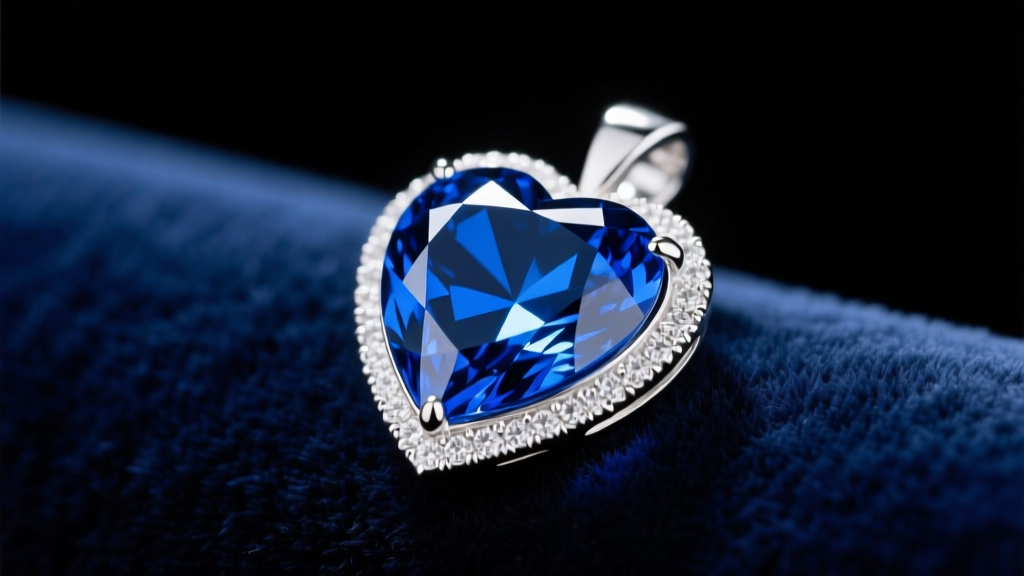
When moviegoers first saw the iconic blue jewel in James Cameron’s 1997 epic Titanic, a universal question emerged: is the heart of the ocean a real necklace? The short answer is both no and yes. The original prop worn by Kate Winslet was a custom creation by the historic London jewelry house Asprey & Garrard, crafted using white gold and a heart-shaped cubic zirconia set in a blue glass-like hue. It was never intended to be a genuine gemstone.
However, following the film's massive success, Harry Winston created a genuine, staggering 130-carat blue sapphire heart necklace surrounded by white diamonds, valued at over $20 million. Celine Dion famously wore this authentic piece during her 1998 Academy Awards performance of 'My Heart Will Go On.' Today, the market is flooded with thousands of replicas ranging from $30 costume pieces to $15,000 high-jewelry sapphire homages. As we navigate the vintage and replica jewelry market in 2026, understanding the exact material composition of your Heart of the Ocean necklace is the absolute first step in proper care and maintenance.
Material Identification: What is Your Replica Made Of?
Before you dip your pendant into any cleaning solution, you must identify the center stone and the metal alloy. The cleaning protocol for a 9-Mohs sapphire will completely destroy a 6.5-Mohs tanzanite or a fragile glass replica. According to the Gemological Institute of America (GIA), gemstone hardness and toughness dictate the mechanical and chemical limits of jewelry care.
| Material | Mohs Hardness | Ultrasonic Safe? | Steam Safe? | Primary Vulnerability |
|---|---|---|---|---|
| Blue Sapphire | 9.0 | Yes (if unfractured) | Yes | Hard knocks causing chipping |
| Cubic Zirconia (CZ) | 8.0 - 8.5 | Yes | Yes | Surface abrasion, grease buildup |
| Tanzanite | 6.5 - 7.0 | NO | NO | Thermal shock, cleavage splitting |
| Blue Glass / Crystal | 5.5 - 6.0 | NO | NO | Scratching, chemical etching |
Cleaning Protocols by Gemstone Type
The Durable Route: Sapphire and Cubic Zirconia
If your necklace features a genuine sapphire or a high-grade CZ, it can withstand modern cleaning technology. Over time, sebum, dead skin cells, and cosmetic lotions accumulate on the pavilion (the underside) of the heart-cut stone, drastically reducing its refractive index and making it look dull and gray.
- The Ultrasonic Method: Use a 40 kHz ultrasonic cleaner filled with warm water and three drops of a mild, non-lotion degreasing dish soap (like original Dawn). Run it for exactly 3 minutes. The high-frequency cavitation bubbles will safely dislodge microscopic debris from beneath the prongs.
- The Manual Method: Soak the pendant in a bowl of warm water and mild dish soap for 15 minutes. Use an extra-soft baby toothbrush to gently sweep the underside of the stone. Rinse with distilled water to prevent hard water spots and dry with a lint-free microfiber cloth.
The Delicate Route: Tanzanite and Glass
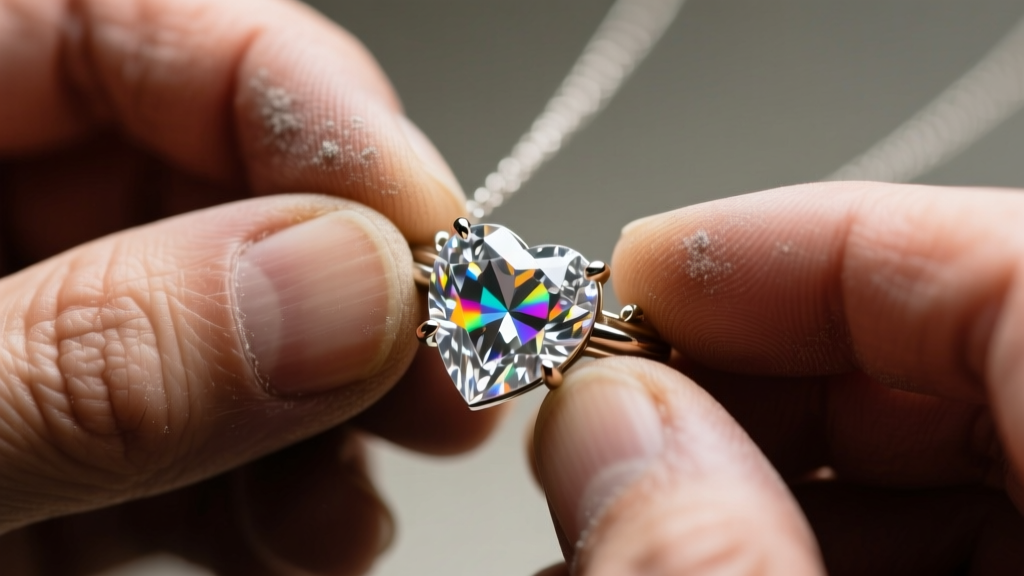
Many mid-tier replicas utilize tanzanite to achieve that deep violet-blue hue, while budget replicas use dyed glass. GIA experts warn that tanzanite has perfect cleavage, meaning it can split along internal planes if subjected to the violent vibrations of an ultrasonic cleaner or the sudden temperature changes of a steam cleaner.
- Safe Cleaning: Mix lukewarm water with a drop of gentle castile soap. Dip a soft, untreated flannel cloth into the solution and gently wipe the face of the stone. Never submerge a glass or tanzanite replica if the setting uses adhesive rather than prongs, as moisture will dissolve the glue and cause the stone to drop out.
Chain and Setting Maintenance for Heavy Pendants
The most common point of failure for Heart of the Ocean replicas is not the gemstone, but the chain and bail mechanics. The cinematic design features a massive, heavy center stone suspended from a relatively delicate chain. This creates a severe mechanical imbalance.
The 'Bail Friction' Phenomenon
The bail is the metal loop that connects the pendant to the chain. When a heavy 30-gram heart pendant hangs on a thin 1.5mm hollow box chain, the weight forces the bail to act like a microscopic saw against the chain's solder points. Every time you move, the bail grinds into the metal links. Over 12 to 18 months of daily wear, this friction will cleanly slice through a hollow silver or white gold chain, resulting in the loss of the pendant.
The Expert Fix: If your pendant exceeds 15 grams, immediately retire the delicate box chain. Upgrade to a 2.5mm or 3.0mm solid wheat chain or a solid rope chain. These structures distribute the tensile load evenly and resist the sawing action of the heavy bail. Furthermore, have a jeweler inspect the bail's interior loop annually; if it is more than 30% worn down, it must be replaced.
Storage and Environmental Hazards
The majority of affordable replicas are cast in 925 sterling silver and plated with a microscopic layer of rhodium (usually 0.75 to 1.0 microns thick) to mimic the bright white luster of platinum or white gold. Once this plating wears off from friction against the skin, the underlying silver is exposed to the environment.
Combating Silver Sulfide Tarnish
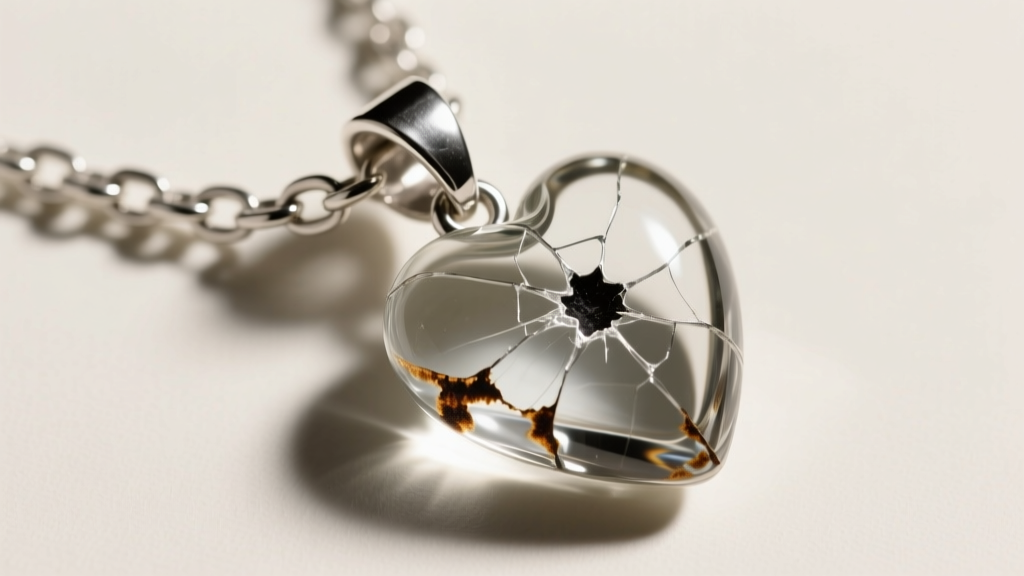
Silver tarnish is not a flaw in the metal; it is a predictable chemical reaction between silver and hydrogen sulfide gas present in the ambient air, accelerated by humidity and the sulfur compounds found in human sweat. When your necklace turns black or yellowish-brown, it requires chemical or electrochemical reversal.
Pro Tip: Never use abrasive silver polishes on rhodium-plated replicas. The mild abrasives (like calcium carbonate) will strip the remaining rhodium plating, leaving you with a dull, easily tarnished silver surface. Instead, use a liquid silver dip specifically formulated for plated jewelry, followed by a thorough distilled water rinse.
For long-term storage, never leave the necklace exposed on a bathroom vanity or dresser. Store it in an airtight polyethylene ziplock bag alongside a 3M anti-tarnish strip. These strips contain activated carbon and silver salts that intercept and neutralize hydrogen sulfide gases before they can reach your jewelry, keeping the metal bright for up to 12 months in storage.
Summary Checklist for Long-Term Preservation
To ensure your Heart of the Ocean replica remains a breathtaking centerpiece for decades, adhere to this maintenance schedule:
- Monthly: Inspect the four to six prongs holding the heart stone. If any prong is lifted or snagging on fabrics, cease wearing it immediately and visit a bench jeweler for a $15-$30 prong re-tipping.
- Bi-Annually: Deep clean the stone using the appropriate method for your specific gem material to restore optical brilliance.
- Annually: Check the chain's clasp spring mechanism and the bail's structural integrity to prevent catastrophic drops.
- Always: Apply perfumes, hairsprays, and lotions before putting on the necklace. The alcohol and aerosol propellants in cosmetics can degrade the reflective backing on glass replicas and cloud the surface of porous gems.
Whether you own a multi-million-dollar sapphire homage or a cherished $50 cubic zirconia movie replica, treating the piece with gemological respect ensures its cinematic magic never fades.


