Is a Gold Snowflake Necklace Worth It? 2026 Value Guide
Discover the true value of a gold snowflake necklace in 2026. Compare solid gold, vermeil, and plated options to find the best budget and investment piece.

The Allure and Economics of Winter Motif Jewelry
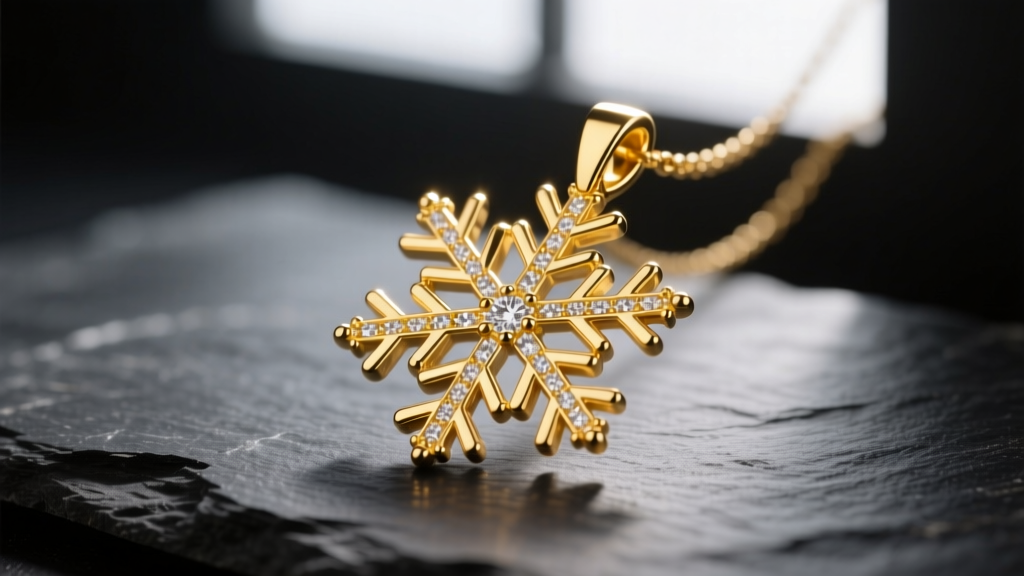
Winter-inspired jewelry remains a perennial staple in fine accessories, but the gold snowflake necklace occupies a unique space between seasonal novelty and timeless elegance. As we navigate the 2026 jewelry market, gold spot prices continue to fluctuate near historic highs, fundamentally shifting how consumers and jewelers approach motif-based pendants. A snowflake design is not just an aesthetic choice; it is a metallurgical challenge. The intricate, symmetrical arms of a snowflake require specific alloy compositions to prevent bending, breaking, or premature wear.
Whether you are considering a delicate 14-karat solid gold piece for daily winter wear or a budget-friendly vermeil alternative for holiday gifting, understanding the true value proposition is critical. This comprehensive assessment breaks down the material science, pricing matrices, and craftsmanship red flags associated with gold snowflake necklaces, ensuring your investment aligns with your budget and longevity expectations.
The Structural Vulnerability of Snowflake Motifs
To assess the value of a gold snowflake necklace, one must first understand the geometry of the pendant. Unlike a solid teardrop or a simple geometric disc, a snowflake features six or more protruding, delicate arms. This structure creates inherent weak points. According to the Gemological Institute of America (GIA), the hardness and tensile strength of gold are entirely dependent on its alloy composition. Pure 24K gold is far too malleable; a 24K snowflake pendant would bend out of shape the moment it snagged on a winter sweater.
Why 14K Gold is the Sweet Spot for Intricate Pendants
For a solid gold snowflake necklace, 14K gold (58.5% pure gold alloyed with metals like copper, silver, and zinc) offers the optimal balance of rich color and structural integrity. The Vickers hardness of 14K gold is significantly higher than that of 18K or 22K gold, allowing jewelers to cast thinner, more intricate crystalline arms without sacrificing durability. If a retailer is marketing an 18K or 22K gold snowflake pendant with razor-thin arms, it is a structural liability, not a premium upgrade.
Material Tiers: What Are You Actually Paying For?
The term 'gold' is heavily regulated, yet frequently misunderstood by consumers. When shopping for a gold snowflake necklace in 2026, you will encounter three primary material tiers. Understanding the distinction between these tiers is the foundation of accurate budget assessment.
Solid Gold (10K, 14K, and 18K)
Solid gold pendants are cast or die-struck entirely from a gold alloy. They hold intrinsic melt value and will never tarnish or wear through to a base metal. A solid 14K gold snowflake pendant (weighing approximately 2.5 to 4 grams) paired with an 18-inch cable chain represents a long-term investment. It can be worn in the shower, in snow, and while swimming without degradation.
Gold Vermeil vs. Standard Gold Plated
The Federal Trade Commission (FTC) strictly defines 'gold vermeil.' To legally carry this label, the pendant must have a sterling silver (.925) base and be plated with a minimum of 2.5 microns of 10K or higher gold. Standard gold-plated jewelry, conversely, often uses a brass or copper base with a microscopic gold layer (usually 0.5 microns or less). The high-friction tips of a snowflake's arms will rapidly wear through standard plating, exposing the reactive brass underneath, which can cause skin discoloration. Vermeil offers a much safer middle ground for budget-conscious buyers.
2026 Pricing Matrix: Gold Snowflake Necklace Tiers
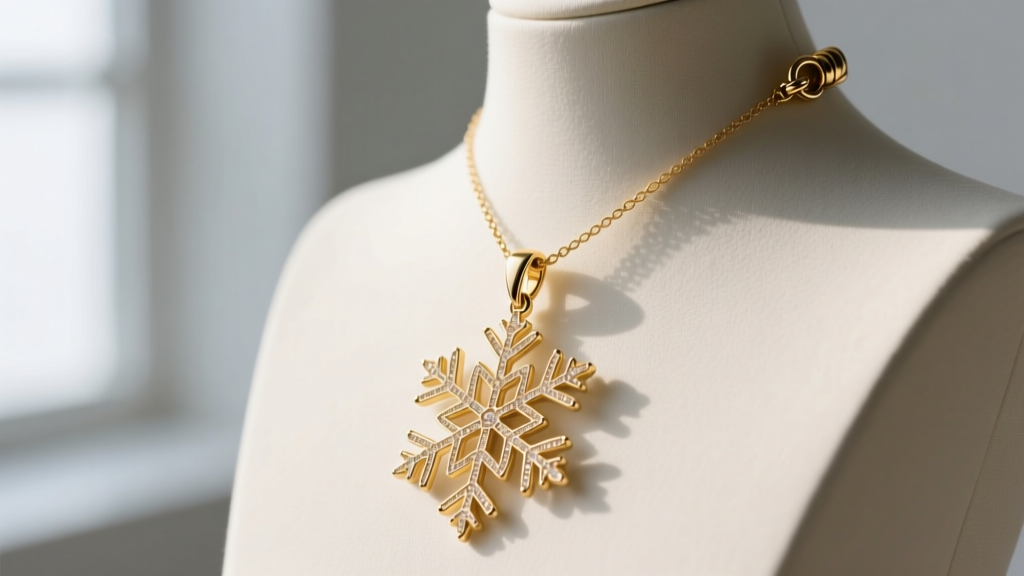
Pricing in the jewelry sector is dictated by raw material costs, manufacturing complexity, and brand markup. The table below outlines the expected retail pricing for a standard 15mm to 20mm gold snowflake pendant with an 18-inch chain in the current 2026 market.
| Material Tier | Base Metal | Gold Thickness / Purity | 2026 Avg. Retail Price | Estimated Lifespan |
|---|---|---|---|---|
| Solid 14K Gold | None (Solid Alloy) | 58.5% Pure Gold | $380 - $650 | Lifetime / Heirloom |
| Solid 18K Gold | None (Solid Alloy) | 75% Pure Gold | $550 - $900 | Lifetime (Prone to bending) |
| Gold Vermeil | Sterling Silver (.925) | 2.5+ Microns (14K/18K) | $85 - $160 | 2 - 5 Years (with care) |
| Standard Gold Plated | Brass / Copper | < 0.5 Microns | $25 - $55 | 3 - 6 Months |
Assessing Craftsmanship and Failure Modes
Beyond the raw materials, the construction of the necklace dictates its true value. A budget-priced solid gold necklace with poor craftsmanship is a worse investment than a well-made vermeil piece. When inspecting a gold snowflake necklace, evaluate the following critical components:
- The Bail Connection: The bail is the loop that connects the snowflake pendant to the chain. In cheaper manufacturing, the bail is simply pinched onto the pendant. Over time, the friction from the chain will wear through the pinched metal, causing you to lose the pendant. Always look for a soldered bail or a jump ring that has been cleanly laser-welded.
- Casting Porosity: Snowflakes require complex molds. If the molten gold cools too quickly or traps gas, microscopic bubbles (porosity) form within the arms. While invisible to the naked eye, porosity severely weakens the structural integrity. Buy from reputable jewelers who use high-quality vacuum casting or die-striking techniques.
- Edge Finishing: Run your fingernail along the edges of the snowflake arms. They should be smooth and slightly rounded. Razor-sharp edges indicate poor finishing and will act like tiny saws, slowly cutting through your necklace chain or snagging on delicate fabrics.
Gemstone Accents: Melee Diamonds vs. Simulants
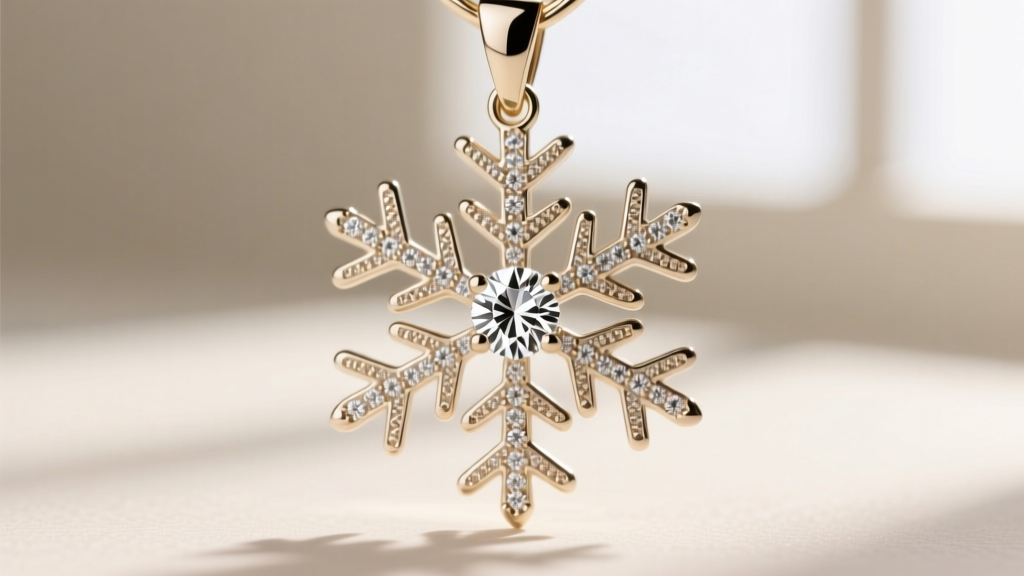
Many premium gold snowflake necklaces feature a center stone or small accent stones on the arms to mimic the icy sparkle of winter. The value assessment changes dramatically based on these accents.
Bezel vs. Prong Settings
For a snowflake motif, a bezel setting (where a rim of gold completely surrounds the gemstone) is vastly superior to a prong setting. Prongs on the delicate arms of a snowflake are prone to catching on hair and winter scarves, eventually pulling back and losing the stone. A bezel-set melee diamond (typically 0.02 to 0.05 carats) adds $75 to $150 to the retail price but ensures the stone remains secure for decades.
Diamond Clarity in Micro-Stones
Do not overpay for high clarity grades in snowflake accent stones. Because the diamonds used in these pendants are usually under 0.10 carats total weight, inclusions are entirely invisible without a 10x jeweler's loupe. A pendant featuring I1 or SI clarity melee diamonds offers the exact same visual brilliance as one with VVS clarity, but at a 30% to 40% lower cost. Savvy buyers should prioritize the cut quality of the accent stones over color and clarity.
Chain Pairings and Clasp Mechanics
The pendant is only half the equation. A common mistake buyers make is pairing a delicate gold snowflake pendant with an overly thick or heavy chain, which overpowers the design and causes the pendant to constantly flip backward. Conversely, a chain that is too thin will snap under the pendulum motion of the pendant.
For a standard 15mm-20mm snowflake pendant weighing under 4 grams, a 1.0mm to 1.2mm box chain or cable chain is the ideal pairing. Box chains offer excellent tensile strength and a flat surface that prevents the pendant bail from wearing a groove into the metal links. Ensure the clasp is a sturdy lobster claw rather than a spring ring; spring rings are notorious for failing in cold weather when the internal metal spring becomes brittle and stiff.
Pro Tip for Winter Wear: If you are wearing a gold vermeil snowflake necklace, apply your perfumes, lotions, and hairsprays before putting the jewelry on. The alcohol and chemicals in cosmetics accelerate the degradation of the 2.5-micron gold layer, particularly on the high-friction tips of the snowflake arms.
Final Verdict: Investment or Impulse Buy?
So, is a gold snowflake necklace worth the investment in 2026? The answer depends entirely on your material choice and intent.
If you are purchasing a solid 14K gold snowflake necklace with a soldered bail and bezel-set accents, you are acquiring a durable, heirloom-quality piece that retains intrinsic metal value and can withstand daily wear. It is a highly worthwhile investment for those who appreciate winter motifs but demand year-round longevity.
If your budget restricts you to the sub-$100 range, a gold vermeil snowflake necklace is an excellent, stylish compromise that offers the look of fine jewelry with a respectable multi-year lifespan, provided you adhere to proper care protocols. Avoid standard gold-plated brass options entirely; the rapid wear on the intricate snowflake arms renders them a poor allocation of even a small budget. By prioritizing structural integrity and verified material standards, you can secure a breathtaking winter pendant that offers genuine, lasting value.


