The Gold Nugget Necklace: Natural vs Cast Technical Guide
Discover the metallurgical and structural differences between natural and cast gold nugget necklaces. Expert sourcing, karat, and chain pairing tips.

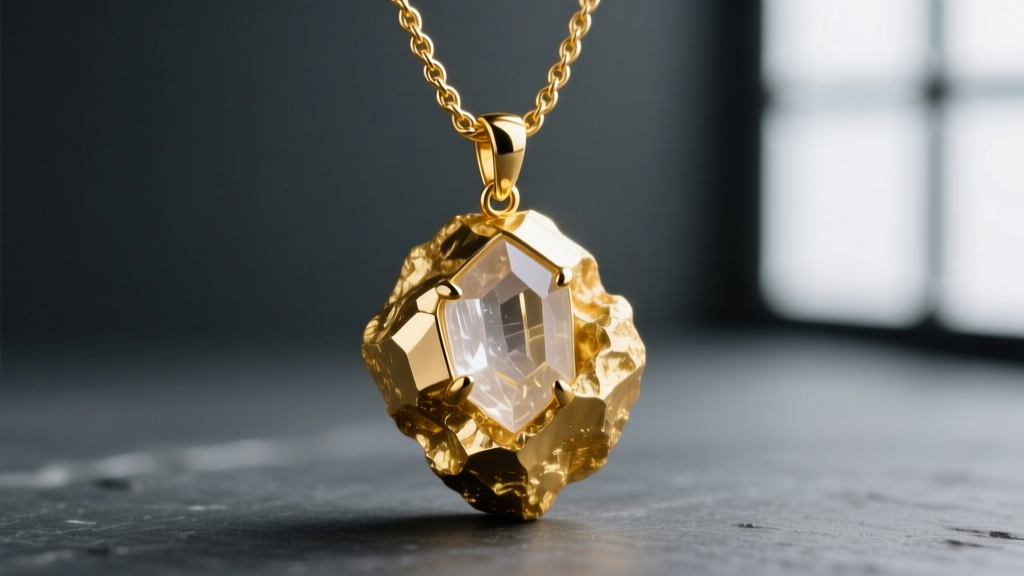
The appeal of a gold nugget necklace lies in its rugged, organic asymmetry—a stark contrast to the precise geometry of modern jewelry. However, beneath the surface of these striking pendants lies a complex web of metallurgy, structural engineering, and market economics. Whether you are evaluating a raw, alluvial placer nugget or a precision-cast replica, understanding the technical specifications is critical for making an informed acquisition. This expert deep dive dissects the material science, chain pairing mechanics, and authentication protocols necessary to navigate the gold nugget market in 2026.
The Metallurgy of Gold Nuggets: Purity and Alloy Composition
Unlike standardized jewelry alloys, natural gold nuggets are geological anomalies. Formed through hydrothermal deposition or alluvial placer processes over millions of years, natural gold is rarely pure 24-karat (99.9% fine). Instead, it naturally alloys with silver, copper, and occasionally bismuth or palladium. According to mineralogical data from Mindat.org, the most common natural gold alloy is electrum, which typically ranges from 18-karat (75% gold) to 22-karat (91.6% gold), with silver making up the majority of the remaining mass.
This natural alloying fundamentally alters the physical properties of the nugget. Higher silver content increases the hardness and lowers the specific gravity of the metal. Pure gold has a specific gravity of 19.3, but a natural electrum nugget might test closer to 16.5 or 17.0. In contrast, cast gold nugget pendants are manufactured using standardized lost-wax casting techniques. These replicas are typically poured in 14-karat (58.5% gold, alloyed with copper and zinc for durability) or 18-karat (75% gold) jewelry alloys. The cast versions possess a uniform crystalline structure and predictable density, lacking the microscopic porosity and internal stress fractures often found in natural, hammer-flattened placer gold.
Natural vs. Cast: Structural Identification Matrix
Distinguishing between a genuine geological specimen and a masterfully cast replica requires looking beyond surface luster. The table below outlines the primary diagnostic metrics used by gemologists and master jewelers to evaluate gold nugget pendants.
| Diagnostic Feature | Natural Placer Nugget | Cast Replica Nugget |
|---|---|---|
| Surface Topography | Smooth, water-worn dimples; lacks sharp crystalline edges unless hydrothermal. | Uniform stippling; may show casting lines or sprue marks if poorly finished. |
| Matrix & Inclusions | Often retains ironstone, quartz, or laterite matrix in deep crevices. | Completely homogenous; no natural mineral inclusions. |
| Specific Gravity | Variable (16.0 - 19.3) depending on silver/copper content and quartz inclusions. | Highly consistent (13.5 for 14k; 15.5 for 18k standard alloys). |
| Internal Structure | Dense, often exhibits folded internal layers visible via X-ray. | Homogeneous; may contain microscopic gas porosity from the casting process. |
| Pricing Basis | Spot melt value + 20% to 150% specimen/rarity premium. | Fixed retail markup over melt value based on labor and brand. |
Chain Pairing Mechanics: Gauges, Bails, and Load Distribution
A gold nugget necklace is inherently top-heavy and asymmetrical. This creates a pendulum effect that places immense dynamic stress on the chain, clasp, and bail. Selecting the wrong chain gauge is the leading cause of catastrophic failure in heavy pendant necklaces.
Calculating Chain Gauge Requirements
As a strict technical rule, the chain's tensile strength must exceed the static weight of the nugget by a factor of at least four to account for dynamic movement. For a standard 15-gram to 25-gram nugget, a delicate 2mm cable or box chain will inevitably suffer link deformation or clasp failure.
- 15g - 30g Nuggets: Require a minimum 3.5mm to 4.5mm solid Rope, Wheat, or Cuban chain.
- 30g - 60g Nuggets: Require a 5.0mm to 7.0mm solid Miami Cuban or tightly woven Wheat chain.
- 60g+ Specimens: Require custom-fabricated heavy-gauge link chains with reinforced, soldered end tabs.
Bail Engineering and Failure Modes
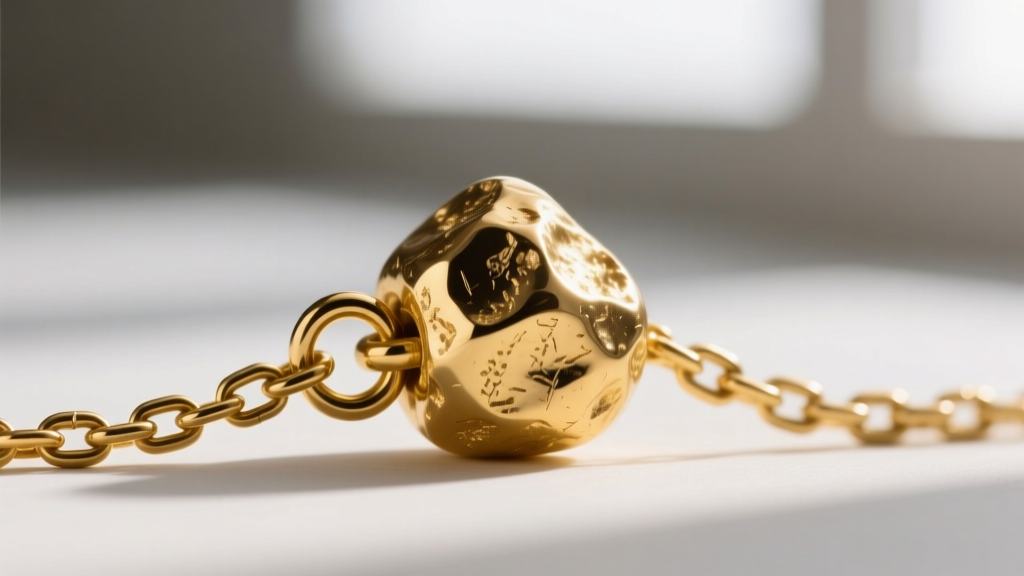
The bail is the critical junction between the organic shape of the nugget and the mechanical links of the chain. Never purchase a heavy nugget pendant featuring a glued or epoxy-set bail. The thermal expansion coefficient of gold differs vastly from that of industrial adhesives; temperature fluctuations will eventually cause the bond to shear.
Instead, insist on a soldered cap bail or a heavy-gauge wire wrap. A proper cap bail is laser-welded or torch-soldered directly to the flattest natural ridge of the nugget using a lower-karat, high-tensile solder (such as 10k or 14k hard solder) to ensure the joint does not melt the surrounding high-karat natural gold. Furthermore, avoid standard lobster clasps for the chain termination. The internal spring mechanism of a lobster clasp is a known failure point under pendulum stress. Opt for a heavy-duty spring ring clasp or a reinforced, soldered-lock lobster clasp paired with a thick, soldered jump ring.
Authentication Protocols and Sourcing Verification
With the price of gold reaching historic highs in 2026, the market has seen an influx of sophisticated cast replicas marketed as 'natural' specimens. Relying solely on visual inspection is no longer sufficient. Professional authentication requires a multi-tiered approach.
"Visual identification is just the first step. To truly verify a natural nugget, we rely on X-ray Fluorescence (XRF) spectrometry to map the exact elemental breakdown, specifically looking for the natural silver-to-gold ratios that indicate alluvial origins, combined with microscopic examination of the quartz matrix interfaces."
— Senior Metallurgical Assayer, Precious Metals Lab
According to testing guidelines outlined by the Gemological Institute of America (GIA), non-destructive XRF testing is the gold standard for surface alloy verification. However, because XRF only penetrates the outer microns of the metal, it must be paired with a specific gravity water displacement test. By weighing the nugget in air and then suspended in distilled water, a jeweler can calculate the exact density. If a piece visually presents as a natural 20k nugget but yields a specific gravity of 13.5, it is definitively a hollowed or tungsten-filled cast replica.
Pricing Frameworks: Melt Value vs. Specimen Premium
Understanding how to price a gold nugget necklace is vital for avoiding retail traps. Cast nugget pendants are priced similarly to standard jewelry: the daily melt value of the gold weight plus a manufacturing and retail markup (typically 30% to 100% over spot).
Natural nuggets, however, operate on a specimen premium model. The baseline is the spot melt value, tracked daily via markets like Kitco. From there, premiums are applied based on:
- Aesthetics and Shape: Symmetrical, highly textured 'butter' or 'ribbon' nuggets command the highest premiums (often 100% to 200% over melt).
- Matrix Presence: Nuggets retaining pristine, sparkling quartz crystals or rare ironstone matrix are valued by mineral collectors, not just jewelers, driving prices exponentially higher.
- Provenance: Documented origins from historically significant claims (e.g., the Klondike, Victorian Goldfields in Australia, or Nome, Alaska) add verifiable numismatic-style premiums.
When acquiring a natural gold nugget necklace, always request the exact gram weight, the XRF karat purity report, and the documented origin. By prioritizing structural integrity in the chain pairing and demanding rigorous metallurgical authentication, you secure not just a striking piece of jewelry, but a tangible, geologically significant asset.


