Gold Tree Necklace Buying Guide: Karats, Chains & Styles
Discover how to choose the perfect gold tree necklace. Our expert buying guide covers karat weights, chain styles, casting quality, and pricing for 2026.

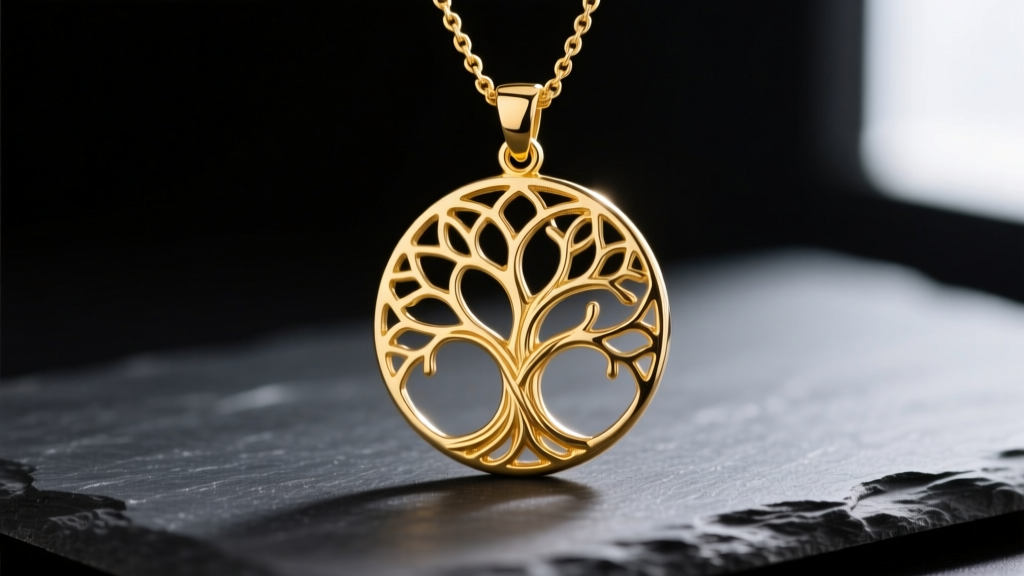
The Enduring Appeal of the Gold Tree Necklace
The tree of life is one of the most universally recognized symbols in jewelry, representing growth, interconnectedness, and resilience. When translated into a gold tree necklace, this ancient motif becomes a versatile staple that bridges the gap between spiritual talisman and everyday fine jewelry. However, the market is flooded with varying qualities of craftsmanship, from flimsy, mass-produced stampings to heirloom-quality castings. As a buyer in 2026, understanding the metallurgy and structural integrity of these pendants is crucial to making a lasting investment.
Decoding Gold Purity: Which Karat is Best for Delicate Branches?
Not all gold is created equal, especially when the design features slender, protruding elements like tree branches and roots. Pure 24K gold is far too malleable for intricate pendants; a simple snag on a sweater could permanently bend the design. Therefore, alloying is necessary.
- 10K Gold (41.7% Pure): The most durable and affordable option. It contains higher amounts of copper, zinc, or silver, giving it excellent tensile strength. Ideal for active wearers, though it has a slightly paler yellow hue.
- 14K Gold (58.5% Pure): The industry standard and the 'sweet spot' for a gold tree necklace. It offers a rich color while maintaining enough rigidity to protect delicate branch cutouts from warping.
- 18K Gold (75% Pure): Prized for its deep, buttery yellow color and hypoallergenic properties. However, 18K is softer. If you choose 18K, opt for a thicker, solid cast rather than a thin, hollow silhouette.
According to the Gemological Institute of America (GIA), the specific alloy metals also dictate the color. For instance, a 14K rose gold tree pendant utilizes a higher copper content, which inadvertently increases the alloy's overall hardness, making it a surprisingly durable choice for fragile branch designs.
Chain Pairing: Matching the Bail and Link Style
A common mistake buyers make is pairing a heavy, solid gold tree pendant with a weak, lightweight chain. The bail (the loop that connects the pendant to the chain) dictates your chain thickness. Most tree pendants feature a standard 3mm to 5mm inner bail diameter.
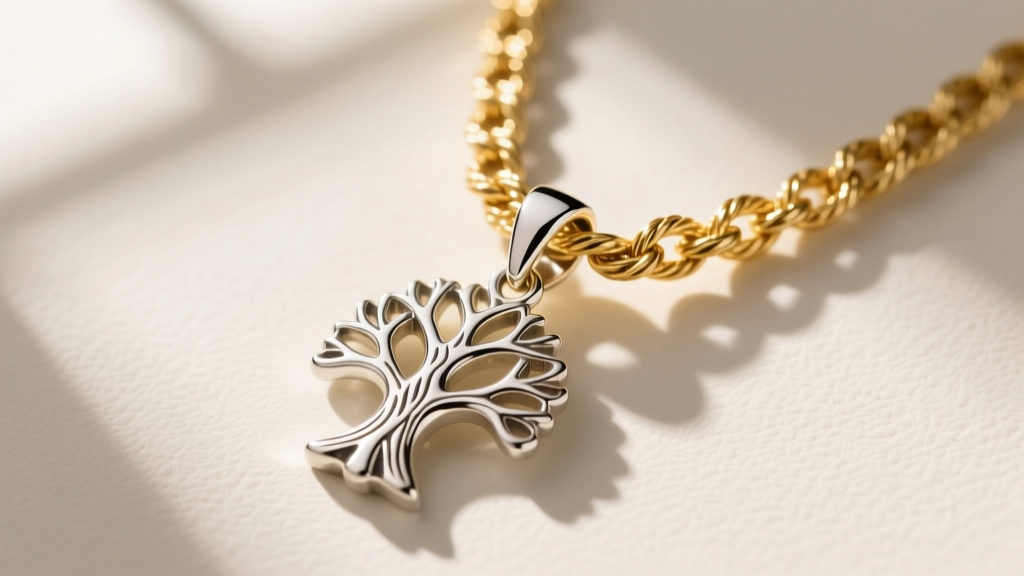
Recommended Chain Types for Tree Pendants
| Chain Style | Best For | Durability & Notes |
|---|---|---|
| Box Chain | Medium to Heavy Pendants | Excellent tensile strength; geometric links resist kinking and lay flat against the collarbone. |
| Rope Chain | Light to Medium Pendants | Highly reflective, but the twisted crevices can trap lotions and oils, requiring frequent ultrasonic cleaning. |
| Cable Chain | Delicate, Minimalist Trees | Classic look, but lower tensile strength. Best reserved for lightweight, laser-cut silhouettes under 2 grams. |
Manufacturing Methods: Cast vs. Die-Struck vs. Laser-Cut
The manufacturing technique drastically affects the texture, weight, and price of your gold tree necklace.
- Lost-Wax Casting: This method is used for 3D, sculptural pendants where branches wrap around a central gemstone (like an agate or mother-of-pearl backing). It allows for organic, rounded textures but can sometimes harbor microscopic porosity if not cast under proper vacuum pressure.
- Die-Striking: Metal is stamped under immense pressure, compressing the gold molecules. This results in a denser, stronger pendant with crisp, polished edges. Die-struck tree silhouettes are highly resistant to denting.
- Laser-Cutting: A flat sheet of gold is precision-cut. While this yields incredibly sharp, modern designs, the edges can sometimes be razor-sharp and snag on knitwear unless properly tumbled and polished by the jeweler.
Gemstone Inlays and Enamel Work
Many gold tree necklaces feature a backdrop of semi-precious stones or enamel to create contrast. Mother-of-pearl is a classic choice, symbolizing the moon and water, nourishing the tree's roots. When buying inlaid pieces, check the bezel setting. The gold should wrap smoothly over the edge of the stone without any gaps or sharp prongs that could catch on fabric. Avoid pieces where the stone is merely glued into a shallow tray, as temperature changes and humidity will eventually compromise the adhesive.
Length and Neckline Pairing
The visual weight of a tree pendant requires careful consideration of chain length. A 16-inch choker length will position the tree high on the collarbone, making it ideal for V-neck blouses and open-collar shirts. An 18-inch princess length allows the pendant to rest just below the clavicle, perfect for crew necks and everyday wear. For larger, heavier statement pieces (over 30mm in diameter), a 20-inch or 24-inch chain allows the necklace to hang over the fabric of a sweater or turtleneck, preventing the bail from rubbing against the collar seam and causing premature wear.
Pricing Guide: What Should You Pay in 2026?
With gold markets experiencing sustained highs, pricing for a gold tree necklace is heavily dependent on the gram weight and the brand's craftsmanship premium. Expect the following retail ranges for authentic, solid gold pieces (excluding heavy gemstone accents):
- 10K Solid Gold (1.5g - 3g): $120 - $250
- 14K Solid Gold (2g - 5g): $250 - $550
- 18K Solid Gold (4g - 8g): $600 - $1,200+
Red Flag Warning: If a pendant is marketed as 'solid gold' but weighs 5 grams and costs under $150, it is likely gold-plated brass or hollow electroformed gold, which will easily crush under pressure.
Verifying Authenticity and Hallmarks
Before finalizing your purchase, inspect the hallmark. According to Jewelers of America, legitimate precious metals must carry a quality mark. On a tree pendant, this is typically stamped on the back of the bail or on the jump ring connecting the pendant to the chain. Look for '10K', '14K', '18K', or their European equivalents ('417', '585', '750'). Additionally, a maker's mark or trademark should accompany the purity stamp to ensure accountability. When buying online, always request a macro photograph of this specific hallmark area before checkout.


