Gold Wing Necklace Troubleshooting: Fixes & Care Guide
Is your gold wing necklace tarnishing or tangling? Discover expert troubleshooting tips, repair fixes, and care routines to restore your favorite pendant.

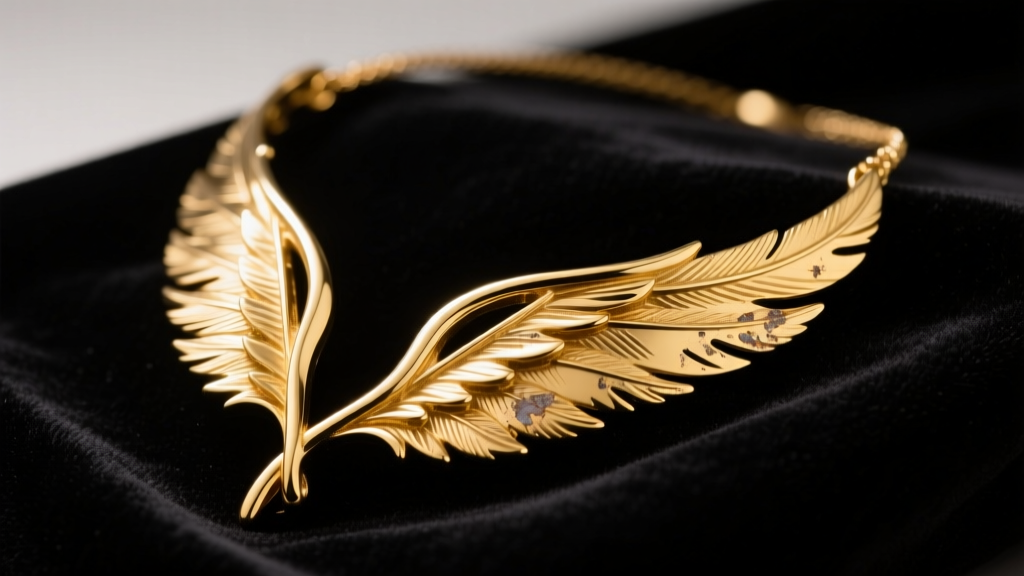
The Unique Structural Vulnerabilities of Wing Pendants
Wing necklaces are notoriously difficult to maintain due to their intricate geometry. Whether you own a delicate angel wing pendant or a bold, solid gold eagle wing, the protruding edges, textured feathers, and uneven weight distribution create unique structural vulnerabilities. Unlike simple geometric pendants, a gold wing necklace features a high surface area with multiple friction points that interact constantly with your chain and clothing. In this troubleshooting guide, we address the most common mechanical and metallurgical failures associated with wing pendants and provide actionable, expert-level solutions to restore and protect your jewelry.
Issue 1: Premature Plating Wear on Feather Edges
The most frequent complaint regarding gold-plated wing pendants is rapid tarnishing and plating loss on the tips of the feathers. This is not necessarily a defect, but a result of physics. The edges of a wing pendant experience the highest rate of friction against the skin and clothing. If your necklace is made of brass with 'flash plating' (typically less than 0.5 microns of gold), the edges will wear through to the base metal within weeks, exposing copper or zinc alloys that oxidize and turn green or black.
Understanding Gold Thickness and Base Metals
According to the Gemological Institute of America (GIA), gold plating durability is measured in microns. To solve premature wear, you must first identify your necklace's material grade. If you are purchasing a replacement or looking to have a worn piece restored, use the framework below to make informed decisions.
| Material Grade | Gold Thickness | Base Metal | Lifespan & Repairability |
|---|---|---|---|
| Flash Plated | < 0.5 microns | Brass / Copper | 1-3 months; difficult to polish without stripping |
| Gold Vermeil | Min. 2.5 microns | Sterling Silver | 1-3 years; can be professionally replated |
| PVD Gold Coating | Variable (molecular) | Stainless Steel | 5+ years; cannot be traditionally replated |
| Solid 14k / 18k | N/A (Solid) | Gold Alloy | Lifetime; can be polished indefinitely |
The Fix: If your vermeil or plated wing necklace is showing brass or silver on the feather tips, do not use abrasive jewelry dips. These chemicals will strip the remaining gold. Instead, take the piece to a professional jeweler for a 'hard gold' electroplating service, which uses a higher voltage to deposit a denser, more wear-resistant layer of gold on the high-friction edges.
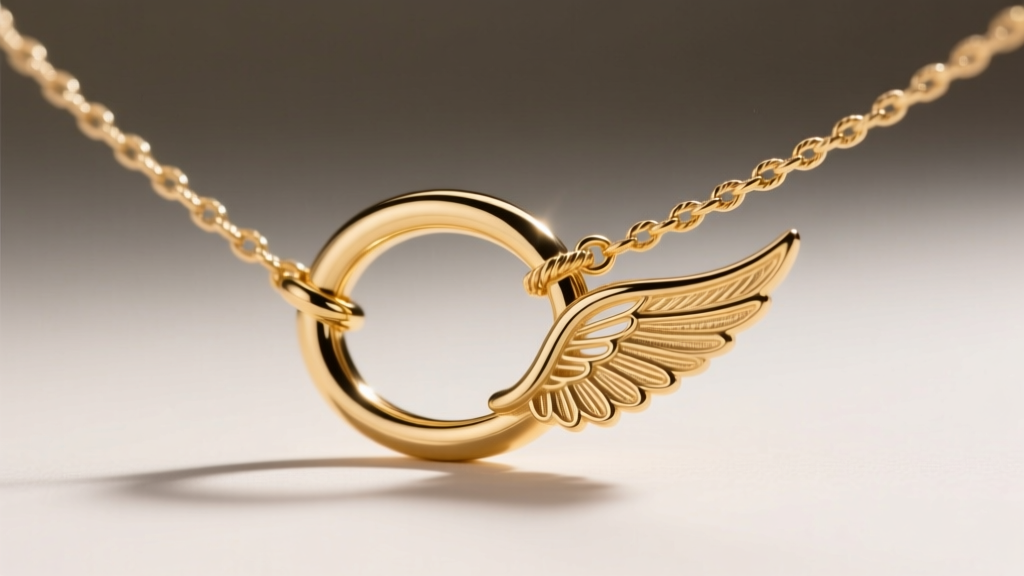
Issue 2: Pendant Flipping and Chain Tangling
Wing pendants have a wide horizontal profile and an off-center center of gravity. This geometry causes the pendant to flip upside down or sideways during wear. When this happens, the intricate feather details catch on the links of the chain, leading to severe tangling and, eventually, chain breakage. This issue is particularly prevalent when pairing wing pendants with box chains or herringbone chains, which have flat, interlocking links that act like tiny hooks.
Upgrading the Bail and Chain Profile
The bail (the loop connecting the pendant to the chain) is the pivot point. A standard 4mm cylindrical bail on a box chain creates a rigid hinge that forces the wing to flip. To solve this, you need to introduce rotational fluidity.
- Switch to a Rounded Chain: Rope chains or bead chains allow the bail to slide and rotate smoothly without catching on the links.
- Install an Oversized Oval Bail: An oval bail measuring at least 8mm x 5mm gives the pendant room to shift naturally without binding against the chain links.
- The Silicone O-Ring Trick: For a cheap, immediate fix, thread a tiny, 1mm clear silicone o-ring through the bail before attaching the chain. This reduces metal-on-metal friction and prevents the pendant from violently flipping and snagging.
Issue 3: Bail Friction and Chain Stretching
Solid gold is dense. A moderately sized solid 14k gold wing pendant can easily weigh between 5 and 9 grams. When suspended on a delicate 0.9mm cable chain, the concentrated weight of the pendant acts as a pendulum, pulling and stretching the circular links into ovals. Once a chain stretches, it loses its structural integrity and becomes highly susceptible to snapping.
The Fix: Match the chain gauge to the pendant's weight. For a solid gold wing necklace weighing over 4 grams, you must upgrade to a chain with a minimum thickness of 1.2mm. Curb chains and wheat chains are structurally superior for heavy pendants because their interlocking, flattened links distribute the tensile stress across a wider surface area, preventing the bail from pulling individual links apart.
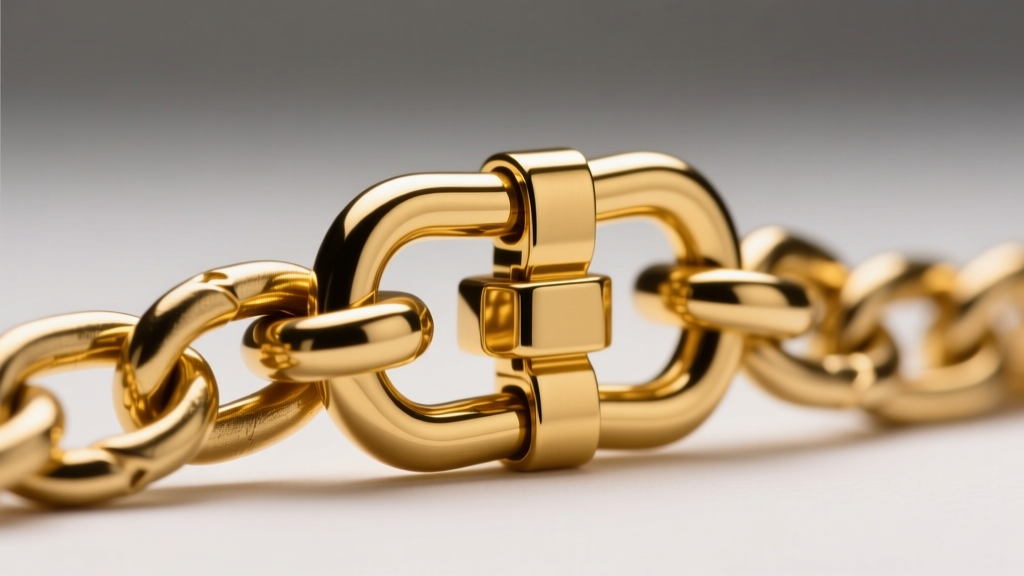
Issue 4: Clasp Slippage and Jump Ring Failure
Because wing pendants are heavy and prone to catching on sweaters or scarves, they place sudden, sharp lateral stress on the clasp. A standard 5x9mm lobster clasp paired with an unsoldered jump ring is a recipe for loss. The sharp tug of a caught wing will easily pull the jump ring open, allowing the necklace to slide off.
Securing the Clasp Assembly
According to Jewelers of America, proper clasp maintenance is critical for heavy pendants. To troubleshoot this vulnerability, implement the following hardware upgrades:
- Solder the Jump Ring: Ask your jeweler to solder the jump ring that connects the lobster clasp to the chain. This eliminates the weak point where the ring can be pulled open.
- Upgrade the Clasp Size: Replace standard clasps with a heavy-duty 10x14mm or 12x16mm lobster clasp. The larger internal spring mechanism provides significantly higher tension and grip strength.
- Consider a Fold-Over Clasp: For chains over 2mm thick supporting massive wing pendants, a fold-over clasp or a secure box clasp with a safety figure-eight latch provides the ultimate protection against accidental release.
Issue 5: Pave Stone Loss on Textured Wings
Many premium gold wing necklaces feature diamond or cubic zirconia pave settings along the ridges of the feathers. The tips of the wings are highly susceptible to impact. When a wing tip bumps against a desk or a doorframe, the standard round prongs used in pave settings can easily bend or shear, resulting in lost stones.
The Fix: If you are having a wing pendant custom-made or repaired, request 'V-prongs' for the stones located at the extreme tips and outer edges of the wings. V-prongs wrap around the sharp corners of the gemstone, providing a protective metal shield that absorbs impact and drastically reduces the risk of stone loss.
Preventative Maintenance Checklist
To ensure your gold wing necklace remains structurally sound and visually brilliant, incorporate these specific maintenance habits into your routine:
- Bi-Annual Bail Inspection: Check the inside of the bail every six months. If you see a deep groove forming from chain friction, have a jeweler add a protective metal sleeve or re-tube the bail before it snaps.
- Ultrasonic Caution: Never clean pave-set wing necklaces in an ultrasonic cleaner. The high-frequency vibrations can loosen the adhesive and prongs holding the tiny stones in the feather details. Use a soft-bristled brush and mild dish soap instead.
- Proper Storage: Store the necklace flat in a velvet-lined box with the pendant facing up. Hanging a heavy wing necklace on a standard jewelry tree will cause gravity to slowly stretch the chain links over time.
By understanding the unique mechanical stresses that wing pendants endure, you can proactively address weak points in the chain, clasp, and plating. A well-engineered gold wing necklace is a timeless statement piece, and with these targeted troubleshooting techniques, it will remain a secure and brilliant part of your collection for decades.


