Grandma Necklace Gold: Karat Alloys & Heirloom Durability
Discover the metallurgy behind a vintage grandma necklace gold piece. Compare karat alloys, chain failure modes, and heirloom durability.

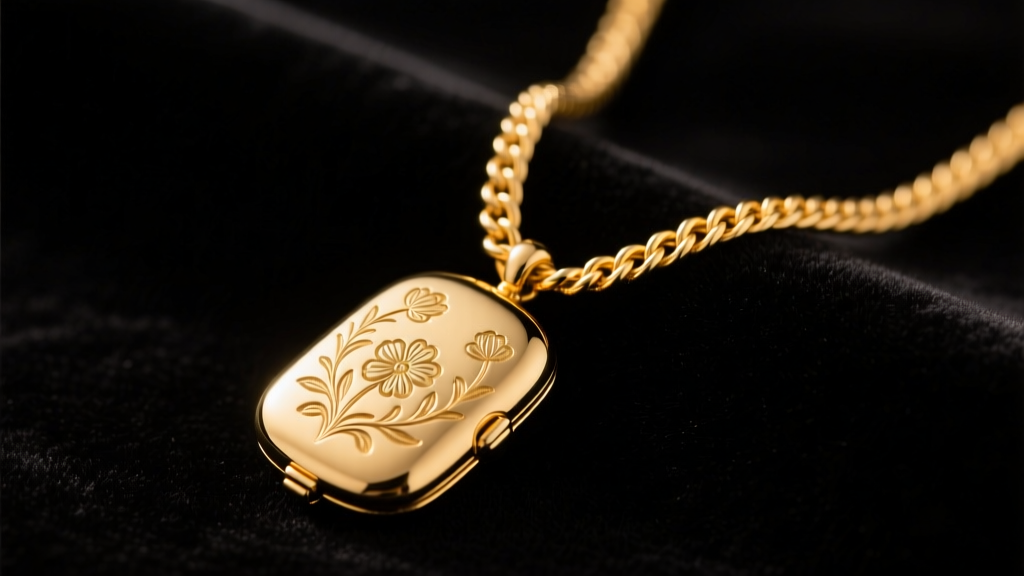
The phrase grandma necklace gold evokes images of heavy, sentimental chains passed down through generations. Whether it is a mid-century rope chain, a classic figaro, or a delicate herringbone piece suspending a glass locket, these heirloom necklaces are prized not just for their emotional value, but for their remarkable physical endurance. Unlike contemporary fast-fashion jewelry, vintage gold necklaces were engineered with specific metallurgical properties that allow them to survive decades of daily wear. To understand why a true heirloom piece outlasts modern alternatives, we must examine the material science of gold alloys, chain structural integrity, and the hidden environmental hazards that threaten vintage jewelry.
The Metallurgy of Heirloom Gold: Karats Explained
Pure 24-karat gold is virtually indestructible in terms of tarnish resistance, but it is far too soft (with a Vickers hardness of roughly 25 HV) to be fashioned into a durable chain. If a 24k gold rope chain were worn daily, the links would stretch, deform, and eventually pull apart under the mere weight of a pendant. Therefore, legacy jewelry relies on alloying—mixing pure gold with metals like copper, silver, zinc, and sometimes palladium—to increase tensile strength and hardness.
14K vs. 18K: The Vintage Sweet Spot
When evaluating a vintage grandma necklace gold piece, you will predominantly encounter two purities:
- 14K Gold (58.3% pure gold): The undisputed champion of American vintage chains. With a Vickers hardness of approximately 150 HV, 14k gold offers the perfect balance of rich color, scratch resistance, and tensile strength. The higher copper and zinc content provides structural rigidity, making it ideal for complex weaves like the rope or cobra chain.
- 18K Gold (75.0% pure gold): More common in European and high-end vintage pieces. While it boasts a deeper, more saturated yellow hue, its lower hardness (around 125 HV) makes it more susceptible to surface abrasion and link deformation over time.
According to the Gemological Institute of America (GIA), the specific ratio of copper to silver in the remaining alloy percentage dictates not only the hardness but also the final color, resulting in variations like warm rose gold or pale green-gold seen in antique pieces.
Solid Gold vs. Modern Alternatives: A Material Breakdown
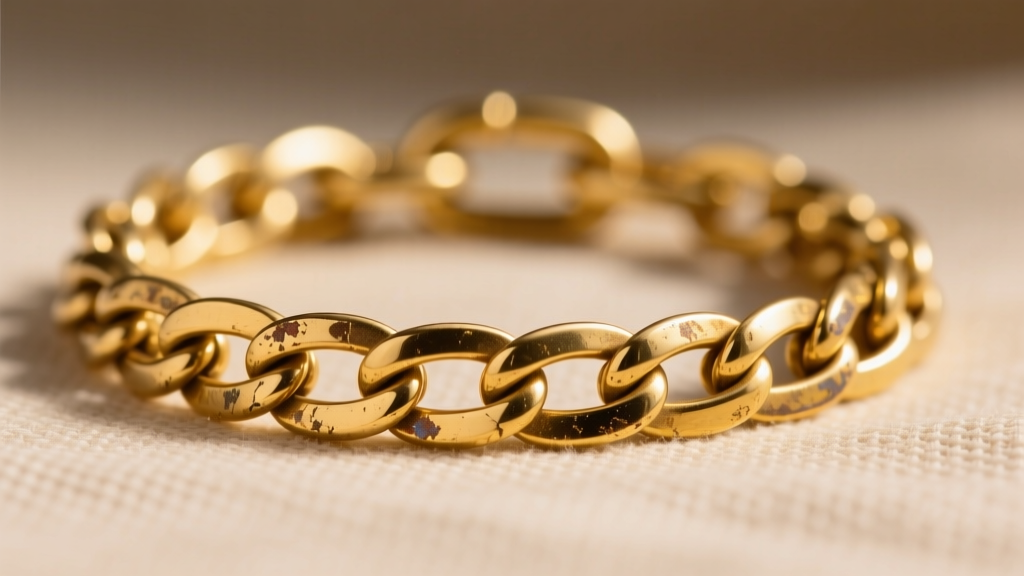
Many modern necklaces attempt to replicate the look of heirloom gold using surface treatments. However, from a materials engineering perspective, these alternatives lack the structural homogeneity required for multi-generational survival. Below is a comparison of material properties and expected lifespans.
| Material Type | Gold Content | Base Metal Core | Vickers Hardness (HV) | Expected Lifespan |
|---|---|---|---|---|
| Solid 14K Gold | 58.3% | N/A (Homogeneous) | ~150 HV | Generations (100+ years) |
| Solid 18K Gold | 75.0% | N/A (Homogeneous) | ~125 HV | Generations (100+ years) |
| Gold-Filled (1/20 14K) | 5% by weight | Jeweler's Brass | ~110 HV (Surface) | 20-30 years (with care) |
| Gold Vermeil | 2.5 microns min. | Sterling Silver | ~65 HV (Core) | 5-10 years |
| Gold Plated | 0.5 microns | Brass or Copper | Variable | 1-3 years |
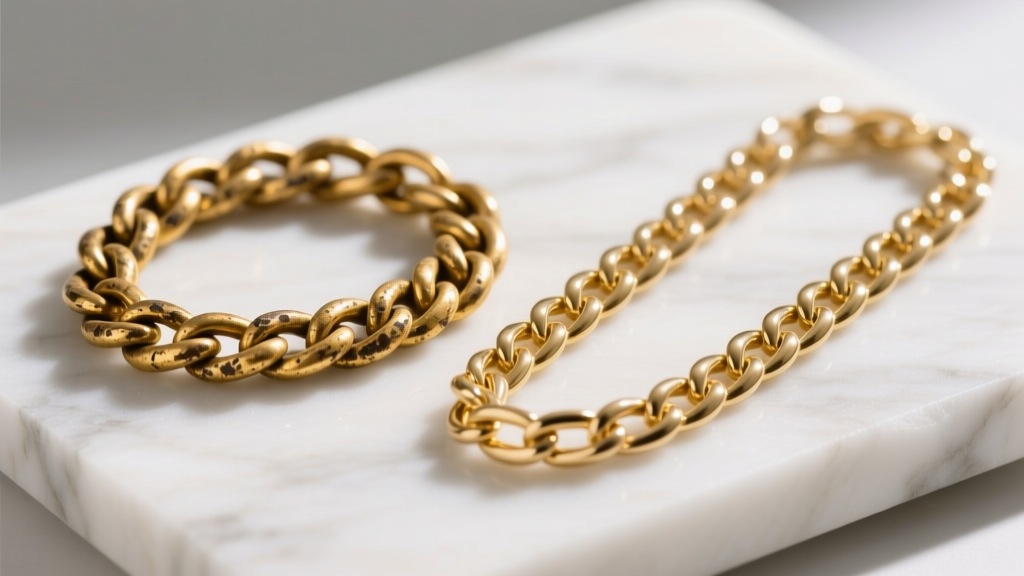
The Federal Trade Commission (FTC) strictly regulates these terms. For a piece to be legally stamped "Gold-Filled," the gold layer must constitute at least 1/20th of the item's total weight and be mechanically bonded to the core via heat and pressure, not merely electroplated. While a high-quality gold-filled chain can mimic a vintage piece for a few decades, once the outer layer wears through at the friction points of the links, the brass core will oxidize and fail.
Chain Styles and Structural Failure Modes
The longevity of a grandma necklace gold chain is dictated as much by its mechanical weave as by its alloy. Different chain styles distribute kinetic stress and tensile loads in vastly different ways, leading to unique failure modes.
The Herringbone Chain: A Fragile Classic
Herringbone chains are beloved for their fluid, liquid-like drape and flat profile, which reflects light beautifully. However, they are notorious for a specific failure mode: kinking. Because the flat, slanted links are laid side-by-side rather than interlocked, bending the chain against its natural plane permanently warps the links. Once a herringbone chain kinks, the structural integrity of that section is compromised, and it will eventually snap under tension.
The Rope Chain: Torsion and Snagging
Rope chains mimic the twist of a nautical rope, offering incredible visual depth. Their interlocking links provide high tensile strength, making them excellent for holding heavy pendants. However, their failure mode lies in snagging. If a single link catches on a piece of clothing and is pulled, the torsion stress can cause the laser-welded seams of older vintage chains to unravel sequentially.
The Curb and Figaro: Indestructible Interlocks
Flat-link chains like the curb and its patterned cousin, the figaro, are the most structurally sound vintage chains available. The links interlock in a single plane and lay flat against the clavicle. This geometry distributes pulling forces evenly across multiple links simultaneously, making them highly resistant to snapping, kinking, or stretching.
The Hidden Enemy: Stress Corrosion Cracking
One of the most vital pieces of knowledge for preserving an heirloom gold necklace is understanding Stress Corrosion Cracking (SCC). Many owners mistakenly believe that because gold is a noble metal, it is impervious to household chemicals. While pure 24k gold is immune, the alloy metals in 14k and 18k gold (specifically copper and zinc) are highly reactive to halogens.
Expert Warning: Never wear a vintage karat gold necklace in a chlorinated swimming pool or while cleaning with bleach. Chlorine reacts with the copper and zinc alloys to form brittle metal chlorides. When combined with the natural tensile stress of the chain links, this causes microscopic cracks that will result in sudden, catastrophic chain failure.
If a vintage chain has been exposed to chlorine, it should be immediately rinsed in distilled water and inspected by a jeweler, who may need to anneal the metal with a jeweler's torch to relieve internal stresses and restore the crystalline structure of the alloy.
Verifying Authenticity: Hallmarks and Acid Testing
When sourcing a vintage piece, do not rely solely on a magnetic test (as gold is non-magnetic, but so are many base metals like copper and aluminum). Instead, look for precise hallmarks. In the United States, you will typically see "14K" or "18K" alongside a maker's mark. European pieces will carry millesimal fineness stamps: 585 for 14k, 750 for 18k, or 375 for 9k gold (common in British vintage jewelry).
For definitive verification, professional jewelers use X-ray Fluorescence (XRF) spectrometry, which bombards the metal with X-rays to read the exact elemental emission spectrum, providing a non-destructive, precise breakdown of the gold, copper, silver, and zinc percentages without damaging the patina of the heirloom piece.
Preserving the Patina
Finally, resist the urge to aggressively polish a vintage gold necklace. The soft, muted luster—a natural patina developed over decades of wear and microscopic surface oxidation of the alloy metals—is a hallmark of its authenticity and history. Clean your heirloom chains using only warm water, a few drops of mild, phosphate-free dish soap, and a soft-bristled baby toothbrush to remove sebum and cosmetic buildup without stripping the metal's historical character.


