How to Untangle Necklaces: A Material Properties Guide
Learn how to untangle necklaces using material science. Discover specific techniques, lubricants, and tools for gold, silver, silk, and steel chains.

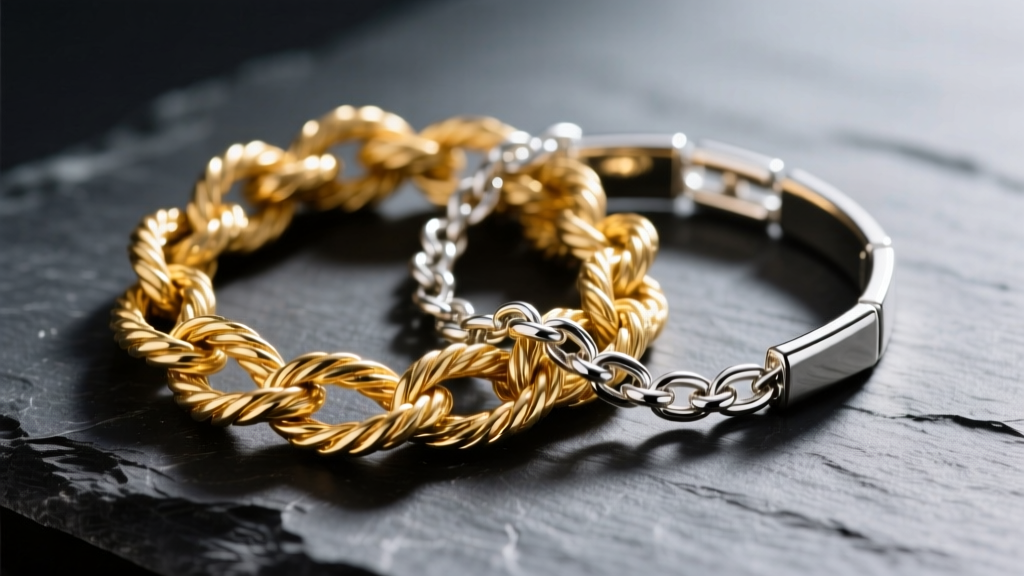
The Physics of Jewelry Knots: Why Materials Matter
When learning how to untangle necklaces, most generic guides suggest simply applying baby oil and pulling at the links with pins. However, treating every necklace knot identically is a fast track to stretched links, snapped cords, and permanent metallurgical damage. A knot is fundamentally a physics problem governed by friction coefficients, material stiffness, and structural memory. By understanding the specific material properties of your jewelry, you can reverse the mechanical binding without compromising the integrity of the piece.
The primary culprit in chain tangling is the coefficient of friction (CoF). Polished platinum has an exceptionally low CoF, allowing links to slide past one another, whereas oxidized or tarnished sterling silver creates microscopic abrasion points that lock links together. Furthermore, the geometry of the chain weave—such as the flat surfaces of a box chain versus the interlocking spirals of a rope chain—dictates how kinetic energy translates into a knot. According to the Gemological Institute of America (GIA), understanding the baseline hardness and ductility of precious metals is critical before applying any mechanical force to a tangled piece.
Material-Specific Untangling Techniques
Different metals and organic materials react to stress, lubrication, and manipulation in vastly different ways. Here is how to approach the most common necklace materials.
High-Friction Metals: Sterling Silver & Oxidized Gold
Sterling silver (92.5% silver, 7.5% copper) is highly susceptible to tarnishing. Silver sulfide buildup acts like microscopic sandpaper, drastically increasing the CoF between links. Never force a silver knot. First, use a specialized silver polishing cloth to remove surface oxidation from the knot area. Once the tarnish is removed, the links will glide more freely. For 14k and 18k gold, the primary risk is work hardening. Gold is highly ductile; repeatedly bending a link back and forth to free a knot will cause the crystalline structure to stiffen and eventually snap. Use a push-and-lift motion rather than a bending motion.
High-Memory Metals: Platinum & Stainless Steel
Platinum and surgical stainless steel possess high tensile strength and structural memory. They resist bending, but when they do tangle, the knots are often incredibly tight due to the stiffness of the wire. Because these metals won't easily stretch, you can apply slightly more lateral pressure. However, their stiffness means they can act like tiny springs, suddenly releasing and cutting your fingers or scratching adjacent gems. Always work on a soft, high-friction surface like a neoprene mat to absorb kinetic release.
Organic & Porous Cords: Silk, Leather, & Cotton
Organic cords require an entirely different paradigm. Silk threads possess microscopic scales that interlock when compressed—exactly like Velcro. Applying oil to a silk cord will permanently stain the fibers and attract dirt, turning a simple knot into a hardened, greasy lump. Instead, use dry lubricants. Leather cords, conversely, lose their natural tanning oils over time, becoming brittle. Forcing a knot in a dry leather cord will cause micro-fractures that lead to snapping. Leather must be conditioned with a micro-drop of mink oil before manipulation.
The Lubrication Matrix: Matching Solvents to Materials
Choosing the wrong lubricant can destroy porous gemstones or ruin organic fibers. Use this matrix to select the correct friction-reducer based on your necklace's material composition.
| Material Type | Recommended Lubricant | Why It Works | Materials to Avoid |
|---|---|---|---|
| Gold / Platinum / Steel | Mineral Oil (Baby Oil) | High viscosity, safe for most closed-back settings, easily washed with dish soap. | WD-40 (leaves corrosive residue) |
| Sterling Silver | Graphite Powder or Polishing Cloth | Dry lubrication prevents trapping moisture which accelerates future tarnishing. | Heavy oils (traps sulfur compounds) |
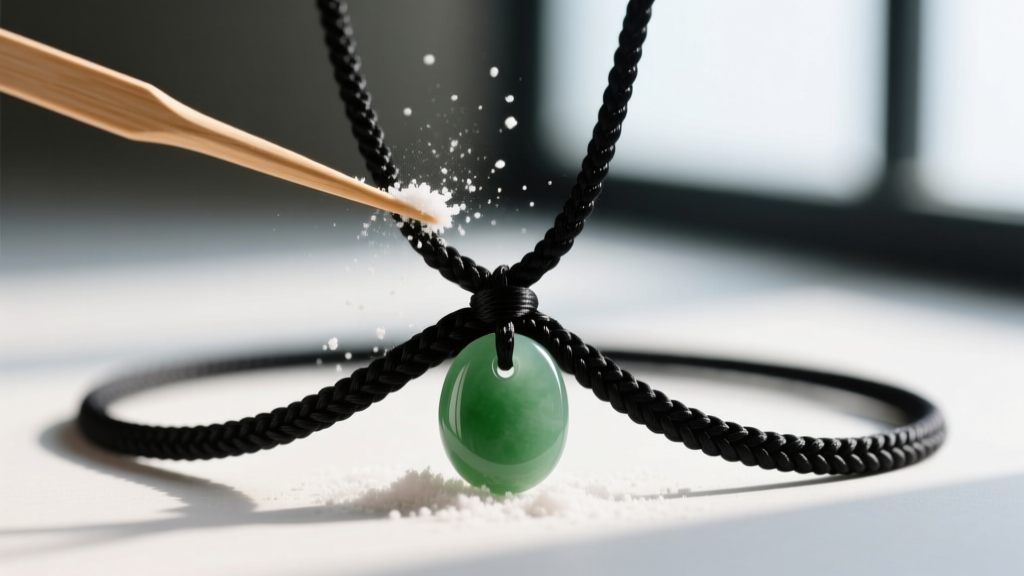
| Silk & Cotton Cords | Food-Grade Cornstarch / Talc | Coats fibers to reduce micro-scale friction without staining or degrading protein fibers. | Any liquid oil or water |
| Leather Cords | Mink Oil or Leather Conditioner | Restores lipid flexibility to the hide, preventing micro-cracking under tension. | Silicone sprays (dries out leather) |
| Porous Gems (Opal, Pearl, Turquoise) | Distilled Water (Mist) | Provides temporary slip without risking chemical absorption into the gemstone matrix. | All oils and chemical solvents |
Tool Selection by Gauge and Hardness
The tools you use must be scaled to the gauge of the chain links. Using a tool that is too thick will wedge the links further apart, tightening the core of the knot. According to Rio Grande Jewelry Supply, understanding wire gauge is essential for bench work.
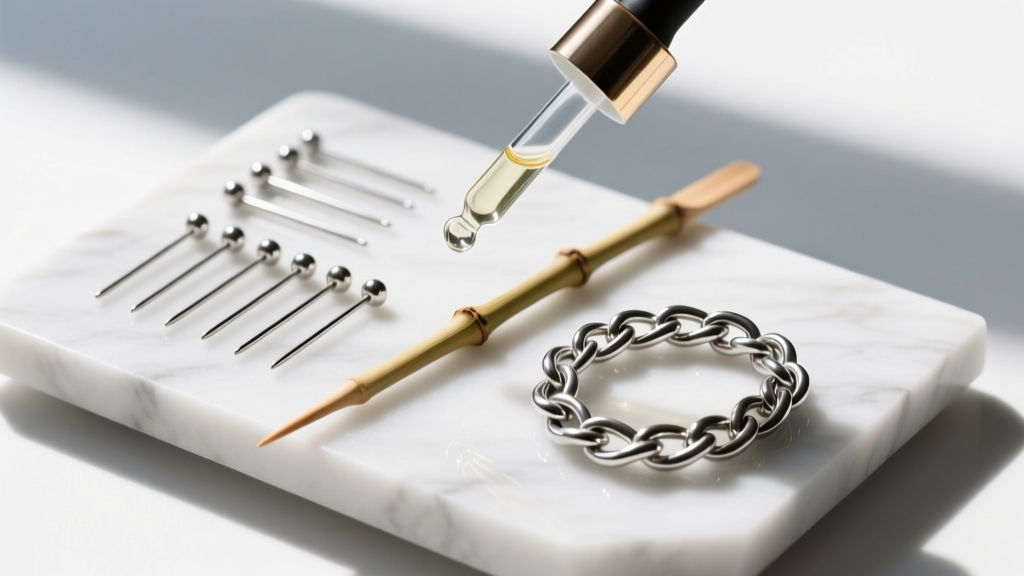
- Standard T-Pins (0.46mm gauge): Ideal for medium to heavy chains (1.5mm to 3.0mm thickness). The stiff steel shaft allows you to push through the center of a knot and pry outward without the pin bending.
- Bamboo Skewers (Sanded to 0.3mm): Essential for soft metals like high-karat gold (22k/24k) or delicate silver filigree. The bamboo is softer than the metal, meaning if you slip, you will not scratch the precious alloy.
- Needle-Nose Tweezers (Fine Point): Never use tweezers to pull a knot tight. Use them only to hold the outer boundary of the knot stationary while you work the center with a pin.
- Optical Magnification: A 10x jeweler's loupe or a digital macro-lens attachment for your smartphone is crucial. You must visually identify the "core" link—the single link that is wrapped by all others—and target that specific link for extraction.
Chain Weave Geometry: Why Some Tangle Worse
The physical shape of the chain dictates its tangling propensity. Snake chains are notorious for knotting because their smooth, continuous cylindrical surface creates a suction effect against the skin and other links, while the micro-joints catch easily when bent backward. Box chains, with their flat, 90-degree surfaces, tend to fold onto themselves in rigid, geometric knots that are tight but predictable. Rope chains tangle in chaotic, multi-axis spirals. When untangling a rope chain, you must rotate the chain along its natural twist axis; pulling against the twist will lock the spiral tighter.
Preventative Storage Based on Material Stiffness
Prevention is ultimately rooted in material science. The Jewelers of America emphasizes that proper storage mitigates environmental and mechanical wear.
Highly flexible chains (like snake or herringbone) possess low structural memory and will conform to any shape they are stored in, leading to permanent kinks and tangles. These must be stored completely flat or hung vertically under their own weight to maintain alignment. Stiffer chains (like cable or curb links) can be coiled, but should be fastened at the clasp to prevent the free end from migrating through the links. For organic cords, storing them in a climate-controlled environment with 40-50% humidity prevents the fibers from becoming brittle or swelling, which alters their friction profile and invites knotting.
Final Thoughts on Material Integrity
Mastering how to untangle necklaces is less about brute force and more about applied physics and chemistry. By matching your lubrication, tools, and manipulation techniques to the specific Vickers hardness, friction coefficient, and structural geometry of your jewelry, you can rescue even the most severely mangled chains. Always prioritize the preservation of the metal's crystalline structure and the integrity of organic fibers over speed. When in doubt, or when dealing with antique pieces with compromised solder joints, consult a professional bench jeweler who can utilize microscopic welding and ultrasonic vibration to free the knot safely.


