The Perfect Great Grandmother Necklace: 2026 Gift Guide
Discover the perfect great grandmother necklace in our 2026 gift guide. Explore arthritis-friendly clasps, sentimental pendants, and safe metals.

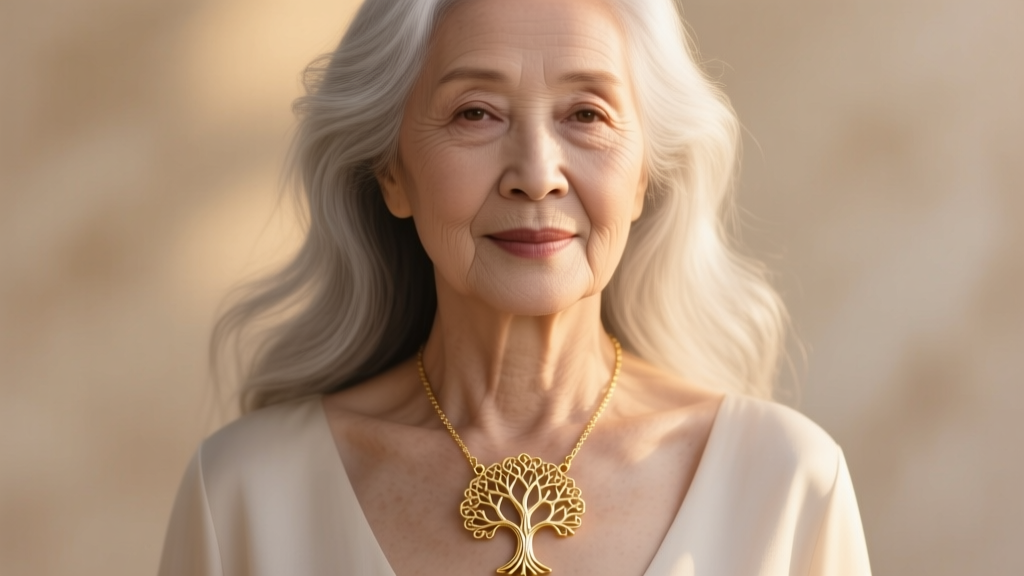
Finding the ideal jewelry gift for a four-generation matriarch is a profound honor. When shopping for a great grandmother necklace, you are not merely selecting a beautiful accessory; you are choosing a wearable heirloom that must balance deep sentimental value with the practical realities of aging. In 2026, the jewelry market offers more adaptive and customizable options than ever before, yet many buyers still overlook the crucial ergonomic and dermatological factors that dictate whether a necklace will be worn daily or left in a drawer.
This comprehensive guide bridges the gap between emotional resonance and functional design, ensuring your gift is both deeply meaningful and physically comfortable for a woman in her 80s, 90s, or beyond.
The Dexterity Factor: Rethinking the Clasp
The most common reason elderly women stop wearing their favorite necklaces is clasp failure—not mechanical failure, but the inability to operate it. According to the Arthritis Foundation, fine motor skill degradation and conditions like osteoarthritis make manipulating small jewelry components incredibly frustrating.
A standard 9mm lobster clasp is virtually unusable for someone with limited pinch strength. When commissioning or purchasing a necklace for a great-grandmother, you must upgrade the closure mechanism.
Comparing Adaptive Clasp Mechanisms
| Clasp Type | Best For | Required Specs for Seniors | Drawbacks |
|---|---|---|---|
| Magnetic (Neodymium) | Severe arthritis, limited mobility | N52 grade magnets, 10mm+ width, ribbed grip texture | Can catch on fine knits; not for heavy pendants |
| Oversized Lobster | Mild stiffness, traditionalists | 15mm to 20mm lever with an extended pull-tab | Still requires some pinch-and-pull coordination |
| Toggle (T-Bar) | Thicker chains, statement pieces | Minimum 20mm bar and a 15mm ring opening | Can slip out if the chain is too long or lightweight |
| Slip-Over (No Clasp) | Maximum independence, ease of use | Continuous 26-inch to 30-inch rope or bead chain | Limits pendant weight; must fit over the head comfortably |
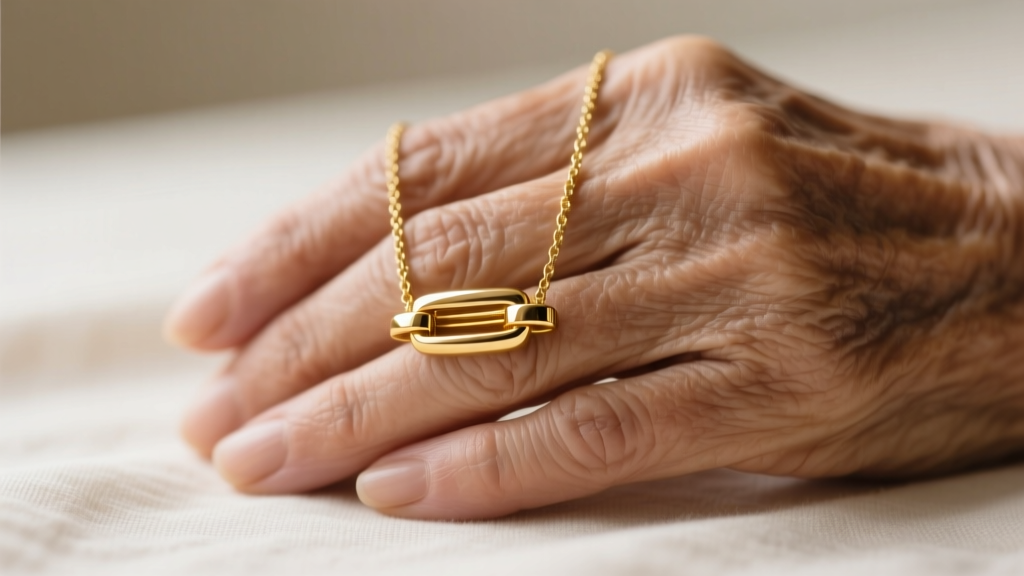
Sentimental Pendants: Celebrating Four Generations
The emotional core of a great grandmother necklace lies in its ability to represent a sprawling lineage. However, the physical execution of "family" jewelry often results in cluttered, heavy, or poorly proportioned pendants. Here is how to execute the two most popular sentimental styles with expert precision.
The Multi-Birthstone Family Tree
When incorporating the birthstones of children, grandchildren, and great-grandchildren, the pendant can quickly become overwhelming. For a family of 10 or more, avoid clustering tiny 1mm stones in a chaotic scatter. Instead, opt for a station-style horizontal bar or a structured tree silhouette where stones are prong-set in the branches.
Expert Tip: If the family includes more than eight members, transition from natural gemstones to high-quality lab-created sapphires or cubic zirconia. This drastically reduces the pendant's physical weight while maintaining vibrant color, preventing the necklace from pulling uncomfortably on the delicate skin of the neck.
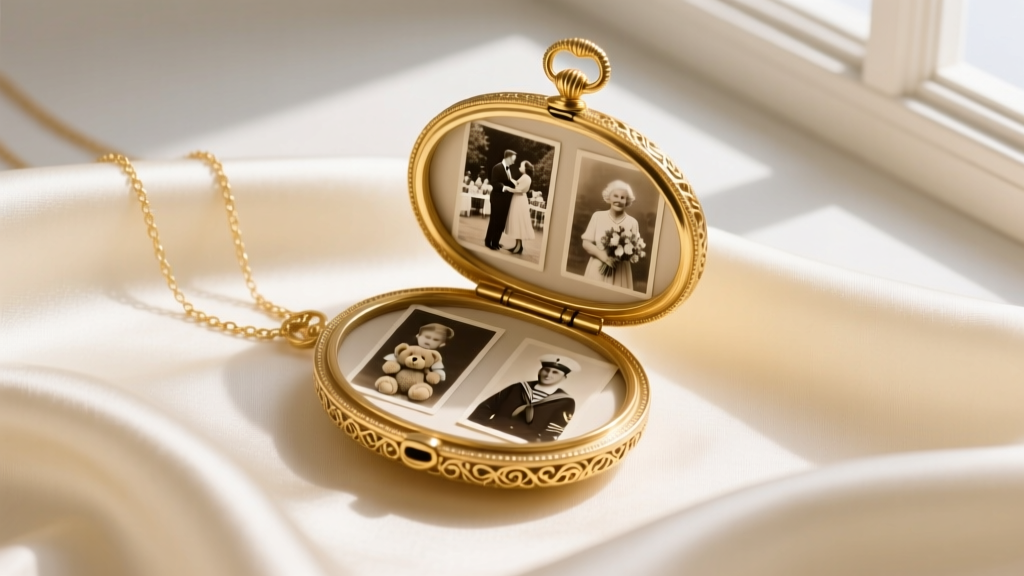
The Heirloom Locket: Hinge and Latch Mechanics
A locket holding photos of four generations is a timeless choice. But do not buy a locket without inspecting the hinge. Cheap lockets use a simple soldered loop that will snap within a year of daily wear. You must seek out a 5-knuckle drawn hinge with a steel pin. Furthermore, the latch (the tiny snap that keeps it closed) should be a friction-fit catch, not a weak magnetic dot, which can fail and result in lost photographs.
Chain Lengths, Weights, and Fabric Snagging
The anatomy of an 85-year-old woman differs significantly from that of a 30-year-old. The neck may be more sensitive, and posture changes can alter how a necklace drapes.
- The Ideal Length: Skip the 16-inch choker, which can feel restrictive or trigger claustrophobia, and the 32-inch opera length, which can catch on wheelchair armrests or walking aids. The 20-inch to 24-inch matinee length is the gold standard. It rests comfortably on the collarbone or upper chest, avoiding the hollow of the throat.
- Chain Profile: Avoid herringbone or snake chains. While beautiful, their flat, interlocking scales act like Velcro against the fuzzy textures of cardigans, shawls, and blankets commonly worn by the elderly. A 1.5mm to 2.0mm box chain or rounded rope chain glides smoothly over fabrics without snagging.
- Weight Limits: Keep the total weight of the chain and pendant under 15 grams. Heavier pieces will dig into the clavicle and cause fatigue over a few hours of wear.
Material Safety: Protecting Fragile Skin
As we age, the epidermis thins, and the skin's moisture barrier weakens, making elderly women highly susceptible to contact dermatitis and metal allergies. According to the Gemological Institute of America (GIA), the alloys mixed with pure gold to create 14k or 10k jewelry often contain nickel, copper, or zinc, which can cause severe irritation on fragile skin.
For a great grandmother necklace that will be worn against the skin daily, you must prioritize metallurgical purity:
- 950 Platinum: The ultimate hypoallergenic metal. It is dense, naturally white, and contains no irritating alloys. It is heavy, so use it for the pendant bail and setting, paired with a lighter gold chain.
- 18k Yellow Gold: Composed of 75% pure gold, it has far fewer alloyed irritants than 14k (58.5% pure). Ensure it is alloyed with silver and copper, not nickel.
- High-Grade Titanium: For a modern, ultra-lightweight, and completely biocompatible option, Grade 5 titanium is exceptional, though it limits the ability to resize or solder the chain later.
2026 Pricing Guide and Sourcing
Investing in a piece meant to become a permanent family heirloom requires a realistic budget. Here is what you can expect to pay for high-quality, senior-adaptive great grandmother necklaces in 2026:
- Entry-Level ($150 - $350): Sterling silver or 10k gold family tree pendants with synthetic birthstones, fitted with an aftermarket magnetic clasp adapter. (Brands: Etsy custom artisans, Kay Jewelers adaptive lines).
- Mid-Tier ($400 - $900): 14k solid gold lockets with 5-knuckle hinges, personalized engraving, and a 22-inch box chain with an oversized 15mm lobster clasp. (Brands: Blue Nile, independent bench jewelers).
- Heirloom Tier ($1,200 - $3,500+): Custom-designed 18k gold or platinum pieces featuring natural, ethically sourced gemstones, laser-engraved family crests or fingerprints, and integrated neodymium magnetic closures disguised as decorative beads. (Brands: Custom CAD/CAM jewelers, Brilliant Earth).
Final Thoughts on Gifting
A great grandmother necklace is more than a piece of jewelry; it is a tangible representation of a legacy. By prioritizing adaptive clasps, skin-safe metals, and snag-free chains, you ensure that your gift is not just a beautiful object to be admired on special occasions, but a comforting, daily companion that she can proudly wear and easily manage. When you present her with a piece that marries deep sentimental meaning with thoughtful, ergonomic design, you are giving her the ultimate luxury: effortless elegance.


