Great White Tooth Necklace: 2026 Value & Buying Guide
Discover how to evaluate a great white tooth necklace in 2026. Learn fossil grading, pricing tiers, wire-wrap hardware, and replica red flags.

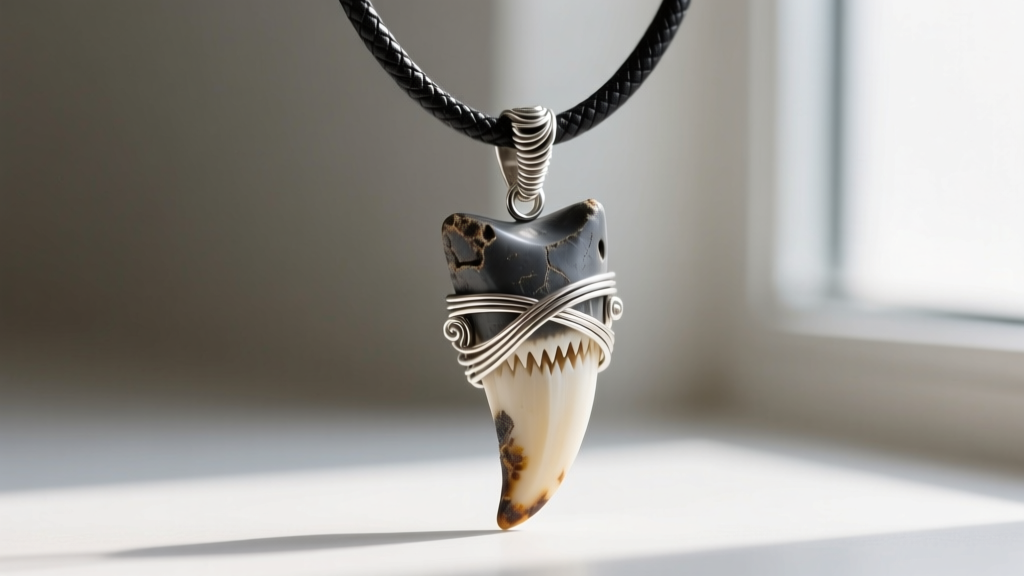
The Allure and Ethics of Great White Shark Tooth Jewelry
The great white tooth necklace remains a cornerstone of coastal, surfer, and bold statement jewelry. However, navigating the market in 2026 requires a sharp eye for both authenticity and ethics. True modern great white shark teeth (Carcharodon carcharias) are heavily regulated. Because the species is listed under Appendix II of the CITES Appendices, the international trade of modern specimens is strictly controlled and largely prohibited to prevent commercial exploitation.
Consequently, any authentic great white tooth necklace you encounter on the legitimate market will almost certainly be a fossilized specimen, typically dating back 2 to 5 million years to the Pliocene or Miocene epochs. These fossils are completely legal to own and trade, as they are excavated from ancient riverbeds and phosphate mines, primarily in regions like the Carolinas, Florida, and Morocco. Understanding the distinction between fossilized enamel, modern replicas, and illegal modern teeth is the first step in assessing true value.
Real vs. Replica: How to Assess Authenticity
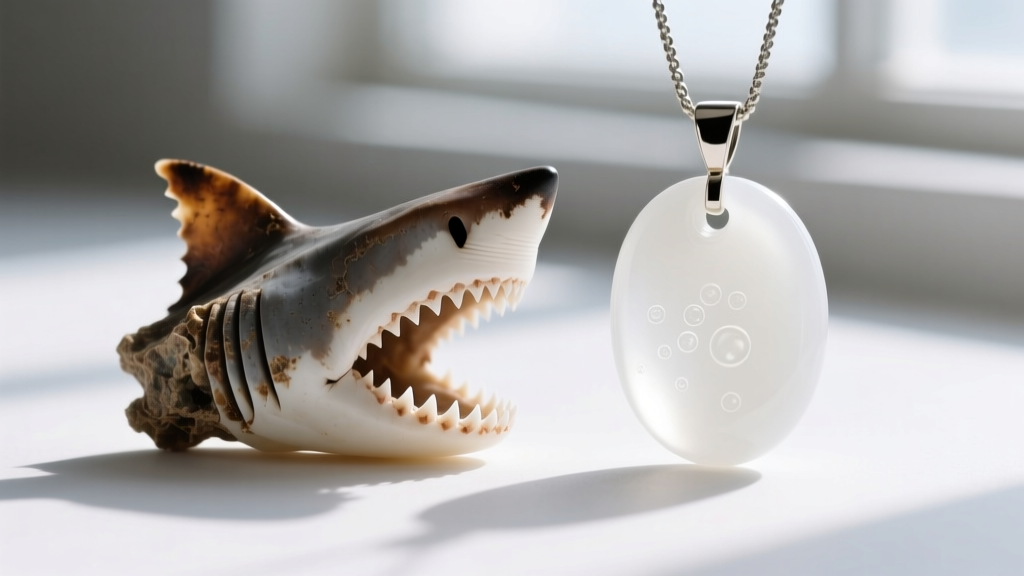
The secondary market is flooded with high-quality polyurethane resin and 3D-printed replicas. While replicas serve a purpose for those seeking a pristine, bright-white aesthetic without ethical concerns, they should not be priced as genuine artifacts. Here is how experts authenticate fossilized great white teeth:
- Permineralization and Color: Genuine fossils undergo permineralization, where groundwater deposits minerals like iron and phosphate into the tooth's porous structure. This results in deep greys, blues, blacks, or rich browns. A stark white tooth claiming to be an ancient fossil is an immediate red flag.
- The Serration Test: Great whites are famous for their serrated edges. Under a jeweler's loupe, real fossil serrations will show microscopic irregularities, natural wear, and occasional chips. Replicas often have perfectly uniform, molded serrations that lack microscopic tearing.
- The Root and Bourrelet: The root structure of a great white tooth features a distinct V-shape and a raised horizontal band known as the bourrelet. According to the Smithsonian National Museum of Natural History, the completeness of this root structure is a primary metric for grading fossil shark teeth.
- Thermal Conductivity: Fossilized teeth are essentially stone. When pressed to the cheek or lip, they will feel distinctly cool and take time to warm up. Resin replicas will feel room-temperature or warm almost instantly.
Fossil Grading and 2026 Pricing Matrix
Not all fossils are created equal. The value of a great white tooth necklace is dictated by the tooth's grade, size (measured diagonally along the slant height), and the quality of the jewelry hardware. Below is the 2026 market pricing matrix for authentic fossilized great white pendants.
| Fossil Grade | Characteristics | Size Range | Hardware Standard | Estimated Retail Price (USD) |
|---|---|---|---|---|
| Grade A (Museum) | Flawless serrations, intact bourrelet, no cracks, deep color. | 2.5" - 3.5" | 18k Gold Vermeil or Solid 14k Gold | $450 - $1,200+ |
| Grade B (Premium) | Minor serration wear, tiny root chips, excellent color. | 2.0" - 3.0" | 925 Sterling Silver Wire Wrap | $180 - $350 |
| Grade C (Commercial) | Faded serrations, noticeable root flaws, peeling enamel. | 1.5" - 2.5" | Silver-Plated Base Metal Bail | $45 - $95 |
| Premium Replica | Flawless white resin, cast from real molds, heavy weight. | 2.0" - 3.0" | 925 Sterling Silver Cast Bail | $60 - $120 |
When assessing budget pieces (under $50), you are almost exclusively looking at Grade C fossils with severe structural compromises, or high-end replicas. If a seller offers a "Grade A, 3-inch authentic great white tooth" for $80, you are likely being deceived.
Hardware and Wrapping: Where Budget Pieces Fail
A common failure mode in budget shark tooth necklaces is the hardware. Fossilized great white teeth are incredibly dense and heavy; a 3-inch specimen can easily weigh between 30 and 45 grams. Suspending this weight from cheap jewelry findings leads to rapid failure.
The Dangers of Glued Bails and Base Metals
Many mass-produced necklaces use a simple metal "bail" glued to the top of the tooth root with cyanoacrylate (super glue) or epoxy. Over time, body oils, saltwater exposure, and the sheer pendulum force of walking will degrade the adhesive, causing the tooth to drop and shatter on impact. Furthermore, base metal bails (often brass or copper alloys plated in silver) will trigger galvanic corrosion when exposed to sweat, leaving green stains on the skin and eventually snapping at the loop.
The Superiority of Artisan Wire Wrapping
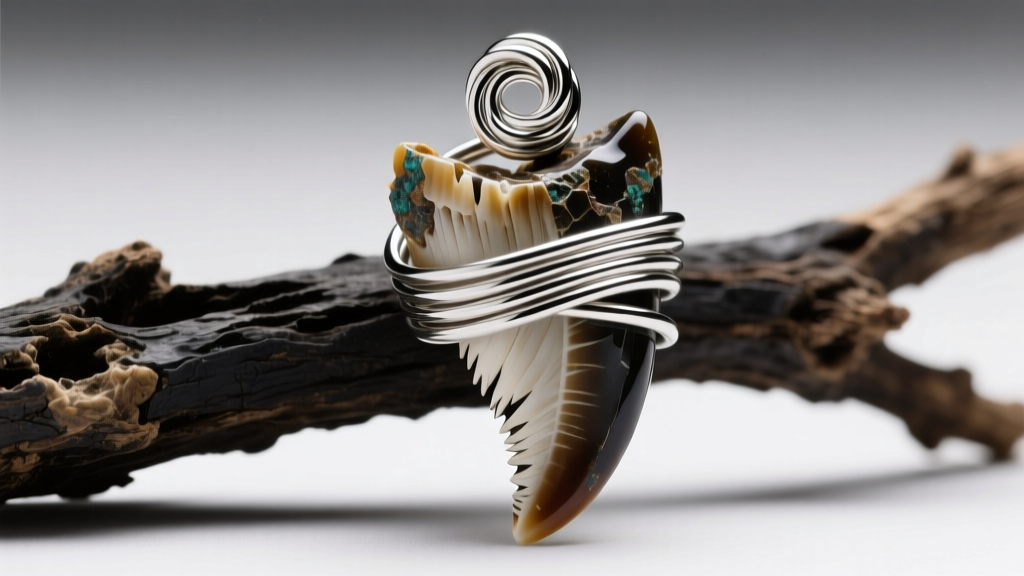
For genuine value, seek out artisan wire-wrapped pendants. A proper wire wrap secures the tooth mechanically, without relying on adhesives. Look for these specific wire-wrapping hallmarks:
- Wire Gauge: The wire must be at least 20-gauge, preferably 18-gauge, to support the weight without bending.
- Material: Dead-soft or half-hard 925 Sterling Silver. Avoid "Tibetan Silver" or "Alpaca," which are nickel-heavy alloys that cause contact dermatitis.
- The Figure-Eight Bind: The wire should cross in a figure-eight pattern at the narrowest part of the root (the neck of the tooth) to prevent the wire from sliding up and off the sloping enamel.
- Protective Coating: High-end wrappers will apply a micro-coating of Renaissance Wax to the sterling silver to delay oxidation, which is crucial if the necklace will be worn in ocean water.
Sizing, Proportion, and Chain Pairing
The aesthetic success of a great white tooth necklace relies heavily on proportion and the structural integrity of the chain. A heavy fossil pendant will easily snap a delicate 1mm box chain or a thin serpentine chain within days of wear.
Matching Chain Thickness to Tooth Weight
Use this framework to pair your pendant with the correct chain or cord:
- 1.5" to 2.0" Teeth (10-20 grams): Can be safely paired with a 2mm to 3mm sterling silver box chain or a 2mm braided leather cord with a silver clasp.
- 2.0" to 3.0" Teeth (20-35 grams): Requires a 4mm to 5mm rope chain, a heavy Cuban link, or a 4mm braided leather cord. Ensure the clasp is a lobster claw rated for heavy pendants, not a fragile spring-ring clasp.
- 3.0"+ Teeth (35+ grams): Best suited for thick, 5mm+ braided leather cords or heavy stainless steel rope chains. At this size, the pendant becomes a bold centerpiece that sits best on a 20-inch or 22-inch chain, resting on the upper chest rather than choking the collarbone.
Final Verdict: Maximizing Your Investment
Evaluating a great white tooth necklace in 2026 is an exercise in material science and ethical sourcing. If you desire a bright, flawless, snow-white tooth, embrace high-quality resin replicas and pair them with solid sterling silver hardware for under $100. If you are a collector seeking the raw, ancient power of a genuine fossil, budget accordingly. Expect to pay a premium for Grade A and B specimens, scrutinize the serrations under magnification, and always insist on mechanical wire wrapping over glued bails. By understanding the geology, the legalities, and the jewelry mechanics, you can secure a piece of prehistoric history that will last a lifetime.


