Greek Eye Necklace Meaning & Care: Protect Your Evil Eye Pendant
Discover the Greek eye necklace meaning and learn expert care tips to clean, protect, and maintain your glass and metal evil eye pendants.

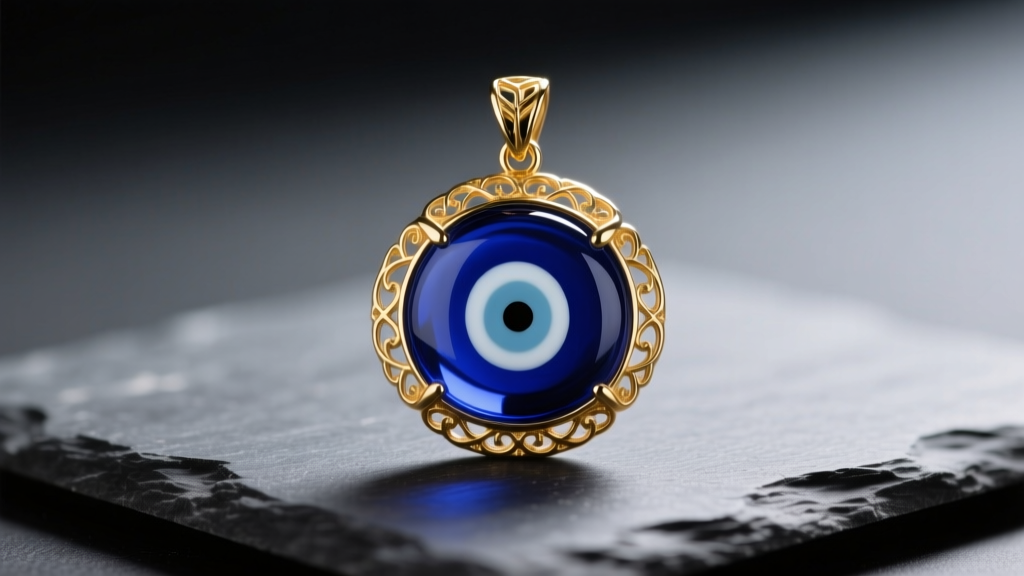
The Greek Eye Necklace Meaning and Material Vulnerabilities
The talismanic power of the evil eye has transcended borders and centuries, but understanding the greek eye necklace meaning is only the first step in owning one. Known in Greece as the Mati (meaning 'eye') and closely related to the Middle Eastern Nazar, this amulet is designed to stare back at the world, deflecting malicious glares and absorbing negative energy directed at the wearer. In 2026, the Mati remains one of the most popular protective pendants globally, crafted in everything from mass-produced enamel to artisanal cobalt glass set in 18k gold.
However, the very materials that give the Greek eye its striking, hypnotic appearance—layered glass, vitreous enamel, sterling silver, and gold—are highly susceptible to environmental damage. Glass and enamel are essentially supercooled liquids; they are hard but brittle. Sterling silver is prone to oxidation, while the delicate metal bails that hold the heavy glass pendants endure immense mechanical stress. To preserve both the physical integrity and the metaphysical purpose of your necklace, you must adopt a rigorous, material-specific maintenance routine.
Physical Cleaning Protocols by Material Type
A common mistake jewelry owners make is treating a composite pendant as a single material. A Greek eye necklace usually consists of three distinct zones: the glass/enamel eye, the metal bezel or bail, and the chain. Each requires a different approach based on its Mohs hardness and chemical reactivity. According to the Gemological Institute of America (GIA), understanding material hardness is critical to preventing micro-scratches that dull the glass's reflective protective gaze.
| Component | Mohs Hardness | Safe Cleaning Agents | Strictly Avoid |
|---|---|---|---|
| Cobalt Glass | 5.5 - 6.0 | pH-neutral dish soap, distilled water, microfiber | Hydrofluoric acid, abrasive pastes |
| Vitreous Enamel | 5.0 - 6.0 | Lukewarm water, soft cotton swabs | Ultrasonic vibrations, sudden heat |
| Sterling Silver (925) | 2.5 - 3.0 | Silver polishing cloth, mild ionized soap | Bleach, chlorine, toothpaste |
| 14k / 18k Gold | 3.5 - 4.0 | Ammonia-free jewelry dip, soft baby brush | Halogens, harsh mechanical scrubbing |
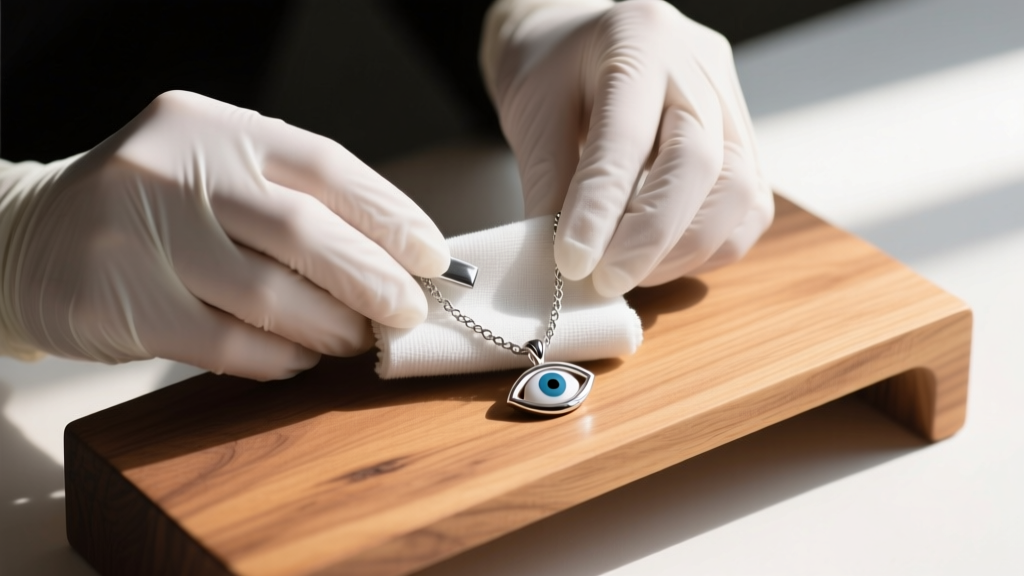
Step-by-Step Guide to Washing Your Glass Evil Eye Pendant
Because the Greek eye is believed to absorb negativity, physical grime like sebum, dead skin cells, and cosmetic residue can literally 'cloud' the eye, symbolically and literally blinding its protective vision. Here is the safest method to restore its clarity without compromising the metal settings.
1. Preparation and Isolation
Always remove the pendant from the chain before washing. The chain can trap moisture against the glass, and the metal bail is the most vulnerable point of failure. Prepare a solution of lukewarm distilled water and a single drop of pH-neutral, lotion-free dish detergent. Avoid tap water if you live in a hard-water area, as calcium deposits will leave a permanent cloudy film on the glass.
2. The Three-Minute Soak
Submerge the glass pendant for no more than three minutes. Prolonged exposure to water can seep into the microscopic fissures between the glass and the metal bezel, leading to hidden corrosion of the adhesive or the metal prongs holding the eye in place.
3. Gentle Agitation
Using an extra-soft baby toothbrush (never a standard adult brush, as the bristles are too stiff and can scratch the gold or silver bezel), gently sweep the bristles over the glass and around the bezel edge. Focus on the back of the pendant, where skin oils accumulate the fastest.
4. Drying and Buffing
Rinse under a gentle stream of distilled water. Immediately pat dry with a lint-free microfiber cloth. Do not air dry, as water spots will form. Finish by buffing the glass in circular motions to restore its high-gloss, reflective finish.
Why You Must Avoid Ultrasonic and Steam Cleaners
As of 2026, consumer-grade ultrasonic jewelry cleaners are more accessible than ever, but they are the absolute worst enemy of the Greek eye pendant. Ultrasonic cleaners work via cavitation—creating microscopic vacuum bubbles in the liquid that implode with tremendous force. While this safely blasts dirt off a solid diamond or plain gold band, the high-frequency shockwaves will easily shatter layered cobalt glass or cause vitreous enamel to micro-fracture and peel away from its metal backing.
Similarly, steam cleaners introduce thermal shock. Glass and enamel expand and contract at different rates than the gold or silver bezels encasing them. Blasting the pendant with 100°C steam will cause the glass to crack internally or pop entirely out of its setting. Stick to manual, room-temperature cleaning methods exclusively.
Spiritual Cleansing vs. Chemical Tarnish Removal
There is a profound intersection between the folklore of the Mati and the chemical reality of jewelry maintenance. In Greek and broader Mediterranean lore, if your glass evil eye pendant cracks or shatters, it means it has done its job: it absorbed a curse or a heavy burden of negative energy meant for you, and it must be buried or returned to the earth. You cannot 'fix' a cracked evil eye.
However, if the metal surrounding the eye turns black, this is not a spiritual failing; it is simple chemistry. Sterling silver reacts with sulfur compounds in the air and in human sweat to form silver sulfide (tarnish). To remove this without damaging the glass, use a treated silver polishing cloth (such as a Sunshine cloth). Never use liquid silver dips on an evil eye pendant. The harsh thiourea chemicals in liquid dips can strip the painted details off the back of the glass or permanently dull the cobalt finish. The Smithsonian Museum Conservation Institute strongly advises against abrasive chemical baths for composite historical artifacts, a rule that applies perfectly to your composite amulet.

Storage and Daily Wear Best Practices
How you store your Greek eye necklace when you are not wearing it is just as important as how you clean it. The primary goal is to prevent mechanical scratching and environmental oxidation.
- Hardness Separation: Never toss your evil eye pendant into a communal jewelry box. While the glass (Mohs 5.5) is harder than silver and gold, it can be easily scratched by diamonds (Mohs 10), sapphires (Mohs 9), or even quartz dust in the air. Store it in a dedicated, soft flannel pouch.
- Humidity Control: Silver tarnishes faster in high humidity. If you live in a coastal or tropical environment, store your necklace in an airtight ziplock bag with a 3M anti-tarnish strip and a small silica gel desiccant packet. This creates a micro-climate that halts silver sulfide formation.
- Chain Tension Check: The heavy glass eye puts constant strain on the jump ring connecting it to the chain. Once a month, use two pairs of smooth-jawed jewelry pliers to ensure the jump ring is completely closed. A gap of even a millimeter will eventually lead to the loss of your protective talisman.
- Chemical Exposure: Always put your necklace on after applying perfumes, hairsprays, and lotions. The alcohol and aerosol propellants in cosmetics can degrade the painted layers of the evil eye and accelerate the tarnishing of the metal bail.
By respecting both the ancient cultural significance and the modern material science of your jewelry, you ensure that your Greek eye necklace remains a clear, unbroken shield and a stunning stylistic statement for years to come.


