Technical Guide to Buying a Durable BFF Necklace
Discover the metallurgy, chain gauges, and clasp mechanics behind durable BFF necklaces. Learn how to choose hypoallergenic, long-lasting friendship jewelry.

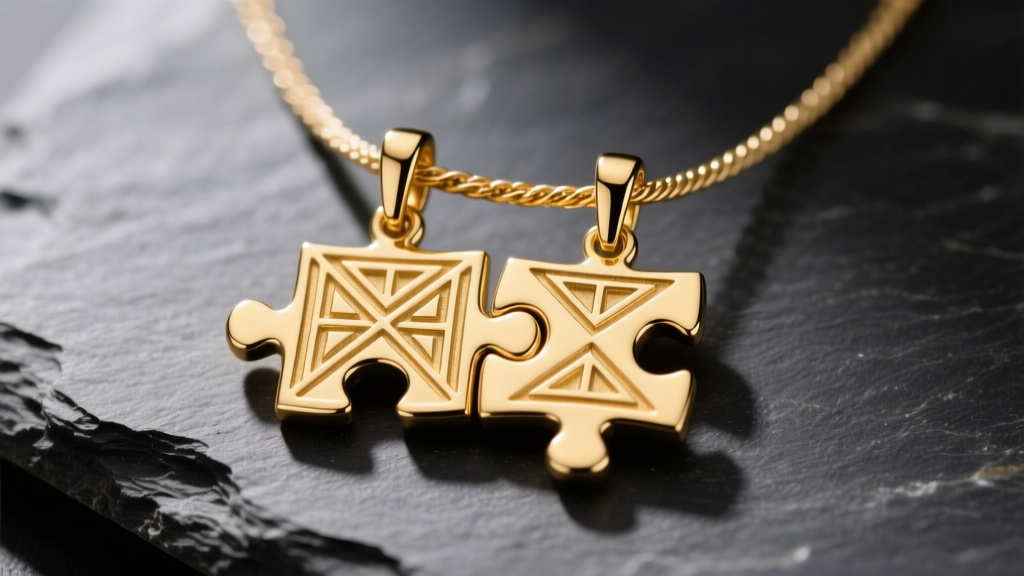
The cultural resonance of the BFF necklace has evolved significantly over the decades, transitioning from cheap, mass-produced mall kiosk trinkets to sophisticated, custom-milled keepsakes. However, the fundamental engineering flaw of most friendship jewelry remains unchanged: structural failure. Between galvanic corrosion, tensile chain snapping, and magnet degradation, the average novelty necklace has a functional lifespan of less than six months. As of 2026, discerning buyers and custom jewelers are approaching the BFF necklace not as a novelty, but as a precision-engineered accessory. This technical deep dive examines the metallurgy, chain mechanics, and interlocking tolerances required to manufacture and purchase a BFF necklace that survives daily wear.
The Metallurgy of Friendship: Material Grades and Plating
The primary cause of contact dermatitis and rapid tarnishing in friendship jewelry is the use of zinc-alloy bases (often deceptively marketed as 'Tibetan Silver' or 'alpaca'). These alloys contain high levels of nickel and lead, which leach when exposed to the slightly acidic pH of human sweat. For a durable BFF necklace, you must specify exact material grades.
316L Surgical Stainless Steel vs. 304
While 304 stainless steel is common in fashion jewelry, 316L is the mandatory standard for longevity. The addition of molybdenum in 316L dramatically increases resistance to chloride corrosion (saltwater and sweat). According to the European Chemicals Agency (ECHA), prolonged skin contact items must release less than 0.5 µg/cm²/week of nickel. High-quality 316L easily passes this REACH compliance, making it hypoallergenic for the vast majority of wearers.
14k Gold-Filled vs. Gold Vermeil
If your clients or personal preference demand gold, avoid standard gold plating (which is typically less than 0.5 microns thick). The Federal Trade Commission (FTC) strictly regulates the term 'Gold-Filled.' A legitimate 14k gold-filled BFF necklace must have a mechanical bond where the gold alloy constitutes at least 1/20th (5%) of the total weight of the item. This yields a plating thickness of 2.5 to 5.0 microns, offering 10 to 15 years of daily wear before the brass or steel core is exposed. Vermeil (gold over sterling silver) is an acceptable alternative, but the sterling core is softer and more prone to warping under the stress of interlocking puzzle mechanisms.
Chain Link Integrity and Tensile Failure
A BFF necklace is subjected to unique kinetic stresses. When two friends hug, or if one pendant snags on clothing, the chain experiences sudden lateral and vertical shear forces. Most commercial necklaces utilize 0.6mm to 0.8mm unsoldered cable chains that will deform and pull apart at less than 3 lbs of tensile pressure.
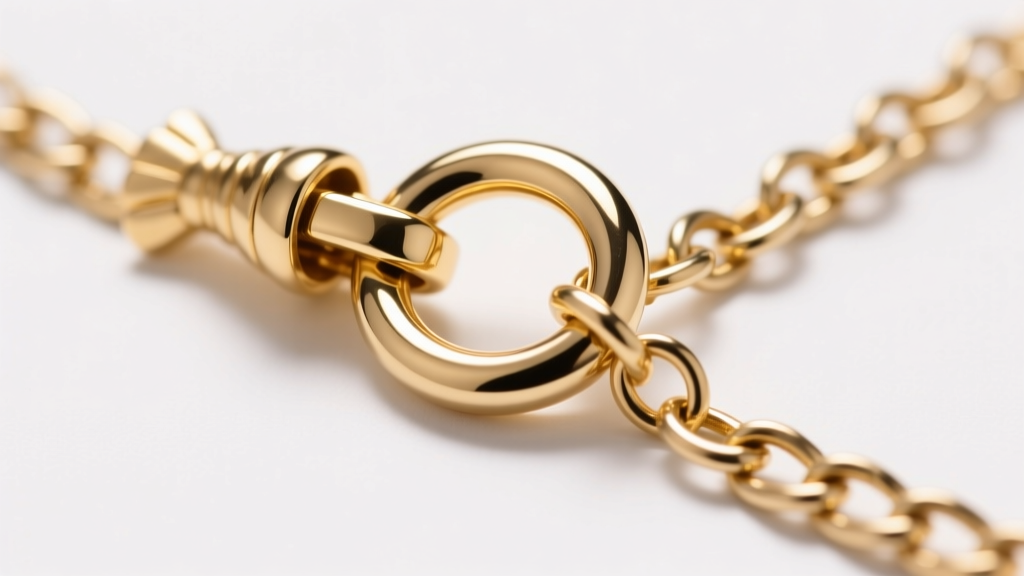
To ensure structural integrity, specify the following chain parameters:
- Wire Gauge: Minimum 1.2mm wire thickness for cable chains, or 1.5mm for curb and box chains.
- Soldered Links: Every individual link must be laser-soldered or torch-soldered shut. Unsoldered links rely purely on friction and the tensile yield of the wire, which will inevitably fail when subjected to the weight of dual pendants.
- Jump Rings: The jump ring connecting the chain to the pendant bail must be at least 1.0mm thick and securely soldered. Open jump rings will spiral open under the pendulum effect of a heavy interlocking pendant.
Interlocking Mechanics: Magnets vs. CNC Milling
The mechanism by which the two halves of the BFF necklace connect dictates both its aesthetic satisfaction and its structural lifespan. There are two primary engineering approaches:
Neodymium Magnetic Halves
Magnetic BFF necklaces offer a satisfying 'snap' but are highly susceptible to environmental degradation. Standard N35 neodymium magnets corrode rapidly when exposed to moisture. A properly engineered magnetic pendant must utilize N52-grade neodymium magnets that are either encased in a 316L stainless steel housing or coated in a Parylene conformal coating to prevent oxidation. Furthermore, the magnets must be press-fitted and secured with a two-part marine-grade epoxy, not standard cyanoacrylate (super glue), which becomes brittle and fails under thermal expansion.
5-Axis CNC Milled Puzzle Pieces
For puzzle-style or split-heart designs, traditional die-casting results in rounded edges and poor tolerances, meaning the two halves never sit perfectly flush. Modern custom jewelers utilize 5-axis CNC milling from solid billets of 14k gold or 316L steel. This allows for tongue-and-groove tolerances as tight as 0.05mm, ensuring the two halves slide together with hydraulic precision and remain flush against the sternum without catching on fabrics.
Technical Comparison Matrix
Use the following matrix to evaluate manufacturing specifications when sourcing or commissioning a high-end BFF necklace.
| Material Specification | Plating / Core | Tensile Yield (Chain) | Nickel Release | Est. Price Range (Custom) |
|---|---|---|---|---|
| Zinc Alloy (Commercial) | Flash Plated (<0.1µm) | < 3 lbs | High (Fails REACH) | $15 - $35 |
| 925 Sterling Vermeil | 2.5µm 14k Gold over Silver | 8 - 12 lbs | Nickel-Free | $85 - $150 |
| 14k Gold-Filled (FTC) | 5.0µm 14k Gold over Brass | 15 - 20 lbs | Trace (Compliant) | $120 - $220 |
| Solid 316L Steel | None (Solid Alloy) | 25+ lbs | < 0.5 µg/cm²/week | $90 - $180 |
| Solid 14k Gold (CNC) | None (Solid 585 Alloy) | 12 - 18 lbs | Nickel-Free | $450 - $800+ |
Clasp Mechanics and Bail Engineering
The clasp is the most common point of catastrophic failure. Standard spring-ring clasps utilize a microscopic internal spring that routinely jams or loses tension. For a dual-pendant BFF necklace, which carries 40% more weight than a standard solitaire pendant, a solid-body lobster clasp is mandatory. Furthermore, the pendant bail (the loop the chain passes through) must be integrated into the CNC design or laser-welded with at least two contact points to the pendant body to prevent shear-stress snapping.
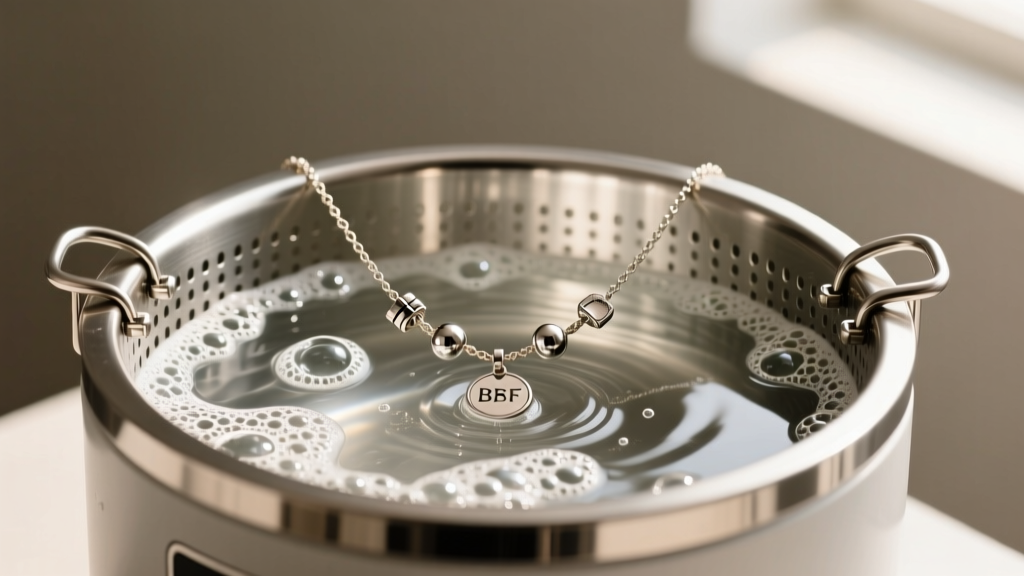
Maintenance and Ultrasonic Cleaning Protocols
Cleaning interlocking jewelry requires specific protocols to avoid destroying the engineering. While the Gemological Institute of America (GIA) notes that ultrasonic cleaners are excellent for removing sebum and dead skin cells from solid metals, they are highly destructive to magnetic BFF necklaces. The high-frequency cavitation can shatter brittle neodymium magnets or compromise the epoxy seal, allowing water to infiltrate the core and cause internal rusting.
For magnetic variants, clean only with a soft microfiber cloth and a mild, non-ammoniated surfactant. For solid 316L or 14k gold CNC puzzle pieces without magnets, a 3-minute cycle in an ultrasonic cleaner with a warm, pH-neutral jewelry solution will safely dislodge debris from the 0.05mm milled tolerances, restoring the satisfying, frictionless slide of the interlocking mechanism.
Investing in a technically sound BFF necklace means looking past the aesthetic design and scrutinizing the metallurgy and mechanics. By demanding 316L steel or FTC-compliant gold-filled materials, insisting on soldered chain links, and selecting precision-milled or properly sealed interlocking mechanisms, you ensure the jewelry survives as long as the friendship it represents.


