How to Clean and Care for a Grey Stone Necklace Safely
Learn how to safely clean, store, and maintain your grey stone necklace. Expert tips for labradorite, moonstone, hematite, and smoky quartz.

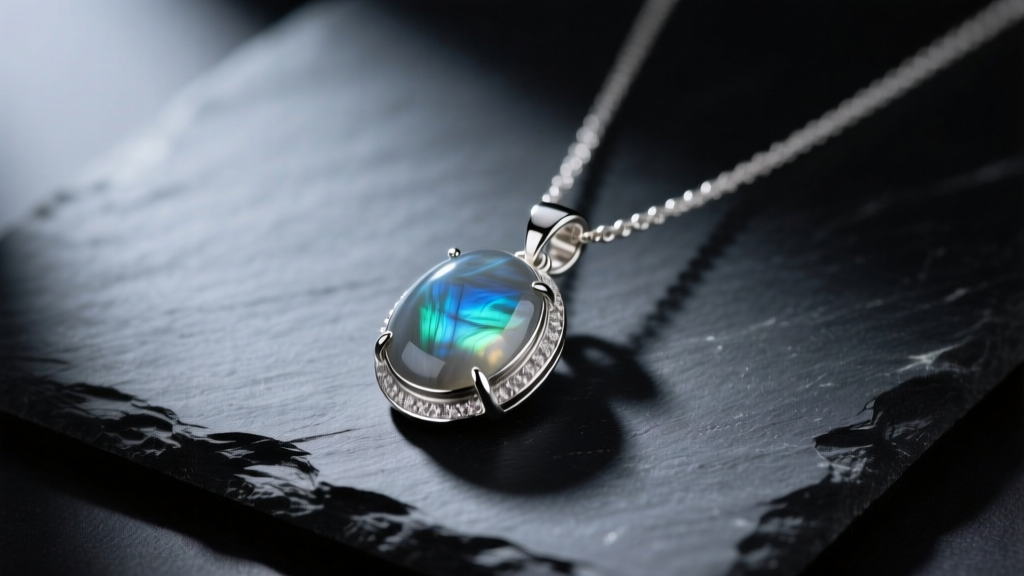
The Hidden Complexity of Grey Gemstones
When you invest in a grey stone necklace, you are not just buying a single type of mineral. The term 'grey stone' encompasses a vast array of geological formations, each with distinct chemical compositions, hardness levels, and structural vulnerabilities. From the metallic luster of hematite and the iridescent flash of labradorite to the moody translucence of smoky quartz and the adularescence of grey moonstone, these gemstones require highly specific care protocols. Using a one-size-fits-all jewelry cleaner can permanently damage the optical properties or structural integrity of your pendant.
As a general rule in gemology, the care required for any gemstone is dictated by its position on the Mohs Hardness Scale and its internal crystal structure (cleavage planes). This comprehensive guide will break down the exact maintenance, cleaning, and storage procedures required to keep your grey stone necklace pristine for decades.
Mineral Hardness and Vulnerability Chart
Before applying any water, soap, or polishing cloth to your jewelry, you must identify the specific grey stone in your necklace. The table below outlines the physical properties of the most common grey gemstones used in modern jewelry.
| Gemstone | Mohs Hardness | Porosity / Structure | Ultrasonic Safe? | Steam Safe? |
|---|---|---|---|---|
| Labradorite (Feldspar) | 6.0 - 6.5 | Low porosity, distinct cleavage | No | No |
| Grey Moonstone | 6.0 - 6.5 | Low porosity, internal lamellar twinning | No | No |
| Hematite (Iron Oxide) | 5.5 - 6.5 | Non-porous, highly reactive to moisture | No | No |
| Smoky Quartz | 7.0 | Non-porous, conchoidal fracture | Yes (Caution) | No |
| Larvikite | 6.0 - 6.5 | Low porosity, cleavage planes | No | No |
| Grey Agate (Chalcedony) | 6.5 - 7.0 | Micro-porous, often dyed | No | No |
Source reference: Mineral properties and care guidelines align with data from the GIA Gem Encyclopedia.
Daily Maintenance: The 'Last On, First Off' Rule
The most effective way to reduce the need for deep cleaning is to minimize contamination in the first place. Skin sebum, cosmetic lotions, and aerosol perfumes create a microscopic film over your grey stone, dulling its natural light return and obscuring optical phenomena like labradorescence.
- Chemical Avoidance: Always apply perfumes, hairsprays, and lotions at least 15 minutes before putting on your necklace. Alcohol and volatile organic compounds (VOCs) in cosmetics can degrade the polish on softer stones like labradorite over time.
- The Wipe-Down: Keep a clean, untreated microfiber cloth in your jewelry box. After wearing your necklace, gently wipe the stone and the metal chain to remove acidic skin oils and salts before storing it.
- Physical Protection: Remove your necklace before engaging in activities that involve hard impacts. While a 7 on the Mohs scale (smoky quartz) resists scratching from everyday dust (which contains quartz particles at a 7), stones like hematite and moonstone will easily scratch or chip if knocked against hard surfaces.
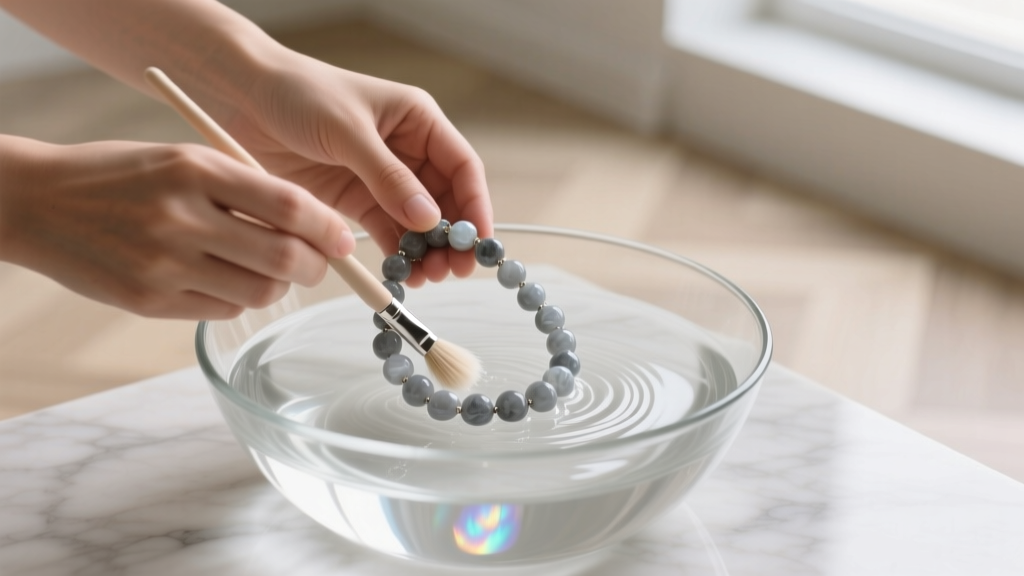
Step-by-Step Deep Cleaning Protocol
When your grey stone necklace accumulates stubborn grime, a gentle manual wash is the safest approach for 95% of grey gemstones. Avoid commercial 'jewelry dips' and ultrasonic cleaners, as the high-frequency cavitation bubbles can shatter stones with internal cleavage planes (like moonstone and labradorite).
Materials Required
- Distilled water (tap water contains dissolved minerals and chlorine that can leave spots or react with metal settings)
- pH-neutral, dye-free, unscented dish soap (e.g., original Dawn)
- A glass or ceramic bowl (never use metal bowls which can scratch the jewelry)
- An ultra-soft baby-hair brush or a dedicated, clean makeup blending brush
- Untreated microfiber or 100% cotton lint-free cloth
The Washing Technique
- Prepare the Solution: Fill the bowl with lukewarm distilled water (approximately 85°F / 29°C). Add a single drop of the pH-neutral soap. Avoid hot water, as thermal shock can cause microscopic fractures in feldspar stones.
- Soak Briefly: Submerge the necklace for no more than 3 to 5 minutes. This loosens sebum and dead skin cells trapped in the prongs or bead holes.
- Agitate Gently: Using the soft brush, lightly sweep across the surface of the stone. Pay special attention to the back of the cabochon or the setting basket where dirt accumulates. Never scrub aggressively.
- Rinse: Rinse the necklace under a gentle stream of lukewarm distilled water to remove all soap residue.
- Dry: Pat the stone dry with a microfiber cloth. Use a wooden toothpick or a can of compressed air to blow out any remaining water droplets trapped between the stone and the metal bezel.
Critical Warnings for Specific Grey Stones
While the manual wash above is safe for most pieces, certain grey stones possess unique chemical or structural traits that demand specialized handling. According to the GIA's Labradorite Care Guide, improper cleaning is the leading cause of diminished optical effects in feldspar gems.
Hematite: The Rust Risk
Hematite is an iron oxide mineral (Fe2O3). Its beautiful, heavy, metallic grey luster makes it a popular choice for beaded necklaces and magnetic clasps. However, because it is essentially iron, prolonged exposure to water will cause it to rust. Never soak a hematite necklace. To clean it, simply wipe it with a barely damp cloth and dry it immediately and thoroughly. Store hematite in a low-humidity environment, ideally with a silica gel packet in the jewelry box.
Labradorite and Moonstone: Protecting the Flash
The mesmerizing flash of labradorite and the milky glow of grey moonstone are caused by light interacting with microscopic internal layers of feldspar. These stones have 'perfect cleavage,' meaning they can split cleanly along specific structural planes. Ultrasonic cleaners and steamers will violently vibrate or thermally shock these layers, causing the stone to crack internally or lose its optical flash. Stick strictly to the gentle manual wash described above.
Smoky Quartz: UV Fading
Smoky quartz derives its grey-to-brown coloration from natural irradiation interacting with aluminum impurities within the quartz crystal lattice. While it is a durable stone (Mohs 7) that can withstand ultrasonic cleaning, it is highly susceptible to UV degradation. Leaving a smoky quartz necklace on a sunny windowsill or wearing it constantly in intense, direct sunlight over several years can cause the color centers to break down, fading the stone to a pale, washed-out yellow or completely clear.
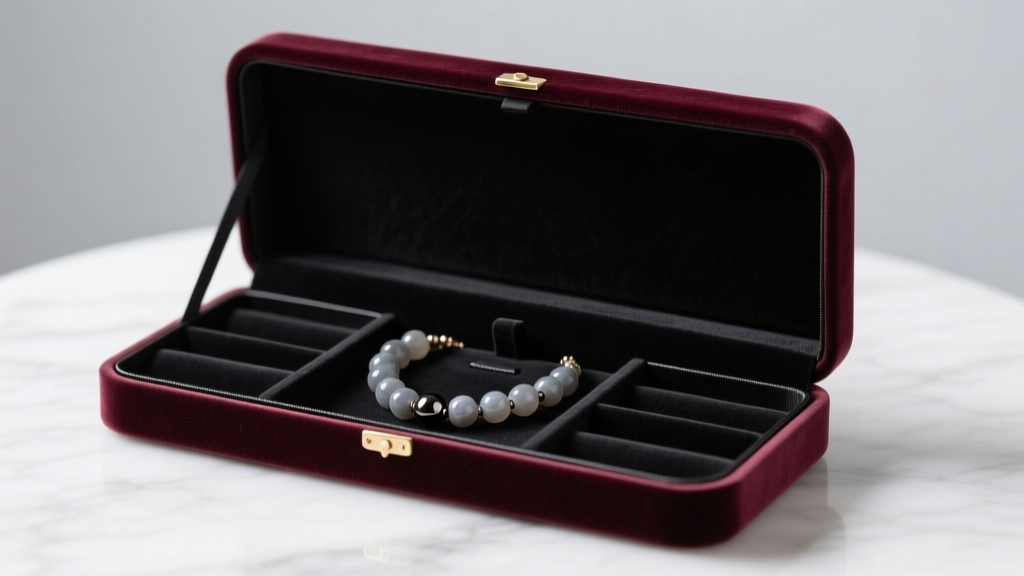
Long-Term Storage and Chain Care
Proper storage is just as critical as cleaning. The metal chain of your grey stone necklace requires its own maintenance routine, and improper storage can lead to tangled chains, scratched stones, and oxidized metals.
Chain Maintenance and Tarnish Prevention
If your necklace features a sterling silver (.925) chain, it will inevitably tarnish due to a chemical reaction between the copper alloy in the silver and sulfur compounds in the air and your skin.
- Polishing: Use a treated jeweler's cloth (such as a Sunshine cloth) to polish the silver chain. These cloths contain micro-abrasives and anti-tarnish agents. Warning: Be careful not to rub the polishing cloth aggressively against softer grey stones like larvikite or moonstone, as the micro-abrasives can dull the stone's polish over time.
- Avoid Liquid Dips: Never use liquid silver dip cleaners on necklaces with porous or fractured stones. The harsh chemicals (often thiourea-based) can become trapped in the stone's microscopic crevices, causing permanent discoloration and structural weakening.
Restringing Beaded Grey Stone Necklaces
If your grey stone necklace is a strand of beads (such as grey agate, labradorite, or hematite) rather than a single pendant on a metal chain, you must monitor the stringing material. High-quality necklaces are strung on silk or synthetic nylon (like WildFire). Silk is organic and degrades when exposed to water, sweat, and skin oils, stretching and weakening over time. If you wear a silk-strung necklace frequently, it should be professionally restrung every 12 to 18 months to prevent catastrophic breakage and the loss of your gemstones.
Optimal Storage Conditions
Store your grey stone necklace in a soft, individual flannel or microfiber pouch. Never toss multiple necklaces into a single jewelry box drawer. Quartz-based stones (smoky quartz, agate) are harder than feldspars (labradorite, moonstone) and oxides (hematite); if stored together, the quartz will easily scratch the surface of the softer grey stones. For added protection against silver tarnish, place an anti-tarnish strip or a piece of activated charcoal inside the storage pouch to absorb ambient sulfur and moisture.
When to Seek Professional Jewelry Repair
While home maintenance is excellent for cleaning, certain issues require a professional jeweler's bench. If you notice any of the following, stop wearing the necklace immediately and take it to a certified bench jeweler:
- Loose Prongs or Bezel Gaps: If the metal holding your grey stone pendant feels loose, or if you can catch a piece of paper under the bezel wire, the stone is at risk of falling out. A jeweler can retighten the setting in minutes.
- Deep Scratches on the Stone: If your labradorite or moonstone cabochon has sustained a deep scratch, a lapidary artist can carefully re-polish the surface. Do not attempt to buff the stone yourself with rotary tools, as the friction heat can crack the gem.
- Clasp Failure: Lobster clasps and spring rings contain tiny internal springs that can fail. Replacing a clasp requires soldering, which must be done carefully to avoid heating the nearby grey stone, which could cause thermal shock.
By understanding the specific geological nature of your grey stone necklace and adhering to these targeted care protocols, you ensure that its unique color, flash, and structural integrity remain flawless for a lifetime of wear.


