The Ultimate Buying Guide to Authentic Traditional African Necklaces
Discover how to identify, source, and buy authentic traditional African necklaces. Learn about Maasai beadwork, Ashanti gold, and ethical sourcing.

The Weight of Heritage: Beyond Mass-Produced Imitations
When shopping for traditional African necklaces, buyers are frequently met with a market saturated by mass-produced, factory-made replicas that strip the jewelry of its cultural and historical significance. Authentic African neckwear is not merely decorative; it is a complex language of social status, marital availability, tribal affiliation, and spiritual protection. According to the Metropolitan Museum of Art, African beadwork and metal smithing represent centuries of intricate trade routes and indigenous craftsmanship.
This comprehensive buying guide is designed for serious collectors, ethical fashion enthusiasts, and jewelry historians. We will dissect regional styles, material authentication, and the exact pricing frameworks you need to navigate the 2026 market without falling victim to tourist-trap counterfeits.
Decoding Regional Styles: What to Look For
Africa is a massive continent with wildly distinct jewelry-making traditions. To buy authentically, you must first understand the specific regional hallmarks of the piece you are evaluating.
1. Maasai Beadwork (Kenya & Tanzania)
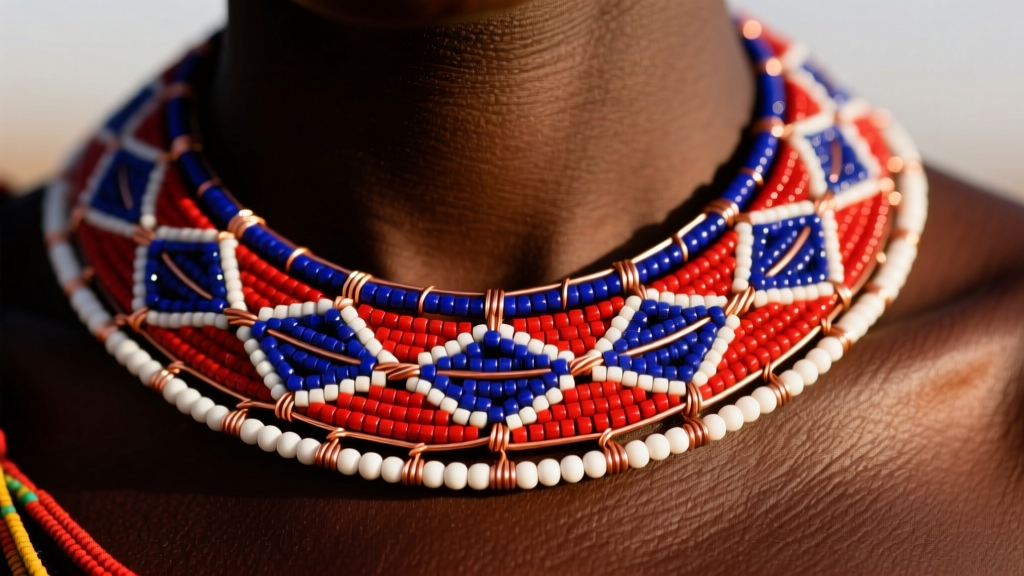
Maasai beadwork is arguably the most recognized African jewelry style globally, which also makes it the most heavily counterfeited. Authentic Maasai collars (known as enkarewa) are woven by women using specific color codes: red signifies bravery and blood, white represents peace and milk, and blue stands for the sky and water.
- Construction: Genuine pieces are strung on 18- to 20-gauge galvanized steel or copper wire, not flimsy elastic or nylon thread. The tension must be tight, with no gaps between the glass beads.
- Bead Type: Look for Czech glass seed beads (size 10/0 or 11/0). If the beads feel unusually lightweight or have a synthetic sheen, they are likely injection-molded plastic.
- Backing: Traditional collars are often backed with upcycled leather or copper sheeting to protect the wearer's skin from the wire armature.
2. Ashanti & Akan Gold Weights (Ghana)
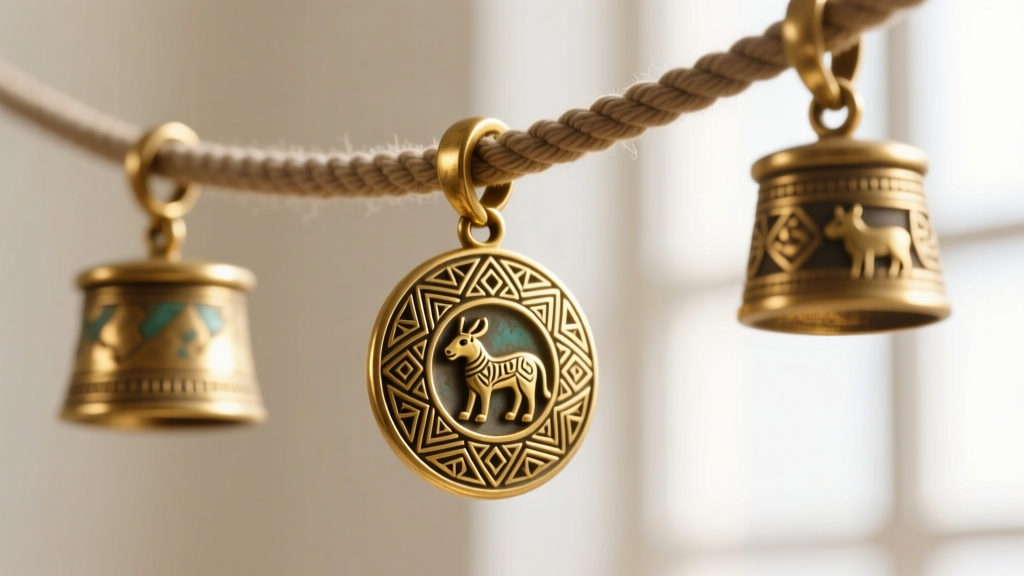
Historically used to weigh gold dust for trade, Abrammuo (gold weights) are now highly prized as pendant necklaces. It is a common misconception that these are made of solid gold; authentic vintage pieces are cast in brass or bronze using the cire perdue (lost-wax) method.
- Patina: Genuine vintage brass weights feature a natural, uneven oxidation. Beware of pieces with a uniform, chemical-induced dark patina or those that are overly polished.
- Imperfections: Because each wax mold is destroyed during casting, every authentic weight is unique. Look for tiny pitting or asymmetrical details that prove it was hand-carved in wax, not stamped by a machine.
3. Tuareg Silver & Amber (Sahara Region / Mali & Niger)
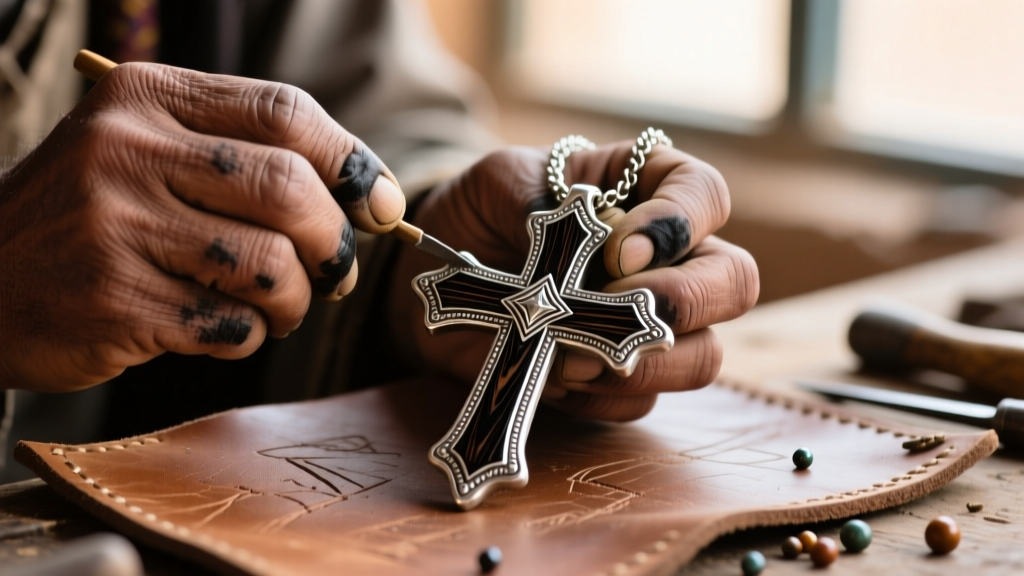
The Tuareg people are master silversmiths. Their iconic Croix d'Agadez (Agadez Cross) pendants are passed down from father to son. Tuareg jewelry relies heavily on negative space, geometric engraving, and ebony wood inlays.
- Metal Purity: While modern tourist pieces may use 925 sterling silver, traditional nomadic Tuareg silver is often alloyed with other metals for durability, testing closer to coin silver (90% purity). It should feel heavy and feature deep, hand-chased engravings.
- Amber Beads: Tuareg necklaces often feature copal (young amber) or genuine Baltic amber. Real amber will pass the saltwater float test and emit a piney scent when gently heated with a needle, whereas plastic imitations will melt and smell acrid.
Material Authentication: Spotting Fakes vs. Genuine Artifacts
The Smithsonian National Museum of African Art emphasizes the importance of material provenance in African adornment. Use this quick-reference table to authenticate common materials found in traditional African necklaces.
| Material | Authentic Characteristics | Counterfeit Red Flags |
|---|---|---|
| Cowrie Shells | Monetaria moneta species. Features a serrated, tooth-like mouth (lip). Feels dense and cool to the touch. | Smooth, molded edges. Uniformly bright white without natural calcium variations. Lightweight plastic feel. |
| Trade Beads | Venetian Millefiori or Chevron beads show layered glass canes. Air bubbles may be visible under magnification. | Painted surfaces instead of inlaid glass. Seams from two-part molds. Perfect, machine-like symmetry. |
| Bone / Horn | Visible porous grain under a loupe. Slight variations in color. Smells like burnt hair when touched with a hot pin. | Uniform texture. Melts or smells like chemicals (resin/plastic) when heat-tested. |
| Leather Cords | Irregular thickness, natural scarring, smells of natural tanning agents or smoke. | Perfectly uniform width, synthetic smell, peels when scratched (PU leather). |
Sizing, Lengths, and Layering Traditions
Traditional African necklaces do not adhere strictly to Western jewelry length standards (e.g., 16-inch choker, 18-inch princess). Instead, they are categorized by their relationship to the body and their intended layering hierarchy.
The Collar and Bib
Maasai and Ndebele pieces are often rigid collars or flexible bibs that sit flush against the collarbone and upper chest. When buying a rigid wire collar, measure your neck circumference precisely and add 1.5 inches. Because these pieces lack clasps, they must be flexible enough to bend over the head but rigid enough to hold their circular tension.
The Lariat and Rope
West African bead strands, particularly those featuring heavy powder glass or Krobo beads from Ghana, are often cut to 28-34 inches. These are designed to be looped multiple times. When purchasing heavy glass bead ropes, ensure the cord is a multi-strand waxed cotton or nylon, as standard silk thread will snap under the weight of dense powder glass.
Ethical Sourcing & Pricing Framework (2026 Market Rates)
The most critical aspect of buying traditional African necklaces is ensuring your purchase supports indigenous artisans rather than exploitative middlemen. Always look for sellers who partner directly with cooperatives, such as the Maasai women's beadwork collectives in Kajiado, Kenya, or fair-trade guilds in Accra, Ghana.
Buyer's Rule of Thumb: If a complex, hand-woven Maasai collar is priced under $30, it is almost certainly factory-produced in Asia and imported. True artisanal labor requires fair compensation.
Current Market Pricing Guide
| Necklace Type | Fair-Trade Artisan Price Range | Tourist Trap / Mass-Market Price |
|---|---|---|
| Maasai Beaded Collar (Complex) | $85 - $250 | $15 - $35 |
| Vintage Ashanti Brass Weight Pendant | $120 - $450+ | $20 - $50 (Cast resin/cheap alloy) |
| Tuareg Solid Silver Agadez Cross | $150 - $400 | $25 - $60 (Silver-plated base metal) |
| Ghanaian Krobo Powder Glass Strand | $90 - $200 | $30 - $45 (Painted clay beads) |
Care and Maintenance for Heritage Pieces
Preserving authentic African jewelry requires an understanding of its organic and metallic components.
- Brass and Bronze: Do not use harsh commercial polishes on Ashanti gold weights. The dark patina in the crevices proves its age and authenticity. Simply rub with a soft cloth and a tiny drop of mineral oil to seal the metal.
- Leather and Cowrie: Keep away from prolonged moisture and direct sunlight, which will dry out and crack the leather cord and yellow the calcium of the cowrie shells. Condition the leather annually with a beeswax-based balm.
- Wire Beadwork: Store Maasai collars flat or hung on a wide, padded hanger. Folding or crushing the piece can permanently kink the 18-gauge wire armature, causing the glass beads to chip or the wire to snap through the bead holes.
Final Verdict: Invest in the Story
Buying authentic traditional African necklaces is an exercise in cultural appreciation and historical preservation. By demanding transparency in materials, understanding regional construction techniques, and insisting on fair-trade pricing, you ensure that the artisans who keep these ancient traditions alive are properly supported. Whether you are drawn to the vibrant geometry of East African beadwork or the heavy, historical gravity of West African cast brass, the right piece will serve as a wearable artifact of human ingenuity.