How to Clean & Care for a Black Diamond Heart Necklace
Learn expert techniques to clean, maintain, and protect your black diamond heart necklace. Discover safe solutions for treated and natural stones.

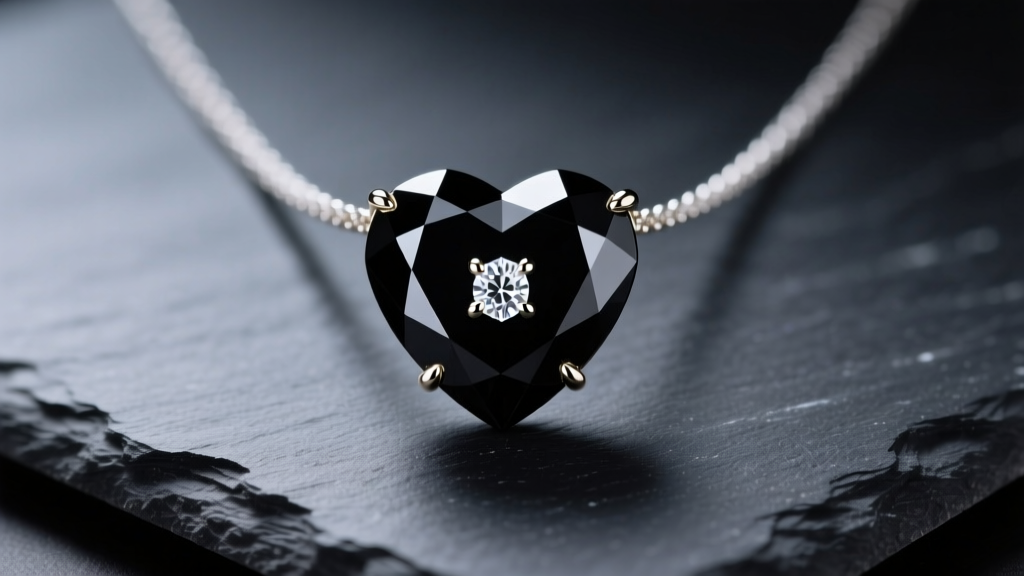
A black diamond heart necklace is a striking departure from traditional fine jewelry, offering a bold, romantic contrast that has surged in popularity. However, the very characteristics that give black diamonds their mesmerizing, opaque allure also make them uniquely vulnerable to improper care. Unlike transparent white diamonds, black diamonds interact with light, oils, and cleaning chemicals in fundamentally different ways. Furthermore, the intricate geometry of a heart-shaped setting introduces specific structural risks that demand specialized attention.
Whether you own a vintage piece featuring a natural carbonado or a modern design set with an irradiated stone, maintaining its luster and structural integrity requires a departure from standard jewelry cleaning routines. This comprehensive guide provides actionable, expert-level protocols to ensure your pendant remains as captivating as the day you acquired it.
The Gemology of Black Diamonds: Why Standard Cleaning Fails
To properly care for your necklace, you must first understand the gemological nature of the stone. According to the Gemological Institute of America (GIA), the black diamond market is primarily divided into three categories, each with distinct care requirements:
- Natural Carbonado: These are polycrystalline diamonds found primarily in Brazil and Central Africa. They are incredibly tough but highly porous. Their microscopic crevices easily trap sebum, lotions, and cosmetics, causing the stone to look dull and grayish over time.
- Irradiated/Treated Natural Diamonds: The vast majority of commercial black diamonds are natural white or gray diamonds that have been subjected to high-dose radiation and heat treatment to achieve a uniform black color. This process can induce microscopic internal fractures and alter the stone's structural stability.
- Lab-Grown Black Diamonds: As of 2026, lab-grown alternatives are prevalent. These possess the same physical properties as natural diamonds but lack the porous inclusions of carbonados or the fracture risks of heavily irradiated stones.
Because treated black diamonds often contain fracture fillings or internal stress points, exposing them to harsh chemicals or extreme thermal shock can lead to catastrophic failure, including cleaving or shattering.
The Heart Motif: Structural Vulnerabilities
The heart shape is notoriously difficult to secure in a pendant setting. Unlike round brilliant cuts that distribute pressure evenly, a heart-shaped diamond has two high-stress zones: the cleft (the V-shaped dip at the top) and the point (the sharp bottom tip).
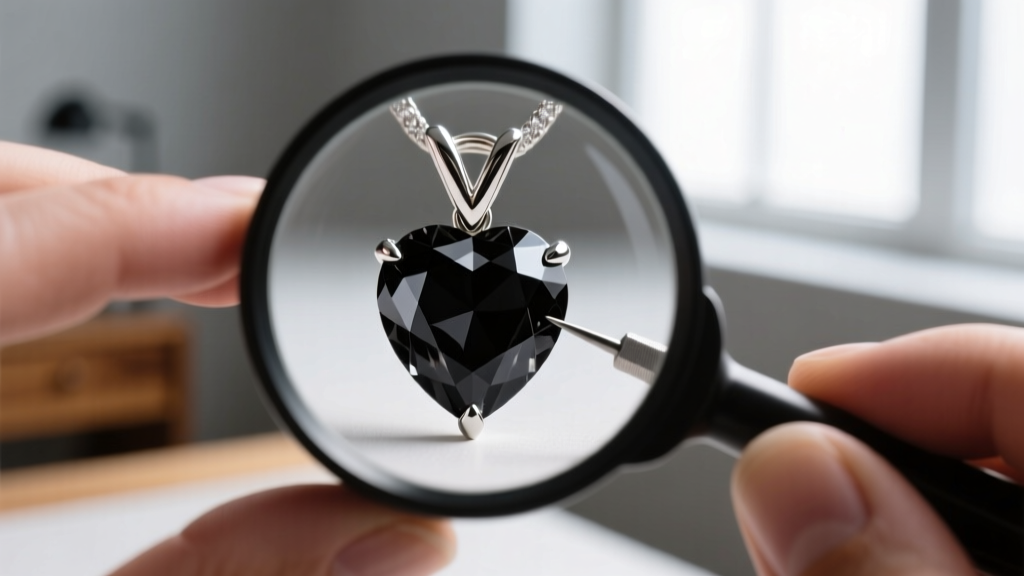
Protecting the V-Prong and Cleft
The bottom point of a heart diamond is typically secured with a V-prong to protect the sharp tip from chipping. Over time, the friction of the necklace chain swinging against the chest can cause the metal of the V-prong to wear thin. The cleft at the top is equally vulnerable, often catching on silk, wool, and lace. When cleaning your necklace, you must physically inspect these prongs. If you notice any lifting, thinning, or if the fabric of your shirt snags on the cleft, cease wearing the necklace immediately and take it to a bench jeweler for prong re-tipping.
The 15-Minute Manual Cleaning Protocol
The American Gem Society (AGS) consistently recommends gentle, manual cleaning for included or treated gemstones. Forget the commercial jewelry dips; they often contain ammonia or thiourea, which can degrade the alloy metals in your setting and strip the polish from porous carbonados.
Materials Required
- 1 cup of distilled water (tap water contains chlorine and hard minerals that can leave microscopic calcified deposits on the stone).
- 3 drops of mild, lotion-free dish soap (e.g., original blue Dawn). Avoid citrus-infused or moisturizing soaps.
- An extra-soft baby toothbrush (adult toothbrushes, even those labeled "soft," have bristles that can micro-scratch high-polish gold or silver settings).
- A lint-free microfiber jewelry cloth.
Step-by-Step Execution
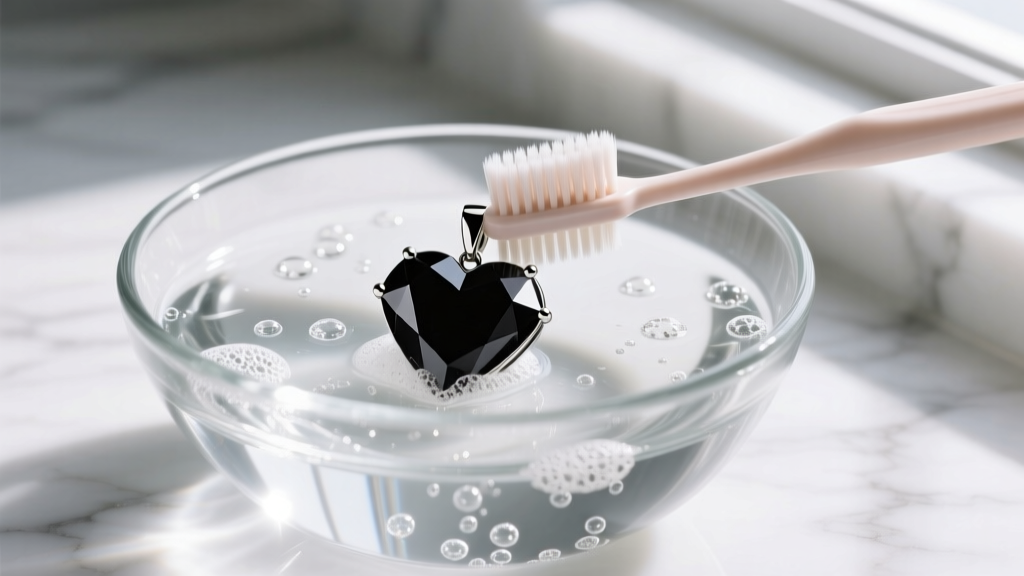
- Prepare the Bath: Mix the distilled water and dish soap in a small glass bowl. Ensure the water is lukewarm—never hot, as thermal shock can fracture treated black diamonds.
- The Soak: Submerge the black diamond heart necklace for exactly 10 to 15 minutes. This allows the surfactants in the soap to break down the hydrophobic oils trapped in the porous inclusions of the diamond.
- The Agitation: Gently brush the stone. Pay special attention to the back of the pendant (the pavilion), where skin oils accumulate. Brush in a circular motion, avoiding aggressive scrubbing directly against the prongs.
- The Rinse: Rinse the necklace under a slow stream of lukewarm distilled water. Crucial: Always place a mesh strainer over the drain before rinsing any fine jewelry.
- The Dry: Pat the piece dry with a microfiber cloth. Never use paper towels or tissue paper; the wood fibers can scratch precious metals and leave microscopic lint wedged in the heart's cleft.
Cleaning Methods: Safety Matrix by Diamond Type
Not all cleaning technologies are safe for all black diamonds. Use the matrix below to determine which modern cleaning methods are appropriate for your specific stone type.
| Cleaning Method | Natural Carbonado | Irradiated / Treated | Lab-Grown Black |
|---|---|---|---|
| Ultrasonic Cleaners | Unsafe (Vibrations exploit porosity) | High Risk (Can shatter internal fractures) | Safe (If setting is secure) |
| Steam Cleaners | Unsafe (Forces moisture into pores) | High Risk (Thermal shock danger) | Safe |
| Ammonia-Based Dips | Unsafe (Degrades stone polish) | Unsafe (Reacts with fracture fillers) | Safe (But harsh on metals) |
| Manual Soapy Soak | Highly Recommended | Highly Recommended | Highly Recommended |
Metal-Specific Maintenance: White Gold vs. Sterling Silver
The care of your black diamond heart necklace extends beyond the gemstone to the metal setting. Black diamonds are most commonly set in 14k or 18k white gold, yellow gold, or sterling silver to maximize visual contrast.
White Gold and Rhodium Plating
If your pendant is set in white gold, it is likely plated with rhodium to achieve a bright, silvery finish. Over time, the natural acidity of your skin and friction from clothing will wear this plating away, revealing the slightly yellowish underlying gold alloy. Avoid polishing your white gold setting with abrasive jeweler's rouge, as this will strip the rhodium even faster. When the pendant begins to look dull or yellowish, it requires professional rhodium re-plating, a service that typically costs between $40 and $80 depending on the complexity of the heart setting.
Sterling Silver and Tarnish Prevention
Sterling silver (925) is highly reactive to sulfur in the air, leading to black tarnish. Because black diamonds are already dark, a tarnished silver setting can make the entire piece look muddy and poorly defined. To prevent this, store the necklace in an anti-tarnish cloth pouch infused with silver-shield technology. If tarnish occurs, use a dedicated silver polishing cloth on the metal only, taking care not to rub the polishing compound into the porous surface of a natural carbonado diamond.
Professional Servicing and Storage
While home maintenance is essential, it does not replace professional oversight. You should take your black diamond heart necklace to a certified bench jeweler every 12 to 18 months. The jeweler will perform a microscopic prong inspection, tighten the bail (the loop that connects the pendant to the chain), and check the structural integrity of the chain's clasp.
For daily storage, never toss the necklace into a communal jewelry box. Black diamonds are a 10 on the Mohs hardness scale, meaning they will easily scratch softer gemstones, pearls, and even the metal chains of other necklaces. Always store the piece individually in a soft, lint-lined compartment or a dedicated velvet pouch, ensuring the chain is fully fastened to prevent it from tangling around the delicate prongs of the heart pendant.
Final Thoughts
A black diamond heart necklace is an investment in unconventional beauty. By understanding the unique gemological properties of your specific stone and respecting the structural vulnerabilities of the heart motif, you can preserve its dark, romantic brilliance for decades. Ditch the harsh chemicals and ultrasonic machines; stick to gentle, manual cleaning protocols, and your pendant will continue to make a striking statement for years to come.


