The Gunda Necklace: 2026 Trend Guide To Heritage Maximalism
Discover how the traditional multi-strand Gunda necklace is driving the 2026 heritage maximalism trend, with styling tips, material grades, and pricing.

The Resurgence of the Gunda Necklace in 2026
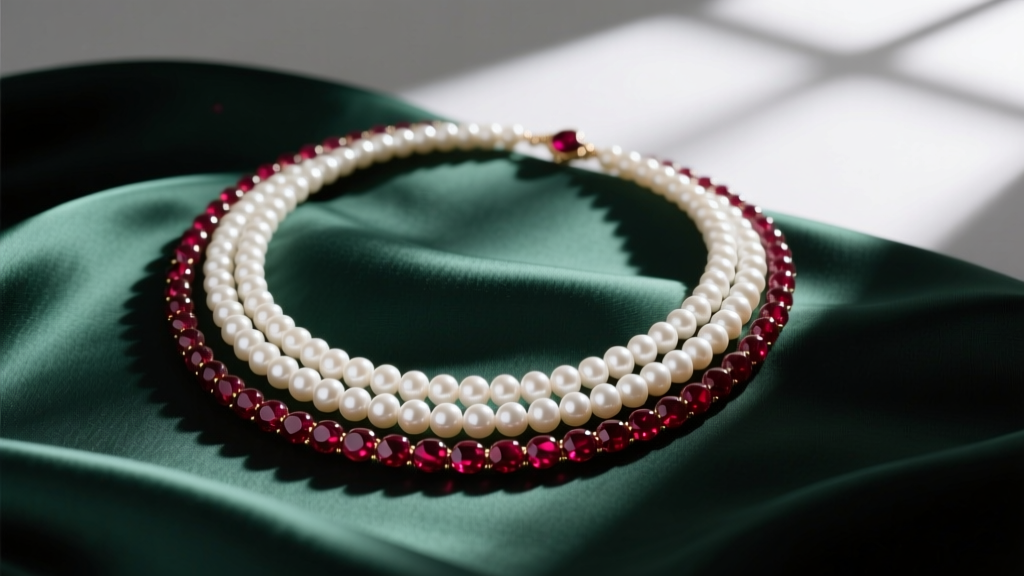
In the ever-evolving landscape of fine jewelry, 2026 has firmly established 'Heritage Maximalism' as the dominant aesthetic. At the very center of this movement is the Gunda necklace. Historically rooted in the royal courts of Rajasthan and Gujarat, the traditional Gunda (or Gunda mala) is a multi-strand collar or choker characterized by its dense layering of small beads—typically seed pearls, coral, or glass—often interspersed with gold, polki (uncut diamond), or meenakari (enamel) spacers. Once reserved exclusively for bridal trousseaus and heavy ceremonial wear, the Gunda necklace has been radically reimagined for the modern wardrobe. Today, it serves as the ultimate statement piece for fashion-forward individuals who appreciate the intersection of historical craftsmanship and contemporary edge.
According to the Victoria and Albert Museum's extensive jewelry archives, multi-strand Indian necklaces have long been symbols of status and regional identity. However, the 2026 iteration strips away the rigid ceremonial rules, focusing instead on the tactile, visual weight of the piece. Designers are playing with asymmetrical strand counts, mixing matte and high-gloss beads, and introducing modern, ergonomic clasps that make these heavy pieces viable for all-day wear.
Anatomy of a Gunda: Strand Counts and Bead Gauges
To truly understand the Gunda necklace, one must look at its structural anatomy. Unlike a standard single-strand pearl necklace, a true Gunda relies on the tension and drape of multiple parallel strands. The most common configurations range from 3 to 7 strands, though archival vintage pieces can feature up to 12 strands for a solid, bib-like collar effect.
Bead Sizing and Material Grades
The visual impact of a Gunda necklace is heavily dictated by the gauge of its beads. Traditional pieces utilize 2mm to 3mm seed pearls or glass beads, requiring thousands of individual beads to complete a single necklace. In 2026, contemporary jewelers are introducing 'chunky' Gunda variations using 4mm to 6mm cultured freshwater pearls or polished resin beads. This not only reduces the overall bead count (and stringing time) but also gives the necklace a bolder, more graphic silhouette that pairs exceptionally well with minimalist tailoring.
When evaluating pearl-based Gunda necklaces, the Gemological Institute of America (GIA) notes that luster and surface cleanliness are paramount. Because multi-strand necklaces require thousands of matched pearls, even minor variations in luster can make the piece look muddy. High-end contemporary Gunda necklaces utilize AAA-grade cultured freshwater pearls, ensuring a sharp, mirror-like reflection across all five to seven strands.
Styling the Gunda: Fusion Maximalism and Western Necklines
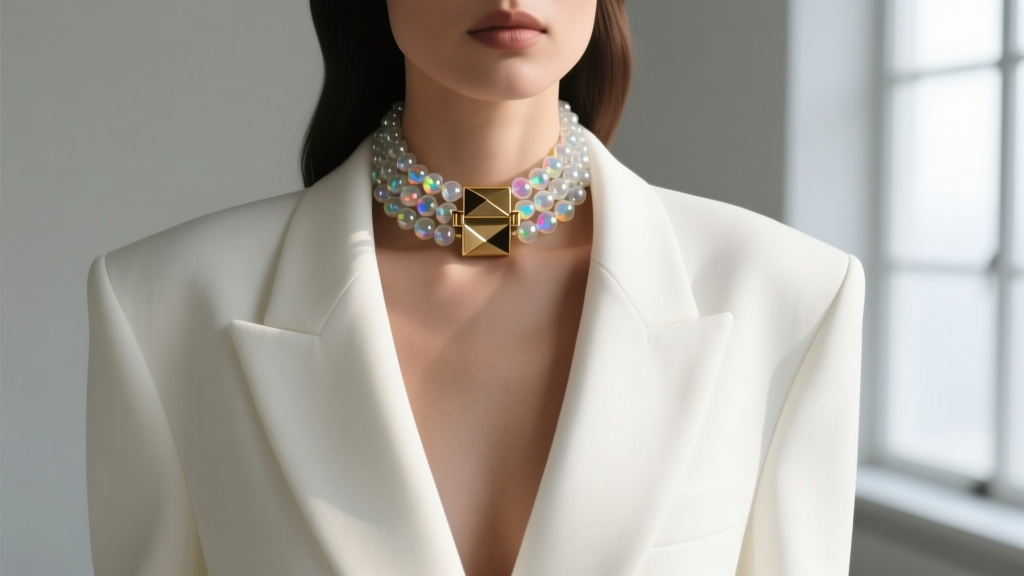
The most significant shift in the 2026 trend cycle is how the Gunda necklace is styled. The days of pairing it exclusively with traditional silk sarees or lehengas are over. The current 'Fusion Maximalism' trend demands contrast. The heavy, intricate, and deeply historical nature of the Gunda necklace is best showcased against stark, modern, and minimalist Western silhouettes.
- The Oversized Blazer: A 5-strand pearl Gunda worn over a crisp, white, oversized menswear blazer creates a striking juxtaposition. The deep V-neckline of the open blazer frames the collarbone, allowing the necklace to sit flat against the skin without competing with fabric folds.
- The Silk Slip Dress: For evening wear, a dark, moody Gunda featuring black onyx beads and ruby spacers draped over a minimalist champagne silk slip dress offers an effortless, bohemian-chic aesthetic.
- The Turtleneck Canvas: In cooler months, wearing a shorter, 3-strand coral Gunda tightly around the neck over a fitted black merino wool turtleneck turns the jewelry into a structural, almost architectural collar.
Material Breakdown: Authentic Vintage vs. Contemporary Fusion
When shopping for a Gunda necklace, buyers are generally split between three distinct market tiers. Understanding the material grades, stringing methods, and pricing is crucial for making an informed investment.
| Material Grade | Avg. Bead Size | Stringing Method | Price Range (USD) | Avg. Weight |
|---|---|---|---|---|
| Vintage Polki & Natural Pearl | 2mm - 3mm | Silk with French Wire | $2,500 - $8,000+ | 120g - 200g |
| Cultured Freshwater Pearl | 3mm - 5mm | Nylon-Coated Steel | $400 - $1,500 | 80g - 140g |
| Boho Fusion (Glass/Resin) | 4mm - 8mm | Elasticated Cord | $80 - $250 | 40g - 90g |
For the serious collector, vintage pieces featuring natural pearls and uncut diamonds (polki) offer unparalleled historical value. However, for the fashion-conscious buyer looking to participate in the 2026 trend without the heirloom price tag, the Cultured Freshwater Pearl tier offers the best balance of luxury, durability, and visual impact.
Troubleshooting the Weight: Failure Modes and Fixes
The most common complaint regarding multi-strand Gunda necklaces is their weight. A traditional 7-strand pearl Gunda can easily exceed 180 grams. This introduces several structural and comfort-related failure modes that buyers and jewelers must address.
The 'Nape Pull' and Choke Effect
When a multi-strand necklace is too heavy in the front and lacks a counterbalance in the back, gravity pulls the front downward. This causes the back of the necklace to ride up the nape of the neck, creating a choking sensation and causing the strands to tangle. The Fix: Modern jewelers are solving this by integrating a curved, suede-backed leather panel at the nape. This distributes the weight across a wider surface area and provides friction against the skin, preventing the necklace from sliding forward. Alternatively, adding a discreet 30-gram counterweight to the clasp area restores balance.
Silk Degradation and Strand Snapping
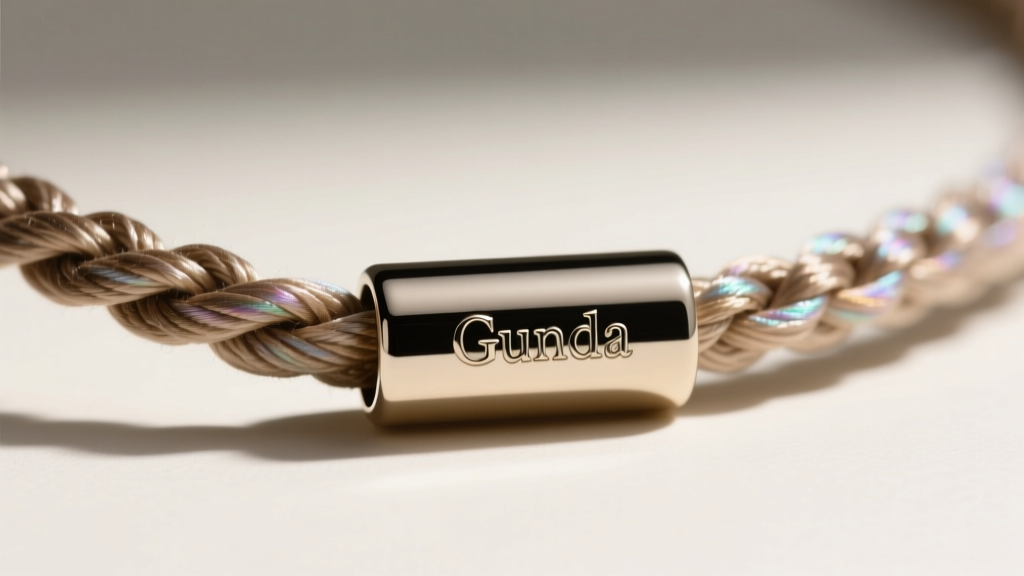
Historically, Gunda necklaces were strung on pure silk thread. While silk drapes beautifully, it is highly susceptible to degradation from sweat, cosmetics, and natural skin acids. A 150-gram necklace strung on degraded silk is a catastrophic failure waiting to happen. The Fix: If you are buying a contemporary piece or restringing a vintage one, insist on Bealon or a similar nylon-coated stainless steel wire (typically 0.018-inch or 0.45mm gauge for heavy multi-strand pieces). This provides the drape of silk with the tensile strength of steel, virtually eliminating the risk of mid-wear snapping.
Clasp Slippage
Many modern brands attempt to use magnetic clasps for ease of wear. However, standard magnetic clasps are rated for roughly 50 to 80 grams of pull-force. On a 150-gram Gunda necklace, the magnetic seal will fail the moment the wearer looks down or moves abruptly. The Fix: Opt for a multi-strand box clasp with a double figure-eight safety latch, or a heavy-duty screw-barrel clasp. If you prefer the convenience of magnets, ensure the piece utilizes rare-earth neodymium magnets encased in a twist-lock housing.
How to Source and Authenticate
When sourcing a Gunda necklace, particularly in the vintage or antique market, always inspect the drill holes of the beads. Natural pearls and older glass beads will show slight chipping or irregularity around the drill hole, whereas modern, mass-produced resin beads will have perfectly clean, laser-drilled holes. Furthermore, examine the spacers. Authentic meenakari (enamel) work will feel slightly raised and have a glass-like, vitreous luster, while cheap painted resin will feel flat and may show brush strokes under a 10x jeweler's loupe.
Final Verdict: Is the Gunda Right for Your Collection?
The Gunda necklace is not for the minimalist. It is a loud, unapologetic celebration of texture, history, and volume. For 2026, it represents a rebellion against the ultra-delicate, barely-there chains that dominated the previous decade. If you are looking to anchor your jewelry collection with a single, transformative piece that bridges the gap between ancient artisanal heritage and cutting-edge modern styling, a well-constructed, ergonomically balanced Gunda necklace is an unparalleled investment. Just remember to prioritize structural integrity—opt for steel-core stringing and secure mechanical clasps—and let the heritage maximalism speak for itself.


