Hammered Gold Necklace Guide: Textures, Karats and Care
Discover everything about hammered gold necklaces. Learn how to choose the right karat, understand texture types, and care for your jewelry.

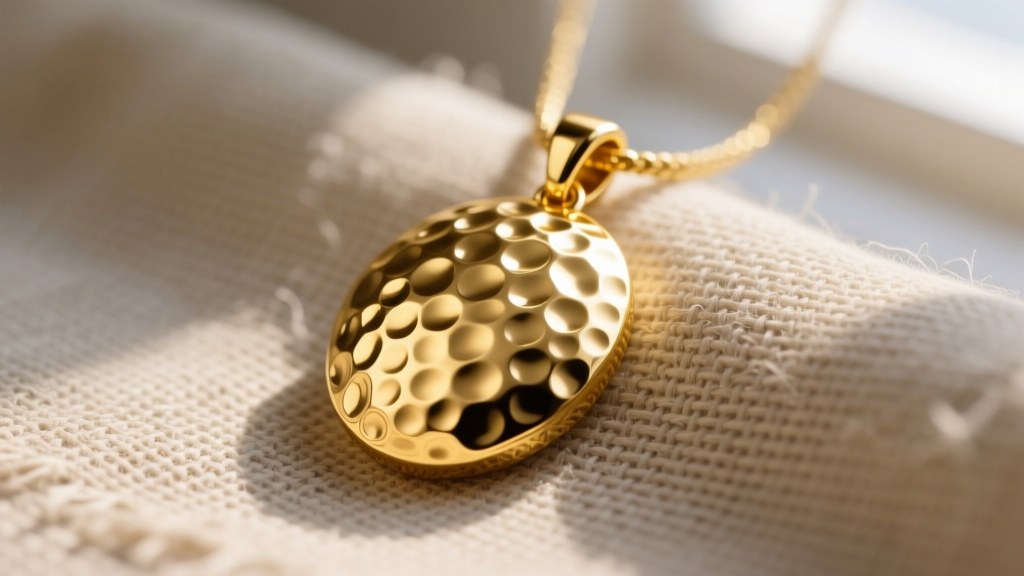
The Beginner's Guide to Hammered Gold Necklaces
When you first start exploring fine jewelry, the sheer volume of finishes, textures, and metal treatments can feel overwhelming. Among the most sought-after artisanal finishes is the hammered gold necklace. Unlike high-polish or matte finishes, hammering introduces an organic, light-catching topography to the metal. It bridges the gap between raw, ancient metalworking and modern, wearable elegance. But what exactly happens to the gold when it is hammered? How do you choose the right karat for a textured piece, and how does the pricing compare to smooth alternatives? This guide breaks down the metallurgy, styling, and maintenance of hammered gold to help you make an informed, confident purchase.
The Metallurgy: What Hammering Actually Does to Gold
To understand the value of a hammered gold necklace, you must first understand the physical transformation the metal undergoes. Hammering is not merely a cosmetic surface treatment; it is a structural alteration. When a jeweler strikes gold with a steel hammer, they are inducing a process called work-hardening (or strain hardening).
At a microscopic level, gold has a crystalline lattice structure. Striking the metal introduces 'dislocations'—defects in this crystal structure that tangle and lock together. According to the Gemological Institute of America (GIA), this dislocation density increases the metal's yield strength and Vickers hardness. In practical terms, a 20-gauge sheet of 14k gold that has been properly hammered will be significantly more resistant to bending and denting than a smooth, annealed (softened) sheet of the exact same thickness. This is why hammered gold pendants and chokers hold their structural integrity so well over decades of daily wear.
Decoding the Texture: Peened vs. Planished
Not all hammered finishes look the same. The visual effect depends entirely on the shape of the hammer's head and the force applied. Here is a breakdown of the three primary hammering techniques you will encounter when shopping.
| Texture Type | Tool Used | Visual Effect | Best For |
|---|---|---|---|
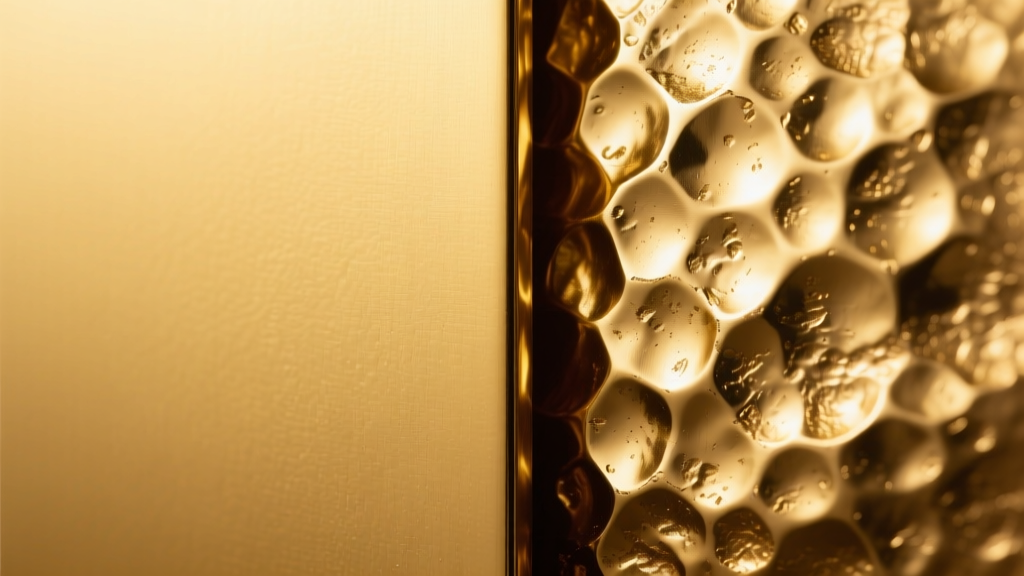
| Peened (Dimpled) | Ball-peen hammer | Overlapping, crater-like indentations; highly rustic. | Bohemian styles, thick statement pendants. |
| Planished (Smooth) | Planishing hammer (flat, polished face) | Subtle, faceted ripples; catches light like a disco ball. | Everyday layering, delicate 18k chains. |
| Raw / Organic | Cross-peen or textured mallet | Deep, linear gouges or asymmetrical bark-like patterns. | Avant-garde, one-of-a-kind artisan pieces. |
For beginners, a planished finish is usually the safest entry point. It offers the artisanal charm of hand-forged jewelry without looking overly distressed, making it easy to pair with both casual and professional wardrobes.
Choosing the Right Karat for Hammered Textures
Gold purity dramatically affects how well a piece takes to hammering. Pure gold (24k) is incredibly malleable. While it can be hammered, the deep indentations of a peened texture will slowly flatten out over years of friction against skin and clothing. Therefore, alloyed gold is the industry standard for textured necklaces.
- 10k Gold (41.7% pure): Extremely hard and durable. It holds sharp, deep hammer marks beautifully, but the pale yellow color lacks the warmth desired by most fine jewelry buyers.
- 14k Gold (58.5% pure): The sweet spot for daily-wear hammered necklaces. It offers excellent structural memory (meaning the dimples won't rub flat) while maintaining a rich, classic yellow hue.
- 18k Gold (75% pure): Prized for its deep, buttery color. Because it is softer than 14k, jewelers must carefully anneal (heat and cool) the metal during the hammering process to prevent micro-fractures. It is ideal for planished, lighter textures.
- 22k Gold (91.6% pure): Rarely used for deeply peened designs due to its softness, but occasionally used in traditional Middle Eastern and Indian heritage jewelry where shallow, broad hammer marks are applied to heavy, rigid collars.
2026 Pricing Expectations: What Should You Pay?
Because hammering is a labor-intensive, manual process, you are paying for the artisan's time as much as the raw material. A machine-stamped 'fake' hammered texture will look uniform and lifeless, whereas genuine hand-hammering features slight, beautiful irregularities. Here is a realistic pricing framework for authentic, hand-forged pieces in the current market:
- Delicate 14k Planished Pendant (1-2 grams): $180 - $350. Often sold with a lightweight 16-inch cable chain.
- Medium 14k Peened Bar Necklace (4-6 grams): $450 - $750. A popular choice for horizontal bar pendants resting on the collarbone.
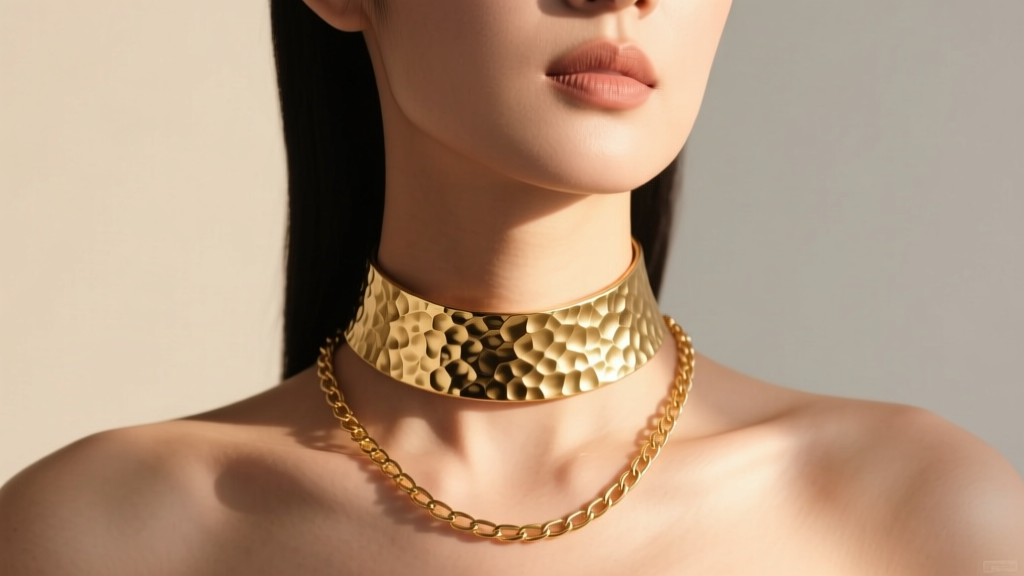
- Heavy 18k Hammered Choker (15-25 grams): $1,800 - $3,500+. These require significant bench time and advanced annealing techniques to prevent the thick wire or sheet from snapping during forging.
Pro Tip: Always check the gram weight. If a seller is offering a 'heavy' hammered gold necklace for under $200, it is almost certainly gold-plated brass or features a machine-stamped texture masked by misleading photography.
Styling and Neckline Pairings
The multifaceted surface of a hammered gold necklace interacts with light differently than a smooth mirror finish. It scatters light, creating a softer, more diffused glow. This makes it incredibly forgiving and versatile for styling.
'The beauty of a hammered texture is its ability to look intentional yet effortless. It bridges the gap between a polished corporate look and a relaxed weekend aesthetic without needing to be changed.'
For V-Necks and Scoop Necks: Opt for a Y-drop or a lariat style with a hammered teardrop pendant. The texture draws the eye downward, elongating the neck. For Crew Necks and Turtlenecks: Choose a shorter, 16-inch planished choker or a thick, hammered paperclip chain. The contrast between the soft fabric and the metallic, light-catching texture creates a striking visual anchor. Layering: Mix textures. Pair your hammered gold pendant with a smooth, high-polish rope chain and a matte-finished snake chain. The juxtaposition of finishes highlights the artisanal quality of the hammered piece.
Care and Maintenance: Preserving the Patina
Caring for a hammered gold necklace requires a slightly different approach than caring for a smooth, high-polish piece. The valleys and crevices created by the hammer strikes can trap lotions, perfumes, and environmental dust.
According to guidelines from Jewelers of America, ultrasonic cleaners are generally safe for solid, un-stone-set gold. However, the high-frequency vibrations can sometimes force dirt deeper into the microscopic pores of a raw, peened texture. Instead, follow this beginner-friendly cleaning routine:
- The Soak: Mix a few drops of mild, phosphate-free dish soap (like Dawn) into a bowl of lukewarm water. Let the necklace soak for 10 minutes.
- The Agitation: Use a brand-new, ultra-soft baby toothbrush to gently sweep across the texture. Do not scrub in circles; brush in the direction of the hammer strikes to avoid creating microscopic scratch patterns on the peaks.
- The Rinse and Dry: Rinse thoroughly under warm running water. Pat dry with a lint-free microfiber cloth. Avoid paper towels, as the wood pulp fibers can snag on the rougher edges of a peened finish.
Over time, the 'peaks' of the hammered texture will naturally polish from friction against your skin, while the 'valleys' will retain a slightly darker, oxidized patina. Do not use aggressive liquid silver dips or harsh chemical polishes to remove this contrast; this two-tone depth is exactly what gives vintage and well-loved hammered gold its unparalleled character.


