Expert Care & Cleaning Guide for a Bow Silver Necklace
Discover expert tips to clean, polish, and store your bow silver necklace. Prevent tarnish and keep your sterling silver jewelry shining brilliantly.

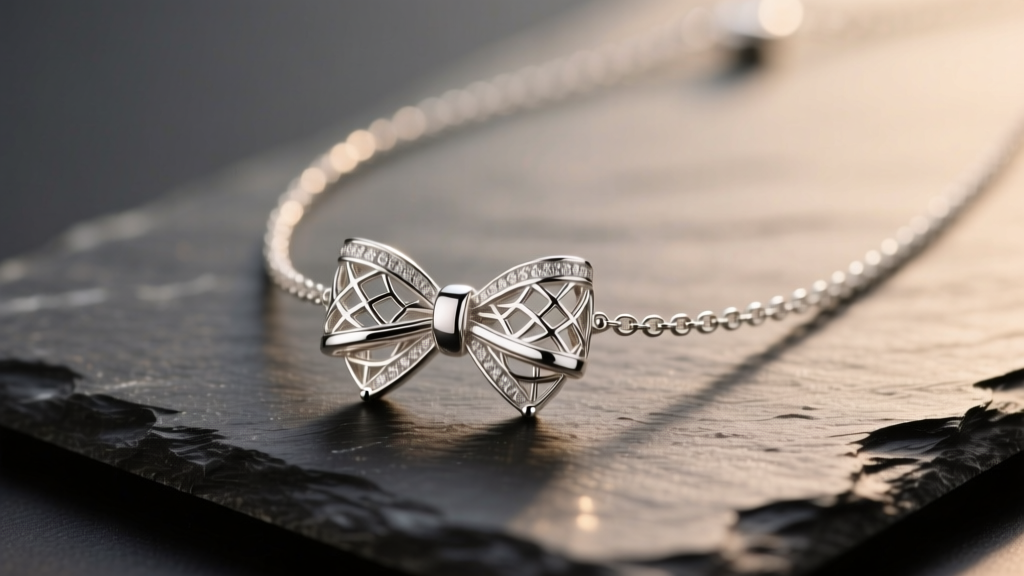
The architectural loops and delicate ribbons of a bow silver necklace make it a timeless symbol of femininity and grace. As of 2026, the continued dominance of the coquette and balletcore aesthetics has cemented the bow motif as a staple in fine jewelry collections. However, the intricate crevices and overlapping metal folds of a bow design make it uniquely susceptible to trapping oils, lotions, and environmental sulfur. Proper maintenance is not just about aesthetics; it is about preserving the structural integrity and light-reflecting facets of your sterling silver piece.
This comprehensive guide dives deep into the metallurgy of sterling silver, providing actionable, expert-level cleaning protocols and storage frameworks to ensure your bow silver necklace remains pristine for decades.
The Chemistry of Silver Tarnish: Why Your Bow Necklace Darkens
To properly care for your jewelry, you must first understand the enemy. Pure silver (99.9%) is highly resistant to tarnish, but it is too soft to hold the rigid, sculptural shape of a bow pendant. Therefore, jewelers use .925 sterling silver, an alloy comprising 92.5% pure silver and 7.5% copper or zinc.
It is this 7.5% copper that causes tarnish. When copper is exposed to moisture and hydrogen sulfide in the atmosphere, it undergoes a chemical reaction that creates silver sulfide, a dark, dull layer on the surface. The overlapping folds of a bow pendant create micro-environments where moisture and sulfur compounds become trapped, accelerating localized tarnishing in the deepest crevices of the ribbon design.
Step-by-Step Cleaning Routine for Sterling Silver Bows
According to the Gemological Institute of America (GIA), regular, gentle cleaning is vastly superior to aggressive, infrequent polishing, which can strip away microscopic layers of silver over time. Choose your method based on the level of oxidation.
Method 1: The Mild Surfactant Soak (For Light Soil and Oils)
This method is ideal for removing daily sebum, skincare residue, and light environmental dust without altering the silver's patina.
- Prepare the Solution: Mix three drops of phosphate-free, mild dish soap (like Dawn) into a bowl of lukewarm distilled water. Avoid tap water, as chlorine and hard minerals can cause spotting.
- Soak: Submerge your bow silver necklace for exactly 5 to 7 minutes. Do not exceed this, as prolonged water exposure can weaken the silk or cotton threads if your piece features mixed media.
- Agitate Gently: Use an extra-soft baby toothbrush (bristles must be under 0.15mm in diameter) to gently sweep the crevices of the bow. Brush in the direction of the metal's grain or the sculptural flow of the ribbon.
- Rinse and Dry: Rinse under a gentle stream of distilled water. Pat dry with a lint-free microfiber cloth, then use a hairdryer on the 'cool' setting to evaporate moisture trapped in the bow's knots.
Method 2: Electrochemical Reduction (For Heavy, Black Tarnish)
If your bow necklace has been neglected and features heavy black silver sulfide buildup, mechanical polishing will scratch the piece. Instead, use a redox (reduction-oxidation) reaction to reverse the tarnish chemically.
- Line a glass baking dish with heavy-duty aluminum foil, shiny side up.
- Place the necklace flat on the foil, ensuring the silver touches the aluminum.
- Sprinkle 2 tablespoons of baking soda and 1 tablespoon of non-iodized salt over the piece.
- Pour boiling water into the dish until the necklace is fully submerged. You will immediately see bubbling and smell a faint sulfur (rotten egg) odor. This is the sulfur transferring from the silver to the aluminum.
- Leave for 3 to 5 minutes. Remove with wooden tongs, rinse thoroughly in distilled water, and dry completely.
Critical Warning: Never use this method if your bow necklace is set with pearls, turquoise, opals, or emeralds. The boiling water and alkaline solution will destroy the hydration and structural integrity of porous and treated gemstones.
Polishing Techniques and Rhodium Plating Considerations
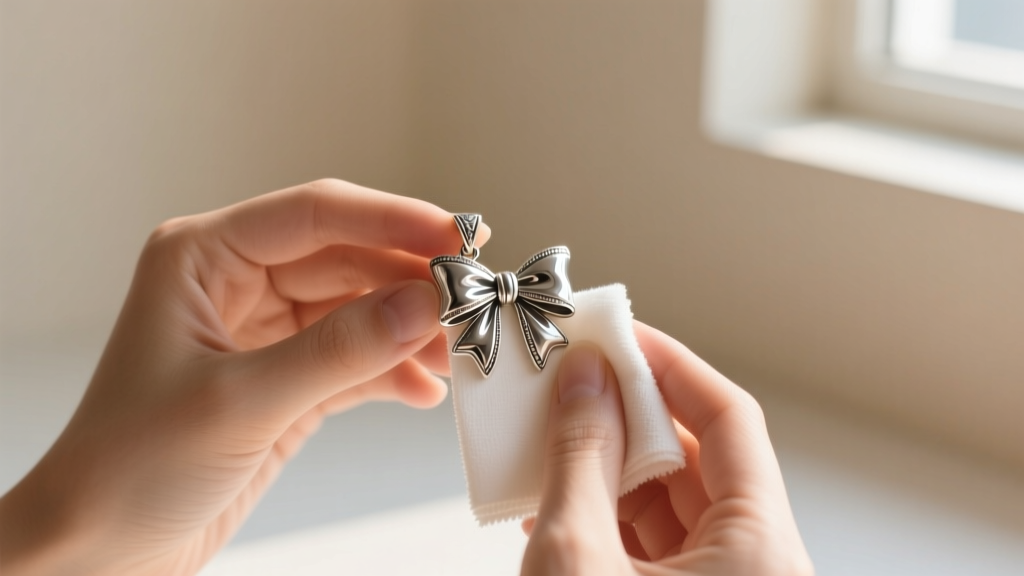
When polishing a bow silver necklace, the tool you use is just as important as the technique. Never use paper towels, tissues, or standard clothing. These materials contain wood pulp fibers that are harder than silver and will inflict microscopic, swirling scratches across the high-polish surfaces of the bow.
Instead, invest in a high-quality jeweler's rouge cloth (such as a Sunshine Polishing Cloth). These 100% cotton flannel cloths are impregnated with micro-abrasives and anti-tarnish agents. Fold the cloth and use the edge to glide through the tight loops and knots of the bow pendant. Use a soft, untreated flannel cloth to buff away any residual rouge.
The Rhodium Factor
Many premium bow silver necklaces released in recent years feature a rhodium plating over the sterling silver. Rhodium is a platinum-group metal that provides a brilliant, mirror-like finish and makes the silver completely impervious to tarnish. If your necklace has a distinctly cool, chrome-like reflectivity and does not tarnish over time, it is likely rhodium-plated. Do not use abrasive polishing cloths on rhodium-plated silver, as you will strip the plating and expose the raw sterling silver underneath. Clean rhodium pieces using only the mild surfactant soak (Method 1).
Common Cleaning Mistakes to Avoid
To protect the delicate geometry of your bow pendant, avoid the following common household cleaning agents. Forbes Advisor and jewelry conservationists consistently warn against these harsh chemicals.
| Cleaning Agent | Chemical Effect on .925 Silver | Expert Verdict |
|---|---|---|
| Toothpaste | Contains hydrated silica (abrasive) and fluoride, which can cause micro-scratching and dull high-polish finishes. | Avoid |
| Bleach / Chlorine | Causes rapid, irreversible oxidation and can permanently pit the copper alloy, leading to structural weakness. | Never Use |
| Ultrasonic Cleaners | High-frequency cavitation can loosen prong settings or fracture internal stress points in cast silver bows. | Avoid for intricate casts |
| Rubbing Alcohol | Safe for bare silver, but will strip protective lacquers and damage any glued-in gemstone accents. | Use with extreme caution |
Proper Storage Techniques to Prevent Future Tarnish
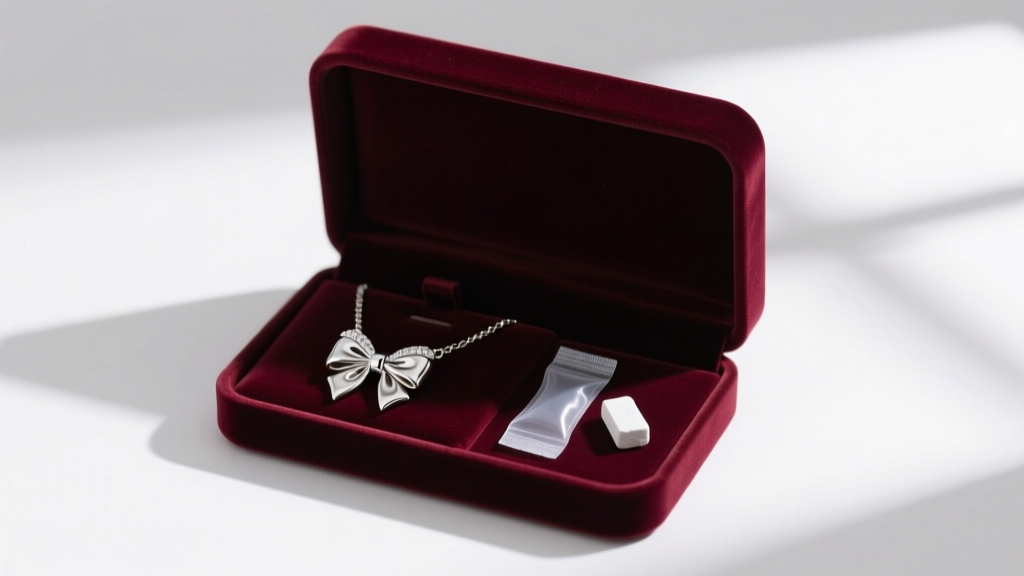
How you store your bow silver necklace when it is not being worn dictates how often you will need to clean it. The goal of storage is to eliminate exposure to humidity and airborne sulfur compounds.
- Anti-Tarnish Strips: Place a 3M anti-tarnish strip in your jewelry box. These strips contain copper-based polymers that sacrificially absorb sulfur gases from the air, protecting your silver. Replace them every 6 months.
- Pacific Silvercloth: For long-term storage, wrap the necklace in a Pacific Silvercloth pouch. This specialized cotton fabric is embedded with microscopic silver particles that capture tarnish-causing gases before they reach your necklace.
- Humidity Control: Never store your jewelry in a bathroom. The drastic fluctuations in heat and humidity from showers create a condensation cycle that rapidly accelerates copper oxidation. Store your pieces in a bedroom closet or dresser with a silica gel desiccant packet.
- Physical Protection: The loops of a bow pendant can easily snag on other chains, causing micro-bends or scratches. Always store your bow necklace flat, fully unclasped to prevent knotting, and isolated from harder gemstones like diamonds or sapphires.
Maintenance Schedule for Daily Wearers
If you wear your bow silver necklace daily, the natural oils from your skin can actually help slow down tarnish by creating a microscopic barrier against airborne sulfur. However, a structured maintenance routine is still required.
The Golden Rule of Jewelry Wear: Always apply your perfumes, hairsprays, and lotions at least 15 minutes before putting on your silver necklace. The alcohol and chemical solvents in cosmetics are primary catalysts for rapid silver degradation.
- Daily: Wipe the pendant gently with a dry, untreated microfiber cloth before bed to remove daily sebum and sweat.
- Weekly: Inspect the jump ring and clasp for any signs of bending or weakening. The weight of a solid silver bow can put stress on lightweight chains.
- Monthly: Perform the mild surfactant soak (Method 1) to clear out trapped debris from the bow's crevices.
- Annually: Take the piece to a professional jeweler for a high-pressure steam clean and a structural integrity check, especially if the bow features pave diamond accents.
By understanding the metallurgical realities of sterling silver and adhering to these precise cleaning protocols, your bow silver necklace will retain its sculptural brilliance and remain a flawless centerpiece in your collection for years to come.


