Hamsa and Evil Eye Necklace Materials: A Durability & Care Guide
Compare metals, enamels, and glass for your hamsa and evil eye necklace. Learn which materials resist tarnish, prevent allergies, and last longest.

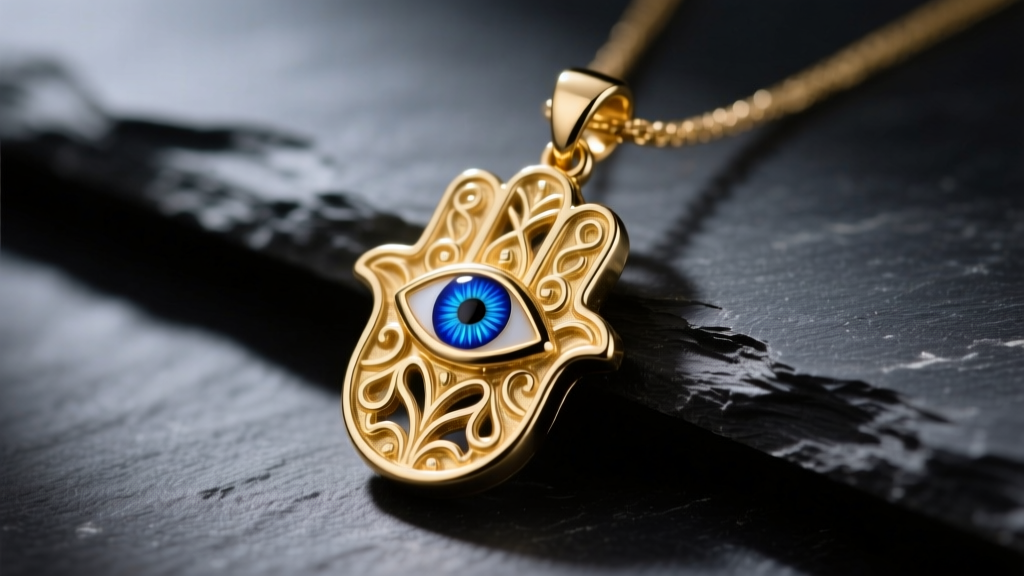
The Anatomy of Protection: Base Metals and Their Alloys
Hamsa and evil eye necklaces are far more than mere fashion statements; they are ancient talismans designed to ward off negative energy and bring fortune to the wearer. However, the modern jewelry market is heavily saturated with mass-produced iterations that prioritize immediate visual appeal over long-term metallurgical integrity. When investing in a hamsa and evil eye necklace, understanding the material composition is critical to ensuring the piece survives daily wear without degrading, tarnishing, or causing contact dermatitis.
The longevity of any pendant relies entirely on its base metal. The hamsa hand, with its intricate fingers and detailed palm lines, requires a metal that can hold fine casting details while resisting the mechanical stress of daily movement. Below, we break down the three most common base metals used in these talismans, analyzing their specific alloy compositions and failure modes.
14k Gold: The Sweet Spot for Daily Wear
Pure 24k gold is far too soft for a daily-wear pendant; it will scratch, bend, and lose its shape within weeks. According to the Gemological Institute of America (GIA), 14k gold (comprising 58.5% pure gold and 41.5% alloy metals like copper, silver, and zinc) offers the optimal balance of richness and tensile strength. The copper content provides a warm hue and structural rigidity, making it highly resistant to the bending forces applied to the delicate fingers of a hamsa design. Expect to pay between $450 and $1,200 for a solid 14k gold hamsa pendant, excluding the chain.
925 Sterling Silver and the Tarnish Factor
Sterling silver is an alloy of 92.5% pure silver and 7.5% copper. While it offers a brilliant, reflective finish at a highly accessible price point ($40 to $150), the copper content makes it highly susceptible to oxidation. When exposed to sulfur compounds in the air, humidity, and human sweat, the copper reacts to form silver sulfide—the black tarnish that plagues unworn jewelry. To combat this, reputable jewelers apply a rhodium plating (typically 0.1 to 0.5 microns thick). While rhodium provides a brilliant, tarnish-proof shield, it is a sacrificial layer that will wear off in 12 to 24 months with daily friction, requiring eventual re-plating.
Brass and Zinc Alloys: The Budget Trap
Pendants priced under $25 are almost exclusively cast from brass (copper and zinc) or zinc alloys, often finished with a microscopic flash-plating of gold or silver. These materials are notorious for causing 'green skin'—a harmless but unsightly chemical reaction where the copper in the brass oxidizes upon contact with the acidic pH of human sweat. Furthermore, cheap alloys frequently contain nickel as a hardening agent, a known allergen that triggers contact dermatitis in up to 15% of the population. If you have sensitive skin, strictly avoid unverified brass or zinc alloy talismans.
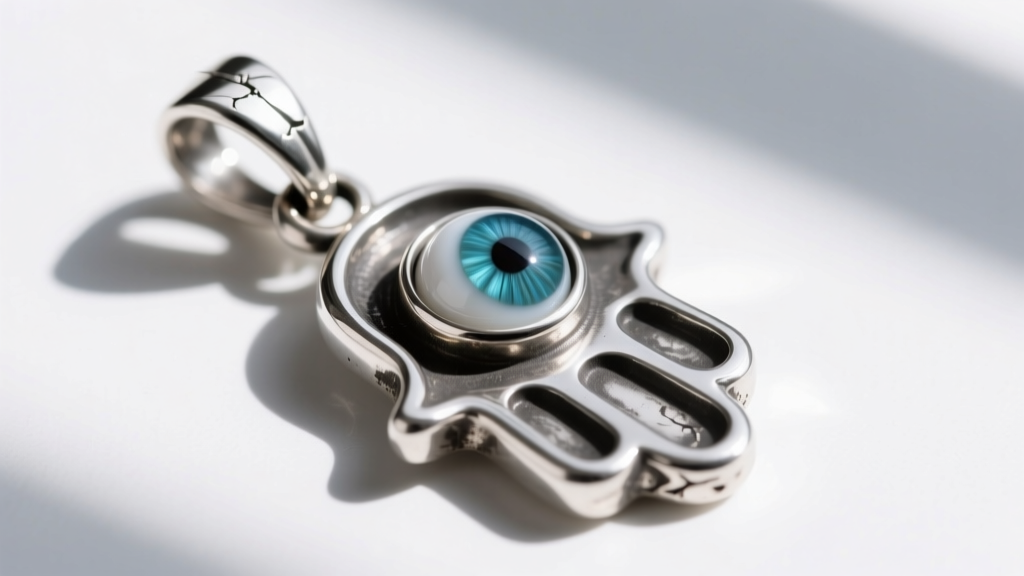
The 'Eye' Centerpiece: Glass vs. Enamel vs. Epoxy
The eye nestled in the palm of the hamsa is the focal point of the talisman, but its material dictates the necklace's overall fragility. The manufacturing technique used to create the blue and white eye drastically alters the pendant's lifespan and care requirements.
- Vitreous Enamel (Fired): This is the premium standard. Glass powder is fused to the metal base in a kiln at temperatures exceeding 1400°F. The resulting bond is essentially permanent, highly resistant to scratches (Mohs hardness of 5-6), and will never fade under UV light. It is the only enamel type suitable for heirloom-quality pieces.
- Cold Enamel (Epoxy Resin): Common in mid-tier jewelry ($50-$100), this is essentially a two-part pigmented epoxy painted into the metal recesses and air-dried. While it mimics the look of fired enamel, it is much softer (Mohs 2-3), prone to micro-scratches, and will inevitably yellow or become brittle after 3 to 5 years of UV exposure.
- Murano and Lampwork Glass: Traditional evil eye beads are crafted from glass. While beautiful and deeply rooted in Mediterranean tradition, glass beads are suspended via a drilled hole. If the hamsa pendant is dropped on a hard surface like tile or stone, the glass eye is highly susceptible to shattering due to its amorphous crystalline structure and lack of impact absorption.
Material Comparison Matrix: Longevity, Price, and Skin Reactivity
To help you navigate the market, we have compiled a data matrix comparing the most common material combinations found in modern hamsa and evil eye necklaces. This framework evaluates real-world durability against retail pricing.
| Base Metal | Eye Material | Est. Price Range | Tarnish Risk | Skin Reactivity | Expected Lifespan |
|---|---|---|---|---|---|
| Solid 14k Gold | Vitreous Enamel | $500 - $1,500+ | None | Hypoallergenic | Generational (50+ yrs) |
| 925 Sterling Silver | Murano Glass Bead | $60 - $180 | High (without Rhodium) | Low (if Nickel-free) | 10 - 20 years |
| Gold Vermeil (Silver base) | Cold Epoxy Enamel | $80 - $250 | Medium (Plating wears) | Low | 3 - 7 years |
| Brass / Zinc Alloy | Acrylic / Plastic | $10 - $35 | Extreme (Flash plated) | High (Nickel/Copper) | 6 months - 2 years |
Chain Selection: Matching the Pendant's Metallurgy
A heavy solid gold hamsa pendant will easily snap a delicate, hollow-cable chain. The chain is the structural suspension system for your talisman, and its metallurgy must match or exceed the pendant's weight and value.
Prone-to-Fail Chain Links and Clasps
When selecting a chain for a hamsa necklace, avoid box chains under 1.2mm in thickness. The sharp 90-degree angles of the box links create stress concentrations that easily kink and snap when subjected to the pendulum-like swinging motion of a heavy pendant. Instead, opt for cable chains or rolo chains (minimum 1.5mm), which distribute tensile stress evenly across rounded links.
Furthermore, discard the standard spring-ring clasp that comes with most retail chains. The internal spring mechanism is the weakest point of the necklace and frequently fails, resulting in lost pendants. Upgrade to a lobster claw clasp or a locking carabiner clasp, which feature a solid internal locking bar that prevents accidental unhooking when the chain is pulled or snagged on clothing.
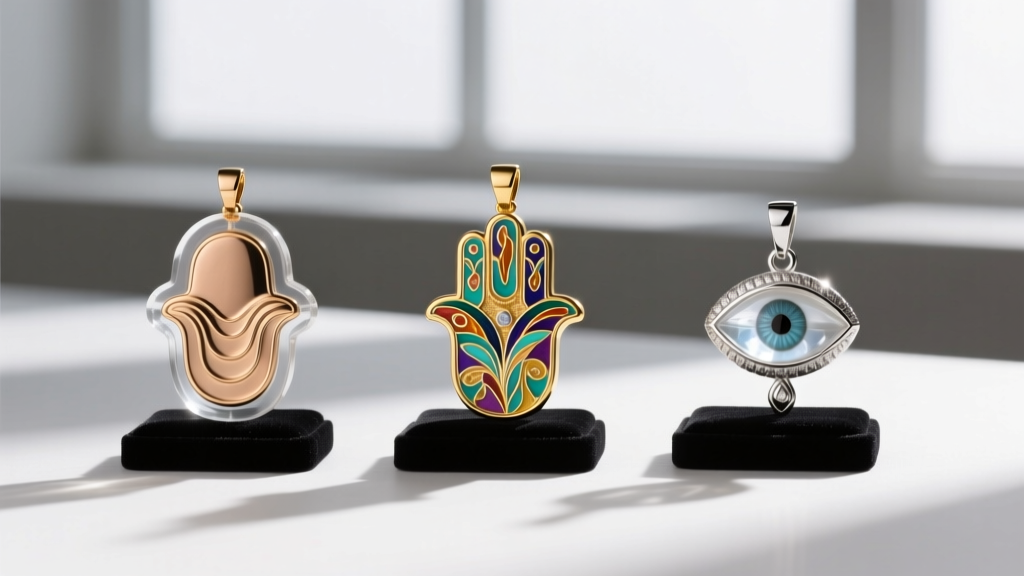
Care Protocols for Mixed-Material Talismans
Because a hamsa and evil eye necklace combines disparate materials (metal, glass, or enamel), standard jewelry cleaning methods can be disastrous. The Silver Institute warns against using harsh chemical dips on mixed-material pieces.
Expert Warning: Never place a hamsa pendant with a glass evil eye or cold epoxy enamel into an ultrasonic cleaner. The high-frequency acoustic cavitation bubbles will easily shatter glass beads and cause micro-fractures in epoxy resin, leading to cloudy, irreparable damage.
The Safe Cleaning Method
For routine maintenance of mixed-material talismans, use a solution of lukewarm distilled water and a few drops of pH-neutral dish soap. Submerge the necklace for no more than three minutes. Use an extra-soft, baby-bristle toothbrush to gently agitate dirt from the intricate crevices of the hamsa's fingers. Rinse thoroughly with distilled water (tap water contains chlorine and minerals that can spot the metal) and pat dry with a lint-free microfiber cloth. For sterling silver base metals showing early signs of sulfide tarnish, use a treated silver polishing cloth on the metal areas only, strictly avoiding the enamel or glass eye to prevent abrasive scratching.
By prioritizing high-integrity base metals, fired enamels, and structurally sound chains, your hamsa and evil eye necklace will transcend fast fashion, serving as a durable, protective heirloom capable of withstanding the rigors of daily life.


