Hand Necklace Meaning: Troubleshoot Symbol & Wear Issues
Discover the true hand necklace meaning to avoid cultural missteps. Learn expert fixes for pendant snagging, bail breakage, and metal tarnish.

Decoding the Hand Necklace Meaning: Avoiding Cultural Missteps
Hand motifs in jewelry are ancient, spanning multiple continents and belief systems. However, modern wearers frequently run into two distinct problems: misinterpreting the hand necklace meaning and dealing with the physical design flaws of hand-shaped pendants. Before troubleshooting the hardware, you must troubleshoot the symbolism to ensure your jewelry aligns with your intent and respects cultural boundaries.
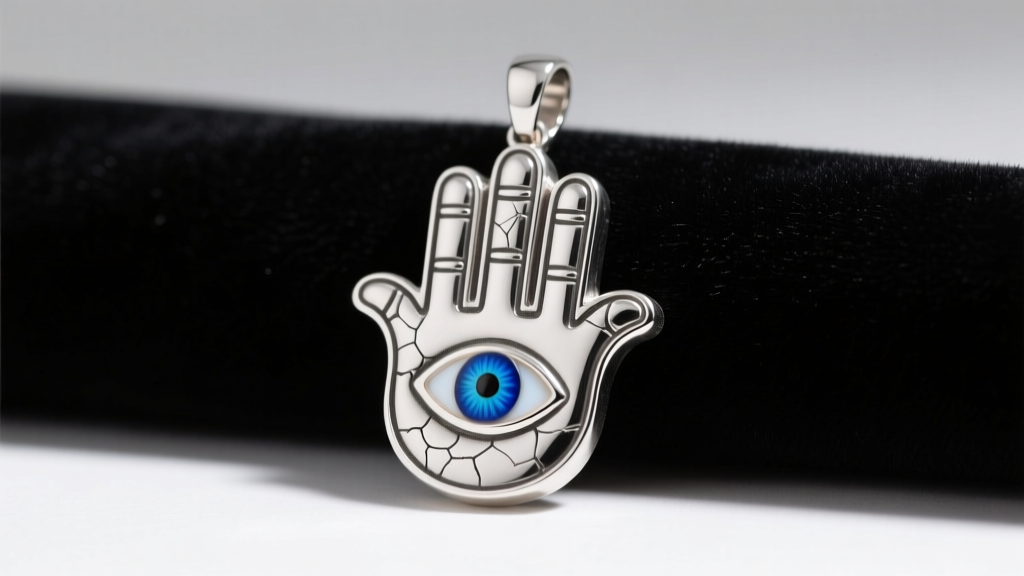
The most common hand pendant is the Hamsa (also known as the Hand of Fatima or Hand of Miriam). According to Britannica, this amulet is primarily used to ward off the evil eye. But orientation matters immensely. If you wear the Hamsa with the fingers pointing up, it acts as a shield against negativity. If worn with the fingers pointing down, it is an invitation for abundance and fertility. Wearing it sideways or unintentionally flipping it backward defeats the amulet's traditional purpose.
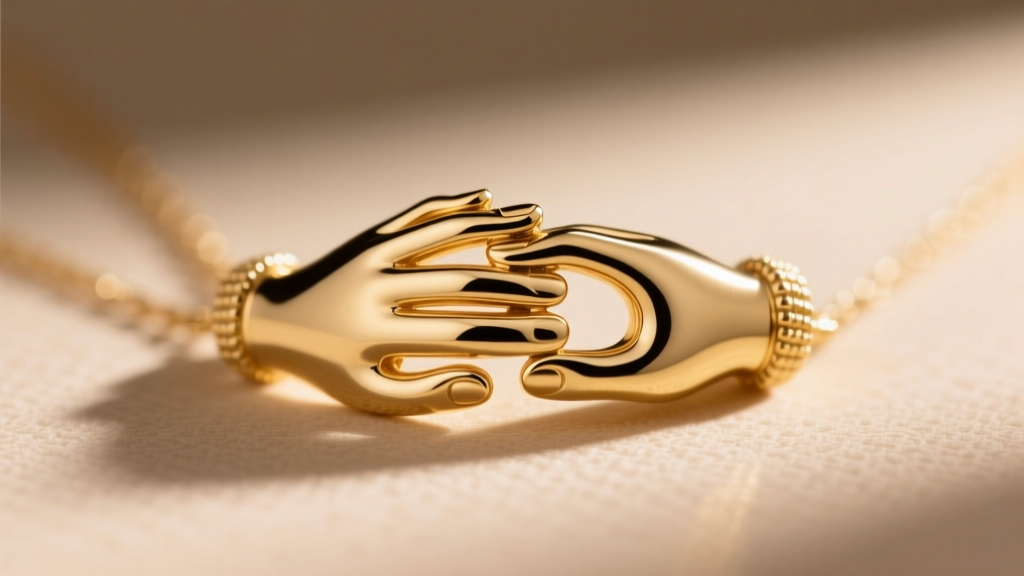
Other common motifs include interlocking hands (often tied to the Irish Claddagh or Victorian friendship tokens) and the "reaching" hand, popularized in spiritual and bohemian aesthetics. The troubleshooting rule here is clarity: never mix conflicting symbols on a single pendant, such as embedding a protective evil eye into an open-palm abundance motif, as this creates a paradoxical energetic loop in traditional talismanic practices.
Physical Troubleshooting: Why Hand Pendants Snag and Break
Beyond the hand necklace meaning, the physical geometry of these pendants presents a massive structural headache. Splayed fingers act as microscopic hooks. If you wear lace, chiffon, or loose knits, a standard cast hand pendant will snag, pulling threads and potentially bending the pendant's fingers.
The Snagging Solution: Micro-Beveling and Motif Swaps
If you already own a snag-prone hand pendant, take it to a local bench jeweler and request a "0.5mm micro-bevel" on the fingertips and outer edges. This rounds off the sharp casting lines left by the mold, allowing the metal to glide over fabrics rather than catch them. If you are shopping for a new piece and frequently wear delicate textiles, opt for closed-hand motifs—such as a fist, a mudra gesture, or interlocking hands—which lack the protruding prongs that cause snags.
Asymmetrical Weight and Bail Failure
Hand pendants are inherently asymmetrical. A Hamsa hand with heavy enamel detailing on the thumb side will pull unevenly on the chain. Over time, this lateral stress causes the bail (the loop connecting the pendant to the chain) to warp or snap at the solder joint. To troubleshoot this, inspect the bail. If it is a simple cast loop, ask a jeweler to laser-weld a heavy-duty 14k gold or platinum jump ring through the bail to act as a secondary stress absorber.
Material Diagnostics: Identifying Pot Metal vs. Precious Alloys
The market is flooded with cheap "boho" or "spiritual" hand necklaces made from ambiguous base metals. Understanding the metallurgy is crucial to troubleshooting skin reactions and rapid tarnishing. Many mass-produced spiritual pendants are cast in white brass (a copper-nickel-zinc alloy) or pot metal, which frequently causes allergic contact dermatitis (ACD) due to nickel leaching.
| Material Grade | Common Markings | Tarnish Rate (Skin Contact) | Skin Reaction Risk | Troubleshooting Fix |
|---|---|---|---|---|
| Zinc Alloy / Pot Metal | None or "Alloy" | 1-3 weeks (flakes/pits) | High (Nickel/Lead risk) | Discard; cannot be safely sealed long-term. |
| White Brass | None | 2-4 months (green/black) | Moderate to High | Coat with jewelry shield; replace chain. |
| 925 Sterling Silver | "925" or "Sterling" | 6-12 months (dark patina) | Very Low | Polish with a treated silver cloth. |
| 316L Surgical Steel | "316L" or "Steel" | Does not tarnish | Low (Hypoallergenic) | Wash with mild soap; highly durable. |
For authoritative guidance on precious metals, the Gemological Institute of America (GIA) notes that genuine sterling silver must contain 92.5% pure silver, usually alloyed with copper for strength. If your hand pendant turns your skin green within hours, it is copper-heavy brass or plated zinc, not sterling silver.
Chain Pairing: Solving the Twisting and Tangling Problem
A frequent complaint with hand pendants is that they constantly flip upside down or cause the chain to twist into a knot. This happens because the pendant's center of gravity does not align with the chain's natural drape. Furthermore, a wide hand pendant (typically 25mm to 35mm across) requires a bail with an inner diameter of at least 4mm x 6mm to sit flat against the chest.
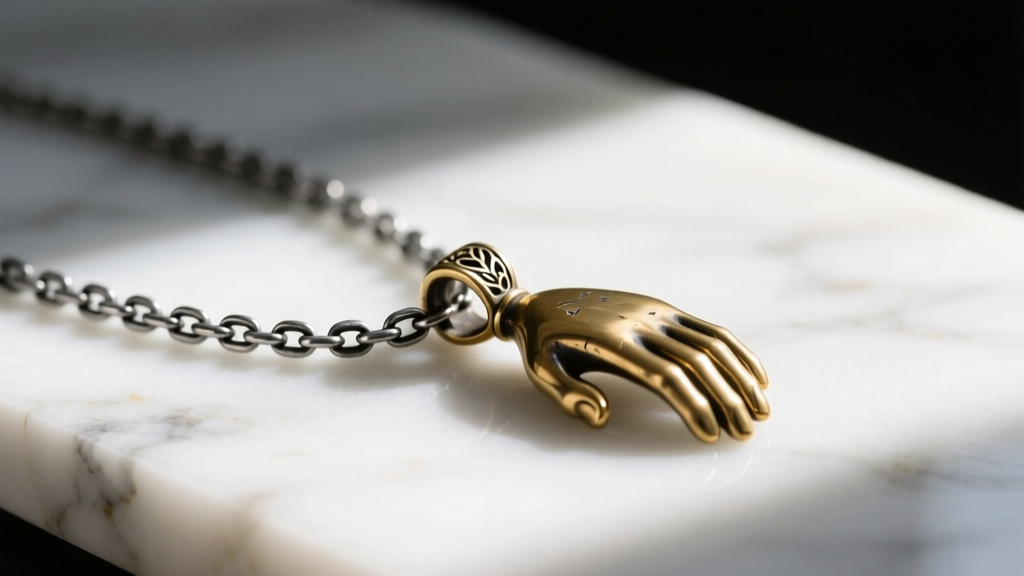
To solve the flipping issue, abandon delicate cable or curb chains. Instead, pair your hand pendant with a 1.5mm to 2.2mm box chain or a rope chain. These chains have high torsional rigidity, meaning they resist twisting when the asymmetrical pendant shifts. Additionally, ensure the chain's breaking strength exceeds the pendant's weight. A standard 15-gram solid silver Hamsa requires a chain rated for at least 15 lbs of tensile strength to prevent accidental snapping during a snag event.
Quick Troubleshooting Checklist
- Symbolism Check: Verify the Hamsa orientation (Up = Protection, Down = Abundance) before wearing it as an amulet.
- Snagging Fix: Request a 0.5mm micro-bevel from a bench jeweler to smooth sharp cast fingertips.
- Bail Reinforcement: Have a secondary jump ring laser-welded to the bail to prevent asymmetrical stress fractures.
- Allergy Test: If the pendant leaves a green mark or causes itching, it contains nickel or excess copper. Switch to 925 silver or 316L steel.
- Chain Upgrade: Swap flimsy cable chains for a 1.8mm box chain to stabilize wide, heavy hand motifs and prevent flipping.
By understanding both the profound hand necklace meaning and the mechanical realities of jewelry design, you can transform a frustrating, snag-prone accessory into a durable, meaningful staple in your daily rotation. For further historical context on amulets and talismans, exploring the archives of The Metropolitan Museum of Art provides incredible visual references on how ancient artisans balanced symbolism with wearability.


