Anatomy of a 1 Carat Floating Diamond Necklace: Expert Guide
Discover the technical anatomy of a 1 carat floating diamond necklace. Expert insights on diamond grading, illusion settings, chain gauges, and pricing.

The Engineering Behind the Floating Illusion
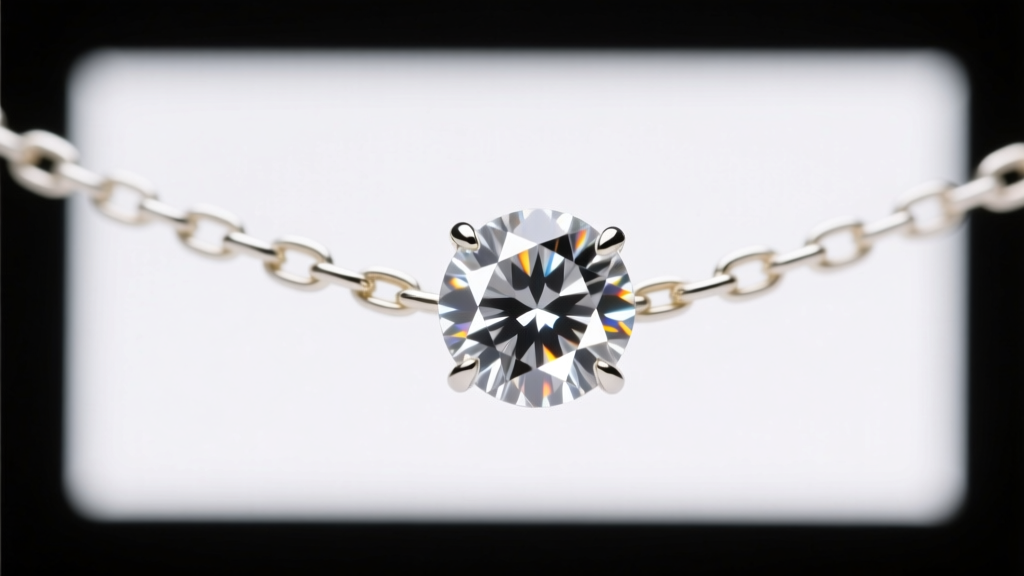
The term 'floating diamond necklace' is a marketing triumph that describes a very specific feat of jewelry engineering. When a client requests a 1 carat floating diamond necklace, they are asking for a solitaire pendant where the gemstone appears to hover effortlessly against the skin, entirely unencumbered by a traditional basket or heavy prong structure. As a domain expert, I can tell you that achieving this optical illusion requires a masterful understanding of metallurgy, light physics, and structural integrity.
There are two primary methods bench jewelers use to create this 'floating' effect for a 1 carat stone (which typically measures 6.4mm to 6.5mm in diameter and weighs exactly 0.200 grams). The first is the bar tension setting. In this configuration, the diamond is held securely between two horizontal metal bars that grip the stone's girdle. The chain threads directly through a hidden bail or, in more aggressive designs, through a laser-drilled channel in the diamond itself (though this is rare and generally discouraged for high-clarity stones). The second method is the CNC-milled illusion head. Here, the metal surrounding the diamond is precision-milled with geometric facets that catch the light and blend seamlessly into the diamond's own facet pattern, making the metal 'disappear' to the naked eye.
Structural Risks of Tension Settings
While a bar tension setting offers the purest floating aesthetic, it introduces significant structural risks. A 1 carat round brilliant diamond is incredibly hard (10 on the Mohs scale), but its girdle—the narrow outer edge where the metal grips it—is susceptible to chipping if subjected to lateral impact. Furthermore, the metal alloy used for the tension bars must possess high 'memory' and tensile strength to maintain constant pressure on the stone. Platinum (PT950 alloyed with Ruthenium) is the only metal I recommend for true tension-set floating pendants, as 14k or 18k gold can slowly deform over time, loosening the grip and risking catastrophic stone loss.
Diamond Selection: Grading a 1 Carat Solitaire
Because a floating setting leaves the pavilion (the bottom half of the diamond) completely exposed and unobstructed by a metal basket, light return is maximized. However, this also means that any flaws in the diamond's cut symmetry or internal inclusions are magnified. According to the GIA Diamond Cut Guide, the precision of the facet angles dictates the stone's brilliance. For a floating pendant, you cannot rely on a heavy metal setting to hide poor light performance.
Optimal Proportions for Maximum Brilliance
When sourcing a 1 carat diamond for a floating necklace, I strictly adhere to the following proportion matrix to ensure the stone looks alive from across the room:
- Cut Grade: GIA Excellent (Triple Excellent if possible). Avoid Very Good or Good cuts entirely.
- Table Percentage: 54% to 57%. This ensures a balance between brilliance (white light return) and fire (colored light dispersion).
- Depth Percentage: 59% to 62.5%. Stones deeper than 63% will look smaller than 1 carat and leak light from the pavilion, creating a dark 'nail head' effect in the center.
- Girdle Thickness: Thin to Slightly Thick. Avoid 'Extremely Thin' girdles, especially in bar settings, as they will chip under the tension of the metal grips.
The Fluorescence Factor
In a floating setting, strong blue fluorescence can sometimes cause the diamond to appear milky or hazy in environments with high ultraviolet light (like direct sunlight or nightclub lighting). For a D to F color diamond, insist on 'None' or 'Faint' fluorescence. For G to I color stones, 'Medium' blue fluorescence can actually be beneficial, as it masks slight yellowish body colors, making the stone face up whiter. For deeper technical insights on how inclusions affect structural integrity, refer to the GIA Diamond Clarity Guidelines.
Chain Mechanics: Gauge, Alloy, and Clasp Hardware
The chain on a 1 carat floating diamond necklace is not merely an afterthought; it is the structural suspension system. A 1 carat diamond plus its metal setting weighs roughly 1.5 to 2.5 grams. While this seems light, the dynamic force exerted on the chain during daily wear—snagging on clothing, sudden movements, and the pendulum effect of the pendant—requires specific hardware.
Why the 0.9mm Box Chain Dominates
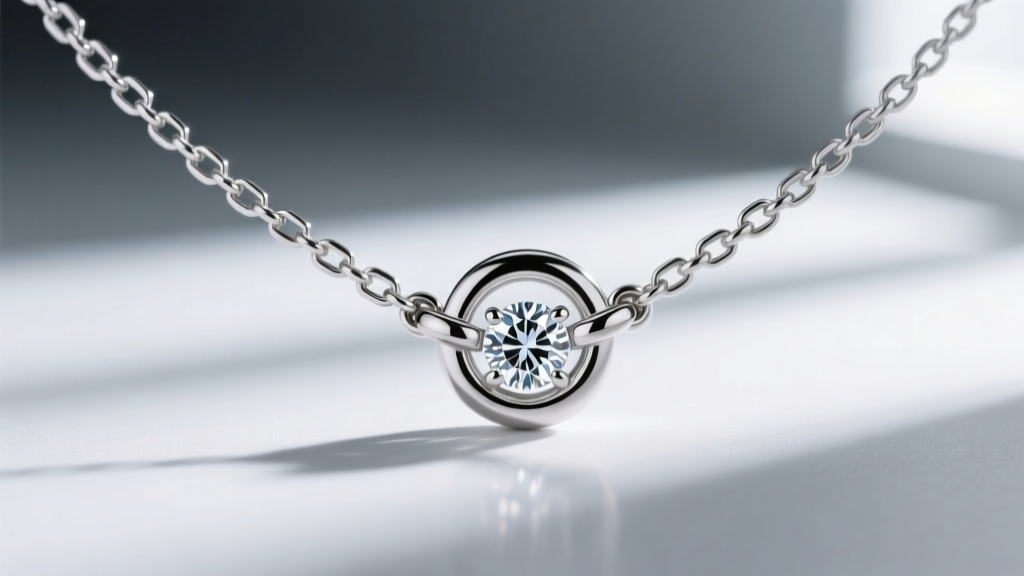
I universally recommend a 0.8mm to 1.0mm box chain for a 1 carat floating pendant. Box chains are constructed from interlocking square links that lie flat and possess immense tensile strength relative to their delicate appearance. Avoid snake chains at all costs; their continuous tubular structure traps skin oils, kinks irreparably if bent, and snaps under sudden tension. Cable chains, while classic, tend to catch on the diamond's prongs or tension bars, causing micro-abrasions over time.
Clasp and Jump Ring Engineering
The weakest point of any necklace is the clasp assembly. For a 1 carat floating necklace, the chain must terminate in a solid lobster claw clasp, not a spring ring (which lacks the internal spring tension to secure a valuable stone). Crucially, the jump ring connecting the clasp to the chain must be laser-welded closed or soldered. A standard split jump ring will eventually pull apart if the pendant catches on a sweater, resulting in the loss of the entire piece.
Pricing Matrix and Value Retention
The market for a 1 carat floating diamond necklace has bifurcated dramatically with the maturation of Chemical Vapor Deposition (CVD) and High Pressure High Temperature (HPHT) lab-grown diamonds. Below is a realistic pricing matrix based on current wholesale and retail benchmarks for a G/VS1 1 carat stone set in 18k white gold with a 0.9mm box chain.
| Diamond Origin | Color / Clarity | Setting Style | Estimated Retail Price | Resale Value Retention |
|---|---|---|---|---|
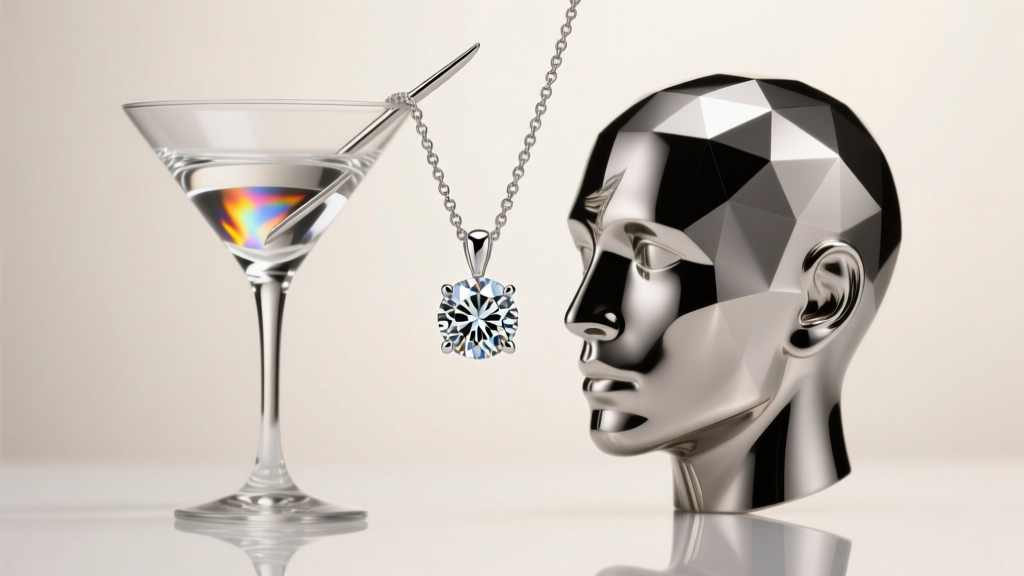
| Natural (Mined) | G / VS1 | 4-Prong Martini | $5,800 - $7,500 | 25% - 40% |
| Natural (Mined) | D / VVS2 | Bar Tension | $9,500 - $12,000 | 30% - 45% |
| Lab-Grown (CVD) | G / VS1 | 4-Prong Martini | $900 - $1,400 | 5% - 10% |
| Lab-Grown (HPHT) | D / VVS2 | Bar Tension | $1,600 - $2,200 | 5% - 10% |
When purchasing a natural diamond, the premium you pay is tied to geological rarity and long-term value retention. Lab-grown diamonds offer identical optical and physical properties at a fraction of the cost, making them the superior choice for buyers prioritizing maximum visual impact over investment value.
Maintenance and Ultrasonic Risks
A floating diamond necklace requires a different maintenance protocol than a traditional pendant. Because the pavilion is exposed, it acts as a magnet for sebum (skin oils) and cosmetics, which will rapidly dull the stone's brilliance. Clean the necklace weekly using a soft-bristled baby toothbrush, warm water, and a few drops of mild, ammonia-free dish soap.
Critical Warning: Never place a tension-set or bar-set floating diamond necklace in an ultrasonic cleaner. The high-frequency acoustic cavitation can cause microscopic fractures in the diamond's girdle where the metal grips it, or worse, shake the stone loose from its tension mount. For illusion settings, ultrasonic waves can loosen the microscopic pave stones often used to enhance the 'floating' halo effect. Treat the engineering of your necklace with respect, and it will remain a breathtaking, gravity-defying staple in your wardrobe for decades.


