Authentic Native American Indian Beaded Necklaces: A Buyer's Guide
Discover how to identify, evaluate, and buy authentic Native American Indian beaded necklaces. Learn tribal styles, material markers, and pricing.

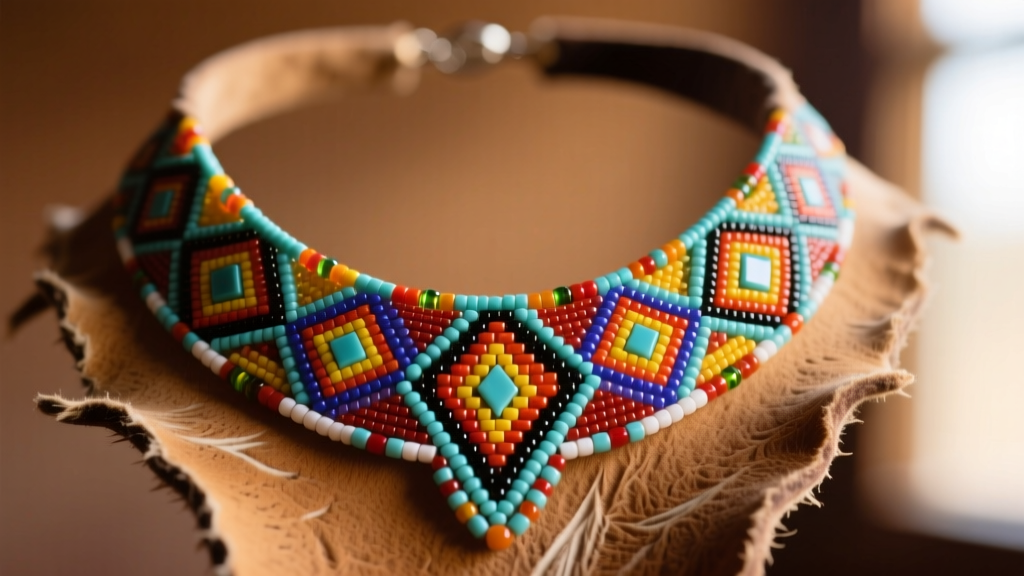
The Legacy and Legalities of Indigenous Beadwork
Native American Indian beaded necklaces are far more than simple adornments; they are wearable archives of history, culture, and indigenous resilience. Long before the introduction of European trade goods, Native artisans crafted intricate neckpieces using porcupine quills, carved bone, shell, and seeds. The arrival of Venetian and later Czech glass seed beads in the 19th century revolutionized this art form, allowing for unprecedented vibrancy and complex geometric or floral patterning. Today, collecting and wearing these pieces is a way to honor and support living indigenous cultures. However, the market is heavily saturated with mass-produced, overseas imitations that exploit indigenous aesthetics without supporting indigenous communities.
When shopping for authentic Native American Indian beaded necklaces, your first line of defense is understanding federal law. The Indian Arts and Crafts Act (IACA) of 1990 is a truth-in-advertising law that prohibits misrepresentation in marketing American Indian or Alaska Native arts and crafts. Under this act, it is illegal to sell, offer, or display for sale any art or craft product in a manner that falsely suggests it is Indian-produced, an Indian product, or the product of a particular Indian or Indian Tribe. If a piece is labeled 'Native American style' or 'Indian inspired,' it is legally acknowledging that it is not made by a Native artisan. Always look for explicit verification of the artist's name and tribal affiliation.
Decoding Authenticity: How to Spot Genuine Craftsmanship
Distinguishing a master-crafted indigenous necklace from a factory-made import requires a trained eye. Authentic beadwork is a labor-intensive process that can take dozens, if not hundreds, of hours to complete. This human element leaves specific markers that machines cannot replicate.
The Backing and Thread Test
Turn the necklace over and examine the backing. Traditional and high-quality contemporary beadwork is typically stitched onto brain-tanned deer hide, elk hide, or, for certain regional styles like Woodland floral work, high-grade velvet or heavy cotton. Mass-produced fakes often use stiff, synthetic felt, pleather, or glued cardboard-like backing. Furthermore, examine the thread. Authentic artisans use heavy-duty nylon beading threads (like Nymo or Silamide), synthetic sinew, or traditional animal sinew. If you see thin, fraying cotton thread, or if the beads appear to be glued to the backing rather than stitched, you are likely looking at an import.
Bead Quality and the 'Too Perfect' Trap
Counterintuitively, extreme uniformity can be a red flag. While master beadworkers strive for neatness, authentic hand-stitched work will have microscopic variations in tension and bead alignment. Machine-embroidered or loom-made imports will look mathematically perfect, with zero tension variance. Additionally, authentic artists predominantly use high-quality Czech glass seed beads (typically sizes 11/0 or 13/0). These beads have a distinct, luminous finish and consistent sizing. Imitations often use cheap plastic beads or low-grade glass that looks dull, melts easily under friction, and features jagged, uneven holes that can cut the threading over time.
Prominent Tribal Styles and Motifs
Native American beadwork is not a monolith; it is highly regional and deeply tied to the specific environment, history, and cosmology of individual tribes. Understanding these regional distinctions is crucial for an informed buyer.
| Tribal Region | Primary Stitch Technique | Common Motifs & Styles | Base Materials | Average Price Range |
|---|---|---|---|---|
| Plains (Lakota, Cheyenne) | Lazy Stitch (Lane Stitch) | Bold geometric patterns, stars, crosses, hourglass shapes | Brain-tanned deer hide, bone hairpipe | $250 - $1,500+ |
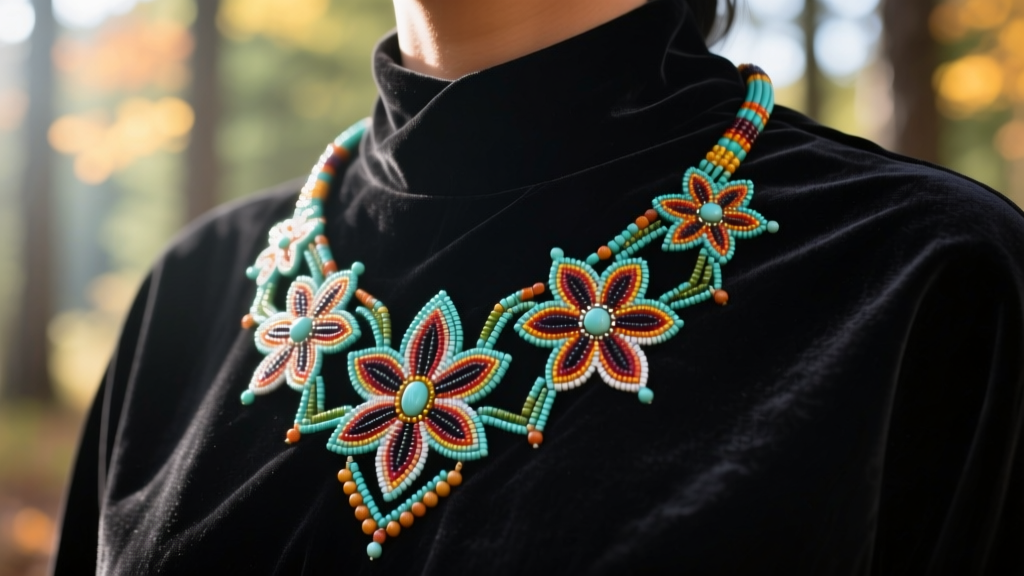
| Woodlands (Ojibwe, Potawatomi) | Spot Stitch (Overlay) | Asymmetrical, flowing floral and botanical designs | Velvet, wool trade cloth, cotton | $300 - $2,000+ |
| Southwest (Navajo, Zuni) | Stringing / Loom / Inlay | Squash blossom motifs, turquoise, naja pendants, petit point | Sterling silver, turquoise, shell, glass | $400 - $5,000+ |
| Northeast (Haudenosaunee) | Spot Stitch / Appliqué | Raised beadwork, symmetrical floral, bird motifs | Velvet, broadcloth, metal tins | $200 - $1,200 |
The National Museum of the American Indian offers extensive archives that highlight how these regional styles evolved through trade networks and inter-tribal exchanges, providing excellent visual references for buyers looking to authenticate vintage or contemporary pieces.
Material Breakdown: What to Look For
The materials used in Native American Indian beaded necklaces tell a story of adaptation and trade. When evaluating a piece, check for the following premium materials:
- Czech Glass Seed Beads: The gold standard for contemporary and vintage 20th-century beadwork. Look for the 'Charlotte' cut (single facet) for added sparkle, or standard round rocailles for traditional matte finishes.
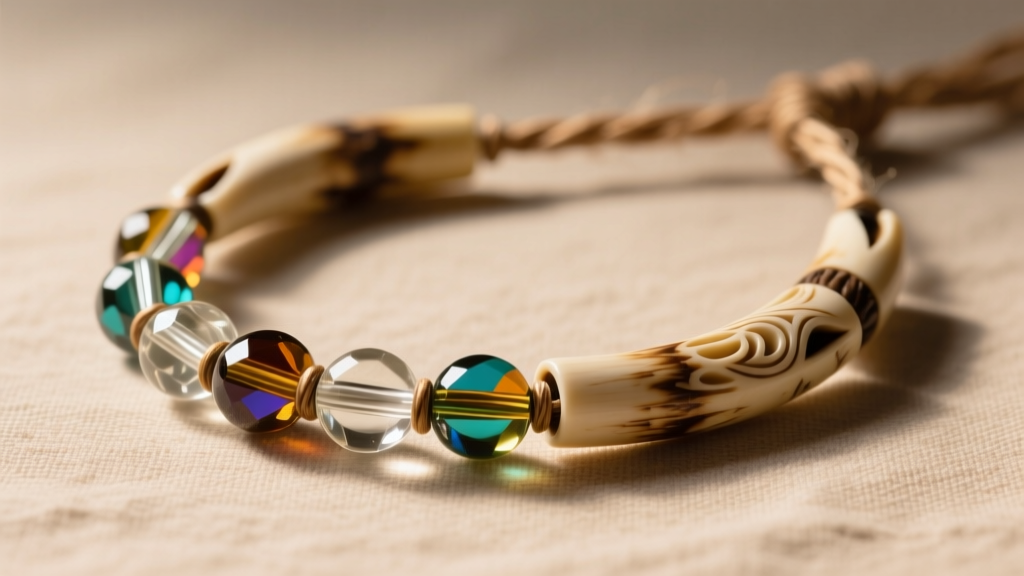
- Bone Hairpipe: Long, tubular beads traditionally made from conch shells, but since the late 1800s, primarily carved from animal bone. They are a staple in Plains Indian breastplates and multi-strand chokers. Authentic bone has a porous, slightly uneven texture, whereas plastic imitations are perfectly smooth and unnaturally lightweight.
- Dentalium Shell: Tusk-shaped shells historically used as currency and adornment. Genuine dentalium has a natural, pearlescent sheen and subtle ridges.
- Sterling Silver & Turquoise: In Southwestern multi-strand bead necklaces, the beads are often interspersed with handmade sterling silver beads (melons or saucers) and natural, untreated turquoise. Look for the artist's hallmark stamped on the silver clasp or naja pendant.
Pricing Guide: What Should You Expect to Pay?
Authentic indigenous beadwork is an investment in fine art. The pricing reflects the cost of premium materials and the sheer hours of meticulous hand-stitching. A simple, single-strand seed bead necklace with a small turquoise pendant from a verified Southwest artist will typically start around $150 to $250. However, complex, multi-strand bone hairpipe chokers or fully beaded Lakota breastplates require hundreds of hours of labor and can easily range from $800 to over $3,500. Intricate Woodland floral velvet neckpieces with extensive spot-stitching usually sit in the $400 to $1,500 range. If you encounter a fully beaded, multi-color geometric necklace selling for $35 at a tourist shop or online marketplace, it is almost certainly a mass-produced import.
Caring for Your Beaded Heirloom
Proper care ensures that your necklace can be passed down as an heirloom. The materials used in indigenous jewelry require specific environmental conditions to prevent degradation.
Expert Tip: Never hang heavy, multi-strand bone or glass bead necklaces on a jewelry stand for long-term storage. The constant gravitational pull will stretch the sinew or nylon thread, leading to permanent warping and eventual snapping. Always store heavy pieces flat in an acid-free archival box lined with unbleached cotton muslin.
Avoid exposing your beadwork to high humidity, which can cause organic backings like deer hide to mildew, or metal components to tarnish. If the piece features brain-tanned leather, keep it away from direct sunlight and extreme heat, which will dry out the natural oils and cause the hide to become brittle and crack. For cleaning, use a soft, dry microfiber cloth to gently dust the beads. Never submerge the piece in water or use chemical jewelry cleaners, as these can strip the dyes from the hide and degrade the threading.
Where to Buy: Trusted Sources and Red Flags
To guarantee authenticity, purchase directly from indigenous artists through their verified websites, social media pages, or at reputable, juried indigenous art markets such as the Santa Fe Indian Market or the Heard Museum Guild Indian Fair. When buying from galleries or online boutiques, ensure they provide a certificate of authenticity that includes the artist's name, tribal affiliation, and the materials used. Be highly skeptical of large online marketplaces that use stock photos, lack artist biographies, or ship directly from overseas warehouses. By prioritizing verified sources, you ensure that your investment directly supports the continuation of Native American Indian beaded necklace traditions and the economic sovereignty of indigenous artisans.


