Hapbee Necklace Review 2026: Tech, Materials & Wearability
An expert deep dive into the Hapbee necklace, analyzing its 316L stainless steel build, magnetic coil tech, chain gauges, and real-world wearability.

The Intersection of Wellness Tech and Fine Jewelry
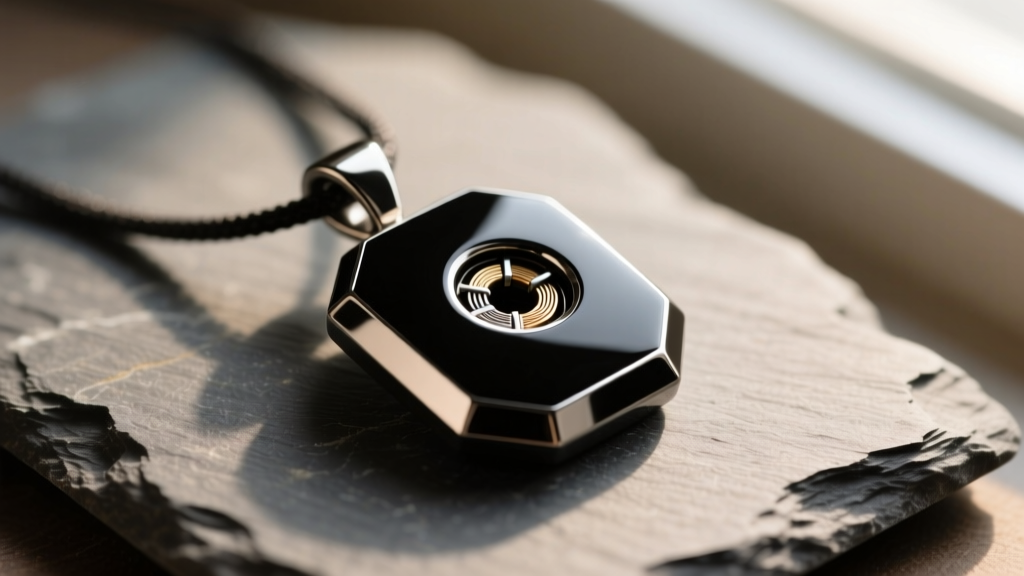
When evaluating the modern landscape of wearable technology in 2026, the conversation often defaults to smartwatches, biometric rings, and continuous glucose monitors. However, the Hapbee necklace represents a fascinating divergence from passive data tracking into active neurological intervention. Marketed as a wellness device that uses ultra-low frequency (ULF) electromagnetic signals to simulate the feeling of specific emotional and cognitive states, the Hapbee pendant is fundamentally a piece of jewelry housing complex biophysics. But how does it hold up under the scrutiny of a jeweler and a materials scientist?
In this expert deep dive, we strip away the marketing gloss to examine the metallurgical composition, chain mechanics, electromagnetic delivery systems, and dermatological realities of wearing the Hapbee necklace daily. Whether you are considering the core stainless steel model (typically retailing around $349) or the limited-edition precious metal variants ($450–$800), understanding the physical build is crucial for long-term wearability.
The Metallurgy of the Hapbee Pendant
The outer casing of the standard Hapbee pendant is engineered from 316L surgical stainless steel. From a metallurgical standpoint, 316L is an austenitic chromium-nickel-molybdenum alloy. The "L" denotes low carbon content (maximum 0.03%), which significantly reduces the risk of carbide precipitation during manufacturing, thereby enhancing its corrosion resistance. This is critical for a device worn against the skin, where exposure to sweat, sebum, and environmental humidity is constant.
PVD Coating vs. Traditional Electroplating
For the matte black and rose gold variants, Hapbee utilizes Physical Vapor Deposition (PVD) rather than traditional wet electroplating. PVD involves vaporizing the coating material (often titanium nitride or zirconium nitride) in a vacuum chamber and bonding it to the 316L substrate at an atomic level. This results in a finish that is up to four times harder than standard gold plating, highly resistant to micro-scratches, and far less likely to flake or tarnish over years of daily wear.
However, a known failure mode for PVD-coated wearables is degradation when exposed to harsh chemicals. Users must avoid ultrasonic jewelry cleaners and chlorine exposure, which can compromise the atomic bond of the PVD layer, leading to localized pitting.
Chain Specifications and Clasp Mechanics
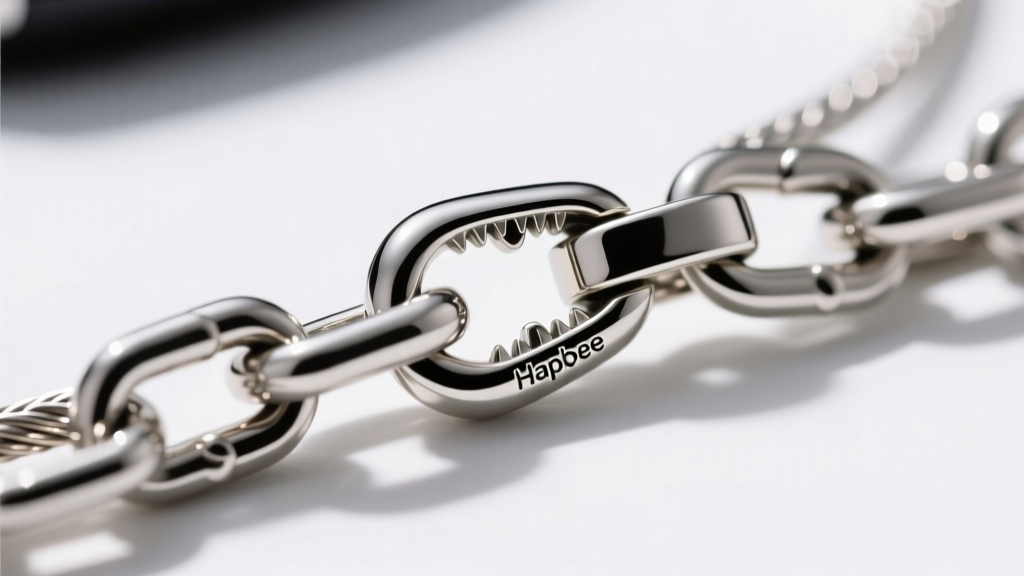
A pendant is only as functional as the chain that suspends it, and for the Hapbee necklace, chain length is not merely an aesthetic choice—it is a functional requirement for the device's efficacy. The standard inclusion is a 1.5mm to 2.0mm 316L stainless steel cable chain, terminating in a precision-cast lobster claw clasp.
| Specification | Standard Model Details | Limited Edition Details |
|---|---|---|
| Pendant Material | 316L Surgical Stainless Steel | Solid 14k Gold or Grade 5 Titanium |
| Surface Finish | PVD Coating (Black/Rose Gold) | High-Polish or Brushed Satin |
| Chain Gauge | 1.5mm - 2.0mm Cable Link | 2.0mm - 2.5mm Curb or Figaro Link |
| Clasp Type | Standard Lobster Claw | Heavy-Duty Spring Ring or Magnetic |
| Water Resistance | IPX4 (Splash Resistant) | IPX4 (Splash Resistant) |
The Importance of Sternum Placement
The Hapbee necklace is designed to rest precisely at the sternum, near the thymus gland and the heart's electromagnetic field. The 1.5mm gauge of the cable chain provides enough tensile strength to support the pendant's weight (approximately 28 grams) without stretching, while remaining thin enough to slide discreetly under a collar. If the chain is too long (e.g., a 24-inch opera length), the pendant will hang too low, drastically reducing the signal's interaction with the body's primary bio-magnetic centers.
Signal Delivery: Biophysics and the Inverse-Cube Law
At the core of the Hapbee necklace is a micro-coil antenna designed to emit ultra-low frequency (ULF) electromagnetic signals. Unlike the broad-spectrum, high-frequency EMF emitted by smartphones or Wi-Fi routers, the Hapbee operates on extremely low frequencies that mimic the natural electromagnetic signatures of various neurochemical states, a concept explored in depth in Hapbee's official technology breakdown.
"The efficacy of localized electromagnetic field therapy is heavily dependent on proximity. Magnetic field strength decreases proportionally to the cube of the distance from the source."
Overcoming the Inverse-Cube Law
According to the principles of electromagnetism, the strength of a magnetic dipole field drops off according to the inverse-cube law ($1/r^3$). This means that if you move the Hapbee pendant just two inches away from your skin, the signal strength your body receives drops to a fraction of its original intensity. This biophysical reality is why the Hapbee necklace is designed with a slightly convex backplate, allowing it to sit flush against the sternum, minimizing the air gap between the micro-coil and the epidermis. For further context on how low-frequency fields interact with human biology, the National Institutes of Health (NIH) database on electromagnetic therapies provides extensive peer-reviewed literature on cellular resonance and PEMF (Pulsed Electromagnetic Field) applications.

Dermatological Considerations and Nickel Sensitivities
One of the most common concerns with any stainless steel jewelry is nickel allergy. While 316L surgical steel is hypoallergenic for the vast majority of the population, it does contain trace amounts of nickel (typically 10-14%) to stabilize the austenite crystal structure. For individuals with severe contact dermatitis, prolonged exposure to sweat can theoretically cause nickel ions to leach from the alloy.
To mitigate this, Hapbee relies on the PVD coating as a physical barrier. Because PVD creates a non-porous, atomically bonded layer over the steel, it effectively encapsulates the nickel. However, if the PVD layer is deeply scratched down to the bare 316L substrate, a localized allergic reaction may occur in highly sensitive individuals. For those with documented, severe nickel allergies, we strongly recommend bypassing the standard models and investing in the Grade 5 Titanium (Ti-6Al-4V) limited editions, which are entirely nickel-free and biologically inert, aligning with FDA guidelines on general wellness and biocompatible devices.
Maintenance and Care Protocols
To ensure the longevity of both the jewelry components and the internal micro-coil, adhere to the following maintenance framework:
- Cleaning: Use only a damp microfiber cloth with a drop of mild, pH-neutral dish soap. Never submerge the pendant in water, as the IPX4 rating only protects against splashes, not full immersion.
- Chemical Avoidance: Apply perfumes, sunscreens, and lotions before putting on the necklace. Alcohol-based fragrances can slowly degrade the oleophobic coating on the PVD finish.
- Storage: Store the necklace in a soft pouch away from harder gemstones or metals. While the 316L steel is hard, the PVD coating can still be micro-abraded by diamond or sapphire jewelry in a shared box.
- Magnetic Interference: Keep the pendant away from strong neodymium magnets or degaussing fields, which could theoretically interfere with the internal micro-coil's calibration.
Final Verdict: A Triumph of Functional Design
The Hapbee necklace successfully bridges the gap between clinical wellness technology and everyday wearable aesthetics. By utilizing 316L stainless steel, advanced PVD coatings, and precision-engineered 1.5mm cable chains, it withstands the rigors of daily wear while maintaining the strict proximity requirements dictated by the inverse-cube law of electromagnetism. While it requires more careful maintenance than a solid gold cast pendant, its dual utility as a fashion accessory and an active biophysical intervention tool makes it a standout piece of engineering in the 2026 wearable market.


