Pearl Necklace Colors: A Buyer's Guide to Hues and Overtones
Discover how to choose pearl necklace colors. Learn to identify natural hues, overtones, and treated dyes in Akoya, Tahitian, and South Sea varieties.

The Anatomy of Pearl Color: Body, Overtone, and Orient
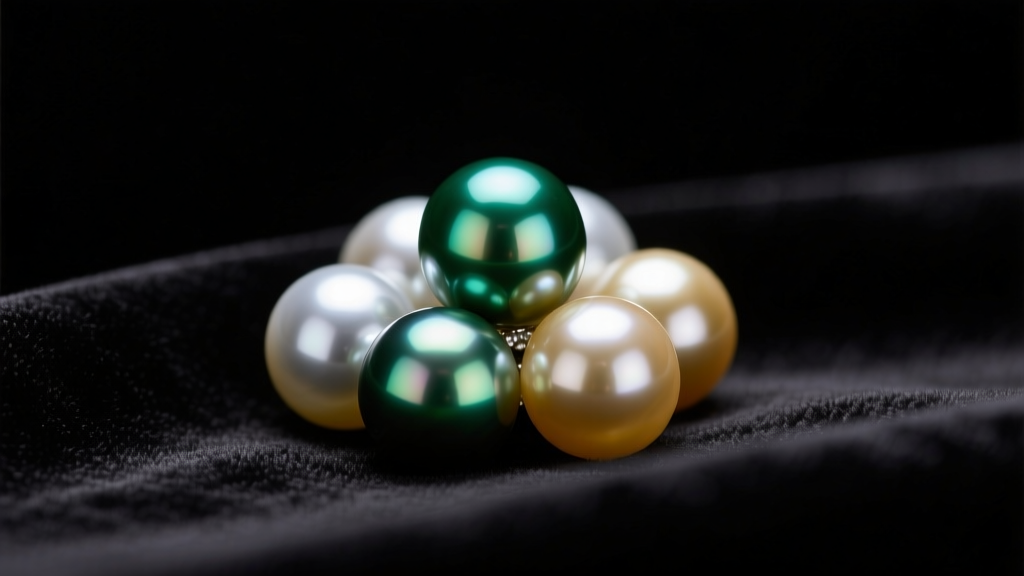
When evaluating pearl necklace colors, buyers must look far beyond the surface. According to the Gemological Institute of America (GIA), a pearl's color is not a single attribute but a complex interplay of three distinct optical phenomena: body color, overtone, and orient. Understanding this triad is the foundation of making an informed purchase.
Body Color is the dominant, overall hue of the pearl, dictated by the specific species of mollusk and the trace elements present in the water. Overtone refers to the translucent secondary colors that appear to float just above the body color, shifting as the pearl moves. Finally, Orient is the iridescent, rainbow-like shimmer caused by light scattering through the microscopic aragonite platelets that make up the nacre. Not all pearls exhibit orient; it is most commonly seen in high-quality Akoya and baroque freshwater pearls with exceptionally thick, well-aligned nacre.
Natural Pearl Color Profiles by Variety
Different pearl varieties possess distinct natural color palettes. Familiarizing yourself with these baseline profiles is critical for spotting misrepresentations in the market.
Akoya Pearls: The Classic White and Silver-Blue
Akoya pearls are renowned for their mirror-like luster and classic white body colors. However, the most sought-after Akoya strands feature a delicate rose or silver-blue overtone. Silver-blue Akoya pearls, which possess a cool, steely grey overtone, have seen a surge in demand in 2026 among buyers seeking a modern, edgy alternative to traditional warm rose overtones. True black Akoya pearls do not exist in nature; any black Akoya strand has been chemically treated.
Tahitian Pearls: The Myth of 'Black' and Peacock Metrics
Often marketed as 'black pearls,' Tahitian pearls actually exhibit a spectacular array of dark body colors, including charcoal, aubergine, pistachio, and deep navy. The most valuable and heavily counterfeited color is Peacock. According to CIBJO (The World Jewellery Confederation), a true Peacock Tahitian pearl must have a dark green or grey-green body color with distinct pink, purple, or red overtones. If a seller offers a 'Peacock' strand that lacks this specific chromatic layering, it is likely a dyed freshwater pearl.
South Sea Pearls: White Satin and 24K Gold
White South Sea pearls range from optic white to creamy ivory, often featuring subtle silver or gold overtones. Golden South Sea pearls are graded on saturation. A pale 'champagne' hue is relatively common, but the deeply saturated '24K Gold' hue—characterized by a rich, buttery yellow body with intense golden overtones—commands massive premiums. Metallic freshwater pearls, while beautiful, achieve their shine through nacre density, not the deep, warm saturation found in genuine Golden South Sea gems.
Treated vs. Natural: How to Spot Dyed Pearl Necklace Colors
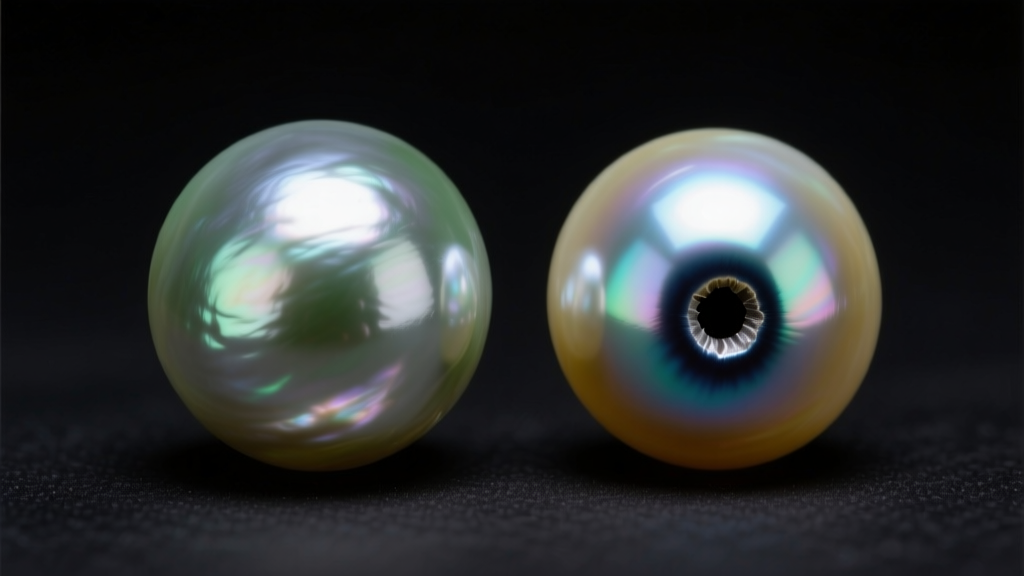
Because rare natural colors command steep premiums, the pearl industry utilizes various treatments to mimic them. The two most common methods are gamma-ray irradiation (used to darken Akoya pearls and turn freshwater pearls metallic grey) and chemical dyeing using silver nitrate or organic dyes.
As a buyer, your best defense is a 10x jeweler's loupe. Examine the drill holes of the pearls. In naturally colored pearls, the color extends uniformly through the nacre layers. In dyed pearls, you will often see dye pooling—concentrated, dark rings of pigment trapped in the porous conchiolin layers near the drill hole or in surface blemishes.
| Pearl Variety | Natural Colors | Common Treatments | Detection Method |
|---|---|---|---|
| Akoya | White, Cream, Silver-Blue | Bleaching, Pinking, Black Dye | Check drill hole for dark dye rings; black Akoya is always treated. |
| Tahitian | Grey, Green, Aubergine, Peacock | Organic Dyes (to mimic Peacock) | Look for unnatural color uniformity; true Peacock has shifting overtones. |
| Freshwater | White, Peach, Lavender, Pink | Irradiation, Chemical Dyes | Acetone swab test (risky); magnification of surface mottling. |
| South Sea | White, Ivory, Pale to Deep Gold | Gamma Irradiation (rare) | UV fluorescence testing by a certified gemologist. |
Matching Pearl Necklace Colors to Skin Undertones
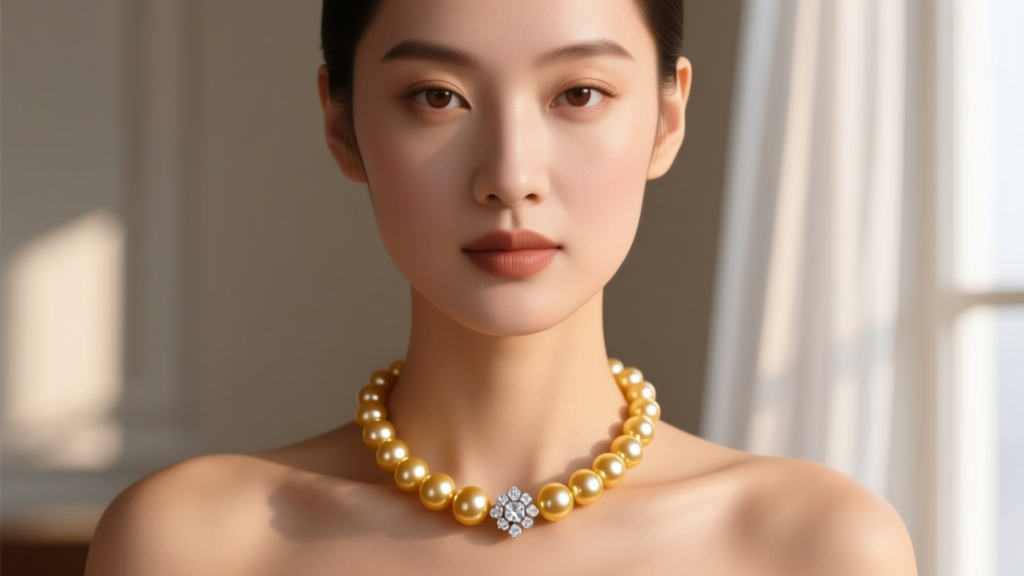
Selecting the right pearl necklace colors is not just about gemological purity; it is about personal aesthetics and skin tone harmony. Here is a practical framework for matching pearls to your undertones:
- Cool Undertones (Pink/Blue Veins): Opt for white Akoya pearls with rose overtones, silver-blue Akoya strands, or stark white South Sea pearls. These cool, crisp hues complement the natural pinkness in your skin without washing you out.
- Warm Undertones (Green/Olive Veins): Golden South Sea pearls, cream-colored Akoya strands, and peach or lavender freshwater pearls will enhance the golden warmth of your complexion. A deep Tahitian aubergine strand also provides a stunning, rich contrast.
- Neutral Undertones (Mix of Veins): You have the versatility to pull off the highly coveted Tahitian Peacock green, which shifts between cool and warm tones, as well as classic white strands with ivory overtones.
Pricing Implications of Rare Colors in 2026
Color is one of the most significant drivers of pearl valuation. According to market data from Pearl Paradise, the saturation and rarity of a pearl's hue can alter its price by 300% or more, even when size, shape, and luster remain constant.
For example, a 12mm strand of pale champagne Golden South Sea pearls might retail for $4,500. However, a strand of the exact same size and luster featuring the rare, deeply saturated '24K Gold' hue can easily command $15,000 to $20,000. Similarly, in the Tahitian market, a standard charcoal grey strand serves as the baseline price, while a matched strand exhibiting true, vibrant Peacock overtones will carry a 40% to 60% premium due to the immense difficulty of matching those specific secondary hues across dozens of pearls.
Expert Buyer Tip: When purchasing high-value colored pearl necklaces online, always request macro-photography against a neutral grey background. White backgrounds artificially boost the brightness of golden pearls, while black backgrounds can exaggerate the overtone visibility of Tahitian pearls, leading to disappointment upon delivery.
Ultimately, navigating pearl necklace colors requires a blend of scientific knowledge and aesthetic intuition. By understanding the difference between body color and overtone, knowing how to inspect drill holes for dye pooling, and recognizing the natural color limits of each mollusk species, you can confidently invest in a strand that is both genuinely rare and beautifully suited to your personal style.


