Mens Black Diamond Cross Necklace: Metal & Gemstone Material Guide
Compare metals and stone types for a mens black diamond cross necklace. Learn about titanium, tungsten, and treated vs. natural black diamonds.

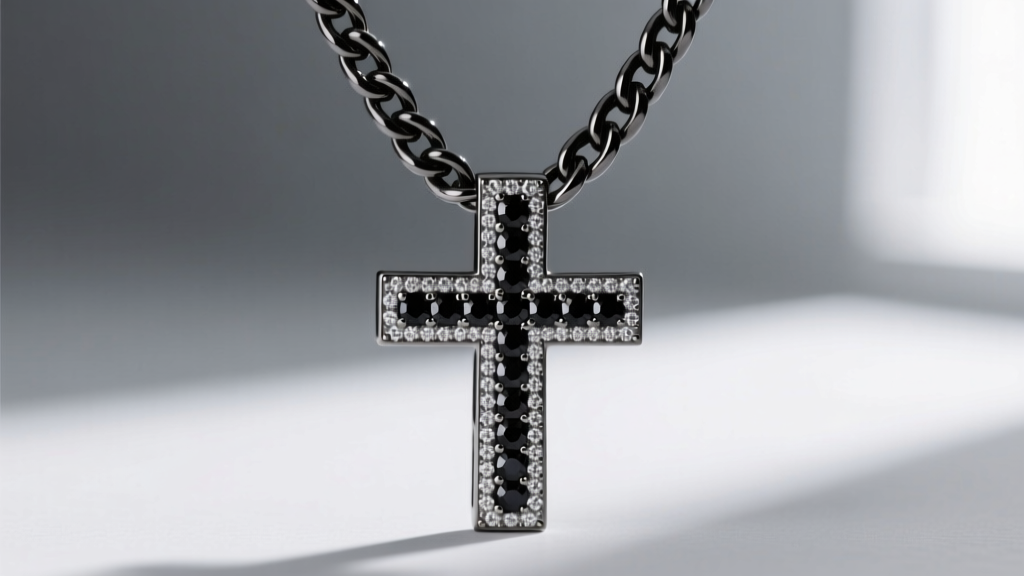
The Anatomy of a Mens Black Diamond Cross Necklace
The intersection of rugged masculinity and fine jewelry has cemented the mens black diamond cross necklace as a modern staple. However, the market is saturated with pieces that vary wildly in metallurgical integrity and gemological authenticity. A $150 pendant and a $4,500 pendant might look identical in dim lighting, but their material properties dictate their longevity, tensile strength, and resistance to environmental degradation. To make an informed investment, buyers must look beyond the silhouette and scrutinize the specific alloys and carbon structures involved.
According to the Gemological Institute of America (GIA), black diamonds present unique challenges in cutting and setting due to their dense inclusion patterns. When paired with the wrong metal alloy or an inadequate chain gauge, even the most striking cross pendant can become a liability. This guide deconstructs the material science behind these necklaces, offering a precise framework for evaluating stones, pendant metals, and chain metallurgy.
Black Diamond Properties: Natural vs. Treated vs. Lab-Created
Not all black diamonds are created equal. The opaque, gunmetal-grey allure of these stones comes from three distinct geological and synthetic origins, each with different physical properties and pricing structures.
Natural Carbonado
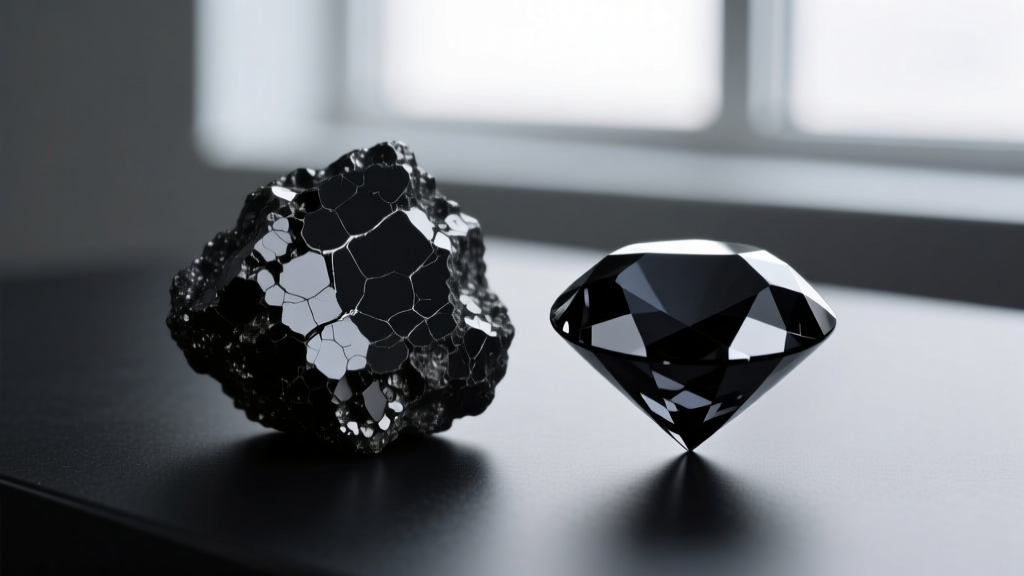
Natural black diamonds, known as carbonado, are polycrystalline aggregates of diamond, graphite, and amorphous carbon. Because of their porous nature and lack of a single crystal lattice, they are incredibly difficult to facet. They are typically cut into cabochons or rough-hewn shapes. While they register a 10 on the Mohs hardness scale, their internal inclusions make them brittle and prone to chipping if struck against a hard surface.
Irradiated and Heat-Treated Diamonds
The vast majority of black diamonds on the commercial market are low-clarity, heavily included white diamonds that have been subjected to high-dose neutron irradiation or extreme heat. This process turns the stone a uniform, opaque black. These treated stones are significantly tougher than carbonado, can be precision-faceted, and hold pavé settings securely without crumbling.
Material Comparison Matrix
| Stone Type | Mohs Hardness | Fracture Toughness | Avg. Price per Carat | Best Setting Style |
|---|---|---|---|---|
| Natural Carbonado | 10 | Low (Brittle) | $300 - $1,200 | Bezel or Prong (Cabochon) |
| Irradiated / Treated | 10 | High (Uniform) | $100 - $400 | Pavé, Channel, or Micro-Prong |
| Lab-Grown (CVD/HPHT) | 10 | Very High | $200 - $600 | Intricate Faceted Prong |
Metal Alloys for the Cross Pendant: Durability & Aesthetics
The pendant's base metal dictates its weight, scratch resistance, and hypoallergenic properties. The Federal Trade Commission (FTC) Jewelry Guides mandate strict hallmarking for precious metals, but alternative metals require a deeper understanding of industrial metallurgy.
Precious Metals: White, Yellow, and Rose Gold
For a mens black diamond cross necklace, 14k and 18k gold remain the premium standards. 14k white gold (58.5% pure gold alloyed with nickel, palladium, or silver) is heavily favored for its bright, rhodium-plated finish that contrasts sharply with black diamonds. However, buyers must note that rhodium plating wears off within 12 to 24 months of daily wear, revealing the slightly yellowish underlying alloy and requiring professional replating.
Alternative Metals: Tungsten Carbide and Titanium
Tungsten Carbide (WC) registers a 9 on the Mohs scale, making it virtually scratch-proof. However, its extreme hardness comes at the cost of tensile flexibility; a WC cross dropped onto a tile floor will shatter like glass. Furthermore, cheap WC alloys use cobalt binders, which can cause severe contact dermatitis. Always seek WC jewelry that uses a nickel-free or ceramic binder. Conversely, Grade 5 Titanium (Ti-6Al-4V) is an aerospace-grade alloy that is lightweight, entirely hypoallergenic, and possesses high yield strength, though it is much softer (Mohs 6) and will accumulate patina and micro-scratches over time.
Chain Metallurgy: Matching Weight and Tensile Strength
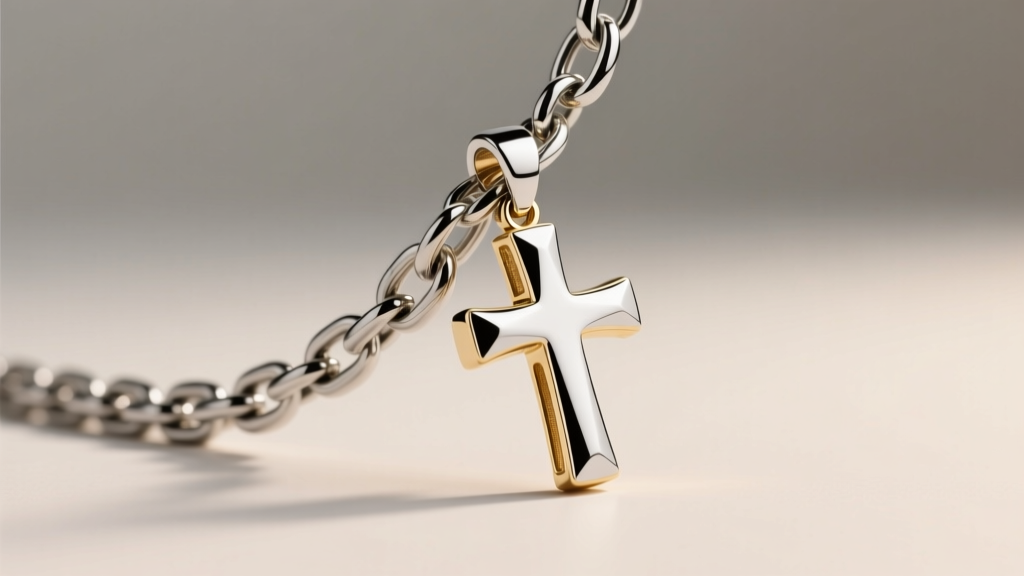
A heavy black diamond cross pendant will quickly destroy an inadequate chain. The failure point is rarely the chain links themselves, but rather the clasp mechanism and the jump ring connecting the pendant. When evaluating chains, consider the following structural profiles:
- Cuban / Curb Links (3mm - 5mm gauge): The gold standard for heavy pendants. The interlocking, flattened links distribute weight evenly and resist twisting. A solid 4mm 14k gold Cuban link chain boasts a tensile yield strength capable of supporting a 40-gram pendant without stretching.
- Rope Chains: While visually dynamic, rope chains are constructed from tightly woven, thin wire links. Under the pendulum stress of a heavy cross, the friction between the micro-links generates metal fatigue, leading to sudden, catastrophic snapping.
- Box Chains: Excellent for lightweight pendants (under 10 grams), but the sharp 90-degree interior corners of the square links are prone to kinking if bent or slept in, compromising the chain's structural integrity.
Crucial Hardware Note: Never pair a heavy pendant with a spring-ring clasp. The internal tension spring is a single point of failure. Always opt for a solid lobster clasp or a custom machined barrel clasp with a secondary safety latch.
Care, Maintenance, and Material Degradation
"The longevity of mixed-material jewelry relies on understanding the galvanic reactions and environmental exposures unique to each component."
Black diamonds are impervious to chemical cleaners, ultrasonic baths, and steam. The maintenance burden falls entirely on the metal setting. Sterling silver (925) crosses will rapidly oxidize and tarnish when exposed to sulfur in the air and human sweat, requiring frequent polishing with a treated jeweler's cloth. If your cross features a pavé setting, avoid ultrasonic cleaners if the metal is oxidized or black-rhodium plated, as the high-frequency vibrations can loosen the adhesive or prongs securing the micro-stones.
For tungsten and titanium pieces, a simple wash with warm water, mild dish soap, and a soft-bristled toothbrush is sufficient to remove sebum and dead skin cells trapped beneath the pendant bail. Avoid wearing alternative metal necklaces in chlorinated pools, as prolonged exposure to harsh halogens can degrade the structural binders in lower-grade tungsten carbide.
Final Verdict: Selecting Your Material Combination
The ideal mens black diamond cross necklace depends on your lifestyle and maintenance tolerance. For a heirloom-quality piece that can be passed down and resized, a 14k white gold pendant featuring irradiated black diamonds on a 4mm Cuban link chain is the most balanced choice. If you work in manual labor or a medical field where scratching and bacterial harboring are concerns, a Grade 5 Titanium or Cobalt Chrome cross with a bezel-set natural carbonado stone offers unparalleled utilitarian resilience. By prioritizing metallurgical specs and gemological treatments over mere aesthetics, you ensure your necklace remains a permanent fixture of your personal style.


