Mastering Chain Lengths for Necklaces: A Technical Fit Guide
Master chain lengths for necklaces with our technical guide. Learn exact drop measurements, pendant weight ratios, and neckline geometry for a perfect fit.

The Physics of the Drop: Why Precision Matters
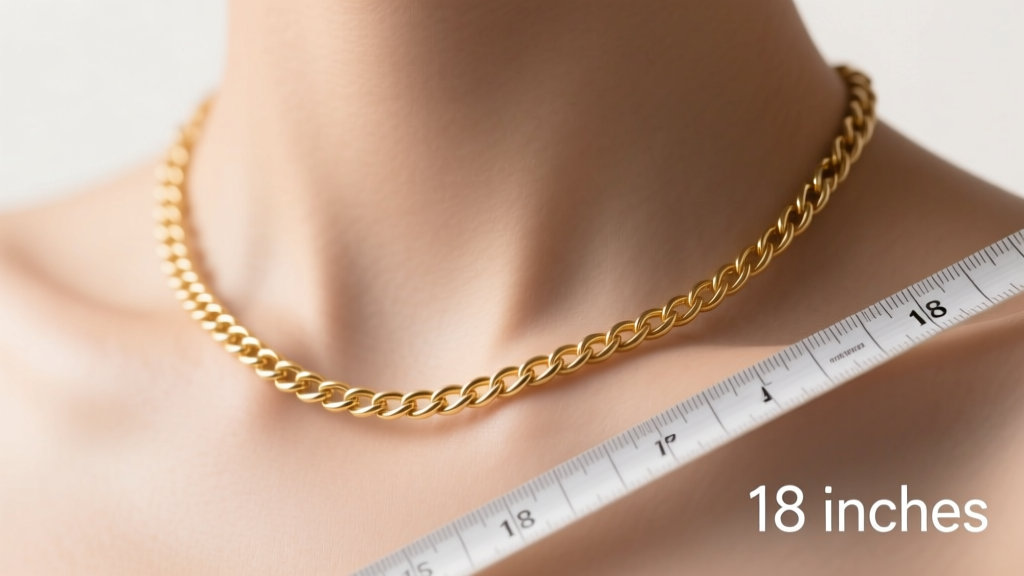
When evaluating chain lengths for necklaces, most consumers rely on guesswork, leading to poor aesthetic drape and structural failure. As jewelry designers and technical appraisers, we must look beyond basic inches and centimeters. The way a necklace rests on the body is dictated by the physics of the catenary curve—the natural arc a flexible chain forms when suspended between two points (the clasp). The weight of the pendant, the gauge of the chain, and the specific chain length all interact to determine this curve. A 20-gram gemstone pendant will pull a 24-inch 1.0mm cable chain into a sharp, deep V-shape, while the same pendant on a 16-inch 2.5mm Figaro chain will create a wider, more structured U-shape. Understanding these mechanics is essential for selecting the correct chain lengths for necklaces that balance visual harmony with tensile integrity.
According to manufacturing standards outlined by the Rio Grande jewelry supplier network, matching chain tensile strength to pendant weight is critical to prevent plastic deformation of the jump rings and clasp mechanisms. A delicate 0.8mm chain may only withstand 4 to 6 pounds of tensile stress before work-hardening and snapping, making it entirely unsuitable for heavy statement pendants, regardless of the chosen length.
Standard Measurements and Anatomical Landing Zones
To master chain lengths for necklaces, one must map the industry-standard measurements to specific anatomical landmarks. The human neck and torso provide distinct visual zones, each serving a different stylistic and functional purpose. Below is the definitive technical chart for necklace drops, correlating length with anatomical placement and ideal pendant weight ratios.
| Length (Inches) | Length (cm) | Industry Term | Anatomical Landmark | Ideal Pendant Weight |
|---|---|---|---|---|
| 14" | 35.5 cm | Collar | Mid-neck, snug fit | Under 5g (or none) |
| 16" | 40.6 cm | Choker | Base of the neck | 5g - 10g |
| 18" | 45.7 cm | Princess | Collarbone (clavicle) | 10g - 20g |
| 20" | 50.8 cm | Princess/Matinee | Below collarbone | 15g - 25g |
| 22" | 55.8 cm | Matinee | Upper bust line | 20g - 35g |
| 24" | 61.0 cm | Matinee | Lower bust/sternum | 25g - 45g |
| 28" - 36" | 71 - 91 cm | Opera | Solar plexus to waist | Multi-strand or heavy |
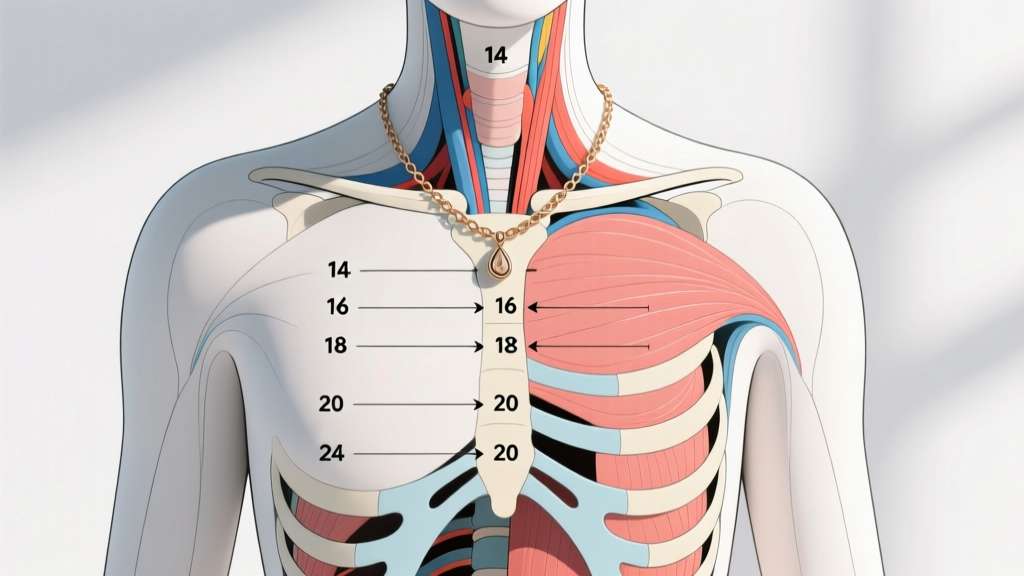
The Collar and Choker Zone (14" - 16")
Chains in the 14 to 16-inch range sit above the clavicle. Because the neck is a highly mobile joint, chains here are subject to constant friction and torsion. For these lengths, we recommend flat-profile chains like the herringbone, omega, or snake chain, which minimize skin pinching and hair tangling. If using a pendant on a 16-inch chain, the bail must be low-profile to prevent the stone from flipping backward against the wearer's throat.
The Princess and Matinee Zone (18" - 24")
The 18-inch princess length is the undisputed industry standard, landing precisely on the collarbone for the majority of adult women. This length offers the highest versatility for pendant suspension. As you move into the 20 to 24-inch matinee range, the chain enters the 'visual center' of the torso. Heavier pendants (25g+) perform best here, as the longer drop allows the chain to form a graceful arc rather than a rigid triangle. Brands like David Yurman frequently utilize the 18-inch to 20-inch range for their signature cable chains, optimizing the link diameter to drape perfectly across the sternum.
The Opera and Rope Zone (28" - 36"+)
Opera-length chains require specialized structural engineering. Because the chain loops far down the torso, it is prone to catching on belts, desk edges, and bag straps. To mitigate this, opera chains should be constructed with high-yield materials like 18k gold alloyed with copper for increased hardness, or platinum. Alternatively, knotting techniques (as seen in pearl strands) are used to introduce flexibility and prevent catastrophic failure if a single link or silk thread breaks.
Technical Pairing: Chain Gauge vs. Pendant Bail Dimensions
Selecting the correct chain lengths for necklaces is only half the equation; the physical interface between the chain and the pendant is equally critical. The bail aperture—the inner diameter of the pendant's hanging loop—dictates the maximum allowable chain gauge. The Gemological Institute of America (GIA) emphasizes that improper chain-to-bail ratios cause accelerated abrasive wear, eventually sawing through the bail or the chain links.
- Standard 3mm Bail: Requires a chain with a maximum outer width of 2.0mm. Ideal for 16" to 18" drops featuring lightweight solitaire stones (under 3 carats).
- Oversized 5mm Bail: Accommodates chains up to 3.5mm thick. Necessary for 20" to 24" drops supporting heavy cabochons or multi-stone cluster pendants.
- Hidden / Tube Bails: Often have strict internal diameter limits (e.g., 1.5mm). Only fine cable, box, or bead chains should be threaded through these to prevent the chain from kinking inside the tube.
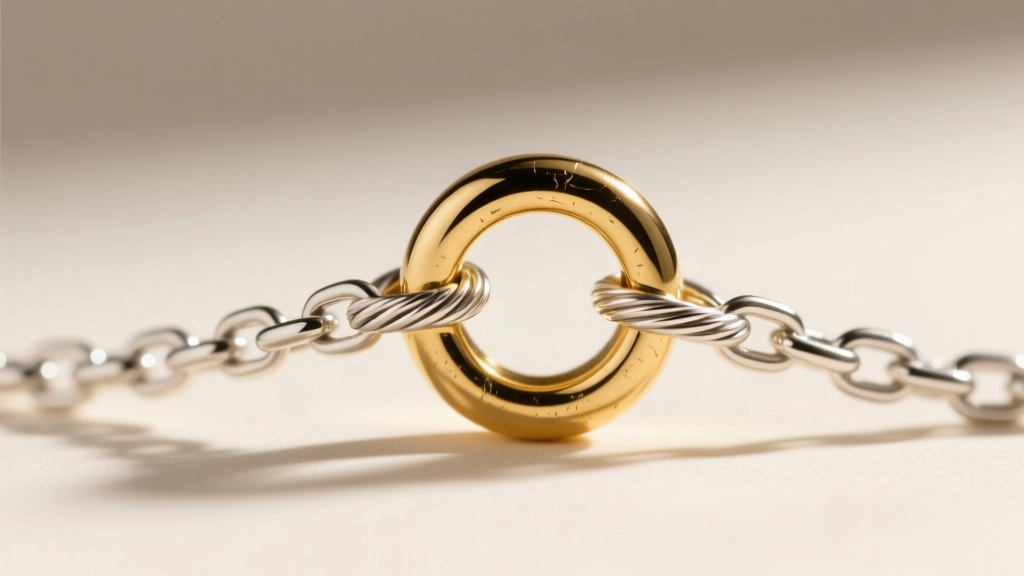
Furthermore, when utilizing a jump ring to connect a pendant to a chain, the jump ring must be soldered or feature a heavy-duty split mechanism. A standard 0.8mm wire gauge jump ring will easily pull apart under the dynamic pendulum motion of a 24-inch chain swinging during normal walking gait.
Neckline Geometry: Calculating the Ideal Drop
Expert stylists use neckline geometry to calculate the optimal chain length. The goal is to maintain negative space between the fabric's edge and the metal. Here is a practical decision framework for matching chain lengths to garment necklines:
- The V-Neck Calculation: Measure the depth of the V-neck from the shoulder seam to the lowest point of the fabric. Add 2 inches to this measurement. This ensures the pendant rests exactly 2 inches below the fabric line, creating a layered, intentional look without the metal resting directly on the hem.
- The Crew Neck Rule: Standard crew necks sit at the base of the neck (approx. 14.5" circumference). To avoid visual clutter, the shortest acceptable chain length is 18 inches, allowing the chain to clear the fabric entirely. A 16-inch choker will visually compete with the shirt's collar.
- The Scoop Neck Arc: Scoop necks create a wide, shallow curve. A 20-inch or 22-inch matinee chain mimics and slightly exaggerates this curve, framing the face and drawing the eye downward in a harmonious arc.
Adjustability and Hardware: Extender Chains and Clasp Mechanics
In modern jewelry design, static chain lengths are increasingly being replaced by adjustable systems. A standard 16-inch chain equipped with a 2-inch extender chain provides three distinct landing zones (16", 17", and 18"). However, adding an extender chain alters the center of gravity and the clasp mechanics.
When a lobster clasp is attached to the very end of a 2-inch extender chain, the weight of the clasp itself can cause the necklace to slide backward, constantly shifting the pendant off-center. To counteract this, technical designers use counter-weighting: adding a small metallic tag or a heavier decorative end-cap to the extender chain. This counter-weight anchors the clasp at the nape of the neck, ensuring the pendant remains perfectly centered at the sternum regardless of which link the clasp is secured to. Additionally, spring ring clasps should be avoided on any chain exceeding 20 inches or supporting pendants over 15 grams, as the internal spring mechanism is highly susceptible to failure under sustained tension. Always opt for forged lobster clasps or magnetic neodymium safety clasps for heavier, longer drops.
"True mastery of chain lengths for necklaces requires looking past the tape measure. It demands an understanding of material tensile strength, anatomical geometry, and the kinetic movement of the wearer. When these technical elements align, the jewelry ceases to be an accessory and becomes an integrated extension of the body."


