Wearing a Necklace in Hawaii: Humidity & Saltwater Fixes
Troubleshoot necklace damage in Hawaii. Learn how to protect jewelry from saltwater, high humidity, and sunscreen, plus emergency field cleaning tips.

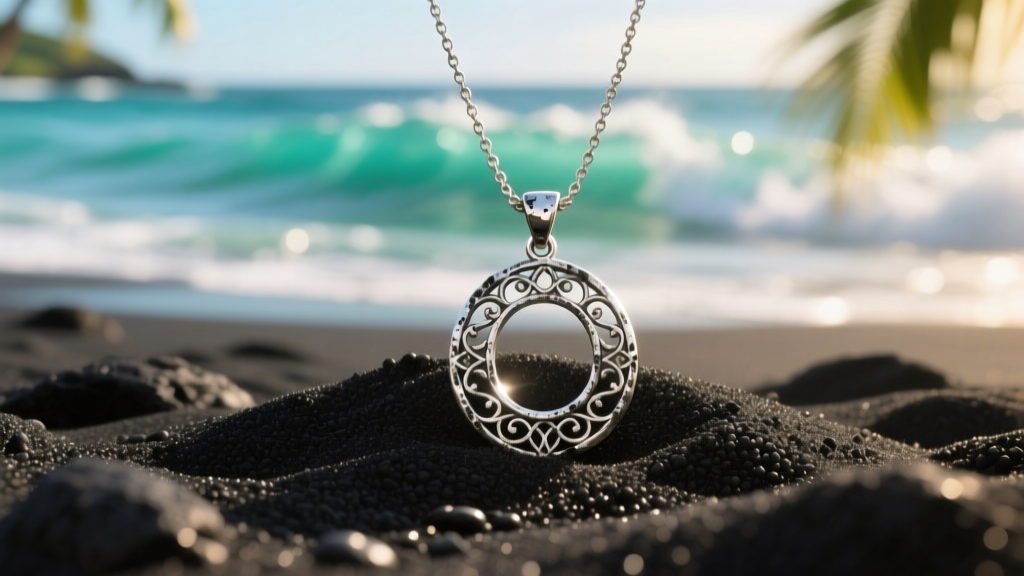
Hawaii offers an unparalleled tropical paradise, but its unique microclimate is notoriously hostile to fine jewelry. Between the 80%+ ambient humidity, aerosolized saltwater, abrasive volcanic sand, and heavy applications of chemical sunscreens, wearing your favorite necklace in Hawaii can quickly lead to irreversible damage. As a jewelry care specialist, I see countless post-vacation repairs involving snapped chains, blackened pendants, and degraded gemstones. This troubleshooting guide breaks down the exact environmental hazards of the Hawaiian islands and provides actionable, chemical-level solutions to protect and restore your necklaces.
The Hawaiian Climate Hazard Matrix
Not all metals and gems react equally to tropical environments. The table below maps specific necklace materials against the four primary hazards found in Hawaii: high humidity, ocean saltwater, chemical sunscreens, and abrasive coral/volcanic sand.
| Material | Humidity (80%+) | Saltwater Exposure | Chemical Sunscreen | Volcanic Sand (Mohs 6-7) |
|---|---|---|---|---|
| 925 Sterling Silver | High Tarnish Risk | Rapid Corrosion | Severe Blackening | Heavy Micro-scratching |
| 14k Solid Gold | Safe | Moderate Pitting | Mild Discoloration | Moderate Scratching |
| Gold Vermeil/Plated | Safe | High Peeling Risk | Plating Degradation | Plating Stripping |
| Freshwater Pearls | Safe | Nacre Dissolution | Acid Etching | Severe Surface Pitting |
| Marine-Grade Titanium | Safe | Completely Safe | Safe | Highly Resistant |
Troubleshooting Specific Necklace Failures
When a necklace fails in a tropical environment, it is rarely due to a single factor. It is usually a compounding chemical reaction. Here is how to diagnose and fix the most common Hawaii-specific jewelry emergencies.
The Sunscreen-Avobenzone Tarnish Effect
If your sterling silver or lower-karat gold necklace suddenly turned black or dark brown after a day at Waikiki or Ka'anapali, the culprit is likely avobenzone. Avobenzone is a common UVA filter in sunscreens that aggressively reacts with the copper alloys present in 925 silver and 10k/14k gold. This creates a layer of black copper oxide on the surface of your chain.
The Fix: Do not use abrasive pastes. For sterling silver, create an electrolytic bath using a glass bowl lined with aluminum foil (shiny side up). Add 1 tablespoon of baking soda and 1 tablespoon of sea salt per cup of boiling distilled water. Submerge the necklace for exactly 3 to 5 minutes. The aluminum will attract the sulfur and copper oxide, reversing the tarnish without removing base metal. For gold alloys, use a specialized non-abrasive jeweler's cloth impregnated with mild polishing compounds to gently lift the oxidized layer.
Saltwater Galvanic Corrosion and Clasp Failure
Ocean water is a highly conductive electrolyte. If your necklace features mixed metals—for example, a 14k gold chain with a stainless steel or brass spring-ring clasp—submerging it in the Pacific Ocean creates a galvanic cell. The less noble metal (the clasp spring) will rapidly corrode and snap. Furthermore, chloride ions in sea salt attack the zinc and copper in gold alloys, leading to stress corrosion cracking along the soldered links of the chain.
The Fix: If a clasp has seized or weakened, it must be replaced by a professional; do not attempt to bend it back into shape, as the crystalline structure of the metal has been compromised by chloride infiltration. To prevent this, always swap to a solid 14k or 18k gold lobster clasp before your trip, ensuring the entire piece is a uniform alloy.
Abrasive Damage from Hawaiian Black Sand
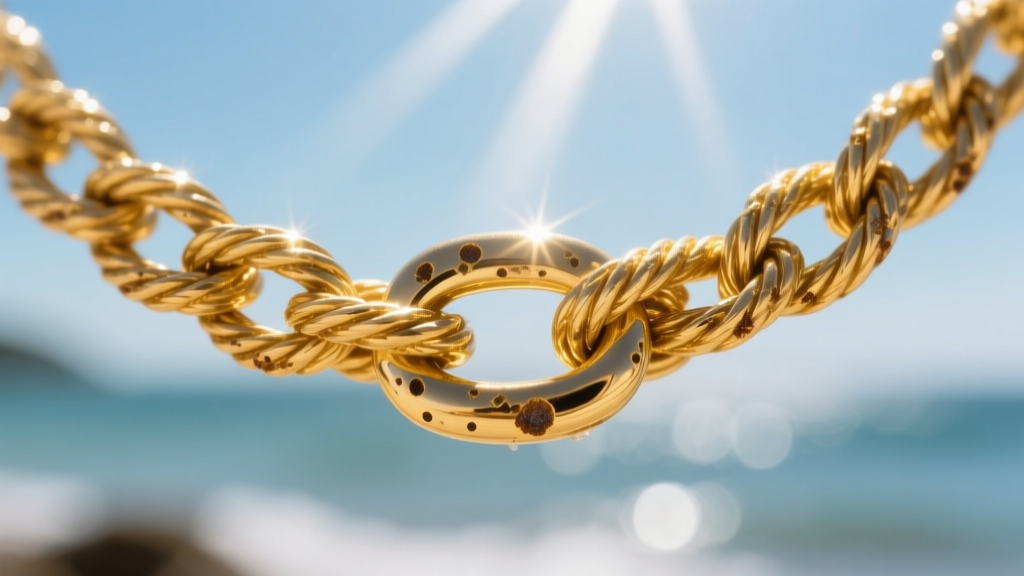
Hawaii's famous black sand beaches, such as Punalu'u, are composed of crushed basalt and olivine. These volcanic minerals rank between 6 and 7 on the Mohs hardness scale. For context, pure gold is 2.5, and sterling silver is roughly 2.5 to 3. Laying your necklace on a towel at a black sand beach, or letting it swing against your sand-covered skin, will result in permanent micro-scratches that dull the metal's luster and obscure gemstone facets.
The Fix: Minor surface scratching on gold or silver can be remedied post-trip with a professional high-polish buffing wheel using rouge compound. However, if your necklace features soft, porous stones like turquoise or opals, the sand will permanently matte the surface. These stones cannot be aggressively buffed and will require a professional re-cut or cabochon re-polishing.
Emergency Field Cleaning Protocols
If you notice your necklace degrading while still on the islands, you need an immediate, safe cleaning method using easily accessible items. Avoid hotel tap water, as Hawaii's municipal water can be highly mineralized or hard, leaving calcium deposits on your jewelry.
- The Baseline Wash: Mix 4 drops of pH-neutral dish soap (like original Dawn) into a cup of bottled or distilled water.
- The Agitation: Use an ultra-soft baby toothbrush (never a standard adult brush) to gently dislodge sunscreen and salt from the crevices of the pendant bail and chain links.
- The Rinse: Rinse thoroughly under a gentle stream of bottled water.
- The Dry: Pat dry with a clean microfiber cloth, then use a hair dryer on the "cool" setting to blow out trapped moisture from the clasp mechanisms.
For comprehensive guidelines on maintaining organic gems in harsh conditions, always refer to the Gemological Institute of America (GIA) care protocols, which emphasize keeping pearls entirely away from acidic tropical lotions and aerosolized salt.
Post-Vacation Restoration: When to See a Jeweler
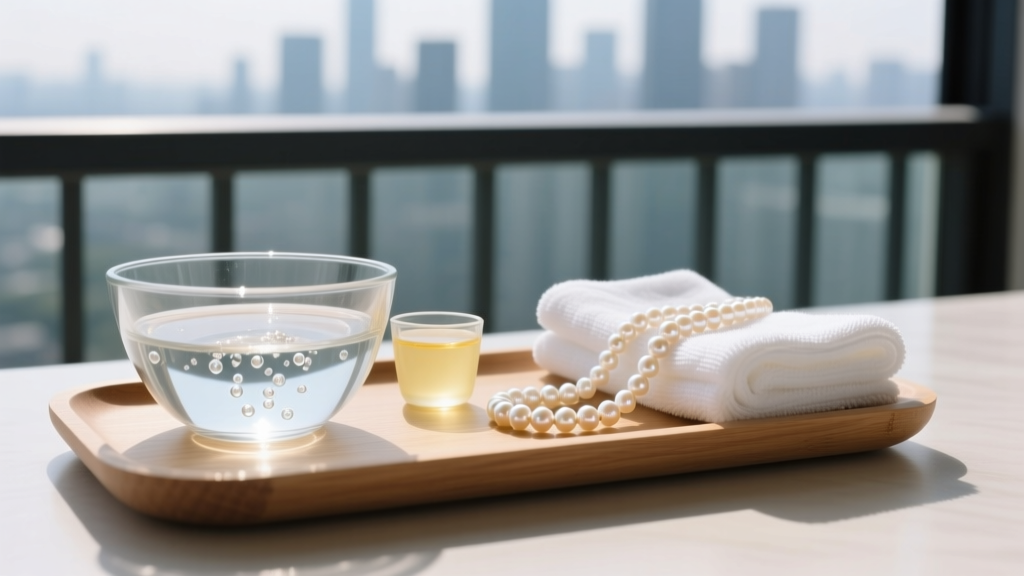
Some damage sustained in Hawaii cannot be fixed in a hotel room. You should take your necklace to a certified bench jeweler upon returning home if you observe any of the following:
- Stiff Lobster Claws: Salt crystallization inside the clasp spring will eventually cause it to snap. A jeweler can safely disassemble, ultrasonically clean, and re-lubricate the internal mechanism.
- White Residue on Gold: If your gold chain has a white, chalky film that won't wash off, it is likely mercury or aluminum contamination from certain aerosol products or environmental exposures. A jeweler can safely burn off the contamination with a specialized torch technique.
- Cloudy Gemstones: Sunscreen oils can seep into the microscopic fissures of emeralds or opalized settings. Professional steam cleaning and ultrasonic baths (where stone-safe) are required to extract these oils.
Prevention is always cheaper than restoration. According to Jewelers of America, establishing a strict "jewelry off before sunscreen and ocean" rule is the single most effective way to preserve your collection. If you must wear a necklace in Hawaii, opt for marine-grade 316L stainless steel, solid platinum, or high-karat gold (18k+), and leave your delicate heirlooms safely in the hotel safe.


