What Is a Five Finger Necklace? Technical Deep Dive
Discover what a five finger necklace is, from Hamsa symbolism to anatomical pendants. Explore metal casting, chain weights, and styling techniques.

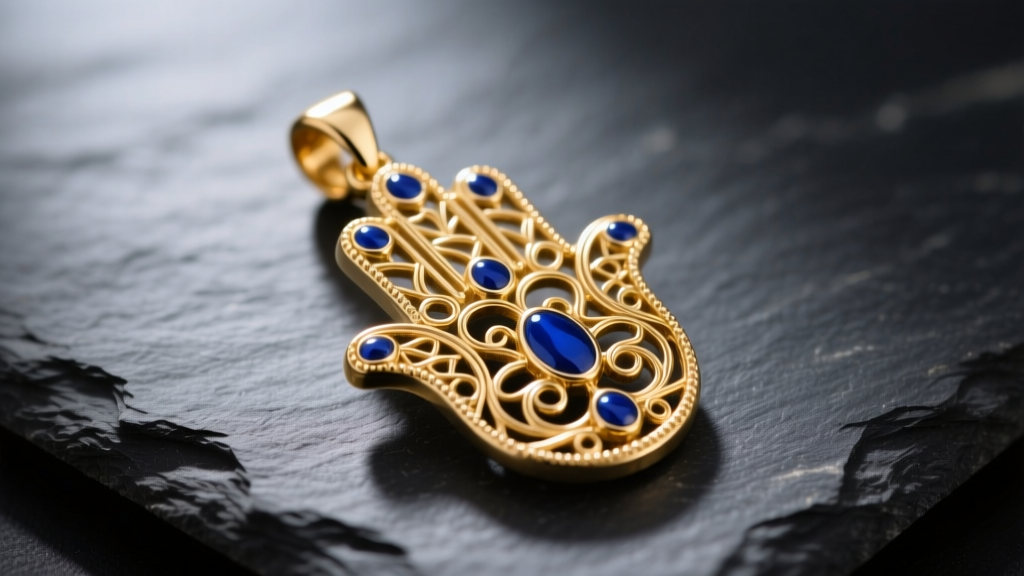
When consumers and collectors ask, "what is a five finger necklace?", they are usually referring to a pendant necklace that features a fully articulated or stylized five-digit hand motif. While the uninitiated might simply see a hand-shaped charm, jewelry historians and master goldsmiths recognize the five-finger necklace as a complex intersection of cultural talisman, anatomical artistry, and advanced metallurgical casting. Whether it takes the form of the symmetrical Hamsa (Khamsa) or an asymmetrical gothic skeletal hand, the five-finger necklace requires specialized manufacturing techniques to ensure the delicate digits do not snap under daily wear.
The Two Primary Archetypes of Five-Finger Pendants
Before diving into the technical specifications of chain pairing and metal grades, it is vital to distinguish between the two dominant design categories of the five-finger necklace. Each dictates a completely different approach to weight distribution and structural integrity.
1. The Hamsa (Hand of Fatima / Miriam)
Rooted in Middle Eastern and North African traditions, the Hamsa is an amulet shaped like an open right hand. As noted by the Metropolitan Museum of Art, the five fingers historically represent the five pillars of Islam or the five books of the Torah, serving as a shield against the evil eye. In jewelry manufacturing, Hamsa pendants are often symmetrical, with the thumb and pinky mirroring each other. This symmetry allows for easier die-striking, but high-end versions still rely on lost-wax casting to accommodate intricate palm filigree and enamel inlay.
2. The Anatomical and Gothic Hand
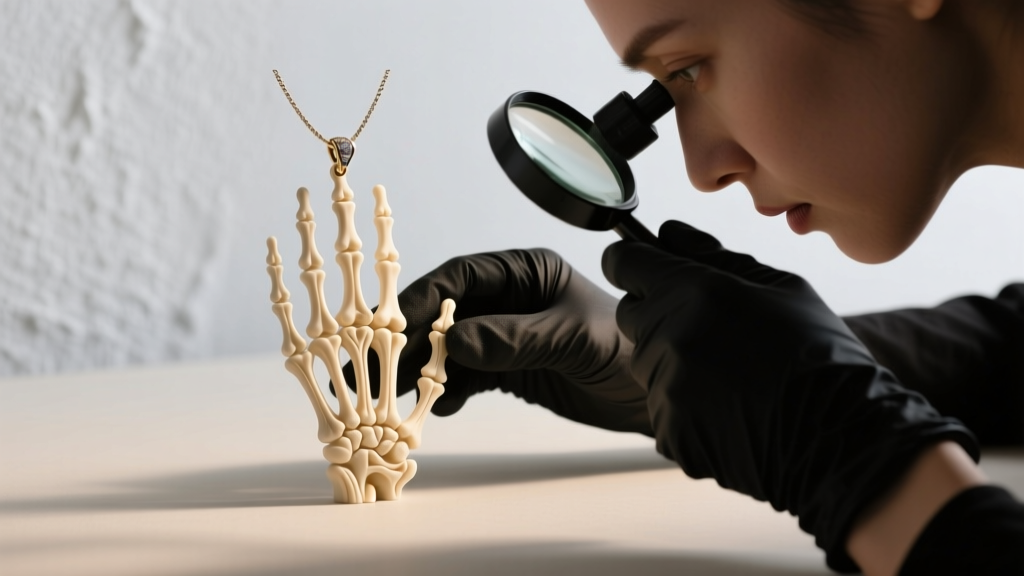
The second archetype is the realistic anatomical hand, often featuring skeletal structures, elongated talons, or articulated finger joints. Unlike the Hamsa, these pendants are highly asymmetrical. The thumb protrudes at a distinct angle, creating an off-center center of gravity. As of 2026, CAD (Computer-Aided Design) software and high-resolution 3D resin printing have largely replaced hand-carved wax for these anatomical models, allowing jewelers to achieve sub-millimeter precision in the knuckle joints without sacrificing the structural core of the digits.
Technical Anatomy & Casting Challenges
Casting a pendant with five distinct, protruding extremities presents unique thermodynamic challenges in the foundry. When molten metal is injected into a flask, it naturally flows toward the thickest sections (the palm) and cools fastest at the thinnest extremities (the fingertips). This differential cooling rate is the primary culprit behind shrinkage porosity—microscopic voids that weaken the metal matrix.
| Finger Component | Avg Thickness (mm) | Primary Casting Risk | Master Jeweler Solution |
|---|---|---|---|
| Thumb Tip | 1.8 - 2.2 | Cold shut (incomplete fill) | Add secondary sprue (feed channel) to the thumb base |
| Index/Middle | 2.5 - 3.0 | Warping during quenching | Maintain uniform mass; avoid sudden water quenching |
| Ring Finger | 2.0 - 2.5 | Surface pitting | Use fine-grain casting investment powder |
| Pinky Finger | 1.2 - 1.5 | Shrinkage porosity & snapping | Thicken the palmar base; taper the tip gradually |
According to metallurgical guidelines referenced by the Gemological Institute of America (GIA), maintaining a consistent thermal gradient is essential. If a five-finger pendant is cast in standard 925 sterling silver without proper spruing, the pinky finger is almost guaranteed to be brittle and will snap if caught on clothing.
Metallurgy: Choosing the Right Alloy for Hand Motifs
The material grade of a five-finger necklace dictates its longevity, patina potential, and price point. Here is a breakdown of the most common alloys used in 2026 for hand pendants:
- 925 Sterling Silver: The industry standard. It offers excellent detail reproduction but is prone to tarnishing. Jewelers frequently use liver of sulfur to artificially oxidize the crevices between the five fingers, creating high contrast that highlights the knuckle lines and palm prints.
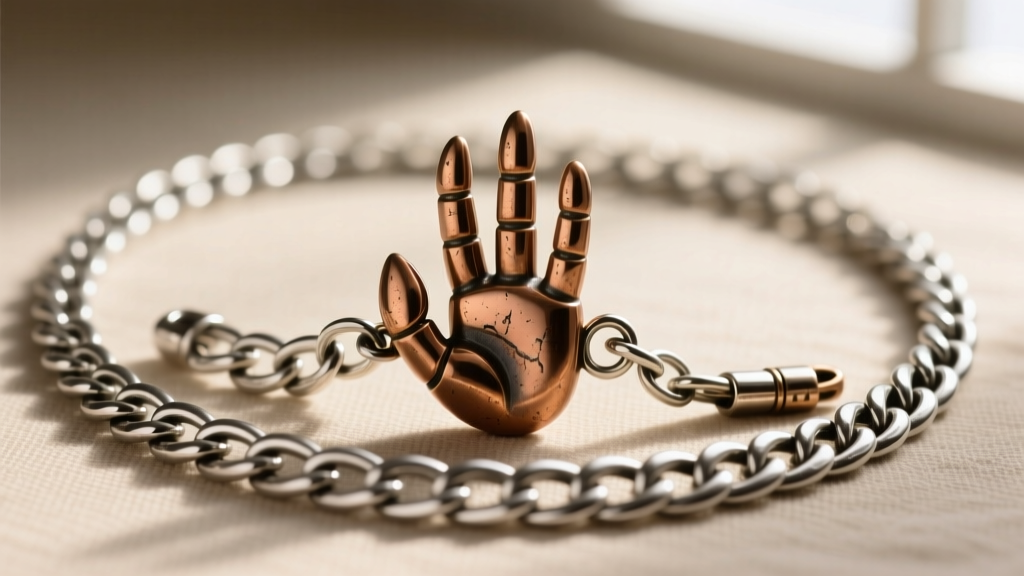
- Silicon Bronze: A favorite for heavy, gothic, or artisan-cast anatomical hands. Bronze is significantly harder than silver, making thin fingers less prone to bending. It also develops a rich, organic verdigris patina over time when exposed to skin oils and moisture.
- 14k Solid Gold (Yellow or White):strong> Reserved for luxury Hamsa pendants. Gold's superior malleability allows for incredibly fine filigree work between the fingers, though it requires a heavier gram weight to prevent the digits from warping under pressure.
The Role of Champlevé Enameling
Many premium five-finger Hamsa necklaces incorporate Champlevé enameling. This involves carving troughs into the metal palm and firing powdered glass into them. The five fingers often frame a central enamel eye or floral motif. The technical challenge here is ensuring the metal walls separating the enamel from the finger joints are at least 0.5mm thick; otherwise, the heat of the kiln will warp the fingers outward.
Chain Pairing: Weight Ratios and Clasp Mechanics
A common failure point in five-finger necklaces is not the pendant itself, but the chain and clasp assembly. Hand pendants are inherently top-heavy and act as a pendulum, generating kinetic stress on the bail (the loop connecting the pendant to the chain).
Expert Insight: Never use a standard spring-ring clasp for a solid metal five-finger pendant weighing over 12 grams. The internal spring mechanism will fatigue and fail under the pendulum swing of a heavy hand motif. Always opt for a forged lobster clasp or a box clasp with a safety figure-eight catch.
To properly support a five-finger pendant, follow these chain tensile guidelines:
- Under 10g (Hollow or Small Hamsa): A 1.5mm to 2.0mm cable or box chain is sufficient. Ensure the bail is lined with a hidden silicone sleeve to prevent the chain from grinding through the pendant loop.
- 10g - 20g (Solid Sterling Anatomical Hand): Requires a 2.5mm to 3.5mm curb, Figaro, or rope chain. The interlocking links of a curb chain distribute the lateral stress of a swinging pendant far better than the simple oval links of a cable chain.
- Over 20g (Oversized Bronze/Gothic Claw): Demands a heavy 4.0mm+ Miami Cuban link chain. The bail must be cast as an integral part of the pendant or soldered using a high-temperature laser welder to prevent tearing.
Wear, Tear, and Laser Welding Repairs
Despite expert casting, the protruding nature of the five fingers makes them vulnerable to impact and snagging. The thumb and index finger are the most frequent casualties when the wearer reaches into bags or puts on tight-knit sweaters.
Historically, repairing a snapped finger on a sterling silver or bronze hand pendant required traditional torch soldering. This method often left a visible, discolored seam at the joint and risked melting the intricate details of the adjacent fingers due to widespread heat distribution. Today, master jewelers utilize laser welding technology. A laser welder uses a highly focused beam of light to fuse a microscopic piece of matching filler wire exactly at the break point. This localized heat prevents damage to surrounding enamel or oxidized patinas, rendering the repaired finger virtually seamless and restoring up to 95% of the original tensile strength.
Sourcing Authentic and Durable Pieces
When shopping for a five-finger necklace, inspect the transition point where the fingers meet the palm. In mass-produced, low-quality castings, this area will look overly thick and bulbous—a lazy attempt by manufacturers to prevent breakage that ruins the anatomical elegance of the piece. High-quality artisan castings will feature a smooth, anatomically correct tapering from the metacarpals to the phalanges. Furthermore, consult historical archives like The British Museum to study the proportions of antique hand amulets, which can help you identify whether a modern Hamsa pendant respects traditional iconography or merely mimics it for fast-fashion appeal.
Ultimately, a five-finger necklace is more than a striking visual statement; it is a testament to a jeweler's mastery over thermodynamics, metallurgy, and structural engineering. By understanding the casting risks, choosing the appropriate chain weight, and maintaining the delicate extremities, you can ensure your hand pendant remains an enduring and protective staple in your collection for decades to come.