The Ultimate Mixed Bead Necklace Buying Guide: What to Look For
Discover what to look for when buying a mixed bead necklace. Learn about stringing materials, gemstone grades, clasp types, and pricing in our expert guide.
The Anatomy of a High-Quality Mixed Bead Necklace
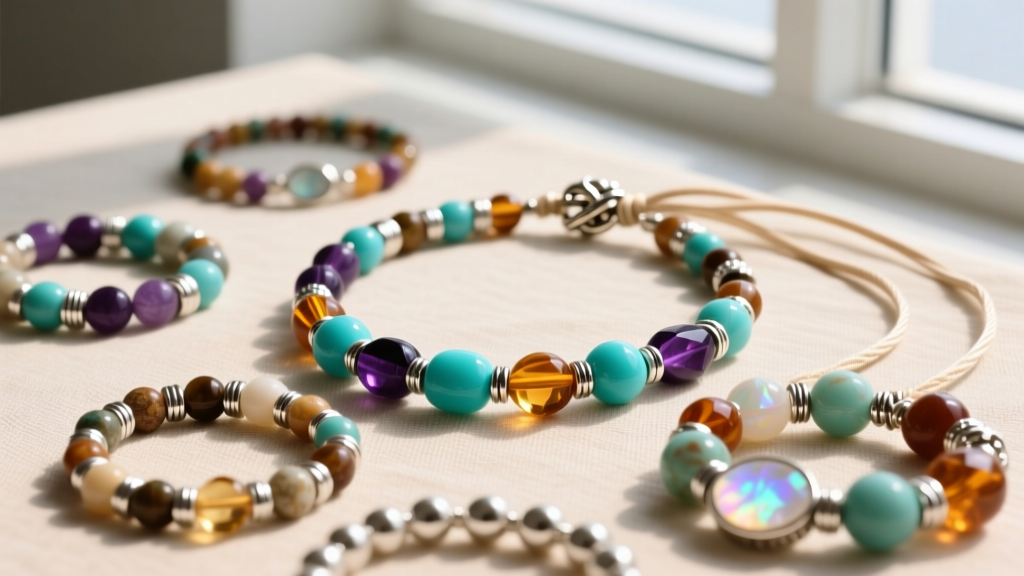
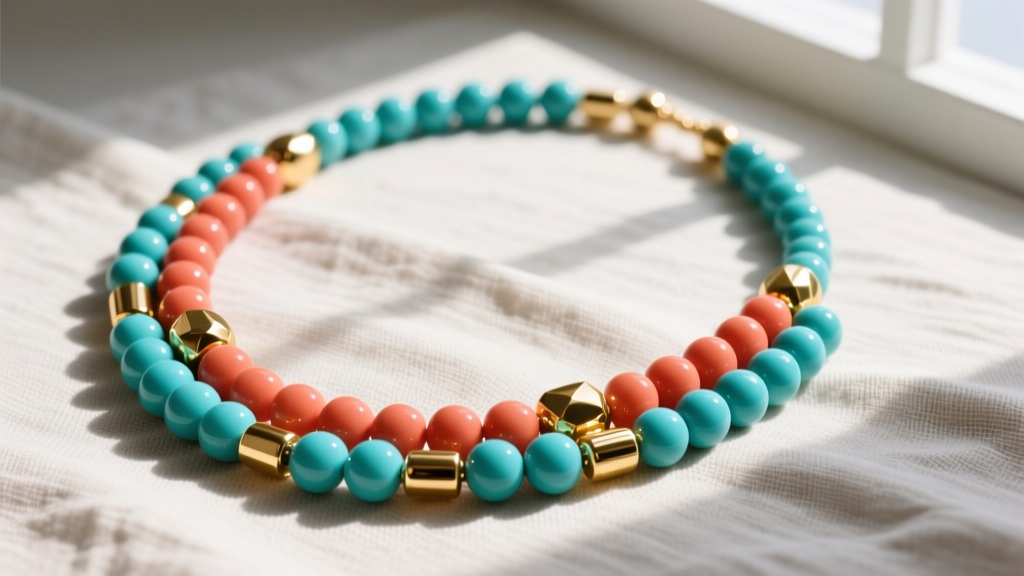
A well-crafted mixed bead necklace is a masterclass in texture, color, and material contrast. By combining gemstones, glass, metals, and organic materials, designers create layered, bohemian, or highly structured statement pieces. However, the very nature of mixing disparate materials introduces unique structural vulnerabilities. When you are evaluating a mixed bead necklace for purchase, you cannot simply look at the aesthetic appeal; you must scrutinize the engineering beneath the surface. Cheap manufacturing shortcuts—such as using rigid stringing wire, mismatched hardness scales, or weak base-metal clasps—will result in a necklace that snaps, scratches, or degrades within months. This comprehensive buying guide will equip you with the technical knowledge to evaluate stringing integrity, bead grading, hardware durability, and fair market pricing.
Stringing Materials: The Hidden Backbone of Beaded Jewelry
The most common failure point in any beaded jewelry is the stringing material. Because a mixed bead necklace often incorporates heavy semi-precious stones alongside lighter glass or wooden beads, the tensile strength and flexibility of the cord or wire are paramount.
What to Look For: 49-Strand Micro-Wire
For high-quality mixed gemstone necklaces, the industry gold standard is a 49-strand stainless steel micro-wire coated in nylon, such as those produced by the Soft Flex Company. The 49-strand construction provides a supple, fabric-like drape that prevents the necklace from kinking or snapping under the shifting weight of mixed bead sizes. Avoid necklaces strung on stiff 7-strand or 19-strand wires, which are prone to metal fatigue and snapping at the crimp points. For heavy mixed bead necklaces exceeding 100 grams, look for a wire diameter of 0.024 inches. For standard mixed beads, a 0.018-inch diameter is ideal.
Red Flags: Elastic and Cheap Nylon
Never purchase a heavy mixed bead necklace strung on elastic cord. Elastic degrades when exposed to skin oils, UV light, and the sharp inner edges of drilled gemstones, leading to catastrophic failure. Similarly, avoid rigid monofilament (fishing line-style) nylon, which becomes brittle over time.
Bead Grading and the Mohs Hardness Scale
When buying a mixed bead necklace, you are combining materials with vastly different physical properties. The most critical, yet frequently overlooked, factor in mixed-material jewelry is the Mohs Hardness Scale. If a designer mixes soft organic beads with hard crystalline gemstones without proper buffering, the harder stones will act like sandpaper, destroying the softer beads over time.
The Hardness Conflict
According to the Gemological Institute of America (GIA), materials like amber, coral, and pearls rank between 2.5 and 4 on the Mohs scale. Conversely, quartz, agate, and amethyst rank at 7. If a mixed bead necklace features raw quartz beads resting directly against polished pearls, the friction from normal wear will permanently scratch and dull the pearls within weeks.
How Experts Solve the Hardness Gap
When inspecting a mixed bead necklace, look for intelligent material buffering. High-end jewelers will separate stones of varying hardness using:
- Metal Spacer Beads: Sterling silver or gold-filled discs that act as a physical barrier between soft and hard stones.
- Micro-Knotting: Using silk or synthetic thread with tiny knots between every bead (common in pearl-and-gemstone mixes).
- Leather or Suede Washers: Placed between heavy, rough-cut stones to prevent edge-chipping.
Gemstone Grading in Mixed Pieces
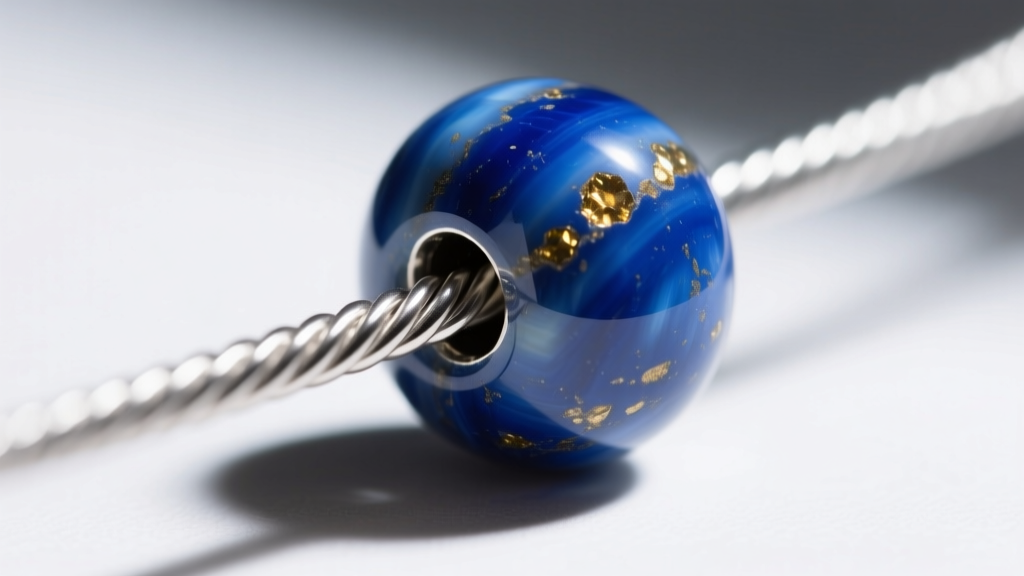
Do not accept low-grade stones just because they are part of a 'mixed' design. Look for AAA-grade semi-precious stones. For example, if the necklace includes lapis lazuli, it should exhibit a deep, uniform royal blue with minimal calcite (white) or pyrite (gold) inclusions, unless the inclusions are intentionally featured as a design element.
Hardware, Clasps, and Jump Ring Gauges
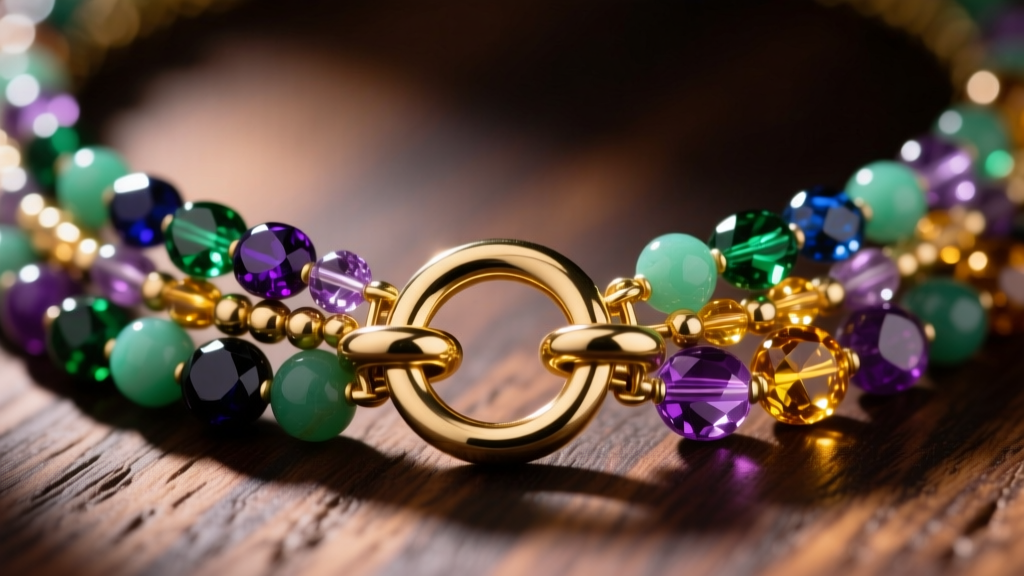
The clasp and the jump rings connecting it to the stringing wire are the primary load-bearing joints of the necklace. A mixed bead necklace can easily weigh between 80 and 200 grams, requiring robust hardware.
Clasp Selection by Weight
| Clasp Type | Best For | Weight Capacity | Pros & Cons |
|---|---|---|---|
| Toggle Clasp | Heavy mixed gemstone necklaces | 150g - 300g+ | Distributes weight evenly; secure under tension. Can slip if the necklace is too loose. |
| Lobster Clasp | Light to medium mixed bead strands | Up to 100g | Easy to use; secure. Internal spring can fail over time if exposed to moisture. |
| Magnetic Clasp | Accessibility needs / Light beads | Under 60g | Extremely easy to put on. Neodymium magnets can lose strength or attract metal dust. |
The Jump Ring Rule
Inspect the jump rings (the small circular loops connecting the clasp to the wire). They must be at least 16-gauge or 18-gauge in thickness. A standard 20-gauge or 22-gauge jump ring will easily pull apart under the swinging pendulum weight of a heavy mixed bead necklace. Furthermore, ensure the jump rings are either soldered shut or feature a split-ring design; standard unsoldered open rings are a major point of failure.
Pricing Framework: What Should You Actually Pay?
The pricing of a mixed bead necklace varies wildly based on the authenticity of the materials and the complexity of the stringing. Use this 2026 pricing framework to ensure you are not overpaying for mass-produced, low-grade imports.
| Tier | Materials | Stringing & Hardware | Expected Price Range |
|---|---|---|---|
| Fashion / Entry | Glass, acrylic, dyed howlite, wood | Nylon cord, base metal clasps | $25 - $65 |
| Artisan / Mid-Range | Genuine amethyst, turquoise, jade, agate | 49-strand wire, sterling silver or gold-filled toggles | $85 - $220 |
| Fine / Designer | Sapphire, emerald, opal, high-grade coral | Micro-knotted silk, 14k/18k solid gold hardware | $450 - $2,500+ |
When shopping mid-range suppliers like Fire Mountain Gems or independent artisans, always verify that the 'turquoise' or 'coral' is not actually dyed howlite or sponge coral, which should be priced in the entry tier.
Expert Inspection Checklist: 5 Things to Verify Before Checkout
Before finalizing your purchase, run the mixed bead necklace through this quick physical or visual inspection checklist:
- The Drape Test: Hold the necklace by the clasp and let it hang. It should coil naturally without stiff, jagged angles. Stiffness indicates cheap, rigid wire or tightly packed beads with no flexibility.
- The Crimp Inspection: Look at the metal tubes securing the wire near the clasp. They should be folded and rounded using a crimping plier, not simply crushed flat with flat-nose pliers (which creates sharp edges that cut the wire).
- The Hole Edge Check: Examine the drill holes of the gemstones. Rough, jagged hole edges will saw through nylon and wire over time. High-quality beads feature polished or chamfered drill holes.
- The Colorfastness Test: If buying in person, gently rub a damp, white cloth against dyed stones (like bright red coral or deep blue lapis). If color transfers, the beads are surface-dyed and will ruin your clothing when exposed to sweat or rain.
- The Clasp Tension Check: If it is a toggle clasp, ensure the T-bar is significantly longer than the inner diameter of the receiving loop. A ratio of less than 1.5x means the clasp will easily slip out during wear.
Conclusion and Long-Term Care
A mixed bead necklace is a versatile, dynamic addition to any jewelry collection, capable of bridging the gap between casual bohemian styles and structured evening wear. By prioritizing 49-strand nylon-coated wire, respecting the Mohs hardness scale, and demanding heavy-gauge hardware, you will secure a piece that lasts a lifetime. To maintain your investment, always store mixed bead necklaces flat or hung on a padded jewelry valet to prevent the stringing wire from taking a permanent 'set' or kinking, ensuring your necklace remains as vibrant and secure as the day you bought it.


