Heart Key Necklace Troubleshooting: Fixes, Care & Repairs
Is your heart key necklace tangled, tarnished, or broken? Discover expert troubleshooting tips to fix clasps, untangle chains, and restore your jewelry.

The Anatomy of Heart Key Necklace Failures
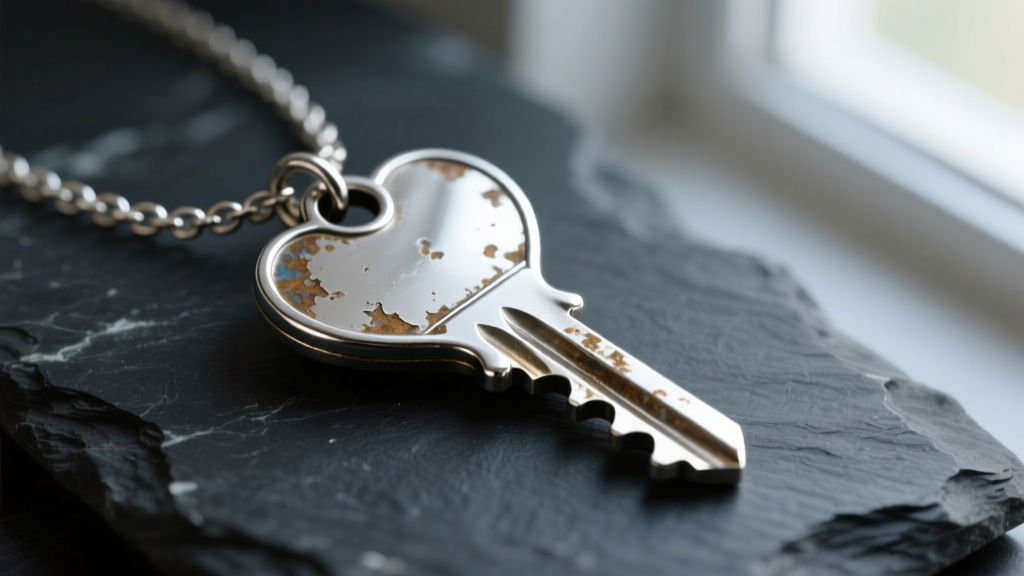
The heart key necklace is a staple of sentimental jewelry, but its structural design inherently invites mechanical failure. Unlike simple geometric pendants, a key pendant features asymmetrical weight distribution and protruding elements—specifically the 'bow' (the top loop) and the 'bit' or 'teeth' (the jagged bottom edge). When manufactured from stamped sheet metal under 0.8mm in thickness, the bow is highly susceptible to metal fatigue and warping. Furthermore, the jump ring connecting the key to the chain experiences concentrated friction, often leading to premature thinning and eventual snapping. Understanding these structural vulnerabilities is the first step in effective troubleshooting and long-term preservation of your jewelry.
Troubleshooting Common Chain & Pendant Issues
Before attempting any repairs, accurately diagnose the failure point. Below is a diagnostic matrix for the most frequent issues reported with heart and key pendant configurations.
| Symptom | Root Cause | DIY Solution | Professional Fix |
|---|---|---|---|
| Chain constantly slipping through the key bow | Jump ring gap is wider than the chain link gauge | Gently squeeze jump ring closed with two pairs of flat-nose pliers | Solder the jump ring shut or upgrade to a thicker gauge ring |
| Key pendant hangs upside down or sideways | Asymmetrical weight; bail is too small for the chain | Add a secondary micro-bail or switch to a lighter, thinner chain | Jeweler can reposition the bail or add a counterweight |
| Heart lock mechanism refuses to click shut | Dirt in the tension spring or bent locking tab | Flush with isopropyl alcohol and use a toothpick to clear debris | Ultrasonic cleaning and microscopic tension adjustment |
| Key teeth snagging on clothing or skin | Sharp casting lines or stamped burrs on the metal edges | Lightly buff edges with a high-grit (1000+) nail buffer | Professional polishing and tumbling to smooth all edges |
How to Untangle the 'Key Teeth' Snag
The most notorious issue specific to this jewelry style is the chain knotting around the key's teeth. Because the teeth act as micro-hooks, standard pulling only tightens the knot, risking chain deformation or link breakage. To resolve this without damaging the metal, you must reduce friction and use precision tools.
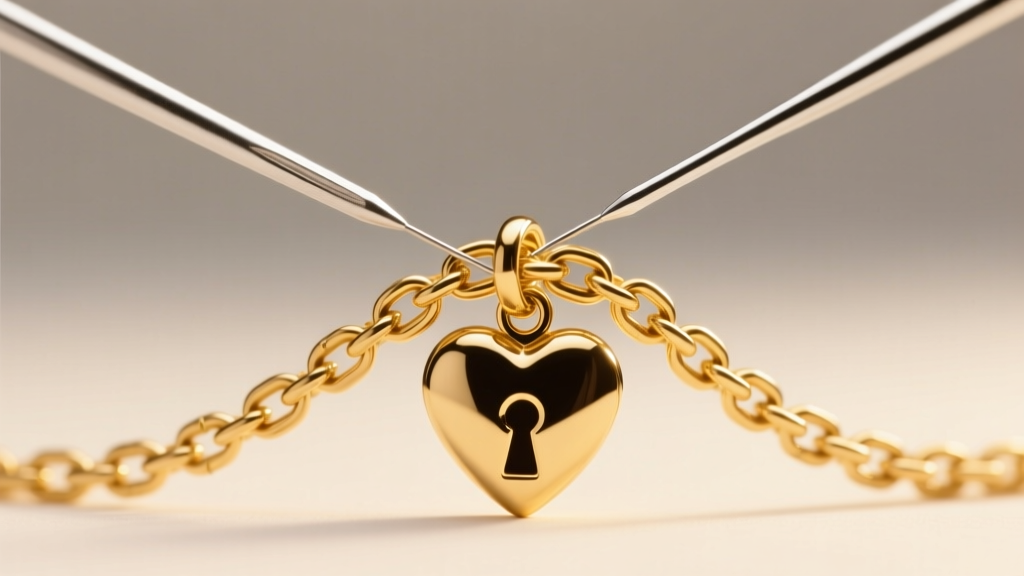
The Mineral Oil and Needle Technique
- Isolate the Knot: Lay the necklace flat on a non-porous surface like a glass or ceramic tile. Do not hold it in your hands, as body heat and tension can worsen the bind.
- Apply Lubricant: Place a single drop of mineral oil or baby oil directly onto the knot. Avoid olive oil or synthetic lubricants, as they can leave a rancid residue or degrade certain porous gemstones if your heart pendant includes stone inlays.
- Use Precision Tools: Take two fine sewing needles or beading awls. Insert the tips into the center of the knot and gently push outward in opposite directions. Do not pull the chain ends.
- Work the Links: Once the central tension is released, use the needles to guide the individual chain links off the key teeth one by one.
- Clean the Residue: Wash the pendant in warm water with a drop of mild dish soap to remove the oil, then dry thoroughly with a microfiber cloth.
Fixing a Loose or Broken Heart Lock Mechanism
Many heart key necklaces feature a functional heart padlock or locket. When the locking mechanism fails, it is usually due to a loss of tension in the internal spring tab or a misaligned hinge pin. If the heart lock no longer 'clicks' securely onto the corresponding key notch, do not force it, as this can snap the internal solder joints.
For a DIY tension fix, use a wooden toothpick to gently pry the internal metal tab on the heart clasp outward by a fraction of a millimeter. This restores the spring tension required to catch the key. If the hinge pin on a heart locket has slipped out, you can temporarily secure it by inserting a microscopic piece of copper wire and trimming it flush with flush-cutters, though a jeweler will need to laser-weld a new permanent pin for lasting security. According to the Jewelers of America, attempting to hammer or force a misaligned locket hinge is the leading cause of irreversible casing damage.
Metal-Specific Tarnish and Corrosion Fixes
The cleaning method you choose must be strictly matched to the metal composition of your heart key necklace. Using the wrong chemical agent can strip plating or permanently pit the surface.
Sterling Silver (925)
Sterling silver tarnishes when the copper alloy reacts with sulfur in the air, forming silver sulfide. For heavy black tarnish, use an electrochemical bath: line a glass bowl with aluminum foil (shiny side up), add boiling water, a tablespoon of baking soda, and a pinch of salt. Submerge the necklace for 3-5 minutes. The sulfur transfers from the silver to the aluminum. Rinse and dry immediately.
Gold Vermeil and Plated Metals
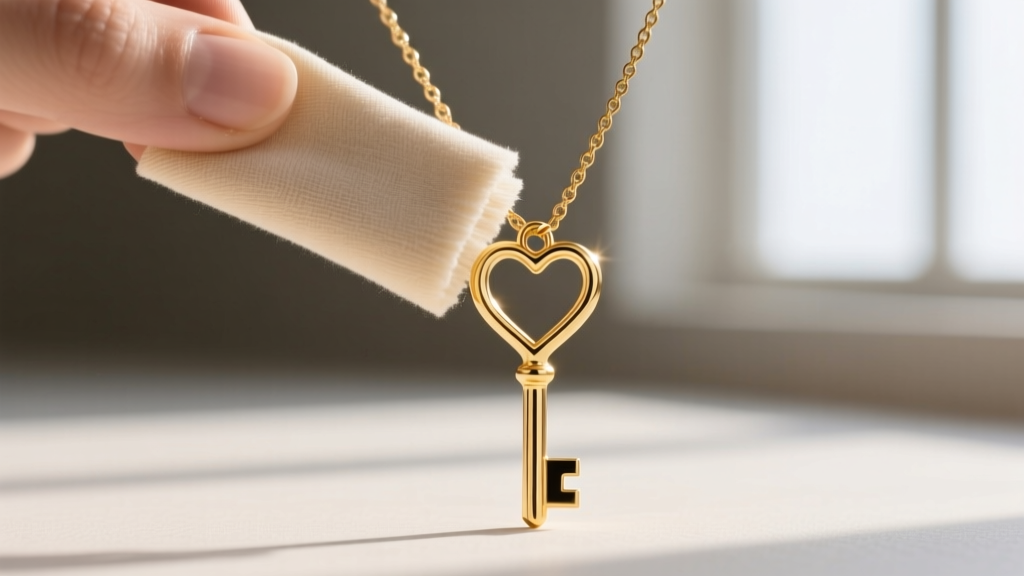
Gold vermeil requires a minimum of 2.5 microns of gold over a sterling silver base. Never use liquid silver dips or abrasive pastes on vermeil, as they will strip the gold layer down to the silver core, particularly at the high-friction key bow. The Gemological Institute of America (GIA) recommends cleaning vermeil strictly with a soft, untreated microfiber cloth and mild soapy water. If the gold has worn off the key teeth or bow, the piece must be sent to a professional for electroplating.
When to Seek Professional Jeweler Intervention
While many maintenance tasks can be handled at home, certain structural failures require professional equipment. If the chain snaps at the clasp, or if the key bow cracks entirely, a jeweler will use laser welding rather than traditional torch soldering. Laser welding is crucial for delicate chains (under 1.0mm gauge) and complex key shapes because it concentrates heat on a microscopic point, preventing the surrounding metal from melting or losing its temper. Expect to pay between $35 and $65 for a standard laser weld on a pendant bail or chain link, a worthwhile investment to preserve a piece with high sentimental value.


