Girlfriend and Boyfriend Necklaces: Troubleshooting Wear and Tear
Discover how to fix common issues with girlfriend and boyfriend necklaces, from broken chains to skin allergies, with our expert troubleshooting guide.

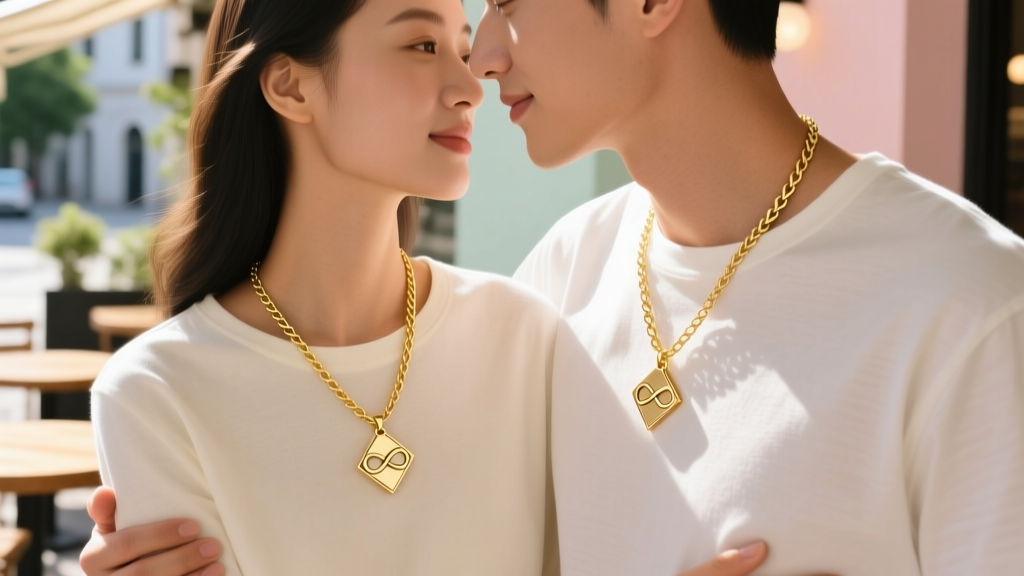
The concept of matching jewelry is a timeless expression of connection, but the reality of wearing girlfriend and boyfriend necklaces daily often ends in frustration. Within months, couples frequently encounter snapped chains, tarnished metals, green skin, and aesthetic mismatches. The root cause of these failures is rarely a lack of sentiment, but rather a fundamental misunderstanding of jewelry mechanics, metallurgy, and lifestyle wear-and-tear.
As a senior stylist and jewelry durability analyst, I have evaluated hundreds of matching sets that failed under the stress of daily life. Men and women subject their necklaces to vastly different environmental and mechanical stresses. A successful matching set must bridge these gaps. This comprehensive troubleshooting guide will help you diagnose and solve the most common pitfalls associated with couple's necklaces, ensuring your investment survives the test of time.
Troubleshooting Chain Breakage and Clasp Failures
The most common complaint with couple's jewelry is mechanical failure. Boyfriends often subject their necklaces to high tensile stress—snagging them on gym equipment, sleeping in them, or accidentally pulling them. If your matching set relies on delicate chains, breakage is inevitable.
The Chain Weave and Width Matrix
Most entry-level matching sets use 0.9mm to 1.2mm cable chains. While this width is acceptable for a lightweight pendant on a woman, it is a structural liability for a man. To troubleshoot and prevent future snapping, you must upgrade the chain weave and gauge.
- For Him: Mandate a minimum width of 2.0mm to 3.0mm. Opt for a Wheat (Spiga) or Box chain. These weaves feature interlocking, multi-directional links that distribute tensile stress evenly, making them significantly harder to snap than standard curb or cable chains.
- For Her: A 1.2mm to 1.5mm Rope or Figaro chain offers an excellent balance of delicate aesthetics and structural integrity, provided the links are soldered.
Upgrading the Clasp Mechanism
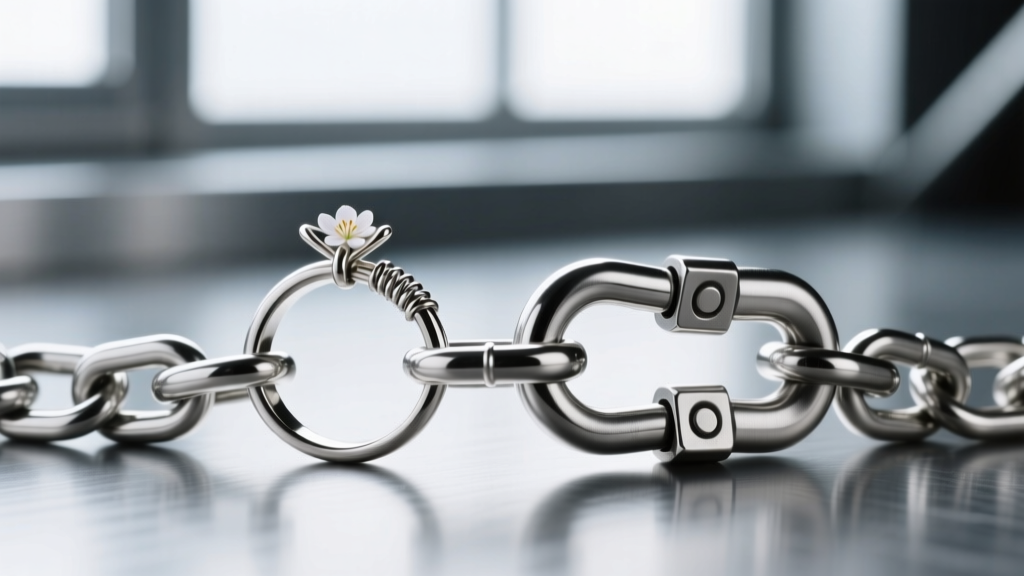
The weakest point of any necklace is the clasp. Standard 5mm spring ring clasps rely on a microscopic internal tension wire that fatigues and snaps after repeated use. Furthermore, the tiny lever is nearly impossible for a man with larger fingers to operate, leading to forced prying and metal deformation.
"Never trust a spring ring clasp on a chain wider than 1.5mm. The mechanical leverage required to open the clasp will eventually warp the circular housing, causing the necklace to slide off unnoticed." — Master Bench Jeweler
The Fix: Retrofit your necklaces with a 10mm to 12mm Lobster Clasp or a Box Clasp with a Figure-Eight Safety Catch. Lobster clasps feature a robust internal spring and a solid casting that resists lateral pulling. If you prefer seamless aesthetics, a neodymium magnetic clasp with a secondary locking collar provides both ease of use and high shear-strength resistance.
Solving the Green Skin and Contact Dermatitis Problem
Nothing ruins the romance of matching jewelry faster than a bright green ring around the neck or an itchy, red rash. This is not a sign that your partner is "rejecting" the metal; it is a predictable chemical reaction known as galvanic corrosion, or an immune response to hidden alloys.
Decoding the Metallurgy of Matching Sets
Many budget-friendly girlfriend and boyfriend necklaces are manufactured from brass or zinc alloys and plated with a microscopic layer (often less than 0.5 microns) of gold or silver. When human sweat—which is highly saline and acidic—penetrates this porous plating, it reacts with the copper in the brass, creating copper chloride (the green residue).
Furthermore, white gold and cheap sterling silver often contain nickel as a hardening agent. According to the Mayo Clinic, nickel allergy is one of the most common causes of allergic contact dermatitis, resulting in severe itching and blistering where the metal touches the skin.
Material Selection Framework
To troubleshoot skin reactions, you must abandon plated metals and invest in solid, hypoallergenic materials. The Gemological Institute of America (GIA) notes that pure 24k gold is hypoallergenic but too soft for daily wear, making alloyed 14k or 18k gold the industry standard for durability and skin safety.
| Material Grade | Hypoallergenic? | Tarnish Resistance | Estimated Price Range (Pair) | Best For |
|---|---|---|---|---|
| ASTM F136 Titanium | Yes (Implant Grade) | 100% Tarnish-Proof | $60 - $120 | Active couples, swimmers, gym-goers |
| 316L Surgical Steel | Mostly (Trace Nickel) | High | $40 - $90 | Budget-conscious, casual wear |
| 14k Solid Yellow Gold | Yes (Nickel-Free) | Moderate (Requires polishing) | $450 - $800 | Luxury, lifelong heirlooms, sensitive skin |
| 925 Sterling Silver | No (Contains Copper) | Low (Oxidizes easily) | $80 - $150 | Occasional wear only |
The Fix: If your partner is experiencing green skin, immediately retire the piece. Replace it with ASTM F136 implant-grade titanium for an indestructible, budget-friendly option, or 14k solid yellow gold (ensure it is alloyed with silver or copper, not nickel) for a premium, lifelong investment.
Fixing Aesthetic Mismatches: The Subtle vs. Loud Dilemma
A frequent non-mechanical failure is the aesthetic clash. Often, one partner desires a bold, statement-making piece, while the other prefers minimalist, hidden jewelry. Forcing both into identical, bulky puzzle-piece pendants or oversized heart lockets usually results in one partner quietly leaving the necklace in a drawer.
Designing for Thematic Cohesion
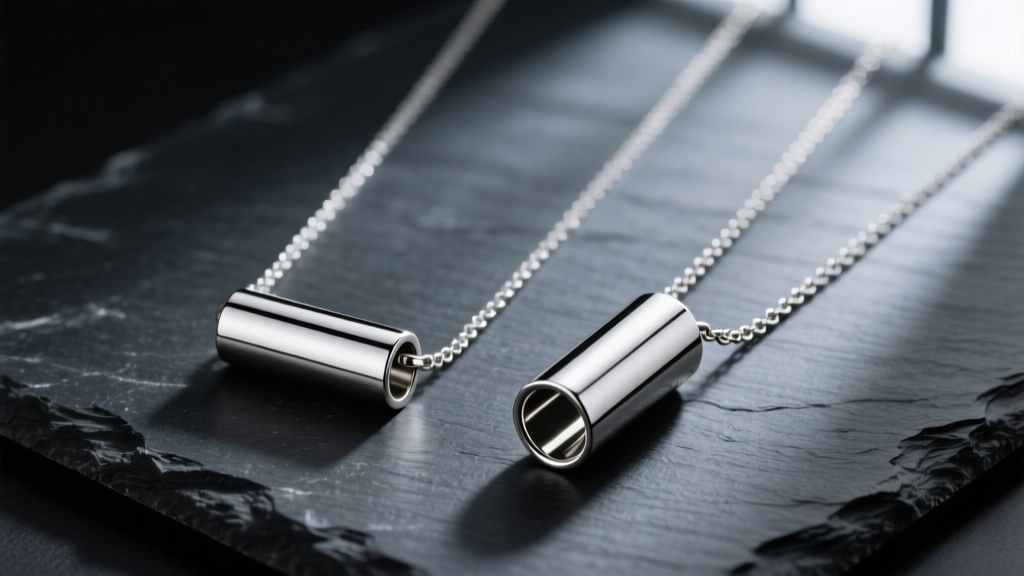
The modern approach to girlfriend and boyfriend necklaces abandons literal "halves of a whole" in favor of thematic cohesion. The goal is to create a set that looks intentional when placed side-by-side, but functions as an independent, stylish accessory when worn apart.
- Mass and Proportion Scaling: Use the exact same chain weave and metal, but scale the pendant mass. For example, a solid 14k gold cylinder pendant (8mm x 20mm) for him, and a hollow, diamond-cut gold tube (4mm x 15mm) for her. They share a geometric language but respect individual style preferences.
- Hidden Data Encoding: Opt for Morse code beaded chains or interior-bar engravings. A coordinate necklace featuring the GPS coordinates of where you met allows both partners to wear a minimalist steel bar that holds profound, private meaning without broadcasting it to the world.
- Interlocking Textures: Instead of matching shapes, match textures. A hammered-finish disk for her and a hammered-finish signet ring on a chain for him creates a subtle visual link that only the two of you will recognize.
Maintenance Protocol for Long-Term Wear
Even the highest-grade metals require basic maintenance to prevent mechanical degradation and aesthetic dulling. Troubleshooting a tarnished or stiff chain is simple if you implement a proactive care routine.
- The Monthly Ultrasonic Bath: For solid gold, platinum, and titanium (without porous gemstones like opals or pearls), use a home ultrasonic jewelry cleaner with a few drops of mild dish soap. The high-frequency cavitation bubbles will dislodge dead skin cells and lotion buildup from the clasp mechanisms, preventing the stiff lever action that leads to breakage.
- The Friction Polish: Keep a treated jeweler's polishing cloth in your nightstand. Wiping the chain for 10 seconds once a week removes the acidic sweat residue before it can etch into the metal alloy or degrade the polish.
- The Sleep Rule: The number one cause of chain kinking and micro-fractures is rolling over on a chain link during sleep. Establish a strict "off before bed" rule, utilizing a dual-hook jewelry stand to prevent the two necklaces from tangling together on a nightstand.
By addressing the structural, chemical, and aesthetic vulnerabilities inherent in matching jewelry, you can transform your girlfriend and boyfriend necklaces from a fleeting novelty into a durable, daily-worn testament to your partnership. Invest in the right gauge, choose biocompatible metals, and respect individual style—the chain will hold.


