Anatomy of a Heart Shaped Tennis Necklace: Expert Buying Guide
Master the technical details of a heart shaped tennis necklace. Explore diamond symmetry, bowtie effects, clasp security, and metal grades.

The Architecture of Heart-Cut Diamonds in Tennis Lines
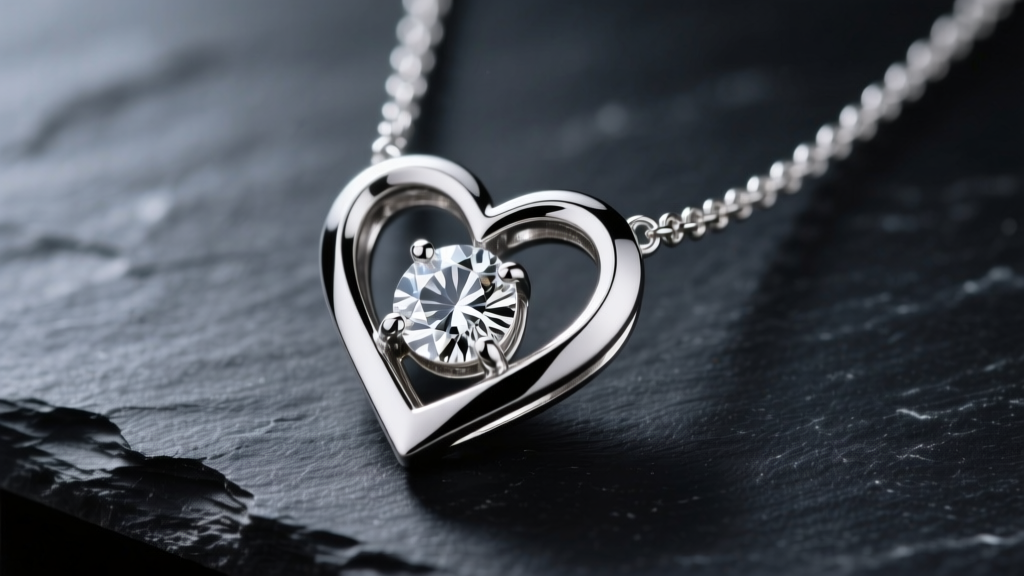
Constructing a flawless heart shaped tennis necklace is an exercise in extreme geometric precision and structural engineering. Unlike standard round brilliant tennis lines, which forgive minor asymmetries through their uniform radial geometry, heart-cut diamonds demand rigorous sorting. According to the Gemological Institute of America (GIA), the heart brilliant is a complex modified brilliant cut, typically featuring 56 to 58 facets. When strung together in a continuous 16-inch or 18-inch line, the clefts (the V-shaped indentation at the top) and the lobes (the rounded upper curves) must align with microscopic tolerances to prevent the necklace from twisting or lying unevenly against the clavicle.
Mitigating the Bowtie Effect
The most prevalent optical flaw in fancy-shaped diamonds is the bowtie effect—a dark, bowtie-shaped shadow that stretches across the center of the stone due to light leakage. In a heart shaped tennis necklace, a prominent bowtie in even a single stone disrupts the continuous scintillation of the entire piece. Expert gemologists mitigate this by selecting stones with optimized pavilion angles (typically between 40.6 and 41.8 degrees). When evaluating a high-carat tennis line, you must inspect the piece in diffuse, natural-equivalent lighting. If the central stones exhibit deep, opaque shadowing across their widths, the cutter has sacrificed optical performance for carat weight retention.
Symmetry and Length-to-Width Ratios
Symmetry is paramount. The two lobes of the heart must be perfectly mirrored, and the cleft must be sharp and well-defined. For a cohesive tennis line, the length-to-width (L/W) ratio of the individual diamonds should remain strictly between 0.90 and 1.05. Ratios exceeding 1.10 yield elongated, slender hearts that are highly susceptible to chipping at the pointed tip and tend to snag on textiles. Conversely, a ratio below 0.85 creates a fat heart that looks visually heavy and clunky when repeated 35 to 45 times across a collarbone.
Metal Alloys and Prong Engineering
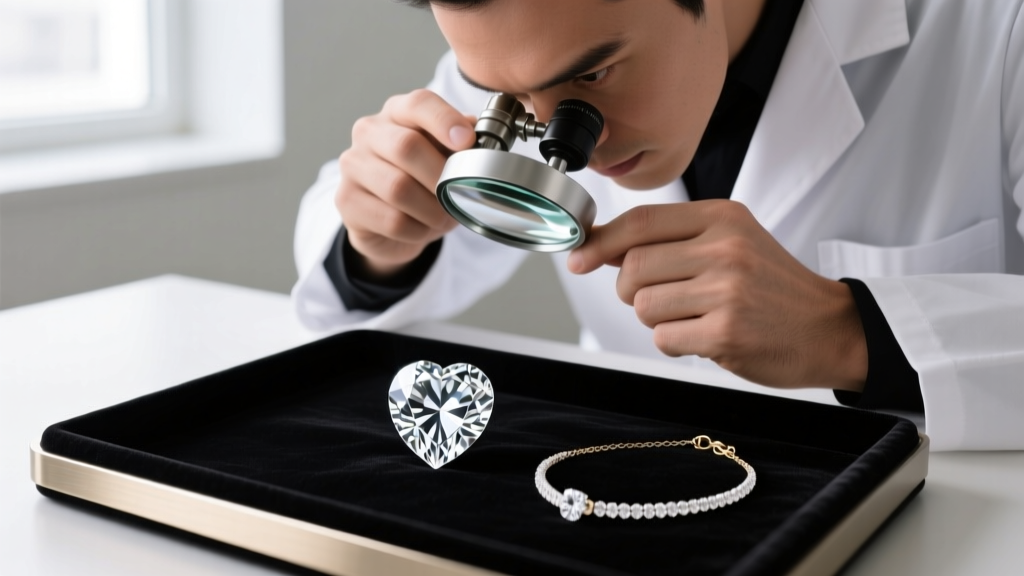
The structural integrity of a heart shaped tennis necklace relies heavily on the chosen metal alloy and the specific prong architecture. Because the heart cut features a sharp, vulnerable point at its base, standard round prongs are entirely insufficient. Expert jewelers mandate a specialized V-prong at the cleft to envelop and protect the acute angle from impact fractures. The lobes and wings are typically secured with standard rounded prongs to maximize light entry.
Below is a technical comparison of the primary alloys used in luxury tennis lines:
| Metal Alloy | Durability & Prong Security | Maintenance Profile | Best Application |
|---|---|---|---|
| Platinum 950 | Exceptional. Develops a patina but does not lose metal mass. Prongs bend rather than snap. | Low. Requires occasional repolishing. No replating needed. | High-carat, heavy daily-wear tennis lines. |
| 18k White Gold | Good, but prongs can wear thin over decades. Alloyed with palladium or nickel for strength. | High. Requires rhodium plating every 12-24 months to maintain bright white luster. | Budget-conscious buyers prioritizing initial brilliance. |
| 14k Rose Gold | Very High. Copper content provides immense tensile strength and prong rigidity. | Low. The warm pink hue is intrinsic and will not fade or require plating. | Vintage-inspired designs and warm skin tone contrast. |
Clasp Mechanisms and Security Protocols
A 10-carat total weight (CTW) heart shaped tennis necklace can easily weigh between 15 and 25 grams. Relying on a standard lobster clasp for a piece of this mass and value is a critical failure point. The tension exerted on the chain during neck movement can easily compromise a weak spring mechanism.
For any diamond tennis line exceeding 5 CTW, a hidden box clasp with double figure-eight safety catches is non-negotiable. The box clasp provides a secure, flush mechanical lock that maintains the continuous visual flow of the diamonds, while the dual figure-eight wires act as redundant fail-safes. If the primary box mechanism is accidentally depressed by a stray hair or clothing fiber, the safety catches ensure the necklace remains tethered to the wrist or neck. Furthermore, the clasp housing must be milled from a solid block of the chosen precious metal, not cast, to prevent porosity and structural shearing.
Pricing Tiers and Carat Weight Distribution
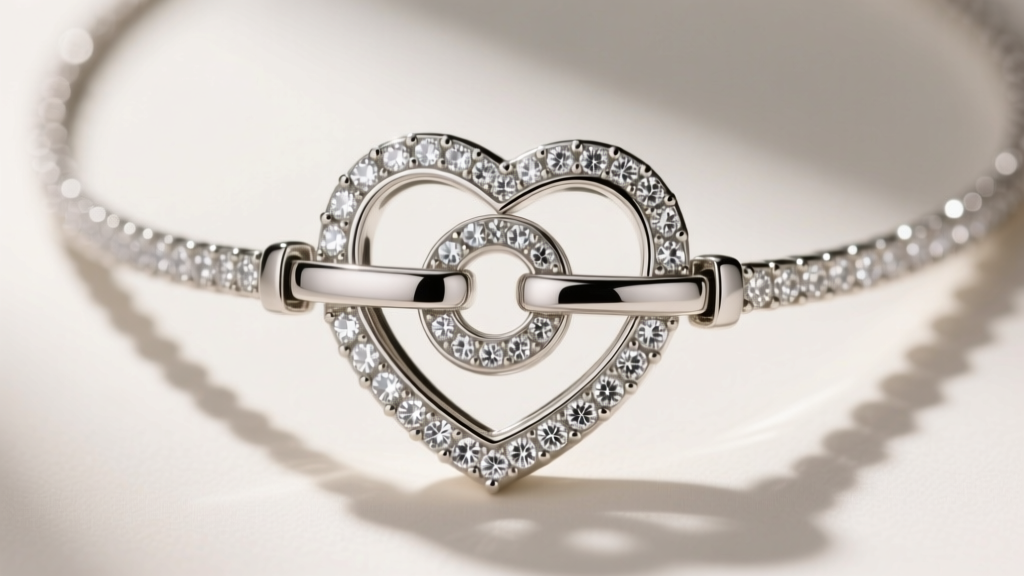
The pricing of a heart shaped tennis necklace is not strictly linear; it scales exponentially with the size of the individual stones and the strictness of the matching criteria. Matching 40 identical heart-cut diamonds for color (D-F), clarity (VS1-VS2), and cut quality requires sorting through thousands of carats of rough and polished inventory. Here is a realistic 2026 pricing framework for a standard 16-inch, 18k white gold setting:
- 3.00 - 5.00 CTW (Micro-Hearts): $4,500 – $9,000. These utilize smaller stones (approx. 0.10ct each). The bowtie effect is less visible at this scale, but the clefts can appear rounded if poorly cut.
- 6.00 - 9.00 CTW (Standard Luxury): $12,000 – $28,000. The sweet spot for visual impact. Stones range from 0.15ct to 0.25ct each. Demands strict V-prong setting and excellent symmetry.
- 10.00 - 15.00+ CTW (High Jewelry): $45,000 – $120,000+. Features massive, individually certified stones. Requires custom-calibrated box clasps and platinum settings to manage the extreme weight.
Diamond Fluorescence and Optical Matching
When matching dozens of heart-cut diamonds for a continuous tennis line, fluorescence becomes a critical, often overlooked variable. According to GIA grading standards, approximately 25% to 35% of diamonds exhibit some degree of fluorescence, typically blue. In a heart shaped tennis necklace, mixing stones with None fluorescence and stones with Strong Blue fluorescence will result in a patchy, mismatched appearance under UV-rich environments (such as direct sunlight or certain nightclub lighting). Expert jewelers strictly sort parcels to ensure uniform fluorescence levels across the entire 16-inch span. Furthermore, strong fluorescence can sometimes cause a diamond to appear milky or oily in daylight, which is particularly detrimental to the crisp, sharp facets required at the cleft of a heart cut. Always request a fluorescence matching report from the setter before finalizing a high-carat purchase.
Sizing, Drape, and Collarbone Placement
The drape of a heart shaped tennis necklace is heavily influenced by whether the carat weight is uniform or graduated. A uniform line (where every stone is the exact same millimeter size) creates a modern, rigid collar effect that sits higher on the neck. A graduated line, where the stones incrementally increase in size toward the center pendant drop, offers a softer, more traditional drape that follows the natural slope of the décolletage.
Expert Insight: When sizing a heart-cut tennis line, always measure the necklace while it is laid flat on a velvet tray, not while suspended. The articulation of the links and the flexibility of the prong settings can add up to 0.5 inches of apparent length when the piece is under the tension of gravity.
Ultimately, investing in a heart shaped tennis necklace requires looking past the romantic silhouette and scrutinizing the metallurgical and gemological engineering beneath. By demanding V-prongs, optimized pavilion angles, and redundant clasp safeties, you ensure the piece remains a secure, scintillating heirloom for decades.


