Heart Toggle Necklace Materials: Gold vs Silver vs Titanium
Compare gold, silver, and titanium for your heart toggle necklace. Discover Vickers hardness, alloy grades, and clasp durability.

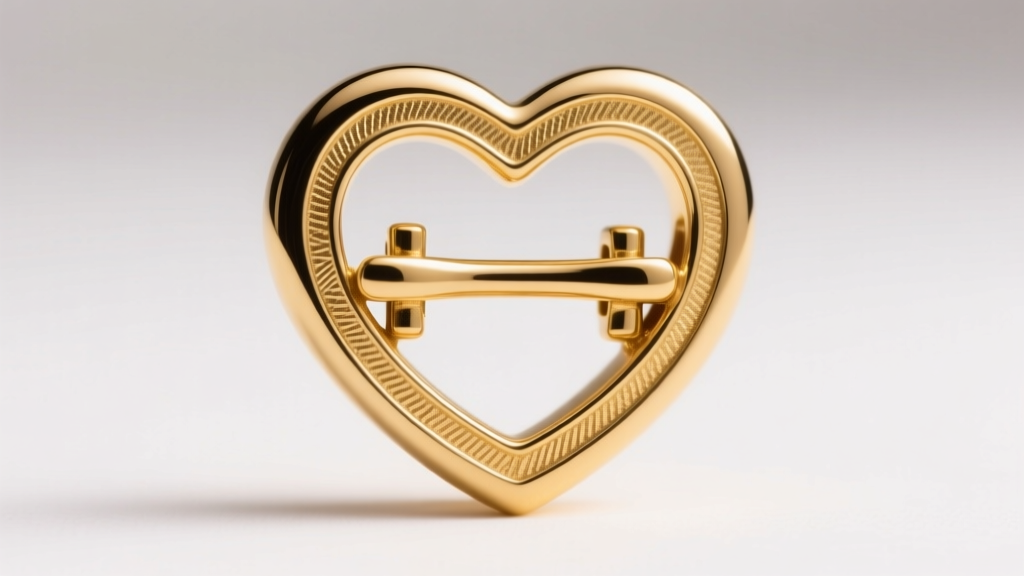
The Engineering Behind a Heart Toggle Necklace
A heart toggle necklace is a romantic and visually striking jewelry staple, but its aesthetic appeal relies entirely on the mechanical integrity of its clasp. Unlike a standard spring ring or lobster clasp, a toggle clasp operates on a simple gravity-and-friction pivot: a T-bar passes through a receiving ring (in this case, a heart-shaped ring) and rests flat against the inner edge. This mechanical simplicity demands rigorous material properties. If the metal is too soft, the T-bar can bend under tension, or the heart ring can warp, leading to catastrophic clasp failure and the loss of the necklace.
When selecting a heart toggle necklace, understanding the metallurgical properties of the chosen material is critical. The Vickers Hardness (HV) scale and the yield strength of the alloy dictate how well the clasp will endure the repetitive friction of daily wear. According to the Gemological Institute of America (GIA), the specific alloying metals mixed with pure gold or silver dramatically alter these physical properties, transforming a fragile decorative piece into a durable, multi-generational heirloom.
Precious Metal Alloys: 14k vs. 18k Gold
Gold is the traditional choice for fine heart toggle necklaces, but pure 24k gold (which sits at a mere 25 HV on the Vickers scale) is far too malleable for a toggle mechanism. Therefore, gold must be alloyed with metals like copper, silver, zinc, or palladium to increase its tensile strength and hardness.
14k Gold (58.5% Pure Gold)
14k gold is the industry standard for structural jewelry components like toggle bars. With a Vickers hardness typically ranging between 130 HV and 150 HV (depending on the exact copper-to-silver ratio), 14k gold offers exceptional rigidity. A 14k gold T-bar will resist bending even if the necklace is caught on clothing. Furthermore, the higher copper content in many 14k yellow gold alloys provides a warm hue while significantly boosting the metal's yield strength, ensuring the heart ring maintains its precise inner diameter over decades of friction.
18k Gold (75% Pure Gold)
While 18k gold offers a richer, deeper yellow color and a higher intrinsic value, it is softer, generally measuring around 120 HV to 130 HV. For a heart toggle necklace, an 18k clasp must be cast slightly thicker or die-struck and work-hardened to compensate for the lower hardness. If you opt for 18k gold, look for brands that utilize modern casting alloys incorporating trace amounts of silicon or boron, which refine the grain structure and improve the wear resistance of the toggle friction points.
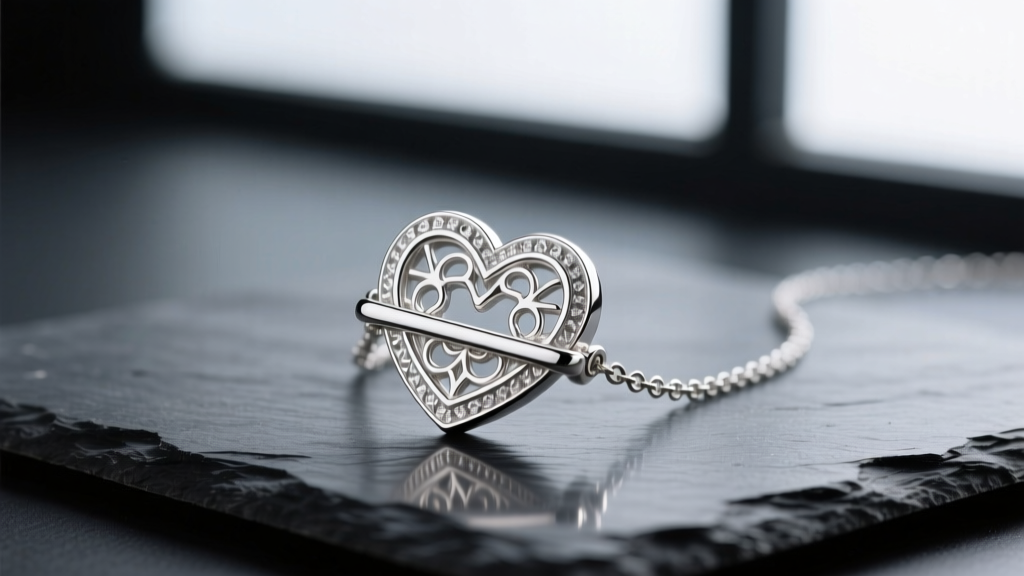
Sterling Silver: Work Hardening and Tarnish
Sterling silver (92.5% silver, 7.5% copper) is a highly accessible and popular material for heart toggle necklaces, but it presents unique metallurgical challenges. Pure silver is exceptionally soft, and while the 7.5% copper addition brings the Vickers hardness up to approximately 65 HV, this is still considerably softer than 14k gold.
The primary risk with a sterling silver toggle clasp is "clasp fatigue." The repetitive sliding of the T-bar through the heart ring can act as an abrasive, slowly widening the inner circumference of the heart. To combat this, expert jewelers utilize a process called work hardening. By mechanically deforming the silver (through hammering, rolling, or tumbling) after casting, the crystal lattice of the metal is compressed, increasing its surface hardness and making the toggle bar far more resistant to bending.
Additionally, the copper content that gives sterling silver its necessary strength is also responsible for oxidation and tarnish. Many high-end silver heart toggle necklaces are plated with a micro-layer of rhodium. While rhodium provides a brilliant, tarnish-resistant white-metal finish, the friction of the toggle mechanism will eventually wear this plating away at the contact points, requiring periodic re-plating by a professional jeweler.
Platinum and Titanium: High-Strength Alternatives
For those seeking maximum durability or hypoallergenic properties, platinum and titanium offer advanced material solutions, though they come with distinct manufacturing constraints.
Platinum 950
Platinum alloys (typically 95% platinum and 5% ruthenium or cobalt) are incredibly dense and heavy. While platinum's Vickers hardness (~135 HV) is similar to 14k gold, it behaves differently under stress. Instead of losing metal mass when scratched or worn down by friction, platinum displaces, developing a soft patina over time. A platinum heart toggle necklace will never wear thin at the friction points, making it the ultimate choice for a permanent, heirloom-quality piece. However, its high density means the necklace will feel substantially heavier on the collarbone.
Grade 5 Titanium (Ti-6Al-4V)
Titanium has surged in popularity for modern, minimalist jewelry. While pure Grade 2 titanium is relatively soft, Grade 5 Titanium (an aerospace-grade alloy containing aluminum and vanadium) boasts a staggering Vickers hardness of 340 HV to 360 HV. A Grade 5 titanium T-bar is virtually unbendable by human hands. According to the Rio Grande jewelry supply metals guide, titanium's exceptional strength-to-weight ratio allows for incredibly sleek, thin toggle designs that remain structurally sound. The drawback is that titanium cannot be soldered with standard jewelry torches; chain links and clasp components must be laser-welded or machined from solid billets, limiting intricate design variations.
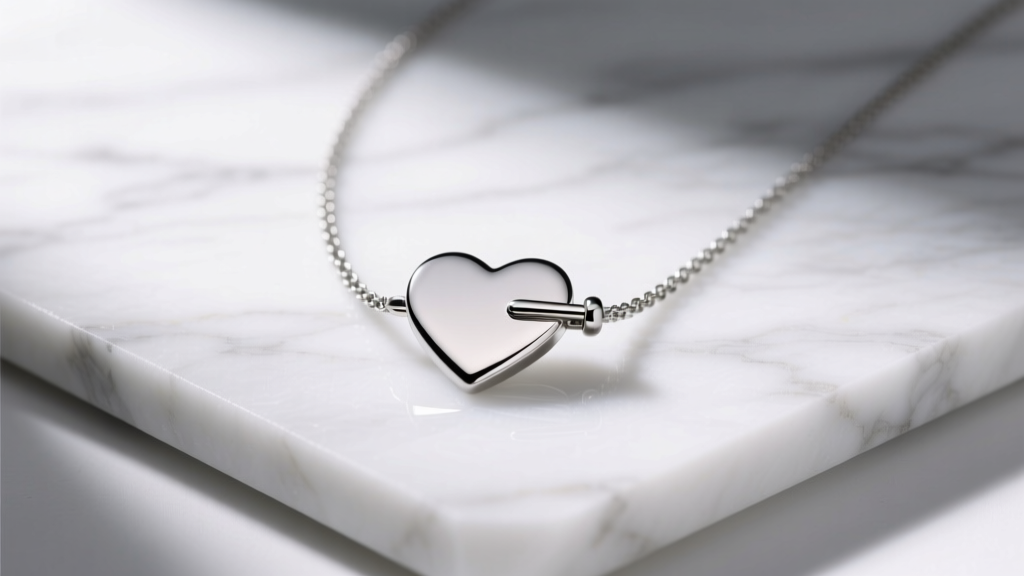
Material Comparison Matrix
Use the table below to compare the physical properties and market positioning of the most common metals used in heart toggle necklaces.
| Material | Vickers Hardness (HV) | Tarnish Risk | Clasp Durability | Avg. Retail Price (16" Chain) |
|---|---|---|---|---|
| 14k Yellow Gold | 130 - 150 | None | Excellent | $600 - $1,200 |
| 18k Yellow Gold | 120 - 130 | None | Very Good | $1,100 - $2,500+ |
| Sterling Silver (925) | 65 - 75 (Work-hardened) | High (Oxidation) | Good (Requires care) | $80 - $250 |
| Platinum 950 (Ru) | 130 - 140 | None (Patina) | Exceptional | $2,000 - $4,500+ |
| Grade 5 Titanium | 340 - 360 | None | Exceptional | $150 - $400 |
Casting vs. Die-Striking: The Hidden Manufacturing Factor
Beyond the base metal, the manufacturing method of the heart toggle components heavily influences longevity. Cast toggles, created by pouring molten metal into a plaster investment mold, can sometimes suffer from microscopic porosity. If a cast silver or gold T-bar has internal voids, it becomes a weak point prone to snapping under lateral stress.
Conversely, die-struck or stamped toggles are cut from sheet metal that has been heavily rolled and compressed. This process aligns the metal's grain structure, resulting in a denser, stronger toggle bar with zero internal porosity. When evaluating a high-end heart toggle necklace, inspect the T-bar and the heart ring's shank. If the edges are perfectly sharp and the metal feels incredibly dense, it is likely die-struck or machined, indicating superior structural integrity compared to a tumbled, cast equivalent.
Maintenance and Friction Point Care
To maximize the lifespan of your heart toggle necklace, maintenance must focus on the clasp friction points. Avoid applying lotions, perfumes, or hairsprays while wearing the necklace, as chemical buildup in the crevices of the heart ring can accelerate tarnishing in silver and degrade the rhodium plating. Once a month, clean the toggle mechanism with a soft-bristled brush and a mild, phosphate-free dish soap solution to remove microscopic abrasive grit that accumulates between the T-bar and the heart ring. For silver pieces, store the necklace flat in an anti-tarnish cloth pouch to prevent the copper alloys from reacting with ambient sulfur in the air.


