Hecate Necklace Care: Troubleshooting Tarnish, Breakage & Green Skin
Troubleshoot common Hecate necklace issues. Learn how to fix tarnish, prevent chain breakage, and stop green skin from heavy mystical pendants.

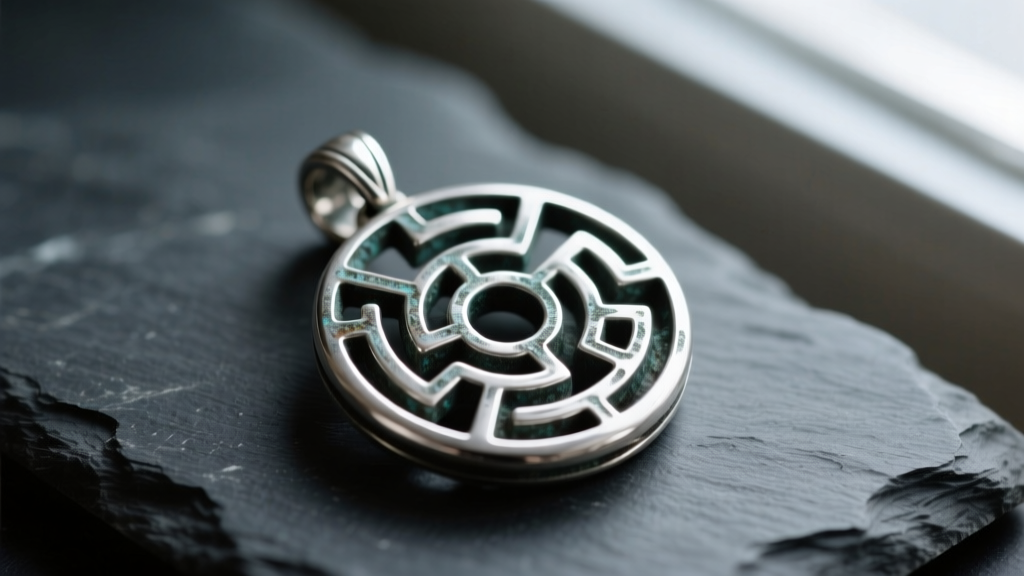
The Hecate necklace—often featuring the Strophalos (Hecate’s wheel), the triple goddess motif, or crossroads keys—is a powerful symbol of magic and transition. However, the very elements that make these pendants visually striking also make them uniquely vulnerable to structural and chemical wear. Deep labyrinthine grooves trap environmental pollutants, while the substantial weight of solid brass or thick sterling silver pieces places immense mechanical stress on chains and bails.
Whether you are wearing a delicate 925 silver Iynx wheel or a heavy cast-bronze triple goddess medallion, troubleshooting the specific failure modes of mystical jewelry requires an understanding of metallurgy and mechanical physics. Here is your comprehensive guide to diagnosing and resolving the most common Hecate necklace issues.
The Metallurgy of Mysticism: Why Your Hecate Pendant Tarnishes
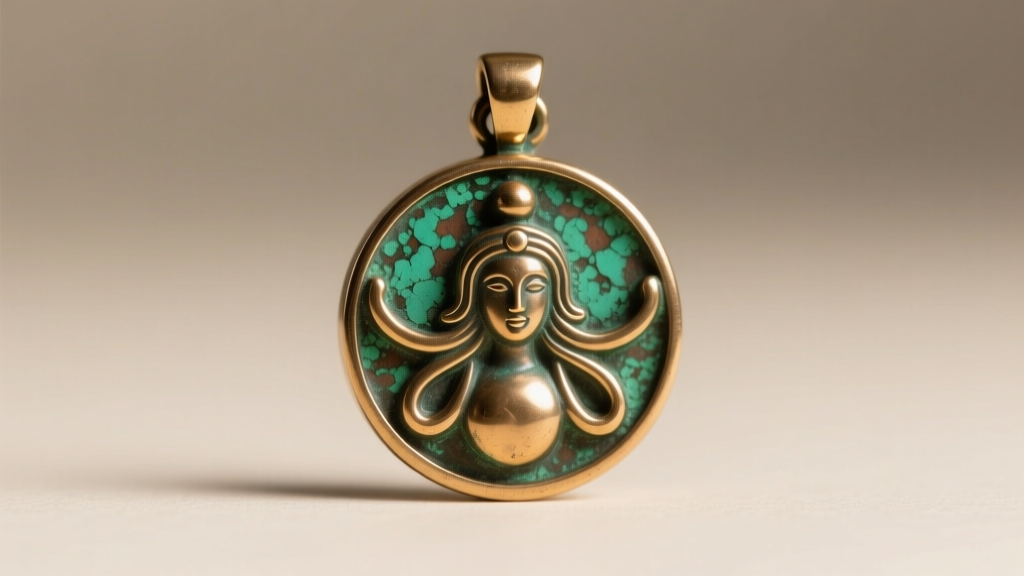
To solve tarnish, you must first identify the alloy. Most high-quality Hecate wheels are cast in 925 sterling silver, which contains 7.5% copper. This copper is the culprit behind black tarnish, as it reacts with sulfur compounds in the air and your sweat. Environmental sulfur is everywhere: it off-gasses from wool clothing, felt jewelry boxes, rubber bands, and even certain types of wall paint. Conversely, budget-friendly Hecate pendants are often made of brass or bronze (copper-zinc and copper-tin alloys, respectively), which do not blacken but instead develop a chalky green verdigris.
The Sebum and Lotion Trap
The Strophalos design features concentric circles and deep, serpentine engravings. These grooves act as microscopic traps for sebum, dead skin cells, and cosmetic lotions. Over time, this organic buildup creates a localized acidic environment that accelerates galvanic corrosion, particularly if the pendant has mixed-metal inlays (like copper wire wrapped around a silver core).
Patina vs. Tarnish: The Cleaning Dilemma
A frequent mistake made by new collectors is aggressively polishing an intentionally oxidized Hecate necklace. Many artisans use liver of sulfur to blacken the recessed grooves of the wheel, making the raised silver symbols pop.
Warning: Never use the popular aluminum foil, baking soda, and boiling water electrochemical bath on a Hecate wheel. While the Silver Institute notes this method effectively reduces silver sulfide back to pure silver, it will instantly strip the intentional dark patina from your pendant's engravings, leaving it flat and washed-out.
The Safe Restoration Protocol
- Step 1: Mix a few drops of pH-neutral dish soap in lukewarm water.
- Step 2: Submerge the pendant for 5 minutes to loosen organic sebum buildup.
- Step 3: Use an extra-soft baby toothbrush to gently agitate the labyrinthine grooves. Never use stiff bristles, which will micro-scratch the high-polish raised surfaces.
- Step 4: Dry immediately with a microfiber cloth to prevent water spots.
Chain Failure & Bail Breakage: Supporting the Weight of Magic
Hecate pendants are notoriously heavy. A solid sterling silver Strophalos wheel measuring 1.5 inches across can easily weigh between 25 and 45 grams. When suspended from a delicate chain, the bail (the loop connecting pendant to chain) acts as a fulcrum. The pendulum-like motion of walking creates friction that eventually saws through the bail or snaps the chain's solder points. You can verify your pendant's exact weight using a standard digital kitchen scale to determine the necessary chain tensile strength.
Matching Chain Tensile Strength to Pendant Weight
Cable chains and box chains are highly susceptible to snapping under heavy pendants because their uniform, geometric links rely on tiny, vulnerable solder joints. For a heavy Hecate necklace, you must upgrade to chains with interlocking or woven structures that distribute kinetic energy.
| Chain Type | Structure | Max Safe Weight Capacity | Verdict for Hecate Pendants |
|---|---|---|---|
| Cable Chain (1.5mm) | Uniform oval links, soldered | ~10 grams | Avoid. High risk of snap. |
| Box Chain (2.0mm) | Square links, interlocking | ~15 grams | Poor. Solder joints fail. |
| Wheat Chain (2.5mm) | Woven, twisted oval links | ~45+ grams | Excellent. Distributes friction. |
| Rope Chain (3.0mm) | Twisted helix links | ~60+ grams | Superior. Best for massive bronze medallions. |
Furthermore, inspect the bail itself. If your pendant weighs over 30 grams, ensure the bail wire is at least 18-gauge (1.0mm thick). Anything thinner, like a 22-gauge bail, will slowly oval and eventually snap from the friction of the chain rubbing against it.
Troubleshooting Contact Dermatitis & 'Green Skin'
Waking up with a green ring around your neck or an itchy, red rash beneath your triple goddess pendant is a common grievance. This is rarely an allergy to silver itself, but rather a reaction to the alloying metals or environmental factors like high humidity, which drastically accelerates copper oxidation rates.
The Copper-Sweat Reaction
If your pendant leaves a green stain, it contains copper (common in brass, bronze, or the 7.5% alloy in sterling silver). When copper mixes with the salts and acids in your sweat—particularly if your skin's pH is naturally acidic (below 5.5)—it creates copper chloride, which absorbs into the top layer of your skin. It is harmless but unsightly.
The Nickel Allergy Factor
If you experience blistering, severe itching, or contact dermatitis, you may be reacting to nickel. Cheap, mass-produced white gold or silver-plated Hecate necklaces often use nickel as a hardening agent or base metal. The American Academy of Dermatology identifies nickel as the most common cause of jewelry-related contact dermatitis.
Actionable Solutions for Skin Reactions
- Renaissance Wax: Apply a micro-thin layer of this museum-grade microcrystalline wax to the back of the pendant. It creates an invisible, acid-resistant barrier that lasts for weeks and will not alter the pendant's appearance.
- Rhodium Plating: Take your sterling silver or brass Hecate pendant to a local jeweler to be rhodium-plated. Rhodium is a hypoallergenic platinum-group metal that completely seals the copper/nickel inside the alloy. Expect to pay $45–$85 for this service.
- Avoid Clear Nail Polish: While often recommended online, nail polish yellows over time, chips into the intricate grooves of the Hecate wheel, and requires harsh acetone to remove, which can damage certain gemstone inlays like turquoise or opal.
Final Thoughts on Preserving Your Talisman
A Hecate necklace is more than an accessory; it is a symbolic anchor. By understanding the specific metallurgical and mechanical vulnerabilities of the Strophalos wheel and heavy cast pendants, you can transition from reactive repairs to proactive preservation. Upgrade to a woven wheat chain, clean with pH-neutral solutions to protect the patina, and seal the back of brass pieces with microcrystalline wax to ensure your talisman remains as enduring as the mythology it represents.