WW1 Necklace Materials: Trench Art Brass vs Sweetheart Silver
Discover the metallurgical properties of authentic WW1 necklace pieces. Compare trench art brass, sweetheart silver, and mourning jet.

The Metallurgy of Memory: Understanding WW1 Necklaces
When collectors and historians seek out an authentic WW1 necklace, they are rarely looking for a single, uniform style. The First World War produced a highly fragmented jewelry landscape defined by three distinct material categories: Trench Art, Sweetheart Jewelry, and Mourning Pieces. Each category utilizes vastly different metallurgical and organic materials, reflecting the harsh realities of the frontlines, the commercial sentimentality of the homefront, and the somber grief of a generation. Understanding the specific material properties—from the zinc content in repurposed artillery brass to the fossilized origins of Whitby jet—is essential for authentication, preservation, and proper wearability. This guide breaks down the exact material science behind these historical artifacts, offering collectors a precise framework for evaluation.
Trench Art Brass and Copper: The Soldier's Alloy
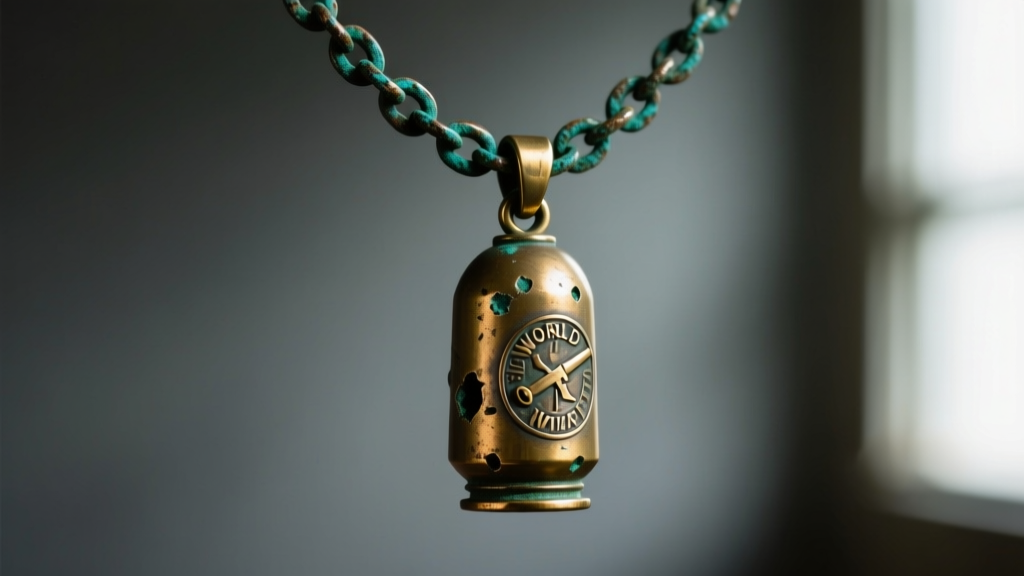
Trench art necklaces were frequently crafted in the trenches or by local artisans near the frontlines using the detritus of war. The most common base material was cartridge brass, specifically C26000 (70% copper, 30% zinc). This specific alloy was chosen by militaries for .303 British, 8mm Lebel, and 7.92×57mm Mauser casings because of its exceptional cold-working properties and resistance to dezincification.
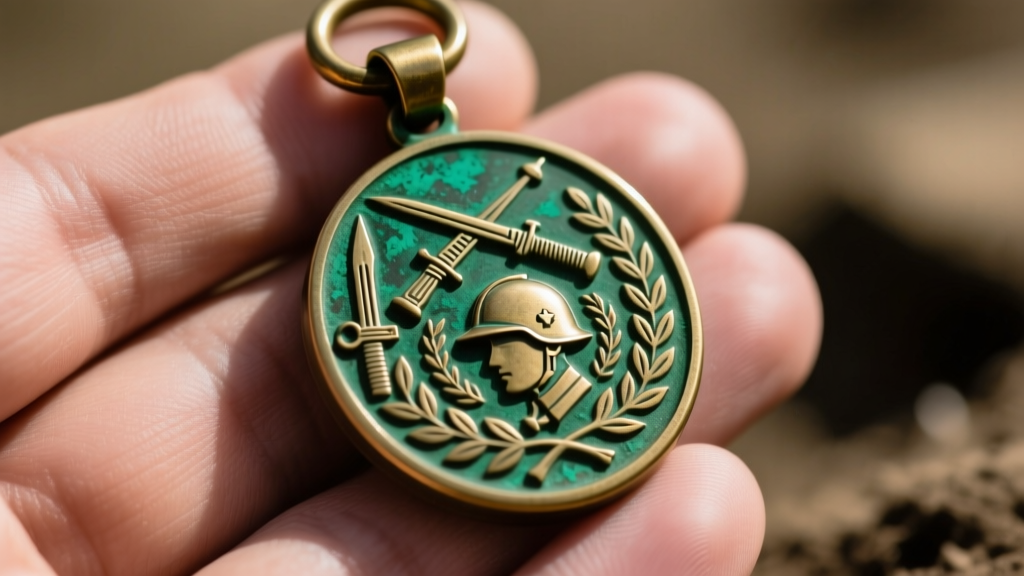
When a soldier or artisan repurposed a spent shell casing into a pendant, they often had to anneal the brass—heating it to a dull red and quenching it—to relieve the work-hardening caused by the explosive discharge of the rifle. This annealing process altered the crystalline structure of the metal, making it malleable enough for hand-engraving with improvised gravers or pocket knives. Over a century later, authentic trench art brass exhibits a distinct, layered patina. Unlike modern chemical antiquing, which sits on the surface, a century-old WW1 necklace brass pendant will show microscopic oxidation in the deepest engraving channels, often with traces of verdigris (copper carbonate) in the recesses. Collectors must be wary of modern CNC-machined replicas, which lack the micro-chatter marks and uneven cutting depths characteristic of hand-carved wartime brass.
Sweetheart Silver and Enamel: The Homefront Standard
While trench art was born of necessity and boredom, 'Sweetheart Jewelry' was a commercial enterprise. These pieces were purchased by soldiers on leave or by families at home and sent to loved ones as tokens of affection. The primary material was 925 Sterling Silver, heavily regulated by British assay offices. An authentic British WW1 necklace from this category will often bear the anchor hallmark (Birmingham) or the leopard's head (London), alongside a date letter corresponding to the 1914–1918 window.
Many sweetheart pendants incorporated guilloché enamel, a technique where translucent glass powder is fused over an engine-turned silver base. The material properties of this enamel are crucial for collectors: it is essentially glass, meaning it has a Mohs hardness of around 5.5 to 7.0 but is highly brittle. Thermal shock or mechanical stress can cause micro-fractures, known as 'crazing.' Furthermore, the silver bases of these necklaces are highly susceptible to sulfur-induced tarnishing. When evaluating a sweetheart pendant, examine the silver-to-enamel boundary; authentic period pieces will show a seamless, hand-finished bezel, whereas modern reproductions often exhibit glue residue or poorly cast, thick silver borders.
Mourning Materials: Jet, Gutta-Percha, and Vulcanite
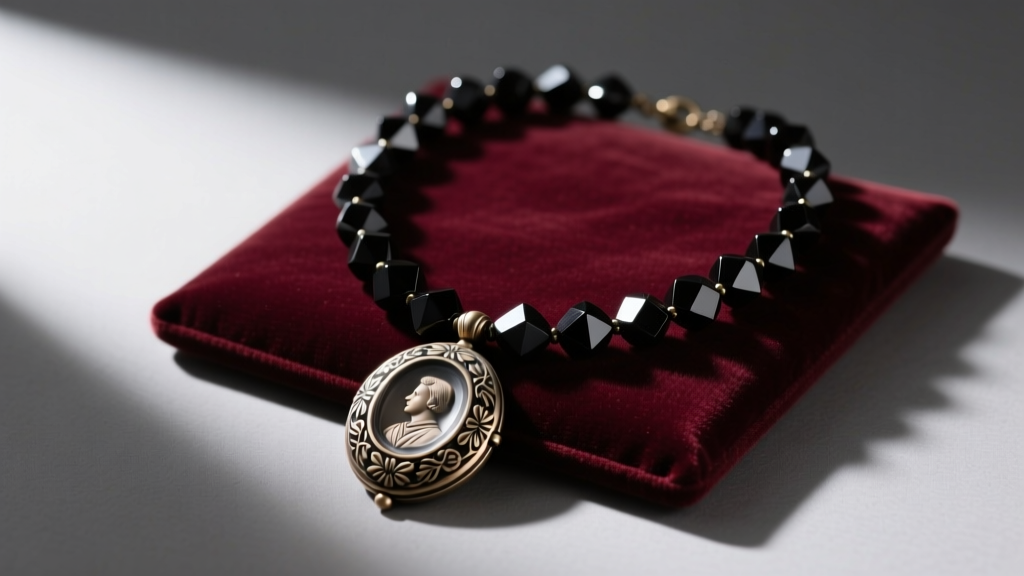
The sheer scale of loss during the Great War extended the Victorian and Edwardian mourning jewelry traditions well into the late 1910s. A WW1 mourning necklace typically features black organic or semi-organic materials, primarily Whitby Jet, Gutta-Percha, or Vulcanite. Distinguishing between these three materials requires an understanding of their physical and chemical properties.
Whitby Jet is fossilized wood from the Araucaria tree. It has a specific gravity of roughly 1.30 (it sinks in water) and a Mohs hardness of 2.5 to 4.0. When rubbed against unglazed porcelain, true jet leaves a distinct ginger-brown streak. Gutta-Percha, a natural latex derived from the Palaquium gutta tree, was molded into lockets and beads. It has a specific gravity of 0.95, meaning it will actually float in fresh water—a definitive test when separated from a necklace strand. Finally, Vulcanite is vulcanized rubber. It is denser than water, smells faintly of sulfur or burning tires when vigorously rubbed, and tends to turn a rusty brown color over decades of UV exposure due to its sulfur content. Identifying the exact material dictates the preservation strategy, as treating vulcanite with the same solvents used for jet will destroy the rubber's polymer chains.
Material Comparison Chart for Collectors
Use the following data table to quickly cross-reference the physical properties of common WW1 necklace materials during authentication and appraisal.
| Material | Composition / Origin | Mohs Hardness | Specific Gravity | Primary Identification Test |
|---|---|---|---|---|
| Cartridge Brass | 70% Cu, 30% Zn (C26000) | 3.0 - 4.0 | 8.53 | Non-magnetic; distinct acoustic ring; layered natural patina. |
| Sterling Silver | 92.5% Ag, 7.5% Cu | 2.5 - 3.0 | 10.36 | Ice melt test; assay hallmarks; sulfur tarnish (black). |
| Whitby Jet | Fossilized Araucaria Wood | 2.5 - 4.0 | 1.30 | Leaves brown streak on porcelain; sinks in water. |
| Gutta-Percha | Natural Tree Latex | 1.0 - 2.0 | 0.95 | Floats in fresh water; smells like old tires when heated. |
| Vulcanite | Sulfur-Vulcanized Rubber | 1.0 - 2.0 | 1.10 - 1.20 | Turns brown with UV age; sulfur smell when rubbed. |
| Guilloché Enamel | Fused Glass Powder | 5.5 - 7.0 | 2.50 | Cold to touch; scratches glass; brittle under pressure. |
Preservation and Wearability in the Modern Era
Wearing a century-old WW1 necklace today requires a strict adherence to conservation-grade preservation. The most common mistake collectors make is aggressively polishing trench art brass with commercial abrasives like Brasso. This not only strips the historical patina but also rounds the sharp edges of hand-engraved motifs, significantly diminishing the artifact's historical and monetary value.
Instead, conservationists recommend the application of microcrystalline wax, specifically Renaissance Wax. Originally developed by the British Museum, this wax forms a stable, non-yellowing barrier that halts bronze disease (a destructive cycle of cuprous chloride reacting with moisture) without altering the visual depth of the patina. For sweetheart silver necklaces, ultrasonic cleaners must be strictly avoided if the piece features guilloché enamel or paste stones, as the high-frequency cavitation can shatter the glass enamel or dislodge historical adhesive.
Furthermore, consider the chain. Pairing an antique brass trench art pendant with a modern, bright sterling silver chain can lead to galvanic corrosion if the two dissimilar metals rest against each other in high-humidity environments. To preserve both the pendant and the chain, utilize oxidized silver, blackened steel, or historically accurate cotton and silk cords.
Authenticating Your WW1 Necklace
Authentication relies on a synthesis of historical knowledge and material science. According to the Imperial War Museums, genuine trench art often exhibits tool marks that reflect the limitations of wartime environments—improvised vises, hand-driven punches, and uneven filing. Conversely, modern fakes often feature laser-etched designs or perfectly uniform CNC milling marks that lack the human imperfections of a soldier working by candlelight.
For sweetheart and mourning pieces, examining the findings (clasps, jump rings, and hinge mechanisms) is just as critical as testing the pendant itself. A WW1 necklace should feature a 'C-clasp' or an early trombone clasp without a modern safety catch. If a piece features a modern lobster clasp or seamless, machine-drawn jump rings, it has either been heavily altered or is a modern reproduction. For deeper insights into the socio-historical context of these pieces, the Victoria and Albert Museum's archives on mourning jewellery provide excellent visual references for the transition from Victorian mourning standards to the more austere, material-scarce reality of the First World War.
Ultimately, collecting a WW1 necklace is an exercise in material archaeology. By understanding the precise metallurgical and organic properties of brass, silver, jet, and gutta-percha, collectors can ensure they are preserving genuine fragments of history rather than modern sentimental reproductions.


