J Crew Mixed Crystal Necklace: A Material Analysis
An expert material analysis of the J Crew mixed crystal necklace, comparing glass, acrylic, brass bases, and plating longevity.

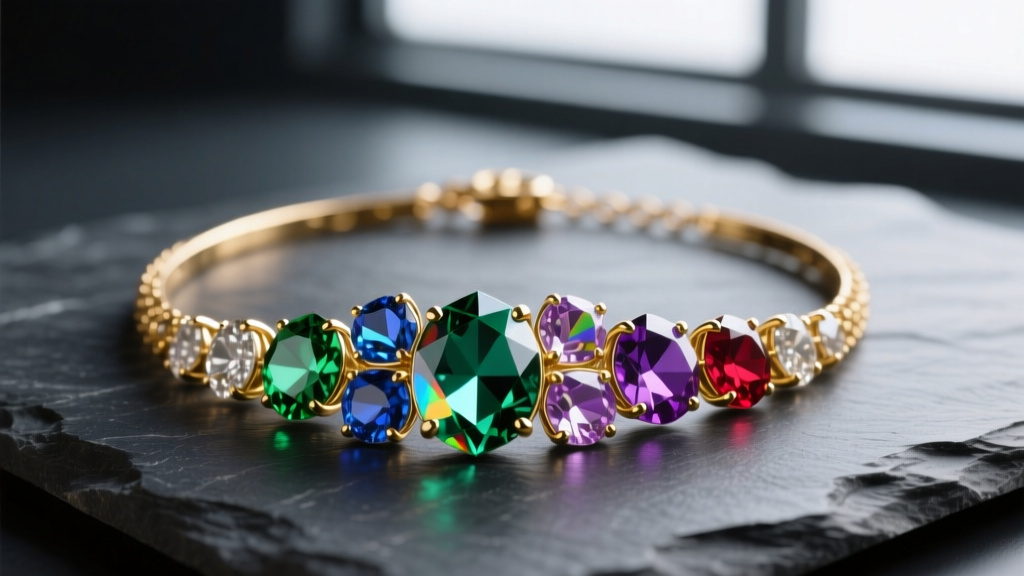
Decoding the J Crew Mixed Crystal Necklace: What Are You Actually Wearing?
The J Crew mixed crystal necklace has long been a staple in statement fashion jewelry, celebrated for its vibrant color palettes and vintage-inspired silhouettes. However, behind the aesthetic appeal lies a complex assembly of industrial materials. For jewelry enthusiasts and collectors, understanding the exact material composition—ranging from the specific types of synthetic stones to the micron-thickness of the metallic plating—is crucial for evaluating longevity, wearability, and cost-per-wear. This guide provides a deep-dive metallurgical and gemological analysis of the materials that construct these iconic pieces, separating marketing terminology from physical reality.
Crystal Composition: Glass vs. Acrylic vs. Cubic Zirconia
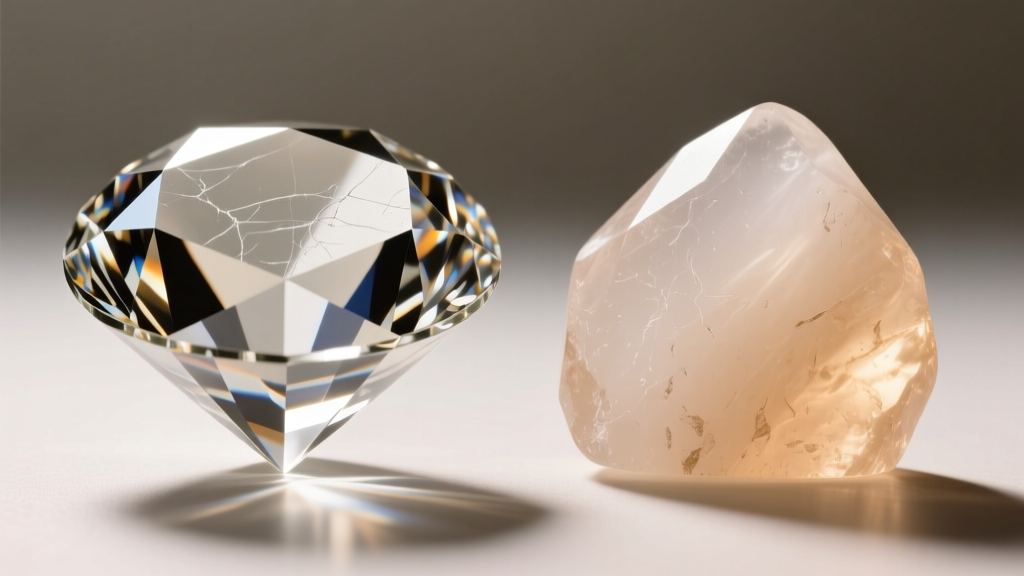
When J Crew advertises "mixed crystals," they are rarely referring to natural gemstones or high-grade cubic zirconia (CZ). Instead, the brand utilizes a strategic blend of faceted glass and molded acrylic (PMMA) to balance visual impact with structural weight. A necklace entirely composed of large glass stones would be uncomfortably heavy and prone to snapping the chain, whereas acrylic alone lacks the necessary optical brilliance.
According to the Gemological Institute of America (GIA), jewelry-grade glass often contains lead or barium oxide to increase its Refractive Index (RI) and dispersion, mimicking the sparkle of fine gems. Acrylic, conversely, has a much lower RI and is significantly softer. Understanding this distinction is vital for maintenance, as the two materials react entirely differently to environmental stressors.
| Material | Mohs Hardness | Refractive Index (RI) | Primary Role in J Crew Designs |
|---|---|---|---|
| Leaded/Barium Glass | 5.5 - 6.0 | 1.55 - 1.70 | Center stones, high-sparkle accents |
| Acrylic (PMMA) | 3.0 | 1.49 | Large cabochons, lightweight bulk |
| Cubic Zirconia (CZ) | 8.0 - 8.5 | 2.15 | Rarely used; reserved for micro-pavé |
Because acrylic registers at a mere 3.0 on the Mohs scale, it is highly susceptible to micro-scratches from everyday dust (which contains quartz, Mohs 7.0). Over time, the acrylic components of your J Crew mixed crystal necklace will develop a cloudy patina, while the glass elements will retain their faceted sharpness.
The Base Metal Architecture: Brass vs. Zinc Alloys
The structural foundation of fashion jewelry dictates its lifespan. J Crew predominantly utilizes cast brass (an alloy of copper and zinc) or, in some lighter components, zinc-based alloys like Zamak. Brass is the superior choice for jewelry manufacturing due to its excellent tensile strength, malleability, and, most importantly, its ability to accept and hold metallic plating.
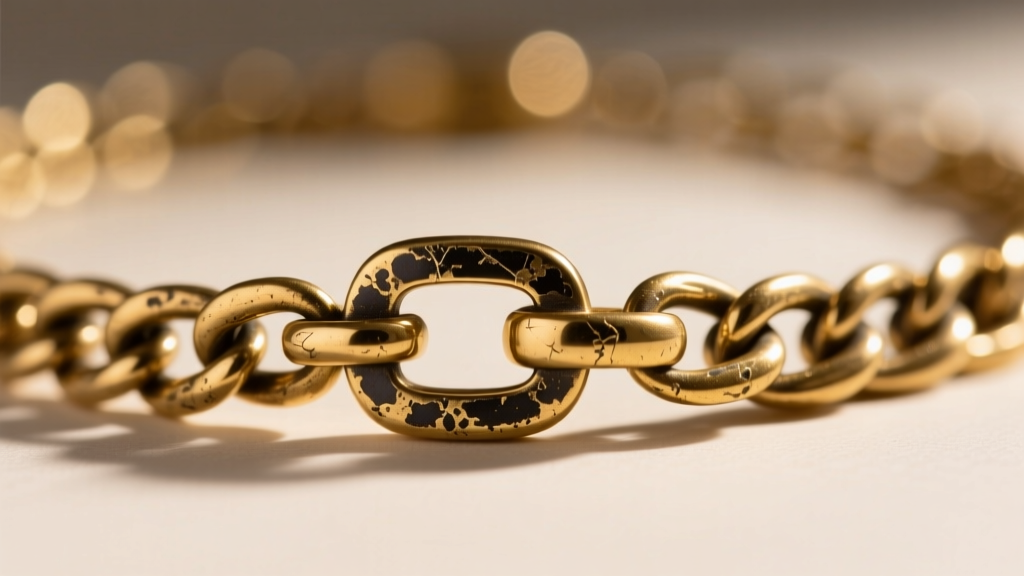
However, brass contains copper, which is highly reactive. When the protective outer plating wears away, the exposed copper reacts with sulfur in the atmosphere and chlorine in human sweat to form copper sulfide and copper chloride. This manifests as the dreaded greenish-black tarnish (verdigris) that can stain the skin and degrade the structural integrity of the chain links at their weakest solder points.
Plating Dynamics: Flash Plating vs. Vermeil
The golden or silver-toned finish of a J Crew mixed crystal necklace is achieved through electroplating. It is critical to distinguish between fashion jewelry "flash plating" and fine jewelry "gold vermeil." According to the London Assay Office, gold vermeil requires a base of sterling silver with a gold plating of at least 2.5 microns.
J Crew fashion pieces utilize flash plating over a brass base. Flash plating typically deposits a microscopic layer of gold or rhodium—often between 0.1 and 0.3 microns thick—over a nickel-free barrier layer (usually palladium or a specialized copper-tin alloy to comply with EU REACH and California Prop 65 regulations). To extend the life of this ultra-thin plating, manufacturers apply an electrophoretic e-coating (a clear, hardened resin) to seal the metal from oxygen and moisture.
The Allergy Factor and Chemical Sensitivities
While modern fashion jewelry is strictly regulated for lead and nickel, the e-coating itself can sometimes cause contact dermatitis in highly sensitive individuals once it begins to micro-fracture. Furthermore, the degradation of the e-coat is accelerated by the alkaline pH of human sweat and the sulfates found in many commercial shampoos and lotions.
Adhesives and Stone Setting: The Hidden Failure Points
How the mixed crystals are secured to the brass base is just as important as the materials themselves. J Crew employs a hybrid setting technique. Larger glass stones are typically secured using traditional metal prongs, which allows light to enter the pavilion of the stone, maximizing brilliance. However, irregularly shaped acrylic cabochons and flat-back glass rhinestones are almost exclusively secured using industrial epoxy resins.
Epoxy adhesives have a specific failure mode: UV degradation and thermal expansion. Prolonged exposure to direct sunlight causes the epoxy to yellow and become brittle. Additionally, because acrylic and brass expand and contract at different rates when exposed to temperature fluctuations (such as moving from an air-conditioned room to a hot summer street), the adhesive bond can fracture, leading to stone loss. Never attempt to clean these glued settings with alcohol-based solutions, as isopropyl alcohol will dissolve the epoxy matrix over time.
Advanced Preservation Protocols
To maximize the lifespan of your J Crew mixed crystal necklace, you must abandon traditional jewelry cleaning methods. Ultrasonic cleaners, which use high-frequency sound waves to dislodge dirt, will shatter the glass crystals and violently shake the epoxy bonds apart. Ammonia-based cleaners will strip the e-coating and cloud the acrylic stones permanently.
- Routine Cleaning: Use a slightly damp microfiber cloth with a drop of pH-neutral dish soap to gently wipe the glass stones and the metal chain. Avoid rubbing the acrylic stones aggressively.
- Drying: Air-dry the piece completely on a towel before storing. Trapped moisture at the clasp or jump rings will accelerate the oxidation of the brass base.
- Storage: Store the necklace flat in a sealed polyethylene bag with a silica gel desiccant packet. This creates a micro-climate with near-zero humidity, effectively halting the copper oxidation process and preserving the flash plating.
Final Verdict on Material Value
The J Crew mixed crystal necklace is a triumph of aesthetic engineering, utilizing the optical weight of glass and the lightweight versatility of acrylic to create accessible luxury. However, from a strict materials science perspective, it is an ephemeral piece. The flash plating and epoxy settings dictate a functional lifespan of 2 to 5 years with meticulous care. By understanding the exact chemical and physical properties of its components, wearers can make informed decisions about maintenance, ultimately preserving the vibrant architecture of these statement pieces for seasons to come.


