Sherlock Holmes And The Deadly Necklace Cast Jewelry: 2026 Value
Assess the 2026 market value, materials, and budget for cinematic props and replicas tied to the Sherlock Holmes and the Deadly Necklace cast.

The Intersection of Cinema History and Jewelry Valuation
In the niche world of cinematic memorabilia, few categories offer as fascinating a study in material degradation, historical provenance, and collector demand as vintage movie prop jewelry. For collectors and investors in 2026, assessing the budget and true market value of pieces tied to specific mid-century productions requires a deep understanding of both gemology and film history. A prime case study in this market is the Sherlock Holmes and the Deadly Necklace cast and its associated production artifacts. The 1962 European co-production, directed by Terence Fisher and starring Christopher Lee, revolves around a cursed, historically significant artifact. While the original screen-used props from this era are exceedingly rare, the secondary market for verified studio pieces, authorized replicas, and high-end artisan tributes has matured into a highly structured asset class.
Evaluating these necklaces and pendants is not merely about aesthetic appreciation; it is a rigorous exercise in metallurgical analysis and provenance verification. Whether you are a seasoned memorabilia investor or a jewelry historian looking to acquire a piece of 1960s cinematic mystery, understanding the exact material grades, failure modes of vintage base metals, and current auction premiums is essential for making an informed purchase.
Metallurgy of the 1960s: What You Are Actually Buying
To accurately assess the value of a pendant or necklace linked to 1960s European cinema, one must first understand the manufacturing realities of the era. Unlike modern fine jewelry, cinematic props from the early 1960s were primarily constructed by costume departments using materials designed to look spectacular under hot tungsten studio lights, not to last for decades.
Base Metals and Plating
Most screen-used pendants from this period were cast in Tombac brass (a high-copper, low-zinc alloy) or stamped from pot metal (a zinc-heavy alloy prone to 'zinc pest' or structural crumbling over time). To achieve a luxurious finish on camera, these base metals were typically coated in a 1-to-2-micron 'gold wash' or rhodium flash. By 2026, original gold wash on a verified screen-used prop will almost certainly show micro-abrasions, verdigris (copper oxidation), or complete wear-through on the high-contact points. Paradoxically, in the prop collecting world, this specific type of controlled degradation often serves as a secondary authentication marker, provided it aligns with the chemical breakdown expected of 60-year-old studio storage.
Simulated Gemstones: Glass Paste vs. Early Synthetics
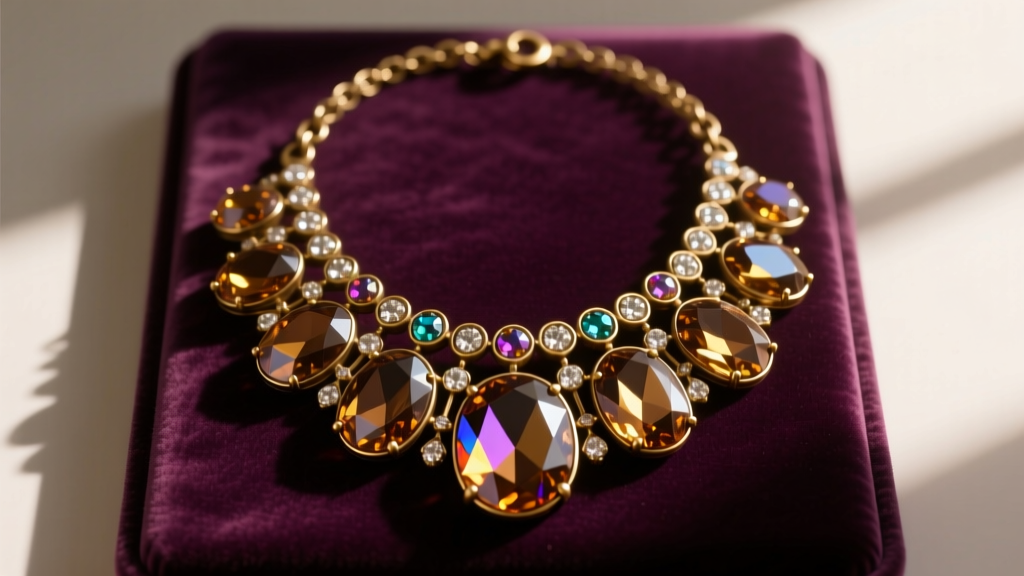
The 'deadly' artifacts depicted on screen were rarely set with genuine precious stones due to insurance liabilities and budget constraints. Instead, European costume jewelers relied heavily on lead glass paste or early strass (high-refractive-index rhinestones). According to the GIA Gem Encyclopedia, lead glass paste was favored for its ability to mimic the dispersion of diamonds and the deep saturation of sapphires or onyx when backed with metallic foil. When evaluating a piece today, the presence of foil-backing that has oxidized or turned black is a strong indicator of an authentic vintage prop, whereas a modern replica will likely feature unfoiled Cubic Zirconia (CZ) or lab-grown spinel set in 925 sterling silver.
The Value Matrix: Screen-Used vs. Artisan Replicas
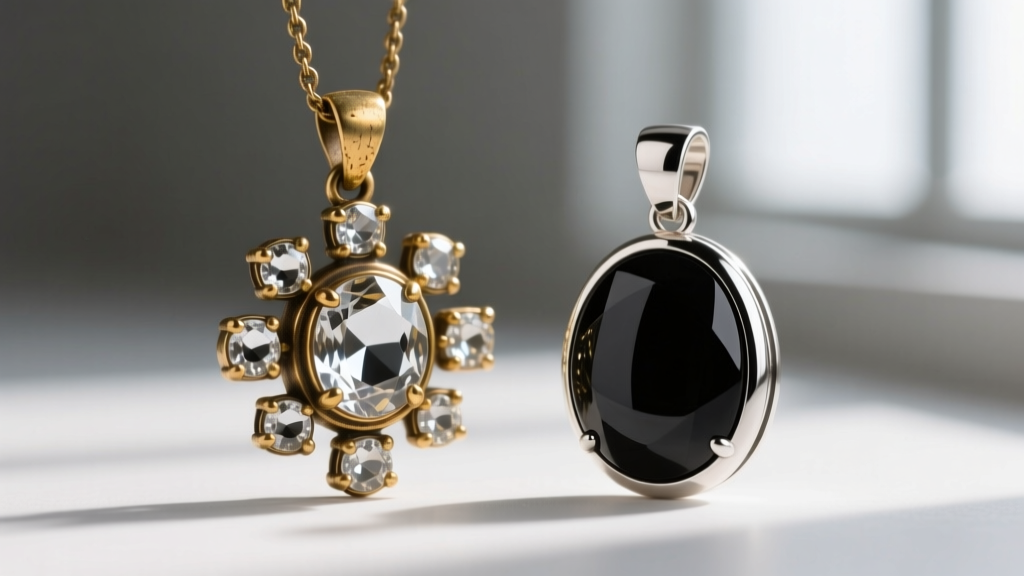
The market for cinematic necklaces is strictly tiered. When building a budget for your collection, it is critical to distinguish between the three primary categories of assets available at auction or through private dealers. The following matrix outlines the 2026 pricing landscape and material realities for mystery and detective genre prop jewelry.
| Category | Material Composition | 2026 Price Range (USD) | Investment Outlook |
|---|---|---|---|
| Verified Screen-Used Prop | Pot metal/Brass, Glass Paste, Gold Wash, Foil-backing | $4,500 – $15,000+ | High appreciation; highly illiquid; requires climate-controlled storage. |
| Vintage Studio Replica (1970s-80s) | Stamped Brass, Early Acrylic or CZ, Electroplated Gold | $600 – $1,800 | Moderate appreciation; appeals to nostalgic collectors and display buyers. |
| Modern Artisan Tribute | 925 Sterling Silver, Lab-Grown Spinel/Onyx, Rhodium Plating | $150 – $450 | Depreciates as jewelry; valued purely for wearability and craftsmanship. |
Authentication and the Provenance Premium
In the cinematic jewelry market, provenance is the single greatest multiplier of value. A beautifully crafted vintage pendant is worth perhaps $200 as an antique curio. However, if that exact pendant can be definitively linked to the Sherlock Holmes and the Deadly Necklace cast or production wardrobe, its value skyrockets. But how do reputable auction houses verify these claims?
The Documentation Trail
According to specialists at Bonhams Entertainment Memorabilia, a valid Certificate of Authenticity (COA) must originate from a recognized studio archive, a principal actor's estate, or a documented prop house. In the case of 1960s European co-productions, studio records are notoriously fragmented. Therefore, collectors often rely on 'screen-matching'—a painstaking process of comparing high-resolution Blu-ray or 4K restoration frames to the physical piece, looking for unique casting flaws, specific stone asymmetries, or distinct clasp modifications made by the wardrobe department.
Beware of the 'Studio Replica' Trap
A common pitfall for novice buyers in 2026 is the 'studio replica' misnomer. Many pieces sold online are labeled as 'vintage studio replicas' when they are actually theatrical props made for stage adaptations in the 1980s or 1990s. While these pieces have their own charm, they lack the historical premium of a 1962 screen-used artifact. Always demand ultraviolet (UV) fluorescence testing; modern theatrical replicas often use synthetic resins and modern adhesives that fluoresce brightly under UV light, whereas 1960s shellac and natural resins used in film props will appear inert or dull.

Budgeting for Your Collection: A 2026 Buyer's Framework
If you are allocating capital toward cinematic mystery pendants and historical prop replicas, a strategic approach to budgeting will prevent overpaying for compromised pieces. Here is a practical framework for assessing value before placing a bid at houses like Heritage Auctions Movie Memorabilia or private estate sales.
- Allocate 15% for Conservation: Vintage base metals are highly reactive. If you acquire a genuine 1960s brass and glass paste prop, budget immediately for professional museum-grade conservation. Attempting to polish away verdigris with commercial silver dips will strip the remaining 1960s gold wash and instantly destroy 40% of the piece's collector value.
- The 'Clasp' Deduction: Wardrobe departments frequently swapped out delicate vintage clasps for heavy-duty modern lobster clasps or safety pins to prevent loss during action sequences. If a purported screen-used necklace features a modern, laser-stamped steel clasp, negotiate a 10-15% deduction from the asking price, as the piece is no longer in its original, unaltered studio configuration.
- Prioritize Stone Integrity over Metal Finish: In glass paste and early rhinestone props, 'stone death' (where the glass becomes cloudy or scratched beyond repair) is a fatal flaw. Metal can be stabilized, but a cloudy central paste stone ruins the visual impact of the prop. Always inspect the table (top facet) of the central stone under a 10x jeweler's loupe for micro-scratches before purchasing.
Final Verdict: Is Cinematic Jewelry a Solid Investment?
Collecting necklaces and pendants tied to classic cinema is less about traditional precious metal value and entirely about historical scarcity and cultural resonance. While a modern artisan tribute offers excellent wearability and durable 925 sterling silver construction for daily use, it holds no long-term investment premium. Conversely, verified artifacts from mid-century European mystery films represent a highly specialized, illiquid asset class. For the dedicated collector willing to navigate the complexities of base-metal degradation, foil-backing oxidation, and rigorous provenance verification, these cinematic artifacts offer a tangible, wearable connection to the golden age of mystery cinema that no traditional diamond pendant can replicate.