Mens Infinity Necklace Materials: A Durability & Style Guide
Discover the best metals for a mens infinity necklace. Compare titanium, tungsten, and steel for durability, weight, and hypoallergenic properties.

The Engineering of the Infinity Loop: Why Material Dictates Longevity
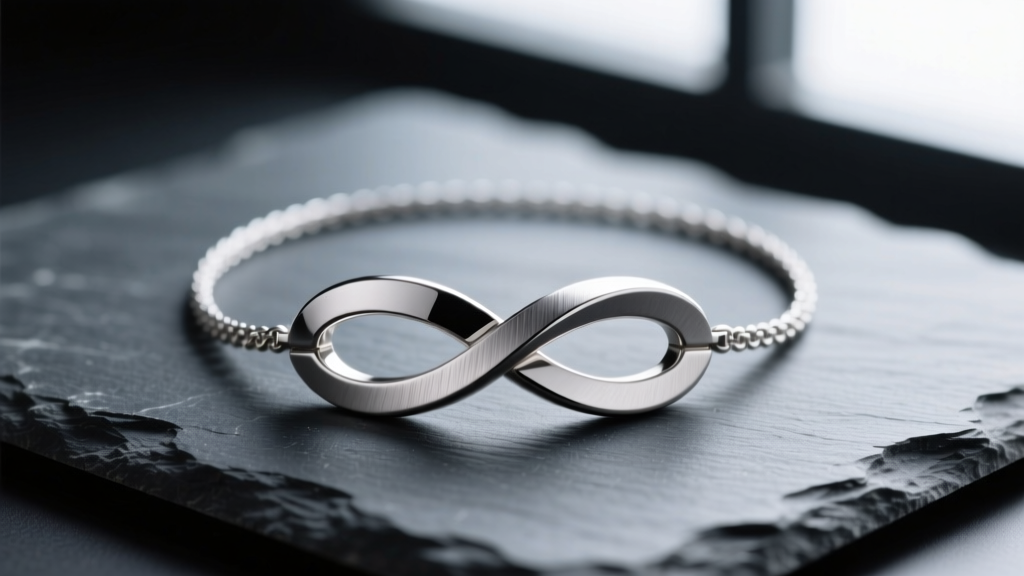
The infinity symbol (∞) presents a unique structural challenge in jewelry design. Unlike simple geometric pendants or solid drop charms, the infinity motif requires a central crossover point. In metallurgical terms, this intersection acts as a stress concentrator. When a chain snags or the pendant is subjected to blunt force, the kinetic energy transfers directly to this narrow junction. If the yield strength of the chosen metal is insufficient, the crossover point will warp, bend, or snap entirely.
For a mens infinity necklace, which is often worn daily and subjected to higher tensile stress from thicker chains and active lifestyles, selecting the right material is not just an aesthetic choice—it is an engineering necessity. Below, we break down the metallurgical properties of the most common metals used in men's infinity pendants, evaluating their hardness, specific gravity, and real-world failure modes.
Material Breakdown: Hardness, Weight, and Wearability
316L Surgical Stainless Steel: The Baseline Standard
316L stainless steel is the most ubiquitous material in men's fashion jewelry. The 'L' denotes low carbon, while the addition of 2-3% molybdenum drastically increases its resistance to pitting corrosion from chlorides (like sweat and seawater). With a Vickers hardness (HV) of roughly 150-190, it is hard enough to resist casual scratching but malleable enough for jewelers to cast intricate infinity loops without micro-fracturing. However, it contains trace amounts of nickel, which can trigger contact dermatitis in highly sensitive individuals.
Aerospace-Grade Titanium (Ti-6Al-4V): The Lightweight Champion
When evaluating a mens infinity necklace for active wear, Grade 23 Titanium (also known as Ti-6Al-4V ELI) is unmatched. Governed by the ASTM F136 standard for surgical implants, this alloy boasts an exceptional strength-to-weight ratio. Its specific gravity is just 4.43 g/cm³, making it nearly half the weight of steel. More importantly, titanium instantly forms a passive oxide layer when exposed to oxygen, rendering it 100% immune to rust and highly hypoallergenic. The primary drawback is its high melting point and tool wear during CNC milling, which pushes the retail price higher than steel equivalents.
Tungsten Carbide: The Scratch-Proof Heavyweight
Tungsten carbide is a composite material consisting of tungsten particles suspended in a cobalt or nickel binder. It registers an astonishing 8.5 to 9 on the Mohs hardness scale, meaning it will never scratch, tarnish, or lose its polished finish under normal conditions. However, its crystalline structure lacks slip systems at room temperature, making it incredibly brittle. If a heavy tungsten infinity pendant is dropped onto a tile floor or struck with a hammer, it will not bend; it will undergo cleavage fracture and shatter.
Comparative Data: Metallurgical Properties at a Glance
| Material | Vickers Hardness (HV) | Specific Gravity (g/cm³) | Hypoallergenic Rating | Avg. Price Range |
|---|---|---|---|---|
| 316L Stainless Steel | 150 - 190 | 8.00 | Moderate (Contains Nickel) | $25 - $60 |
| Grade 23 Titanium | 320 - 360 | 4.43 | Excellent (100% Biocompatible) | $50 - $130 |
| Tungsten Carbide | 1300 - 1500 | 14.50 | Variable (Depends on Binder) | $35 - $85 |
| Cobalt Chrome (ASTM F75) | 350 - 450 | 8.30 | High (Nickel-Free Alternative) | $60 - $150 |
The Sterling Silver Trap: Why 925 Fails the Infinity Test
While Jewelers of America recognizes 925 Sterling Silver as the premium standard for fine jewelry, it is fundamentally unsuited for a daily-wear mens infinity necklace. Sterling silver is an alloy of 92.5% silver and 7.5% copper. It possesses a very low Vickers hardness of roughly 60-70 HV.
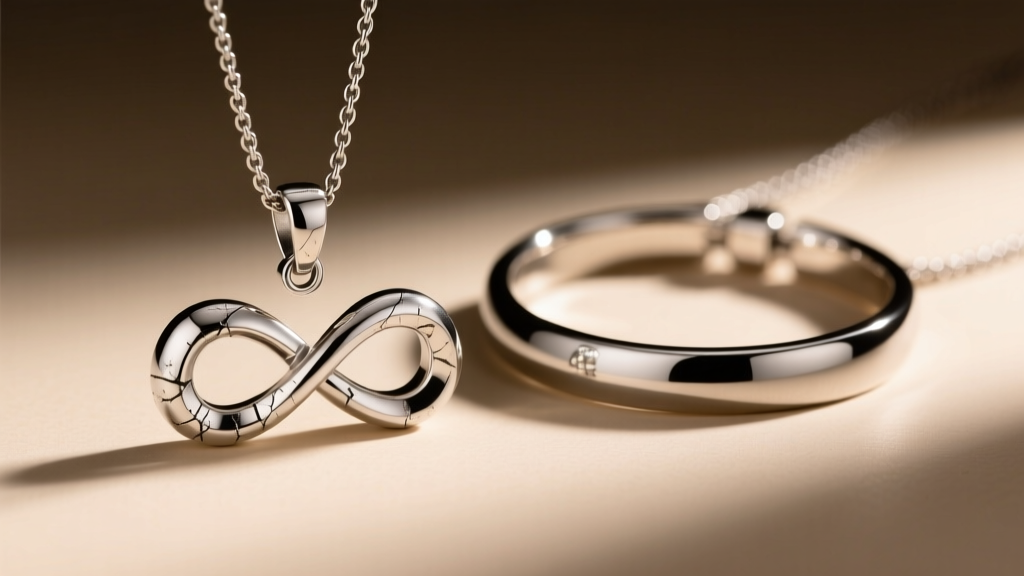
Because the infinity symbol relies on structural integrity at the central crossover node, silver's high ductility becomes a fatal flaw. If the pendant snags on a shirt collar or gym equipment, the dislocation glide within the silver's crystal lattice will cause permanent plastic deformation. The infinity loop will bend out of shape, and attempting to bend it back will induce work-hardening, eventually leading to metal fatigue and a clean snap at the junction. Furthermore, the copper content reacts rapidly with sulfur in the air and human sweat, requiring constant polishing to maintain its luster.
Environmental Failure Modes: Sweat, Chlorine, and Impact
Understanding how different metals react to environmental stressors is critical for long-term wearability. Here is how the top materials handle real-world hazards:
- Chlorine Exposure: Swimming pools and hot tubs are laden with chlorine. While Grade 23 Titanium and Tungsten Carbide are entirely inert to chlorinated water, 316L steel can suffer from crevice corrosion if the chlorine becomes trapped in the microscopic seams of the infinity crossover.
- Acidic Sweat: Human sweat has a pH ranging from 4.5 to 7.0. Over time, the lactic acid in heavy sweat can degrade the cobalt binder in low-quality tungsten carbide, leading to a phenomenon known as 'cobalt leaching,' which causes green skin discoloration and localized rashes.
- Blunt Impact: For mechanics, weightlifters, or manual laborers, impact resistance is paramount. Titanium will absorb and distribute kinetic energy through elastic deformation, bouncing back to its original shape. Tungsten will shatter. Steel will dent but remain structurally intact.
Final Verdict: Matching the Metal to Your Lifestyle
Choosing the ultimate mens infinity necklace requires aligning the metallurgical properties of the metal with your daily environment. If you prioritize a scratch-proof, high-polish mirror finish and work in an office environment, Tungsten Carbide is the superior choice. If you want a traditional, weighty feel and are on a budget, 316L Stainless Steel remains a reliable workhorse.
Expert Recommendation: For athletes, swimmers, or those with nickel allergies, Grade 23 Titanium is the undisputed champion. Its biocompatibility, immunity to chlorine, and featherlight specific gravity ensure that the infinity pendant remains comfortable and structurally flawless for decades, regardless of the physical toll placed upon it.
Ultimately, the infinity symbol represents permanence. By selecting a metal with the tensile strength and corrosion resistance to match that symbolism, you ensure the necklace outlasts the very concept of time it seeks to represent.


