Khanda Necklace Value Guide: 2026 Pricing & Metals
Evaluate khanda necklace value in 2026. Compare metal grades, pricing tiers, craftsmanship red flags, and chain durability for informed purchasing.

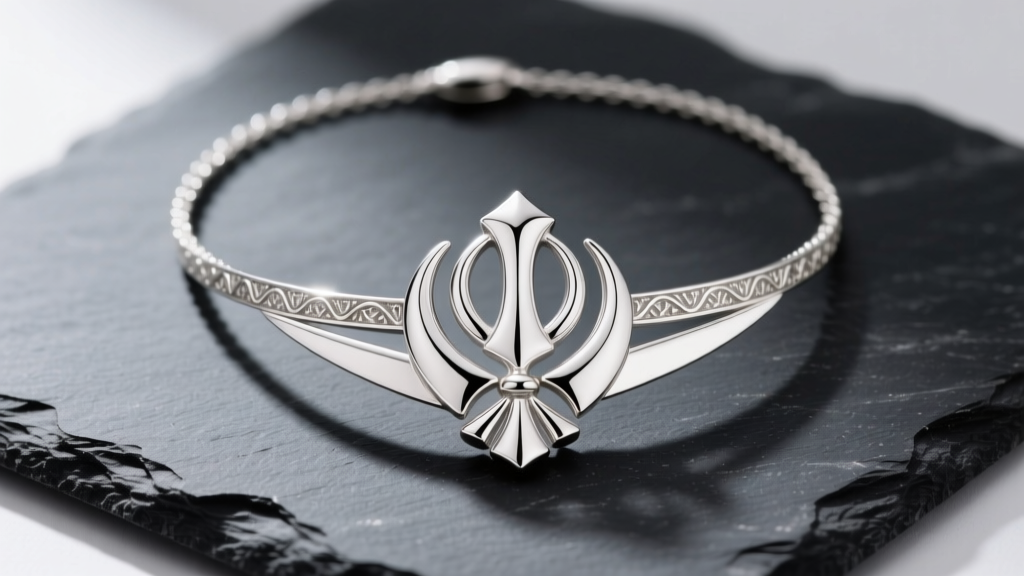
The Anatomy of Value: Assessing the Khanda Necklace
The Khanda is a profound and sacred symbol in Sikhism, representing divine knowledge, eternity, and the balance of spiritual and temporal authority. When shopping for a khanda necklace, buyers are not just purchasing jewelry; they are investing in a wearable emblem of faith. However, the 2026 jewelry market is saturated with varying quality tiers, from mass-produced alloy trinkets to master-crafted solid gold heirlooms. Assessing the true value of a khanda necklace requires looking past the initial price tag and evaluating metal integrity, structural craftsmanship, and long-term durability.
According to the Sikh Museum, the symbol comprises three distinct elements: the central double-edged sword (Khanda), the circular quoit (Chakkar), and the two crossed single-edged swords (Kirpans). A high-value pendant maintains crisp, distinct separation between these elements, whereas low-value manufacturing often results in a "muddy" or merged silhouette. This guide breaks down the exact metrics you need to evaluate budget, material grade, and structural longevity.
The 2026 Khanda Necklace Pricing & Material Matrix
Material composition is the primary driver of a pendant's base value. In 2026, fluctuating precious metal markets have shifted the baseline pricing for solid gold and sterling silver pieces. Below is a realistic value assessment matrix based on current market rates and standard pendant weights (ranging from 3 grams for delicate pieces to 12 grams for heavy statement pieces).
| Metal Grade | Stamp / Hallmark | Average Weight | 2026 Price Range | Tarnish & Wear Profile |
|---|---|---|---|---|
| 316L Stainless Steel | None or '316L' | 5g - 10g | $25 - $65 | Highly resistant to tarnish; hypoallergenic; excellent daily wear budget option. |
| 925 Sterling Silver | '925' | 4g - 8g | $75 - $180 | Prone to oxidation; requires polishing; soft metal, prone to scratching. |
| 14k Solid Gold | '14K' or '585' | 4g - 7g | $450 - $850 | Excellent durability; retains intrinsic melt value; ideal for lifetime wear. |
| 18k Solid Gold | '18K' or '750' | 5g - 9g | $700 - $1,400+ | Rich color but softer than 14k; higher scratch risk; premium investment tier. |
Note: Prices reflect the pendant only. Chains are priced separately based on length and gram weight. Always verify hallmarks against the FTC Jewelry Guides to ensure legal compliance and authenticity.
Craftsmanship vs. Mass Production: The Hidden Costs
A common trap in the budget jewelry sector is the assumption that all pendants of the same metal hold equal value. The manufacturing method drastically impacts both the aesthetic reverence of the Khanda symbol and the physical lifespan of the piece.
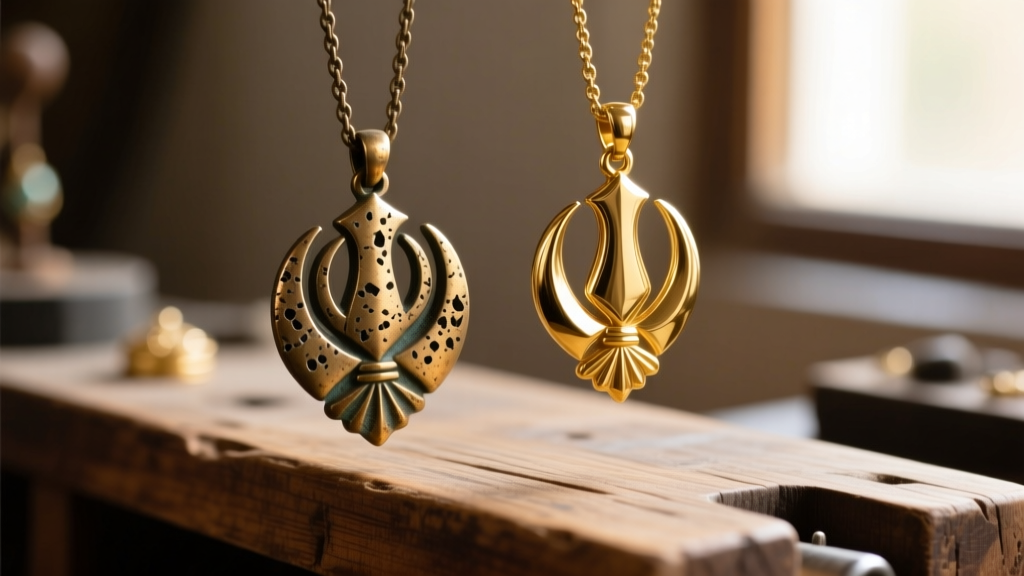
Lost-Wax Casting vs. Die Stamping
Premium khanda necklaces are typically produced using lost-wax casting. This method allows for deep undercuts, meaning the central Khanda sword can appear to float distinctly above the Chakkar, creating dynamic shadows and a 3D effect. The edges of the Kirpans remain razor-sharp in their detailing.
Conversely, budget pendants (often priced under $40 even in silver) are frequently die-stamped from thin sheets of metal. While this saves on labor and material weight, it results in a flat, two-dimensional profile. The edges are often left rough or improperly tumbled, which can catch on clothing or scratch the wearer's skin. When assessing value, turn the pendant over. A high-value piece will have a cleanly finished back, sometimes with light milling or a stamped maker's mark, while a low-value piece will show hollowed-out recesses and rough sprue marks where it was cut from the casting tree.
The Bail Loop Vulnerability
The bail—the loop at the top of the pendant through which the chain threads—is the most frequent point of catastrophic failure. In cheap manufacturing, the bail is cast as part of the pendant body, leaving it porous and brittle. A heavy 8-gram silver Khanda pendant swinging on a chain generates significant kinetic torque; a poorly cast bail will snap within months. High-value pendants feature a soldered bail made from a separate, thicker gauge of wire, ensuring structural integrity. Always inspect the seam where the bail meets the pendant body before purchasing.
Chain Pairings: Matching Gauge to Pendant Weight
A khanda necklace is only as valuable as the chain that secures it. Pairing a heavy pendant with a micro-chain is a recipe for loss and financial waste. The chain must be rated to handle at least three times the weight of the pendant to account for sudden snags.
- Lightweight Pendants (Under 4g): A 1.2mm to 1.5mm cable or curb chain is sufficient. Ensure the clasp is a sturdy lobster claw, not a weak spring-ring.
- Mid-Weight Pendants (4g - 8g): Opt for a 2.0mm to 2.5mm box chain or rope chain. Box chains offer excellent tensile strength and resist kinking, which is vital for maintaining the dignified drape of the Khanda.
- Heavy Statement Pieces (8g+): Require a 3.0mm+ Cuban link or thick rope chain. The bail must be oversized to accommodate the thicker links without causing abrasive friction.
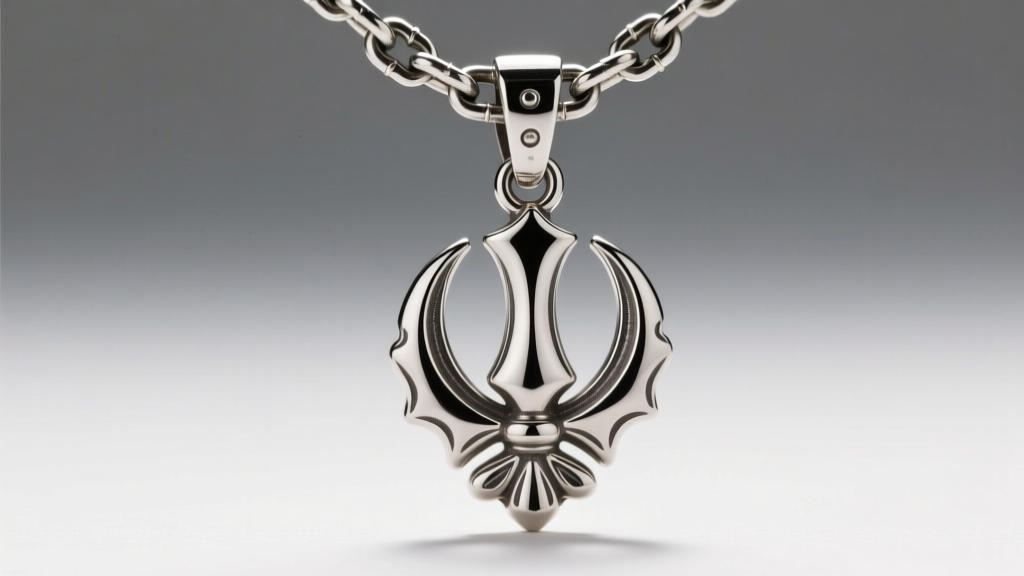
Enamel and Stone Accents: Value Add or Markup Trap?
In recent years, jewelers have introduced Khanda pendants featuring black enamel inlay or cubic zirconia (CZ) pavé to appeal to fashion-forward demographics. From a strict value-assessment perspective, you must separate the intrinsic metal value from the decorative markup.
Enamel Work: High-quality vitreous enamel (fired glass) is durable and adds genuine artisan value. However, most budget pieces use cold epoxy resin, which yellows, chips, and degrades within two years of daily wear. If the product description does not explicitly state "fired enamel" or "vitreous," assume it is epoxy and do not pay a premium for it.
Gemstones: CZ accents on a silver Khanda can look striking but add zero resale value and often fall out due to cheap prong casting. If you desire a gem-set Khanda, seek out natural black diamonds or sapphires set in 14k gold with secure bezel or four-prong settings, verified by a GIA-certified jeweler. Avoid paying "designer markups" for silver pendants with synthetic stones; the cost of the stones is negligible, and you are solely paying for the brand name.
Red Flags: How to Avoid Counterfeits and Overpriced Alloys
When conducting your budget assessment, beware of these common market deceptions:
- The "Silver-Plated" Mirage: Many online marketplaces list pendants as "Silver Khanda Necklace" but bury the words "brass core" or "silver-plated" in the fine print. Plating wears off the high-friction edges of the Kirpans within weeks, exposing the brass beneath, which turns the skin green due to copper oxidation. Always demand solid 925 or 316L steel.
- Nickel-Laden "Surgical Steel": While 316L stainless steel is generally hypoallergenic, unregulated "surgical steel" or "Tibetan silver" alloys often contain high levels of nickel. This causes severe contact dermatitis. Stick to verified 316L or precious metals.
- Hollowed Gold: Some 14k gold Khanda pendants are manufactured using electroforming, creating a massive-looking pendant that weighs barely 2 grams. While the gold is real, the structural integrity is akin to an eggshell; a single drop onto a hard surface will dent it irreparably. Always check the gram weight, not just the physical dimensions.
Final Value Verdict
Investing in a khanda necklace is a deeply personal decision that bridges spiritual significance with material reality. For daily, rugged wear on a strict budget, a 316L stainless steel piece with a soldered bail offers unmatched cost-per-wear value. For those seeking an heirloom that honors the weight of the tradition, a solid 14k gold pendant, cast with deep undercuts and paired with a 2.5mm box chain, remains the gold standard for 2026. By scrutinizing the hallmark, the bail construction, and the manufacturing method, you ensure that your investment reflects the eternal strength of the symbol it bears.


