Troubleshooting Your Vintage Mariana Necklace: Repair & Care
Learn how to troubleshoot common issues with your vintage Mariana necklace. Expert tips on cleaning cloudy crystals, fixing clasps, and restoring plating.

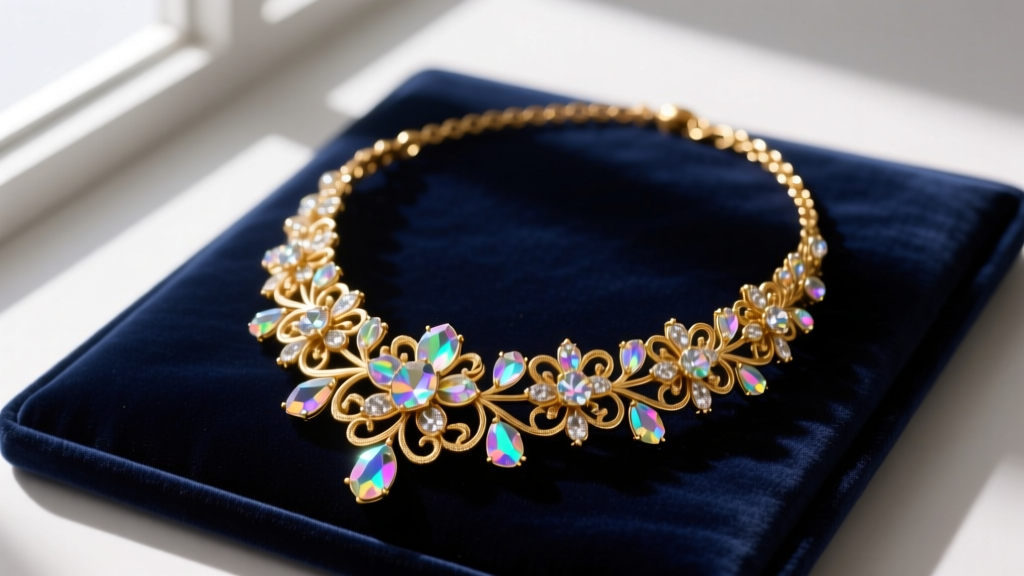
Mariana Jewelry, originating from Israel in the early 1990s, quickly became a cornerstone for collectors of vintage-inspired, crystal-heavy statement pieces. Known for their intricate metalwork, Victorian and Art Nouveau motifs, and extensive use of authentic Swarovski crystals, Mariana necklaces are highly sought after in the secondary market. However, as these pieces age, collectors and wearers frequently encounter specific structural and cosmetic failures. Troubleshooting a vintage Mariana necklace requires a nuanced understanding of mid-century jewelry construction techniques, foil-backed crystal anatomy, and base metal conservation.
In 2026, maintaining these intricate pieces is more complex than ever. With Swarovski having halted retail component sales in 2021, sourcing exact replacement crystals requires deep market knowledge. This guide provides actionable, expert-level troubleshooting frameworks for the most common Mariana necklace failures, from oxidized foil backing to clasp fatigue and plating loss.
Identifying the Root Cause: Authenticity and Material Breakdown
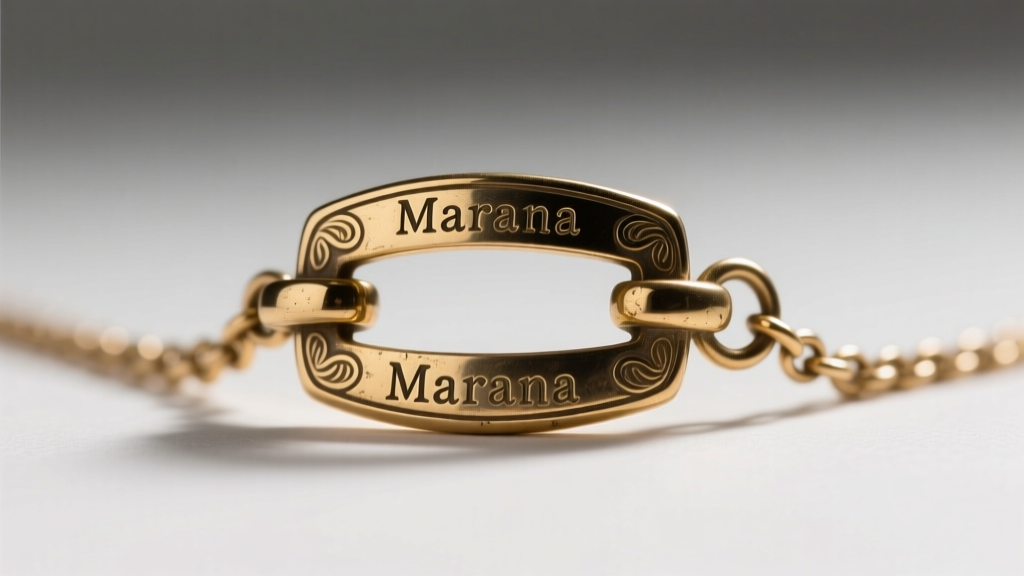
Before attempting any repair, you must verify the piece's authenticity and understand its base materials. Mariana necklaces are typically constructed from gold-tone or silver-tone plated brass or pewter, set with precision-cut Swarovski crystals. The first step in troubleshooting is locating the maker's mark. Authentic pieces will feature 'Mariana' stamped in an oval cartouche, often accompanied by 'Israel' or a specific copyright symbol.
If the metal is flaking or revealing a dark, heavy base, you are likely dealing with a pewter alloy that has suffered from 'tin pest' or severe oxidation beneath the plating. If the base metal is yellowish and non-magnetic, it is brass. Identifying the base metal dictates your chemical cleaning approach. Never use harsh silver dips or ultrasonic cleaners on Mariana pieces; the high-frequency vibrations will shatter the adhesive bonds securing the crystals, and the chemicals will strip the delicate gold-tone electroplating.
Troubleshooting Cloudy or 'Dead' Swarovski Crystals
The most frequent complaint among Mariana collectors is crystals that have lost their brilliance, appearing cloudy, gray, or completely 'dead.' To troubleshoot this, you must understand how these specific stones are set. Mariana heavily utilized foil-backed Swarovski crystals, particularly in their Aurora Borealis (AB) and Volcano AB lines. The foil is a microscopic layer of silvering applied to the pavilion (bottom) of the glass to amplify light refraction.
Diagnosing the Cloudiness
- Surface Dirt: Oils and lotions accumulate on the crown (top) of the crystal. This is easily resolved.
- Foil Oxidation (Moisture Breach): If moisture breaches the bezel setting, the silver foil oxidizes and turns black. This is irreversible without replacing the stone.
- Foil Scratching: Improper cleaning with abrasive cloths can scratch the glass surface, diffusing light and mimicking cloudiness.
| Visual Symptom | Underlying Cause | Expert Solution |
|---|---|---|
| Dull, greasy film on top | Sebum and cosmetic buildup | Wipe gently with a dry, untreated microfiber cloth. Use a soft-bristled makeup brush to dislodge debris from the bezel. |
| Dark, patchy shadows inside | Moisture-induced foil oxidation | Stone must be carefully unseated and replaced with deadstock Swarovski foil-back equivalents. |
| Rainbow 'slick' on surface | AB coating degradation | Do not use alcohol or ammonia. Clean only with distilled water on a cotton swab and dry immediately. |
For surface cleaning, avoid liquid solutions entirely. As noted by the conservation experts at Lang Antiques University, moisture is the primary enemy of foil-backed vintage jewelry. Use a dry, soft-bristled brush to clean around the prongs and bezels without risking moisture entrapment.
Resolving Clasp Failures and Weak Jump Rings
Mariana necklaces are often heavy, featuring dozens of large crystal drops and substantial brass filigree. This weight places immense tensile stress on the clasp assembly and the connecting jump rings. The original spring ring clasps used in the 1990s and early 2000s frequently suffer from internal spring fatigue or rust, causing the clasp to stick open or snap shut weakly.
Upgrading the Clasp Mechanism
Do not attempt to repair a faulty spring ring; the internal steel spring is inaccessible and prone to re-failure. Instead, upgrade the clasp to a 14k gold-filled or surgical steel lobster claw. Lobster claws offer a superior strength-to-weight ratio and are much easier to operate for individuals with limited dexterity.
Reinforcing Jump Rings
The jump rings connecting the clasp to the chain or pendant are typically the weakest link. Original Mariana jump rings are often made of soft, 22-gauge or 24-gauge brass, which can easily pull apart under the weight of a statement pendant. When replacing them, use 20-gauge half-hard brass or stainless steel jump rings. Ensure the jump ring is closed using two pairs of flat-nose pliers, twisting laterally rather than pulling the ends apart, which compromises the circular integrity and work-hardens the metal unevenly.
Managing Plating Loss and Base Metal Oxidation
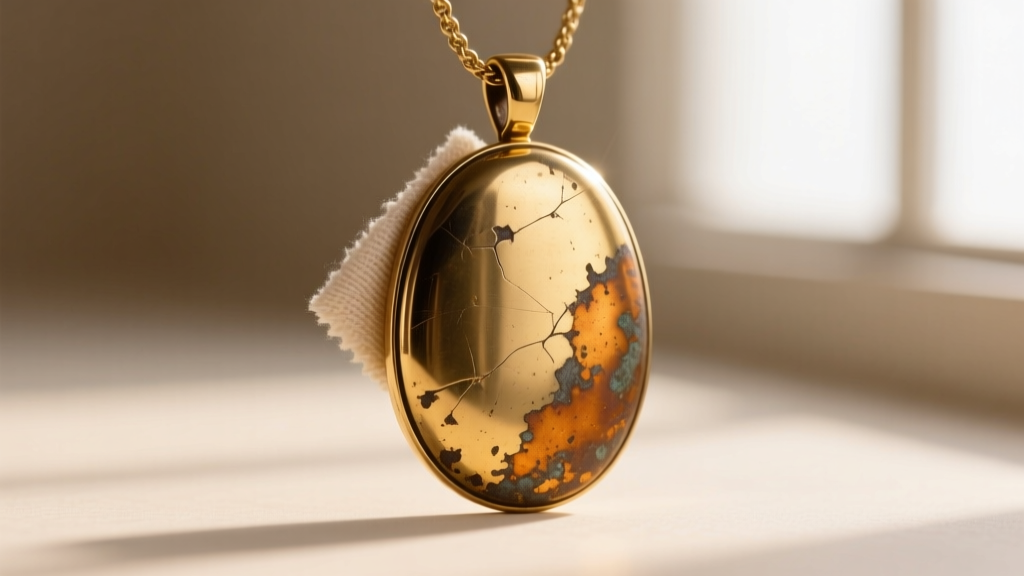
Gold-tone plating on vintage Mariana pieces is generally a thin electroplated layer over a brass or pewter base. Over decades of wear, friction and skin acidity wear away this plating, resulting in 'brass bleed'—a dull, brownish discoloration that collectors often mistake for dirt. Attempting to polish brass bleed with standard jewelry polishing cloths (which contain mild abrasives) will only accelerate the removal of the remaining original plating.
The Conservation Approach
Instead of aggressive polishing, the goal is stabilization. Once the plating has worn through to the base metal, the exposed brass will rapidly oxidize and turn green or black when exposed to humidity. To halt this process, apply a micro-crystalline wax. Renaissance Wax, a staple in museum metal conservation, forms a hard, moisture-proof barrier that prevents further oxidation without altering the visual tone of the metal. Apply a minuscule amount with a cotton swab, let it haze for five minutes, and buff gently with a clean microfiber cloth. This seals the exposed base metal and protects the remaining original plating from skin oils.
Sourcing Discontinued Components in 2026
If your troubleshooting reveals a cracked or irreparably oxidized crystal, replacing it presents a unique challenge. Swarovski's 2021 decision to cease the wholesale and retail distribution of loose crystal components has drastically altered the repair landscape. You can no longer simply order a 14mm Round Stone in 'Volcano AB' from a standard supplier.
To source authentic replacement crystals for a Mariana necklace today, you must turn to specialized deadstock suppliers, vintage jewelry cannibalization, or secondary market lots. Search for 'New Old Stock (NOS) Swarovski loose stones' on specialized lapidary and vintage jewelry forums. When matching colors, be aware that Swarovski's AB coating formula underwent subtle shifts in the late 2000s; a crystal purchased in 2026 from old inventory may have a slightly different refractive index than one set in a 1998 Mariana piece. Always test the replacement stone under natural daylight alongside the original pendant before committing to the adhesive setting.
Pro-Tip for Adhesive Setting: When resetting a foil-backed crystal into a Mariana bezel, never use cyanoacrylate (Super Glue). The fumes will permanently fog the crystal and the foil. Use a specialized, non-fuming jewelry epoxy like G-S Hypo Cement, applying a microscopic bead to the bezel shelf, not the stone itself.
Troubleshooting and restoring a vintage Mariana necklace is an exercise in patience and material science. By respecting the delicate nature of foil-backed crystals, upgrading structural weak points with appropriate gauge metals, and employing museum-grade conservation waxes, you can preserve these intricate wearable artifacts for future generations. For more historical context on the evolution of crystal manufacturing, the official Swarovski archives provide excellent background on the cutting techniques utilized during Mariana's peak production years.


