Hello Kitty Necklace Price & Value Guide 2026: What to Pay
Discover the true value of a Hello Kitty necklace in 2026. We compare Sanrio, Pandora, and Swarovski pricing, materials, and authenticity tips.

The Hello Kitty Jewelry Market in 2026: An Overview
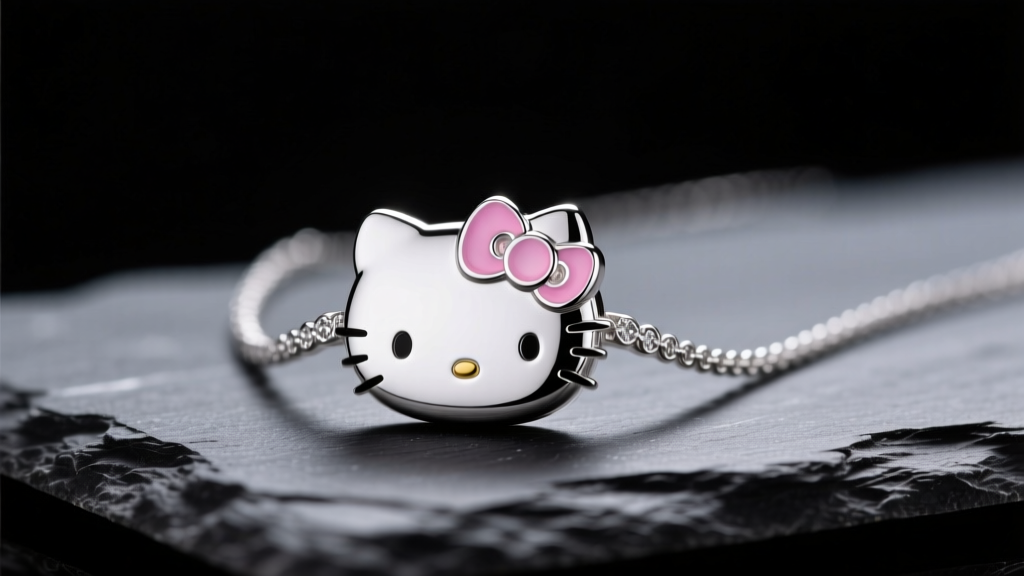
When it comes to character jewelry, few icons possess the enduring market dominance of Sanrio’s flagship feline. In 2026, the market for a Hello Kitty necklace is more saturated than ever, spanning everything from $5 gas-station trinkets to $2,500 diamond-encrusted luxury collaborations. For collectors and casual fans alike, navigating this vast pricing spectrum requires a solid understanding of metallurgy, brand licensing, and jewelry manufacturing standards. Assessing the true value of these pieces is not just about the brand name stamped on the box; it is about evaluating the intrinsic metal weight, the quality of the enamel work, and the structural integrity of the chain.
According to Sanrio Official, the brand licenses its intellectual property to a wide array of jewelry manufacturers, meaning two necklaces bearing the exact same character design can have wildly different material compositions and price points. This guide breaks down the exact pricing tiers, material grades, and long-term wearability factors you need to consider before making a purchase, ensuring you get genuine value for your money.
Material Breakdown: What Are You Actually Paying For?
The price of a Hello Kitty pendant is directly tethered to its base metal, gemstone accents, and the type of enamel used to create her iconic red or pink bow. Understanding these material tiers is the first step in accurate budget assessment.
Tier 1: Base Metals and Cold Enamel (The $10–$40 Range)
At the entry-level, necklaces are typically cast from zinc alloys or brass and plated with a microscopic layer of silver or gold-colored flash plating. The colored details are achieved using cold enamel, which is essentially a pigmented epoxy resin applied via syringe and cured at room temperature. While affordable, cold enamel is highly susceptible to UV yellowing, shrinking, and chipping within months of daily wear. Furthermore, as the flash plating wears off, the underlying copper or brass reacts with skin acidity, frequently causing the dreaded green skin effect. These pieces hold zero intrinsic resale value and should be treated as temporary costume accessories.
Tier 2: Sterling Silver and Cubic Zirconia (The $65–$180 Range)
The mid-tier market is dominated by official collaborations, most notably Pandora’s ongoing Sanrio collections and licensed sterling silver pieces sold in specialized jewelry boutiques. These necklaces are cast in 925 sterling silver (92.5% pure silver, 7.5% copper). To combat the natural tarnishing caused by the copper alloy, reputable manufacturers apply a rhodium plating via electroplating, usually at a thickness of 0.5 to 1.0 microns. The bows and dresses are often filled with high-grade vitreous enamel or precision-set cubic zirconia (CZ) melee stones. According to the Gemological Institute of America (GIA), 925 sterling silver offers an excellent balance of durability and precious metal value, making this tier the sweet spot for everyday wearability and long-term value retention.
Tier 3: Solid Gold and Melee Diamonds (The $300–$2,500+ Range)
At the apex of the market are limited-edition drops and high-end fine jewelry interpretations. These pieces are cast in solid 14k or 18k gold (yellow, white, or rose) and feature genuine melee diamonds instead of CZ. The value here is driven by the current spot price of gold, the carat weight and clarity of the diamonds, and the extreme collectibility of limited Sanrio boutique releases. While the markup for the intellectual property license is still present, the intrinsic melt value and gemstone quality provide a financial floor that base metal and silver pieces simply cannot match.
Brand Comparison & Pricing Matrix
To help you benchmark current market rates, we have compiled a comparative matrix of the most prominent Hello Kitty necklace tiers available in 2026. This table factors in average retail pricing, material longevity, and secondary market demand.
| Brand / Tier | Primary Metal | Accents & Enamel | Avg. Price (2026) | Longevity Score (1-10) |
|---|---|---|---|---|
| Fast Fashion / Mall Kiosk | Zinc Alloy / Brass | Cold Epoxy Resin | $15 - $35 | 2 |
| Pandora x Sanrio | 925 Sterling Silver | Rhodium, CZ, Hot Enamel | $85 - $150 | 8 |
| Swarovski x Sanrio | Rhodium-Plated Brass | Precision-Cut Crystals | $120 - $220 | 6 |
| Independent Fine Jewelers | Solid 14k / 18k Gold | Melee Diamonds, Guilloché | $450 - $2,500+ | 10 |
The Authenticity Test: Spotting Counterfeits
Because of the massive global appeal of the character, counterfeit Hello Kitty jewelry floods online marketplaces. The Federal Trade Commission (FTC) Jewelry Guides strictly regulate metal stamping, but counterfeiters routinely ignore these laws. Here is how to verify the authenticity of a mid-to-high-tier piece:
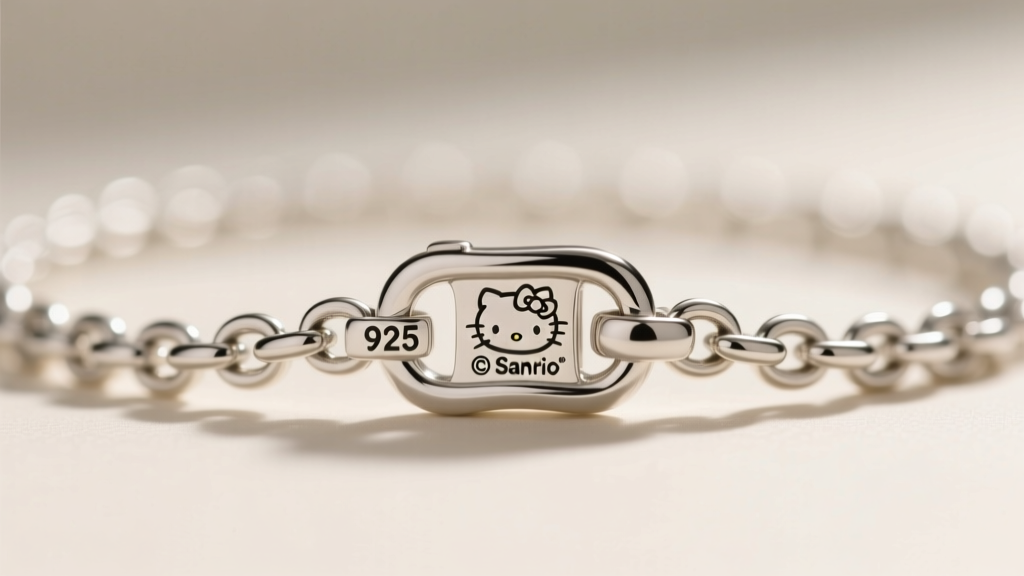
- The Hallmark Check: Genuine sterling silver pieces will always bear a "925" stamp. More importantly, authentic licensed jewelry will feature a microscopic "© Sanrio" or "Sanrio Co., Ltd." engraving, usually located on the back of the pendant or on the flat tag attached to the clasp.
- The Weight Test: Sterling silver and gold are dense metals. A solid silver Hello Kitty pendant of standard dimensions (approx. 15mm x 12mm) should weigh between 2.5 and 4 grams. If the piece feels suspiciously light or hollow, it is likely a base metal knockoff.
- Enamel Precision: Authentic licensed pieces feature enamel that is perfectly flush with the metal borders (bezels). Counterfeits often have messy, overflowing resin that spills onto the silver borders, or conversely, resin that has shrunk below the metal line due to improper curing.
Pro-Tip for Collectors: Always use a jeweler's loupe (10x magnification) to inspect the prongs holding any cubic zirconia or crystal accents. Mass-produced fakes frequently use glued-in stones rather than properly burnished metal prongs, leading to rapid stone loss.
Chain Gauge and Clasp Mechanics: The Hidden Value Killers
A common mistake buyers make is focusing entirely on the pendant while ignoring the chain. The chain is the structural lifeline of your necklace, and its gauge (thickness) dictates its survival rate. In the $20–$50 tier, manufacturers typically use 0.6mm to 0.8mm cable chains. These are notoriously weak; a simple snag on a sweater can generate enough tensile force to pull the unsoldered jump rings apart or snap the links entirely.
For genuine value and daily wearability, look for chains in the 1.0mm to 1.4mm range, specifically in durable weaves like the rolo or cable chain with fully soldered links. Furthermore, inspect the clasp. Cheap spring-ring clasps feature weak internal springs that fail within months. A high-quality lobster clasp, complete with a sturdy soldered jump ring at the attachment point, is a hallmark of a manufacturer that prioritizes structural integrity over cutting pennies.
Long-Term Value and Common Failure Modes
Even authentic, mid-tier Hello Kitty necklaces are not immune to the realities of daily wear. Understanding the common failure modes will help you maintain your jewelry and assess whether a vintage or secondhand piece is worth salvaging.
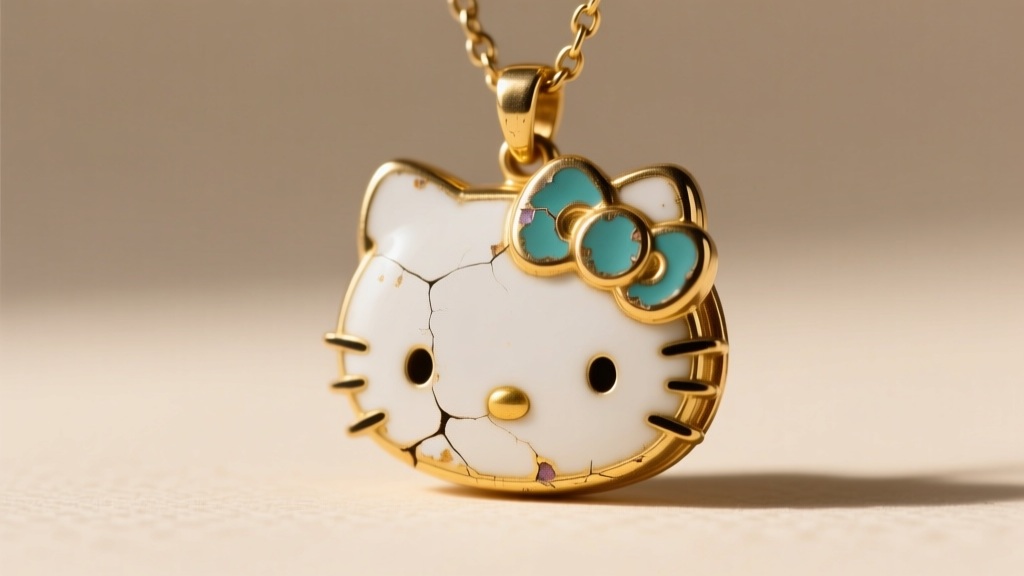
- Enamel Chipping and Cracking: Vitreous (hot) enamel is essentially glass fused to metal. While it resists scratching and UV fading beautifully, it lacks flexibility. Dropping a sterling silver pendant with hot enamel onto a tile floor can cause the enamel to shatter or crack along the metal stress lines.
- Rhodium Wear-Through: On sterling silver pieces, the rhodium plating will eventually wear thin on the high-friction areas (like the back of the pendant and the clasp). This exposes the underlying silver, which will begin to oxidize and tarnish when exposed to sulfur in the air. This is not a defect, but a natural maintenance requirement; a quick trip to a jeweler for a $30 re-plating will restore the piece to factory condition.
- Jump Ring Separation: The small ring connecting the pendant to the chain is a primary failure point. If the jump ring was not laser-soldered shut during manufacturing, repeated friction will slowly grind the metal down until the gap opens and the pendant is lost.
Final Verdict: Which Hello Kitty Necklace Should You Buy?
If you are buying a Hello Kitty necklace purely for nostalgic, short-term fun, the $20 base-metal tier serves its purpose, provided you understand it is a disposable accessory. However, for true value assessment, the $85–$150 range occupied by official sterling silver collaborations (like Pandora) offers the best intersection of precious metal intrinsic value, durable craftsmanship, and official IP licensing. These pieces will not turn your skin green, they can be professionally polished and maintained, and they hold a recognized place in the secondary collector's market. Avoid overpaying for gold-plated brass masquerading as fine jewelry, and always verify the 925 and © Sanrio hallmarks before completing your purchase.


